



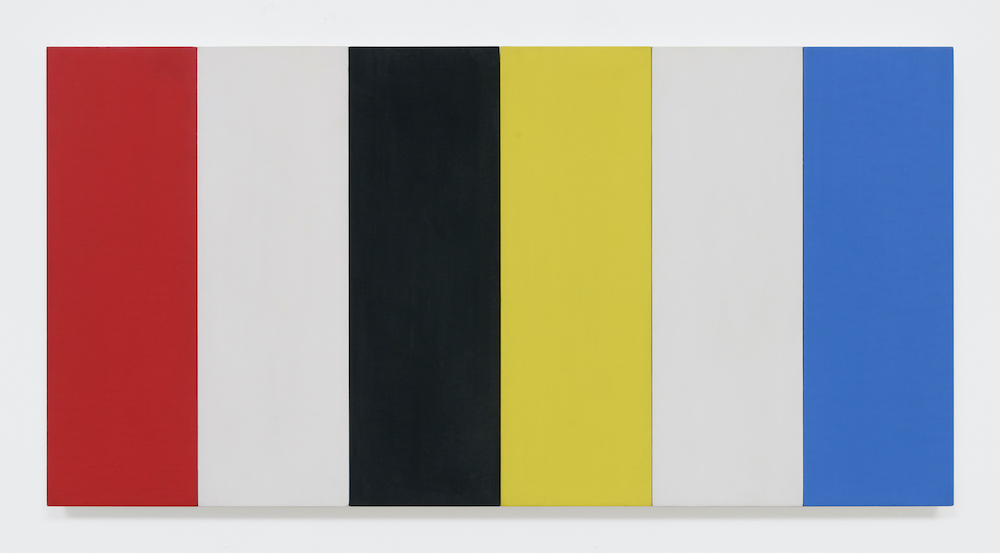
Red Yellow Blue White and Black names five colors across six joined panels. The title does not account for one of them. It names the colors, but not their order, repetition, or relation. Naming is present. Order is withheld.
Color does not sit inside a painting here. It stands on its own. Each panel holds a single color without image, without gesture, without anything to carry it. Nothing is added to stabilize it. What remains has to hold by itself. Red Yellow Blue White and Black (1953) brings that condition into view before it settles. Six joined panels stretch across the wall with the sequential logic of a frieze and the emptiness of an altarpiece after its images have been removed. The title names the colors and nothing more. The joins sit between seam and relation. The sequence is ordered, but the order is not given. Color appears without narrative, composition thinned almost to refusal.
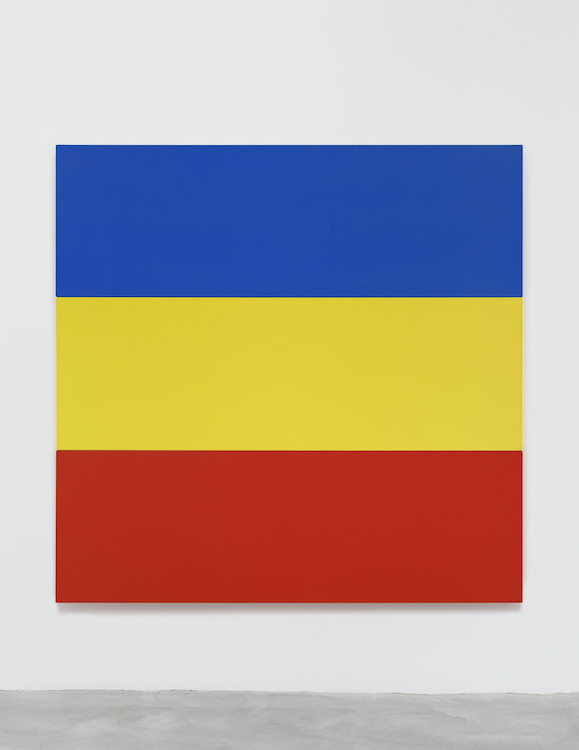
That pressure belongs to Kelly’s Paris years, when observation and abstraction were not opposites but consecutive acts. The colors come from looking — boats in Sanary, facades, fragments of the built world — and then remain after the object is gone. They keep the weight of what was seen without retaining its form. What was read as emptiness is the removal of everything that usually carries a painting. By Blue Yellow Red III (1971), that condition no longer wavers. Three joined panels present three primary colors without hierarchy or adjustment. The title names them and stops. The painting does the same. What began as reduction has hardened into method. Color stands without needing to be resolved.
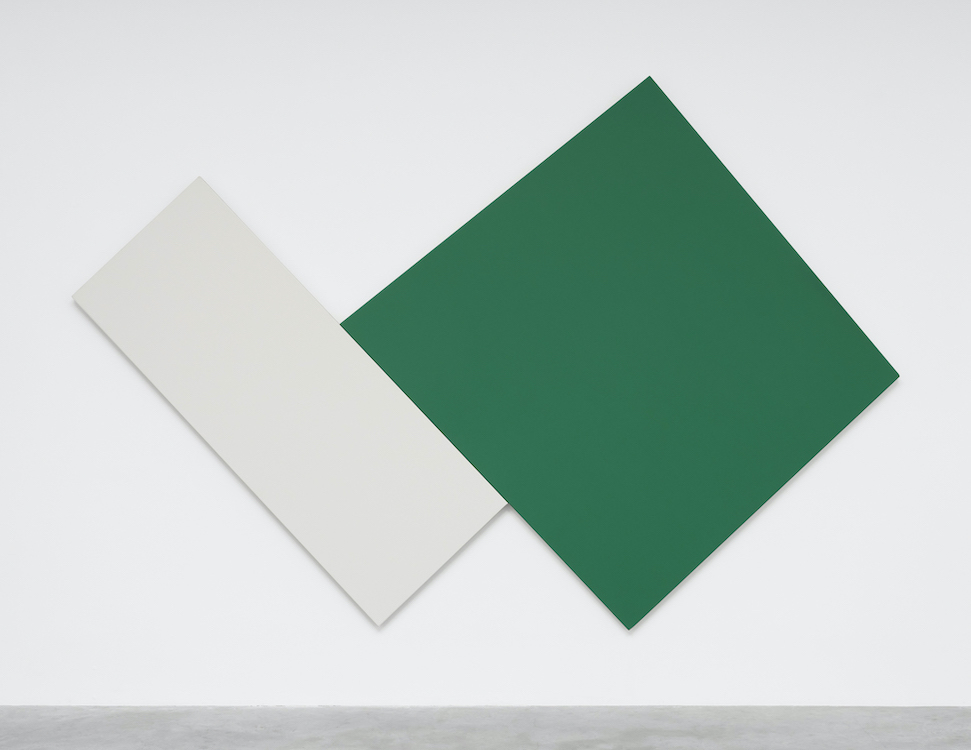
The panels carry this. In 1953, six are needed. By 1971, three are enough. By 1988, two will hold it. It is not economy. The claim holds with less. The panels do not merge into a single field. They remain separate — color next to color, each holding its own space. The joins are not compositional events. They are structural ones. In Green White (1988), that structure reaches its edge. Two panels, nearly equal in scale, place green beside white. White holds form without chromatic instruction. It sits inside the system without behaving like the others.
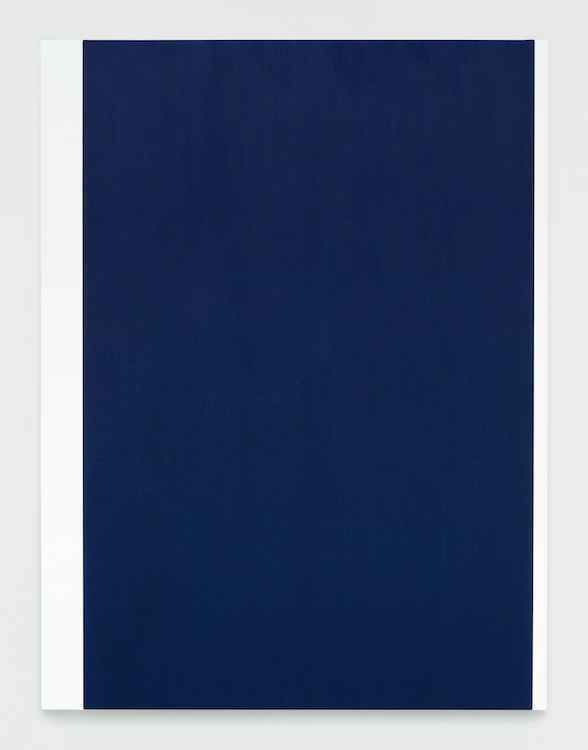
Across the exhibition, the shift is direct. The early work holds the question. The later works do not. They proceed. In Blue with Two Whites (2014), white is doubled and placed beside blue without hesitation. By the end, The Naming of Colors no longer reads as an answer. It holds as a position. Color remains.
Color does not sit inside a painting. Each panel holds it on its own.
Placed across the wall, the panels do not resolve into a single image. They remain separate, each carrying its own field. What joins them is not composition but adjacency — color set next to color, holding space between them.
The work does not build inward. It spreads across the wall, where color operates as a unit of space rather than an element within a picture.
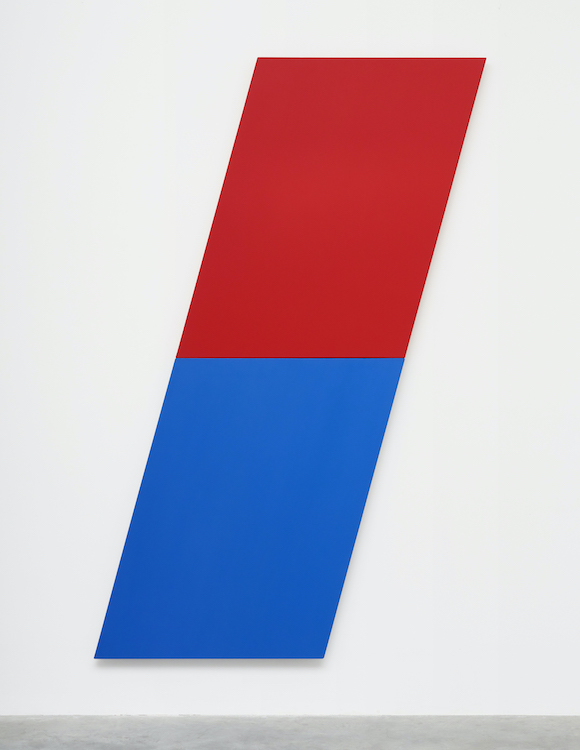
1. Ellsworth Kelly, Red Blue, 1968–70. Oil on canvas, two joined panels, 100½ × 66½ in (255 × 169 cm). Artwork © Ellsworth Kelly. Courtesy Matthew Marks Gallery.
2. Ellsworth Kelly, Blue Yellow Red III, 1971. Oil on canvas, three joined panels, 72 × 74 in (183 × 188 cm). Artwork © Ellsworth Kelly. Courtesy Matthew Marks Gallery.
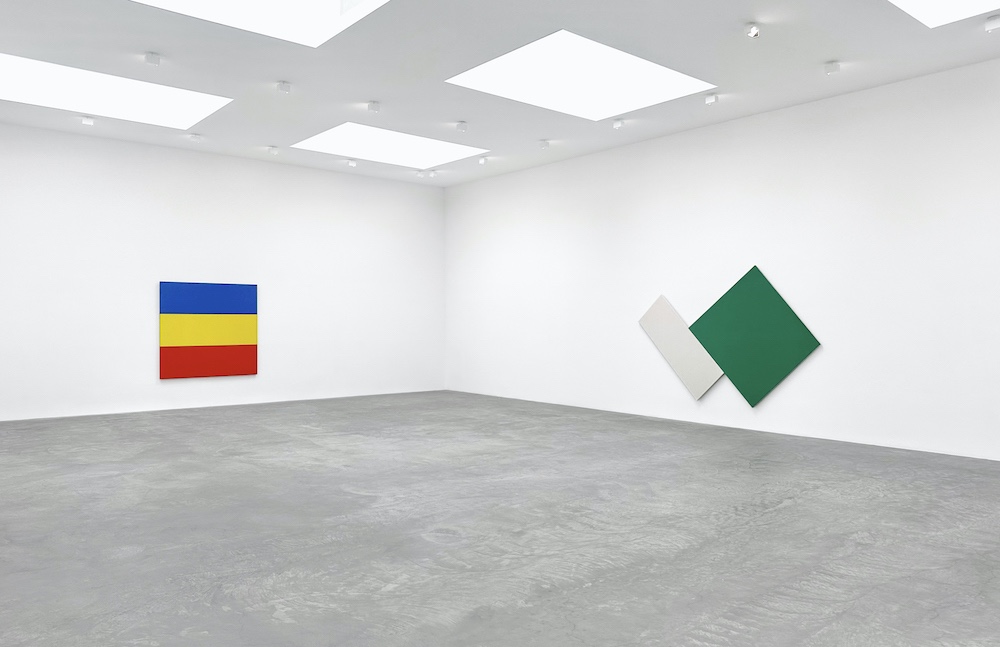
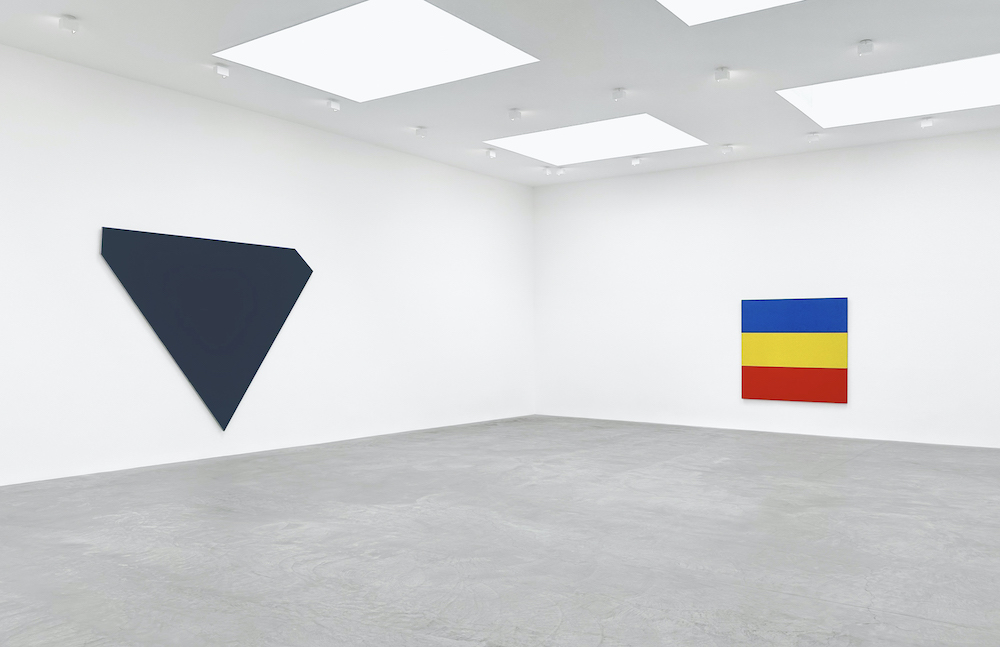
3. Installation view: Ellsworth Kelly, The Naming of Colors, Matthew Marks Gallery, Los Angeles, February 26 – April 11, 2026. Artwork © Ellsworth Kelly. Courtesy Matthew Marks Gallery.
4. Ellsworth Kelly, Green White, 1988. Oil on linen, two joined panels, 87¾ × 133 in (223 × 338 cm). Artwork © Ellsworth Kelly. Courtesy Matthew Marks Gallery.
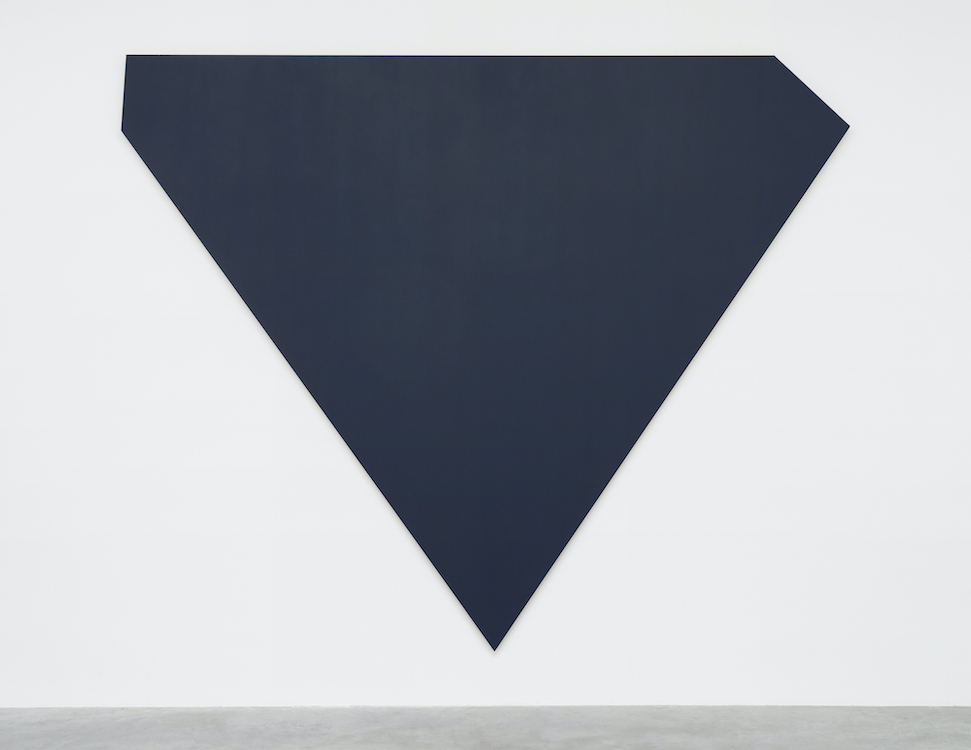
5. Ellsworth Kelly, Dark Blue Gray, 1980–81. Oil on linen, 106 × 129½ in (269 × 329 cm). Artwork © Ellsworth Kelly. Courtesy Matthew Marks Gallery.
6. Installation view: Ellsworth Kelly, The Naming of Colors, Matthew Marks Gallery, Los Angeles, February 26 – April 11, 2026. Artwork © Ellsworth Kelly. Courtesy Matthew Marks Gallery.
7. Ellsworth Kelly, Blue with Two Whites, 2014. Oil on canvas, three joined panels, 65¼ × 49¼ in (166 × 125 cm). Artwork © Ellsworth Kelly. Courtesy Matthew Marks Gallery.
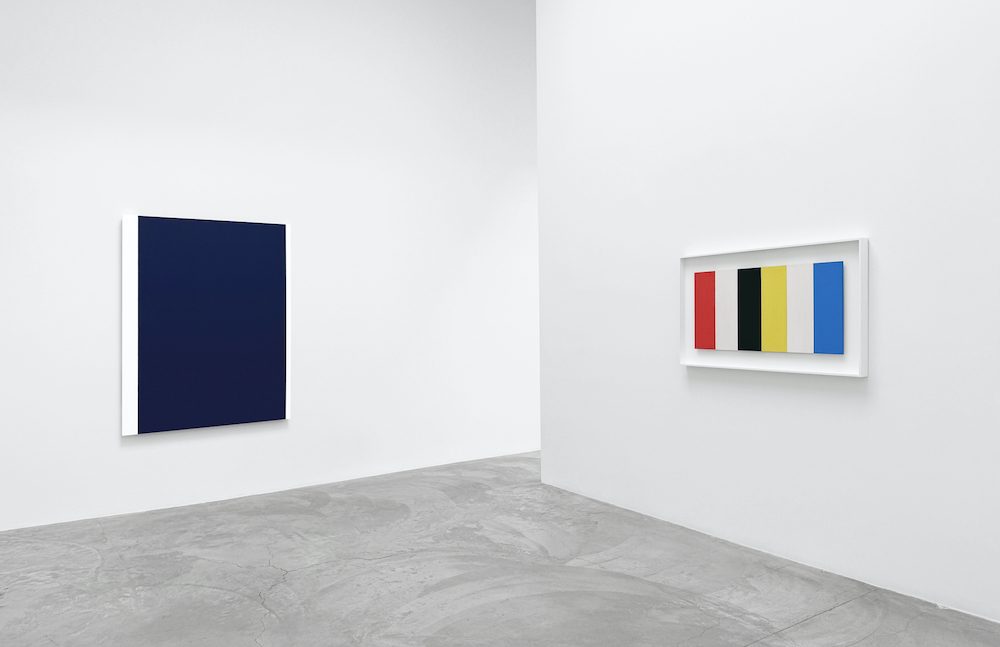
8. Installation view: Ellsworth Kelly, The Naming of Colors, Matthew Marks Gallery, Los Angeles, February 26 – April 11, 2026. Artwork © Ellsworth Kelly. Courtesy Matthew Marks Gallery.
9. Ellsworth Kelly, Red Yellow Blue White and Black, 1953. Oil on wood, six joined panels, 19¾ × 39 in (50 × 99 cm). Artwork © Ellsworth Kelly. Courtesy Matthew Marks Gallery.
Cover
All images © their respective rights holders.
Image rights & attribution →