




At Skopia, Franz Gertsch and Vincent Fournier ask to be read as opposites.
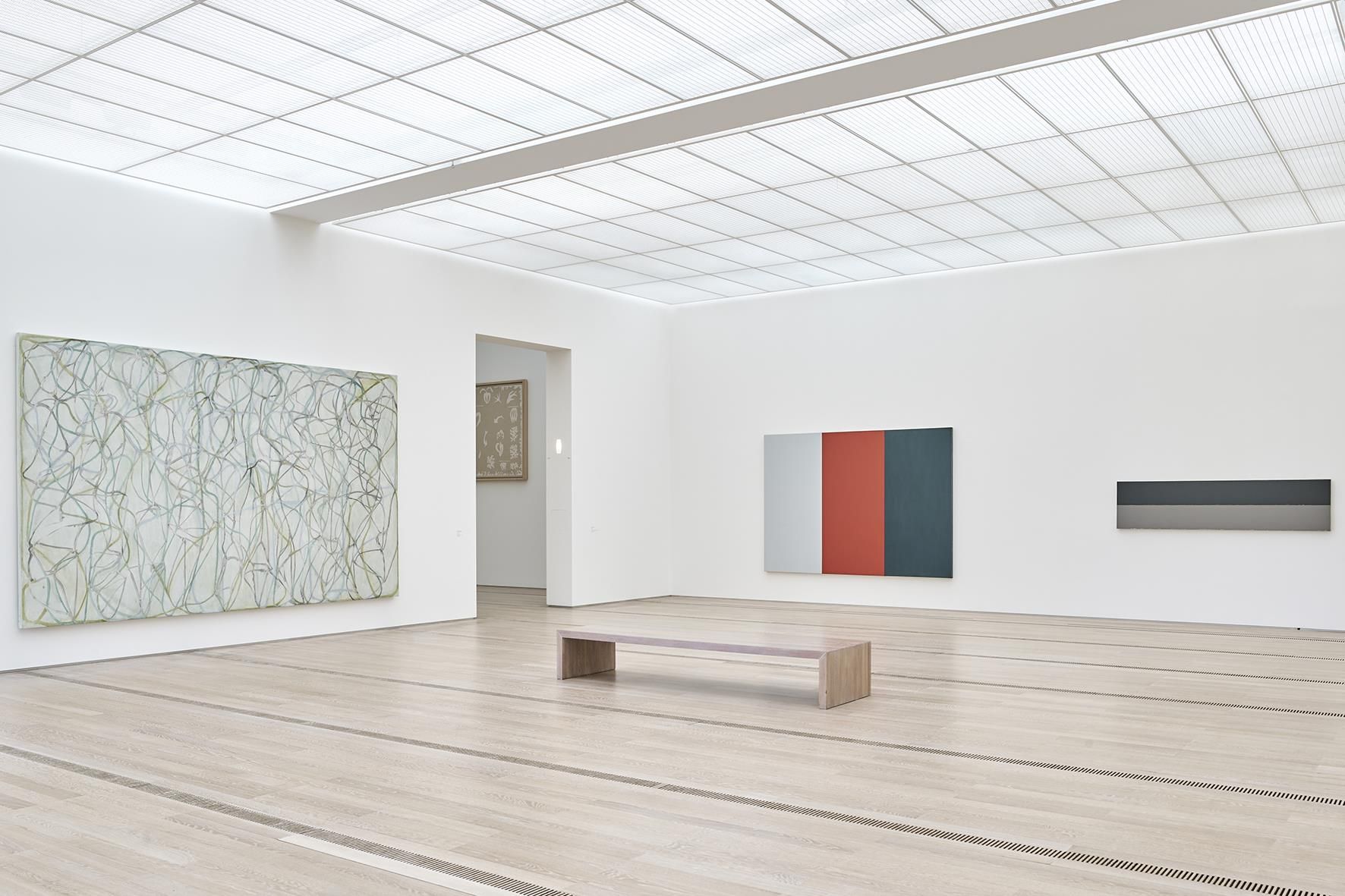
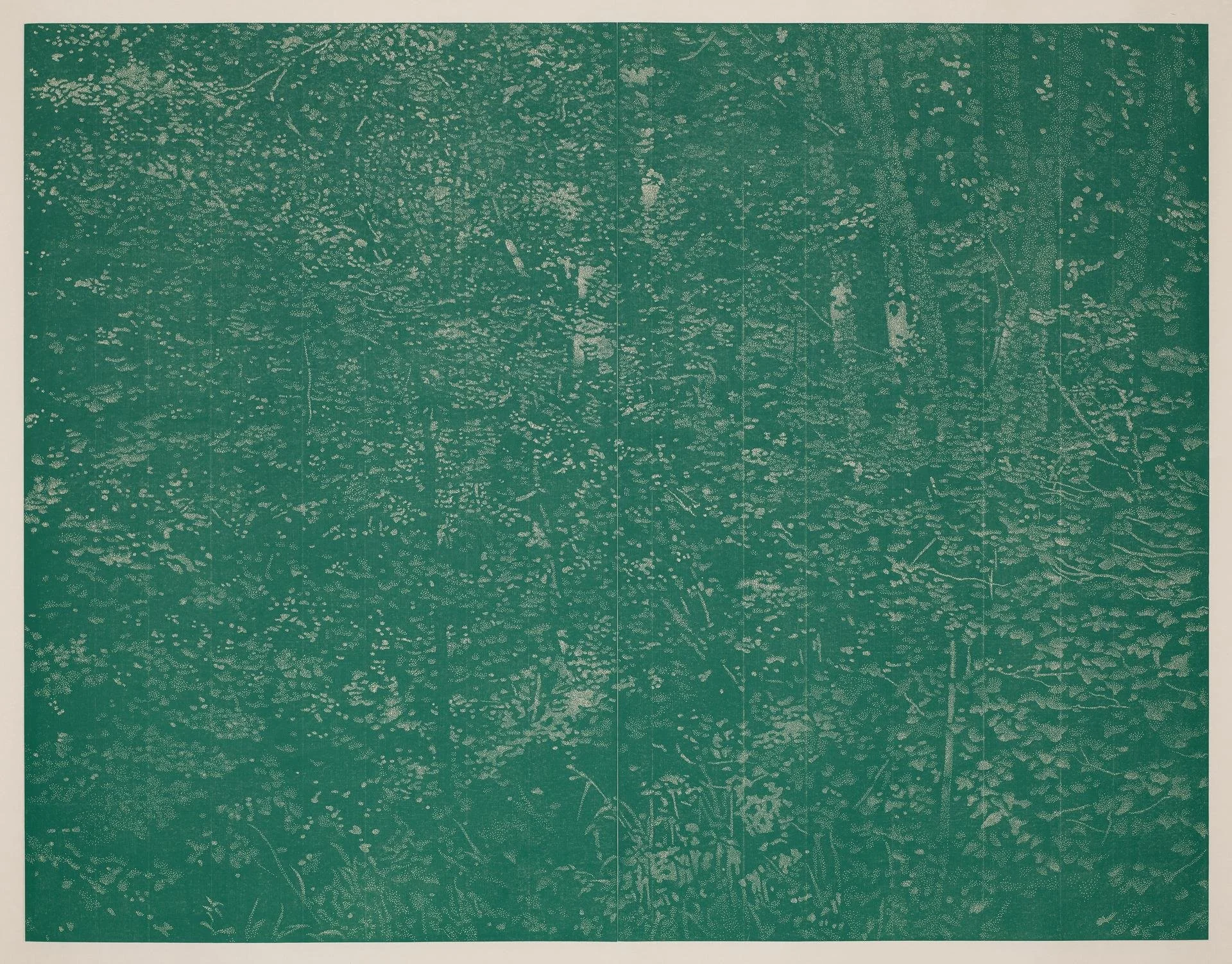
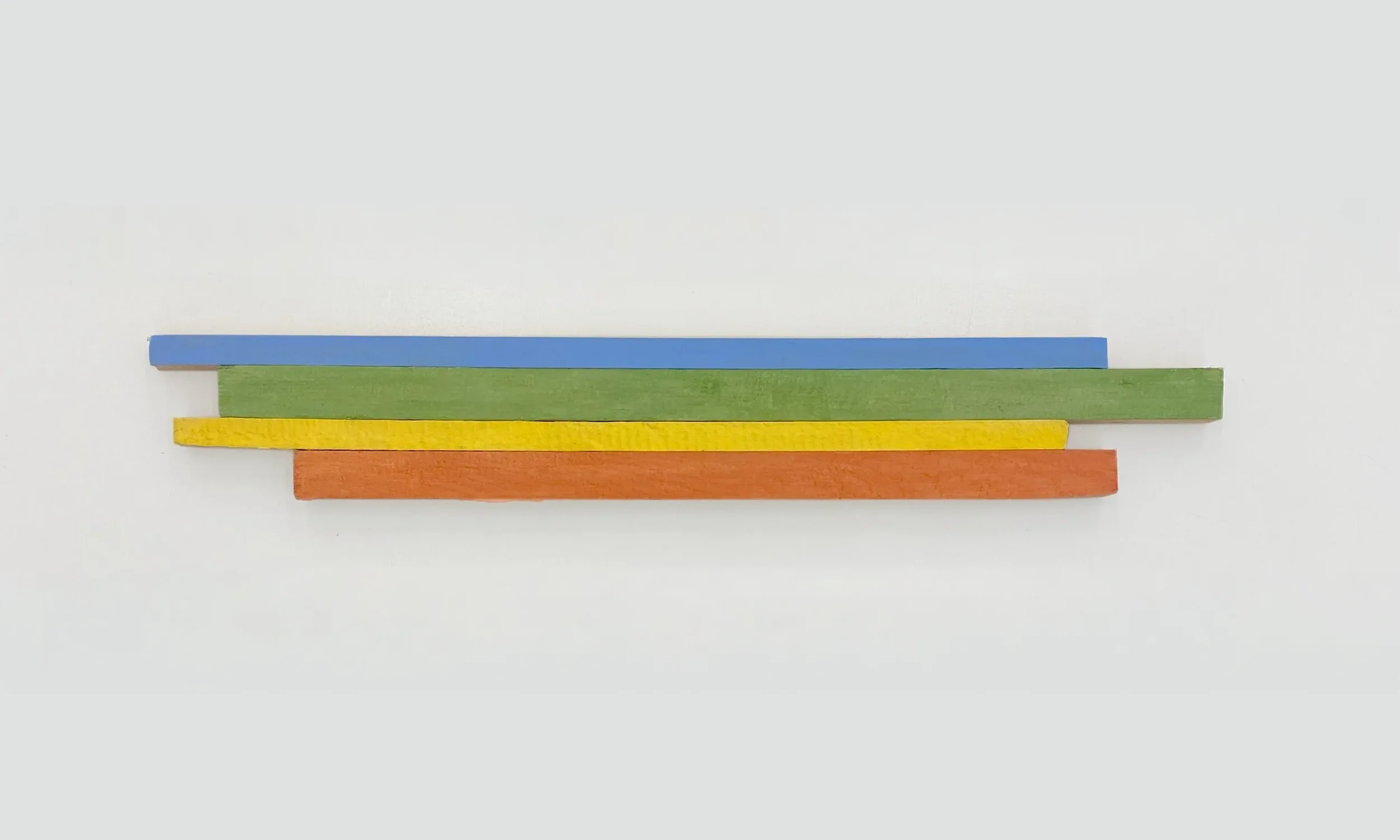
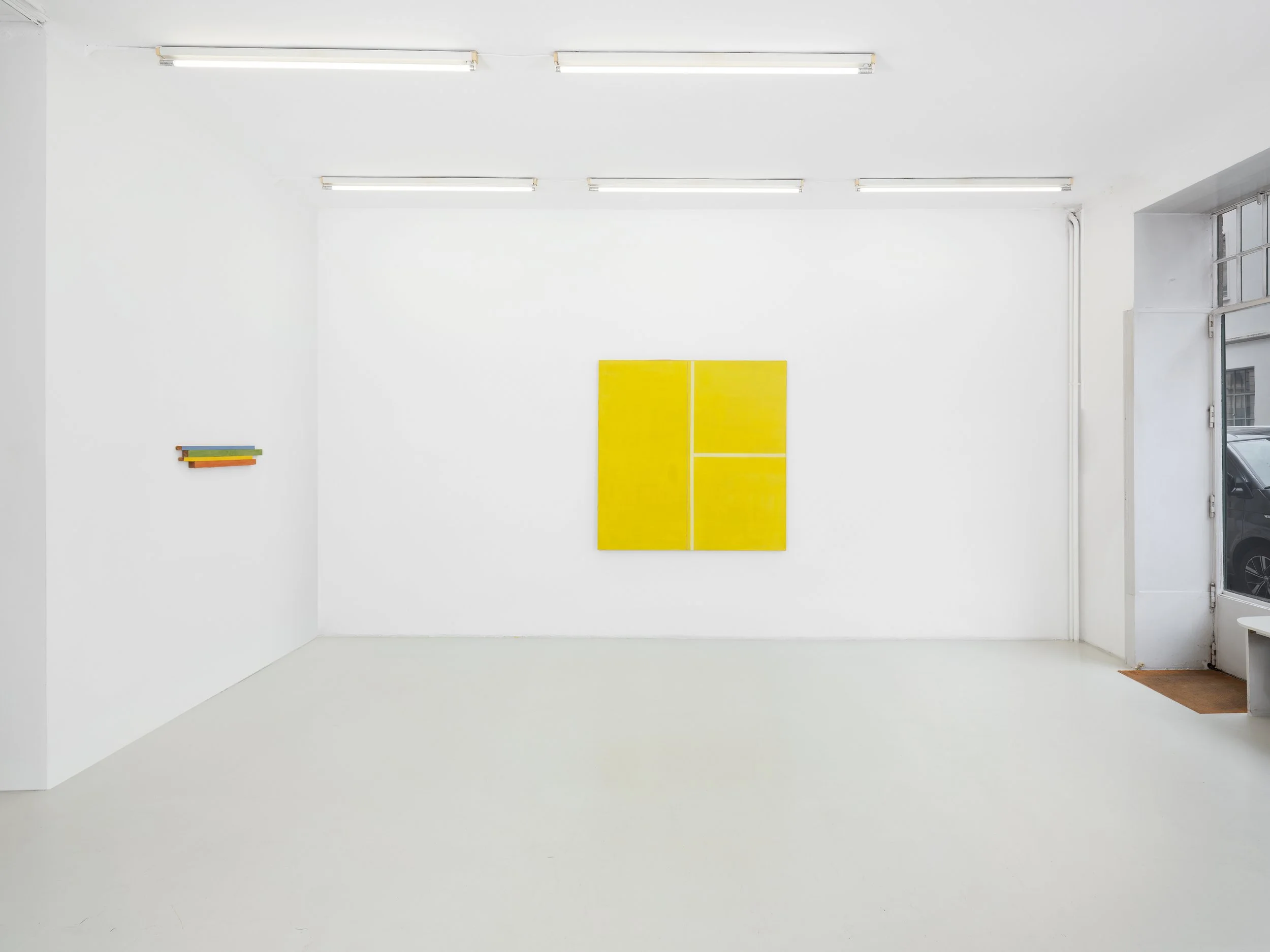
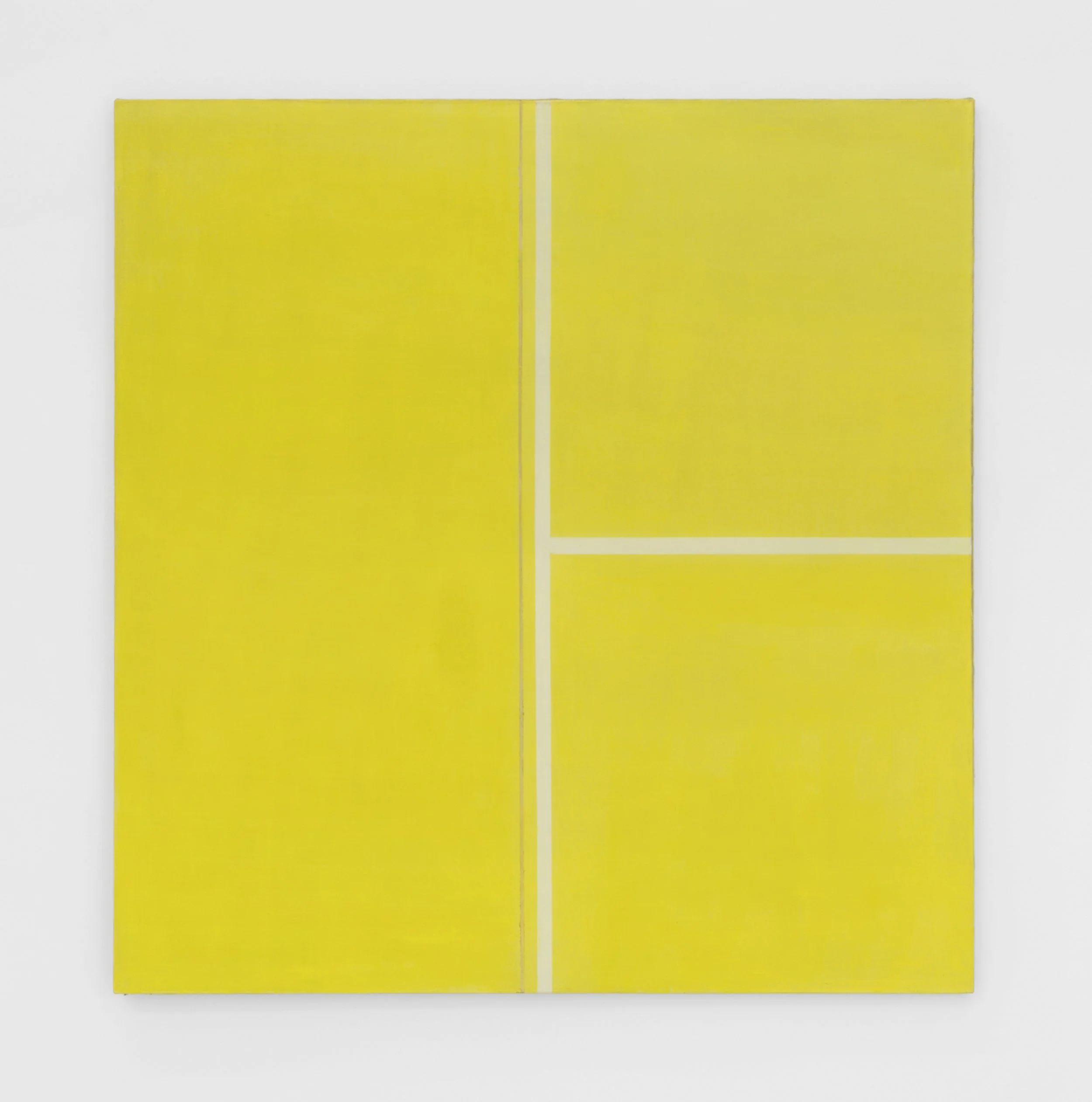
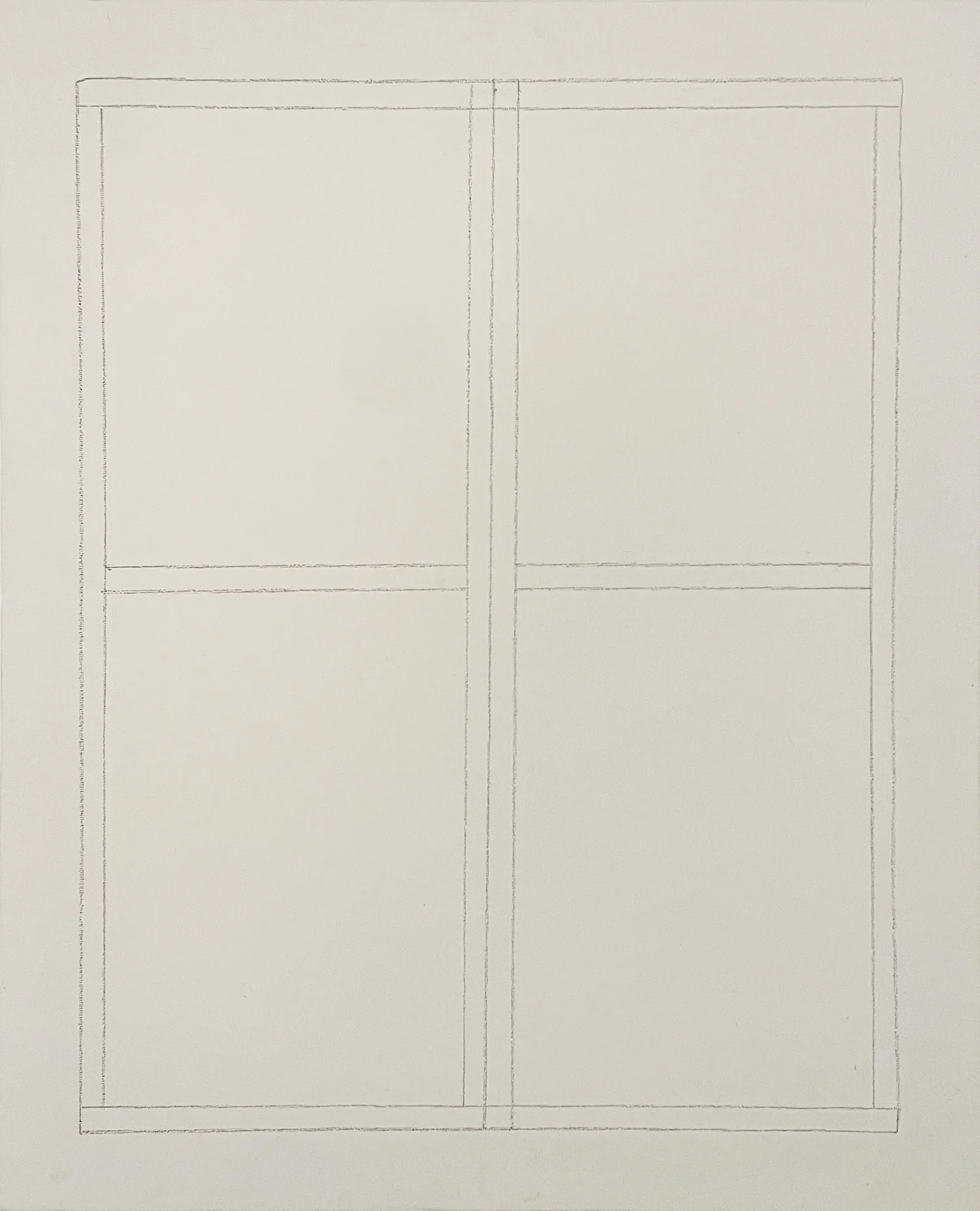
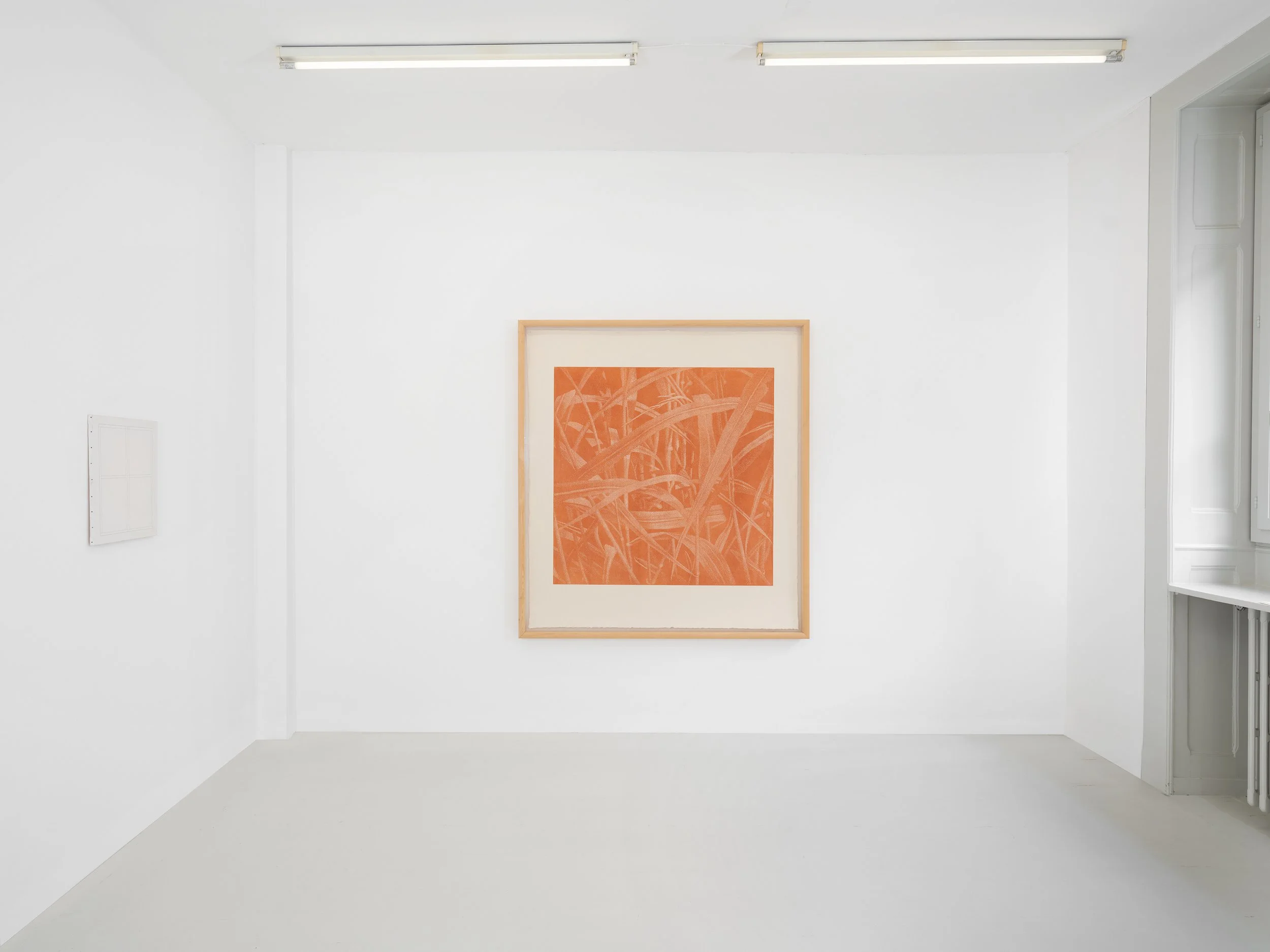
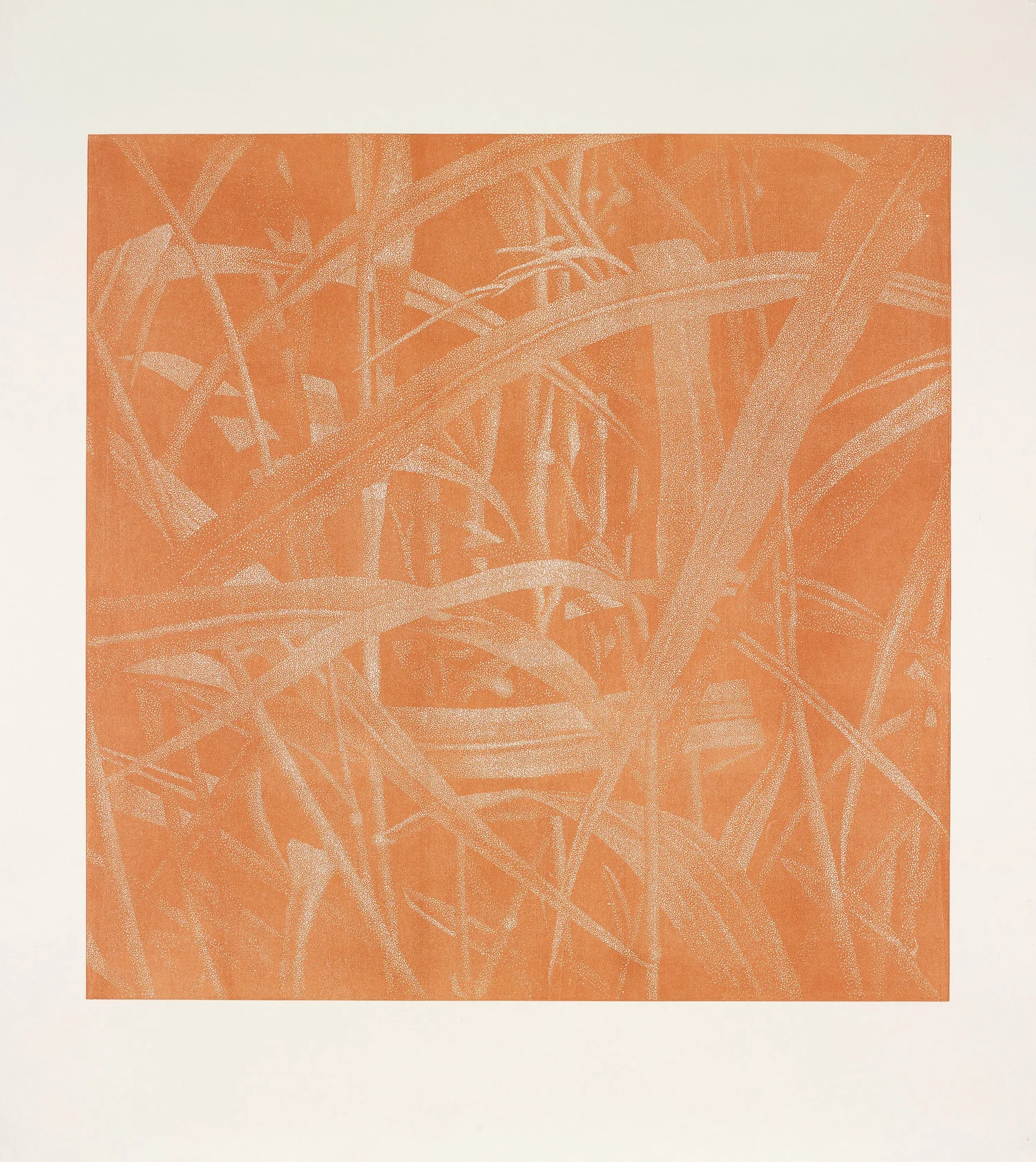
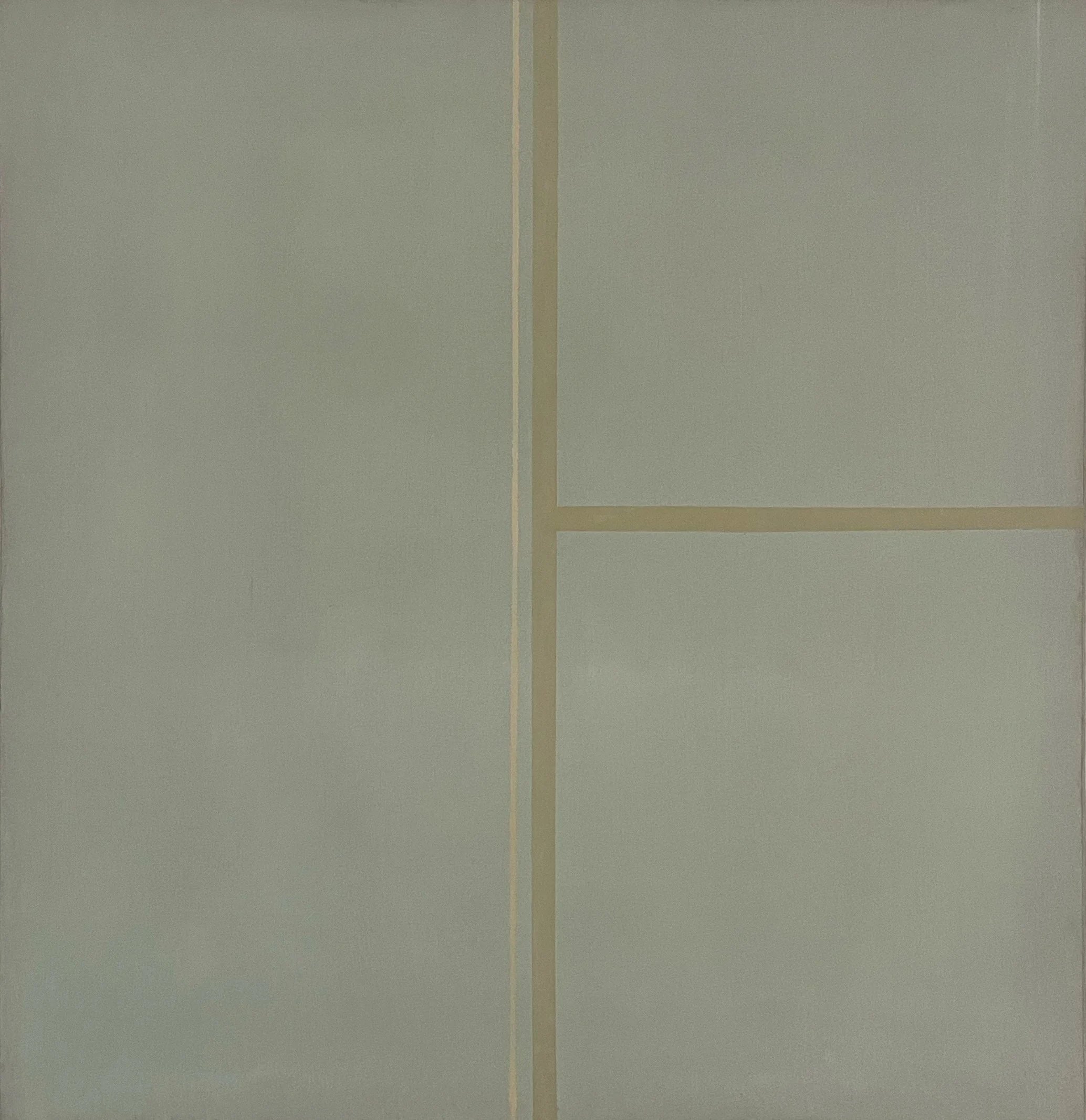
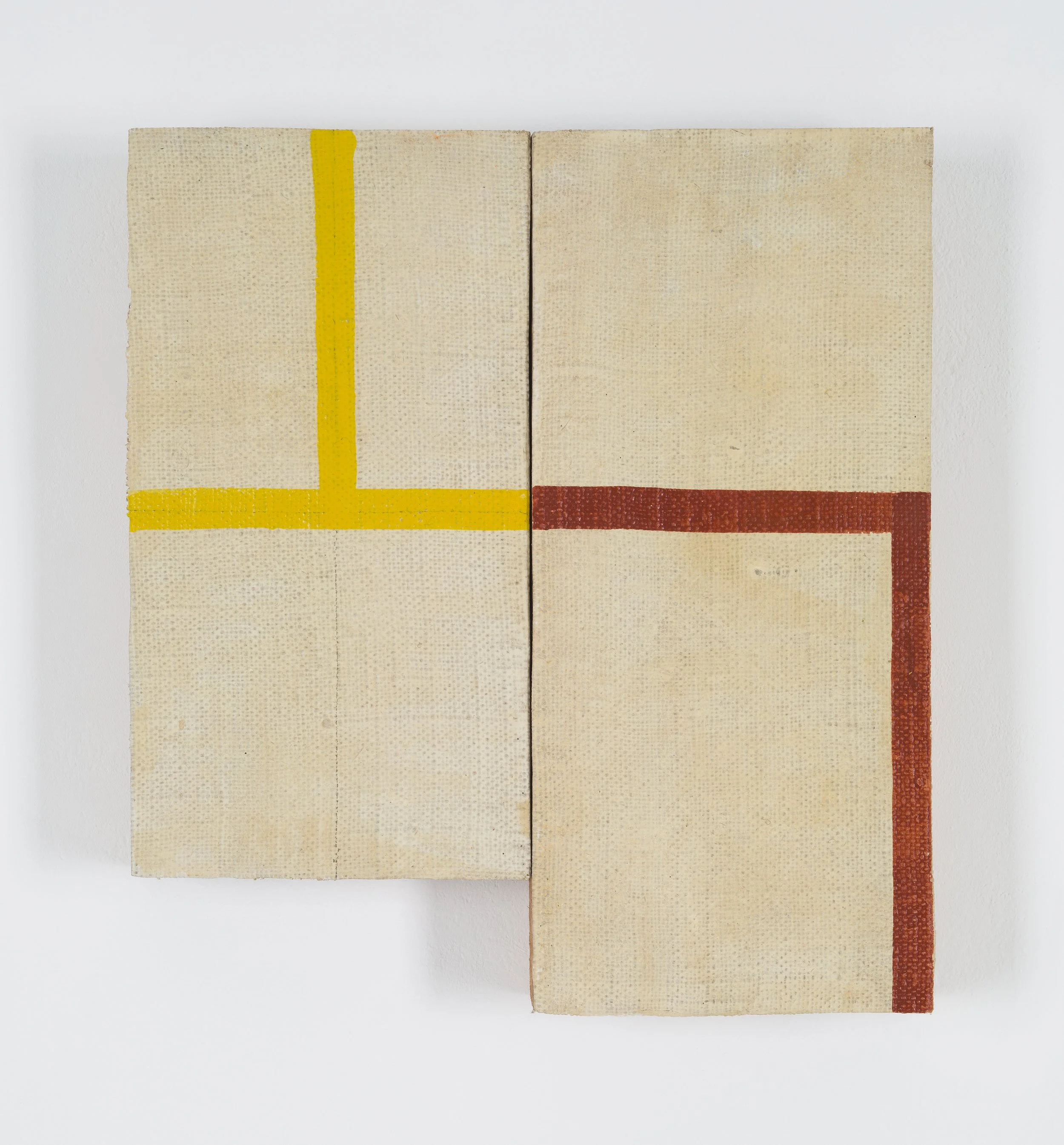
One wall makes the contrast easy. Gertsch’s vegetation presses forward as density: orange grasses, enlarged and worked into Japanese paper until motif and surface begin to fuse. Nearby, Fournier’s pale structures hold back. Pencil, tempera, jute, wood, grid, interval. A trained eye knows what to do with the difference. Gertsch brings image. Fournier brings reduction.
Figuration beside abstraction is the available reading. Gertsch arrives with vegetation, season, photographic source, and the long public history of Swiss photorealism. Fournier arrives with measured divisions, pale grounds, withheld surface, and the discipline of a nearly empty field. The pairing can be read as dialogue between picture and abstraction because the wall allows that reading first.
The category keeps image as the unit. The question becomes which kind of image: pictured or reduced, full or withheld, figurative or abstract. Contemporary looking often makes the same assumption. An image arrives, declares itself, and is finished when the eye moves on. Recognition is treated as an event.
Gertsch begins inside that assumption. His history with photography is real: documenta 5, the portraits, his place within Swiss photorealism. In the woodcuts, though, the photograph becomes a starting condition, carried through cutting, through what Gertsch called light points, through mineral pigment, and through Kumohadamashi Japanese paper made by Heizaburo Iwano. Recognition is built slowly by the surface that produces it, not delivered by the subject alone.
Gertsch’s own term, Polyfocal Allover, matters because it refuses the single point of arrival. Allover belongs to a modernist history of distributed surface, but Gertsch’s version makes that distribution perceptual and temporal: everything inside the frame is asked to hold equal value, and the eye cannot resolve the image by finding a center. The grasses do not compose around a center. They saturate.
On Fournier’s side, delay is named before the image arrives. His titles are not atmospheric labels: lectio meditatio names reading and meditation; scala claustralium names Guigo II’s twelfth-century Carthusian ladder of prayer; fenêtre de l’ermitage names the window of the hermit’s cell. The vocabulary is specific, and Skopia’s own materials connect Fournier’s recent work to that Carthusian source.
Before it is modernist reduction, the grid is a discipline of delay. It holds attention in a sequence before image is allowed to arrive. The jute absorbs the tempera before the tempera can become picture. Fournier keeps the image before arrival, not as absence, but as a form of attention under discipline.
Placed together, Polyfocal Allover and lectio meditatio stop sounding like separate vocabularies. They become two procedures against the same demand. One distributes attention across the surface until recognition is overrun. The other holds attention before image can settle into recognition at all. Gertsch overruns recognition. Fournier withholds it.
One reaches field through saturation; the other reaches field through restraint. One makes the image too dense to remain a single moment of looking; the other holds image long enough that field becomes the primary condition.
Both artists have already moved past image as event.
At the support, the same refusal starts before composition has a chance to organize the eye. Gertsch’s Iwano paper receives cutting, pigment, and pressure until the image seems to come from inside the paper rather than sit on top of it. Fournier’s jute on wood catches the mark before the mark declares itself. In both, event-time fails at the surface. Neither support offers the clean ground of instant recognition.
Gertsch carries the public historical weight: documenta, Venice, the Museum Franz Gertsch, the long public position of the photorealist image turned monumental woodcut. Fournier works from a quieter register, often with smaller physical force, where title, support, and restraint carry the pressure. Skopia’s installation does not ask for equivalence. A Gertsch surface can dominate by density while a Fournier panel alters the tempo beside it. They do not need the same status to share a problem.
Gertsch pushes image past the point where subject can control the surface. Fournier holds the surface before image is allowed to arrive. One is too full. One is almost empty. In both, recognition is stretched beyond the event of first contact.
Intermezzo is first an interval, a pause, a between-state. In this installation, the word does not need to carry the show. It names what the wall has already made visible: the interval where image is no longer arriving all at once and has not disappeared into surface.
Gertsch fills that interval through density. Fournier holds it open through delay.
The image slows into field.
In Intermezzo, recognition does not arrive at once. Gertsch slows the image through density, woodcut, paper, and the allover field; Fournier slows it through grid, jute, title, and contemplative restraint. The pairing matters because both artists refuse image as a single event. One overruns recognition. The other withholds it. What remains is field: image held long enough to become a condition rather than a moment.
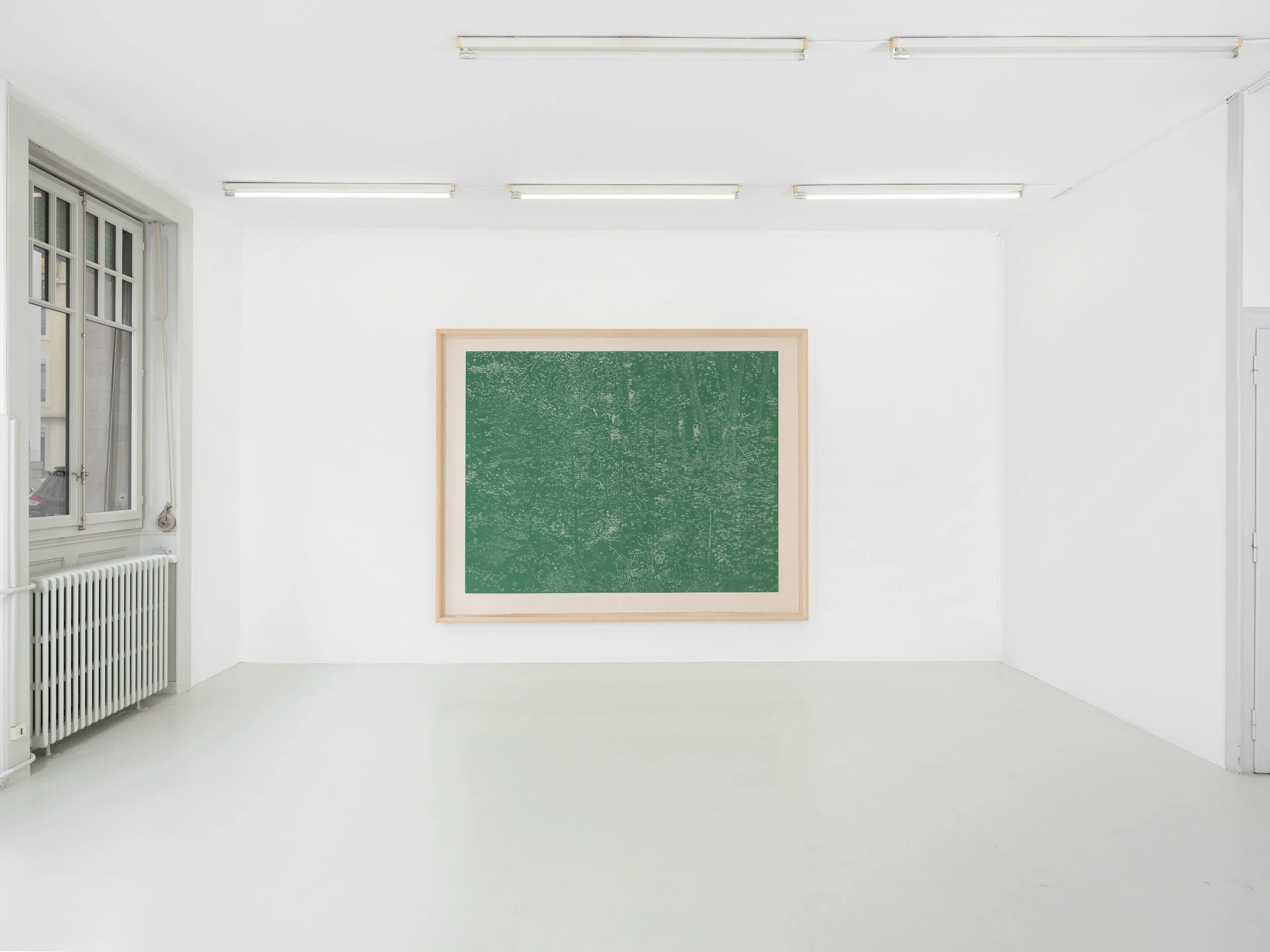
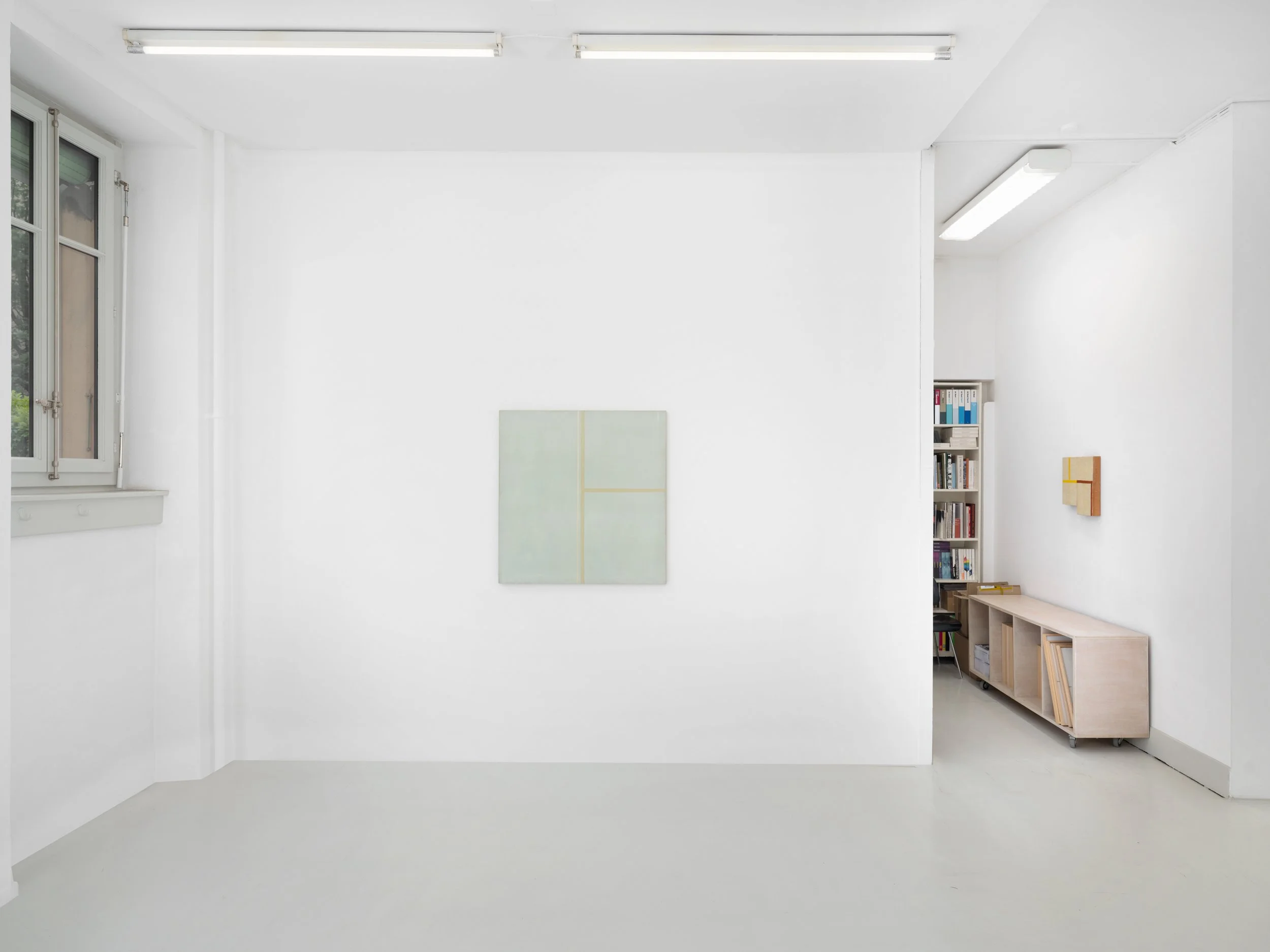
Cover: Intermezzo, 22 May – 20 June 2026, installation view, Skopia, Geneva. Photo: Julien Gremaud.
All images © their respective rights holders.
Image rights & attribution →