







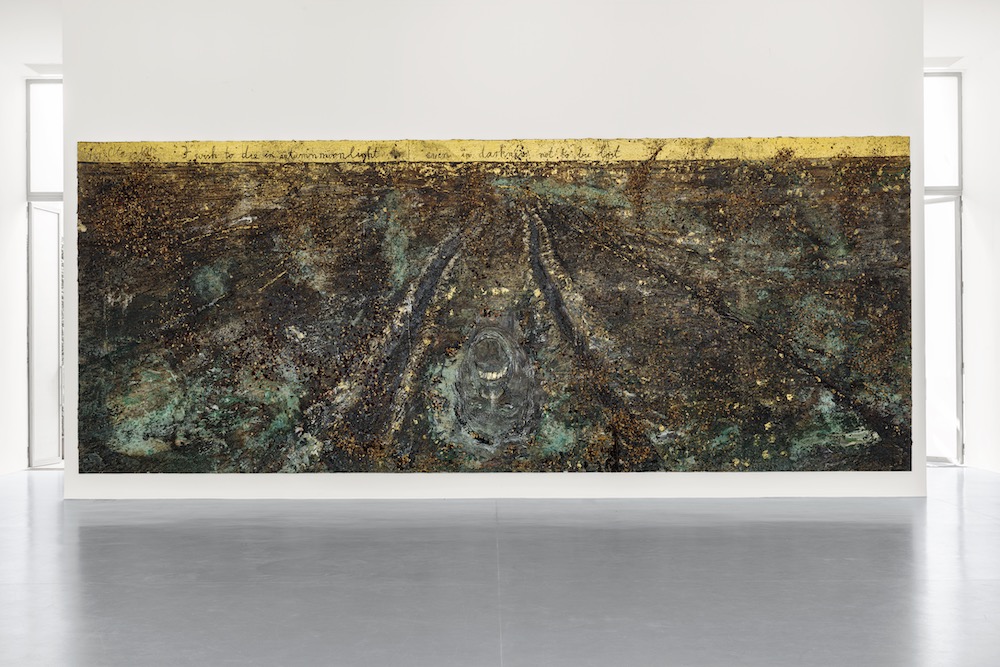
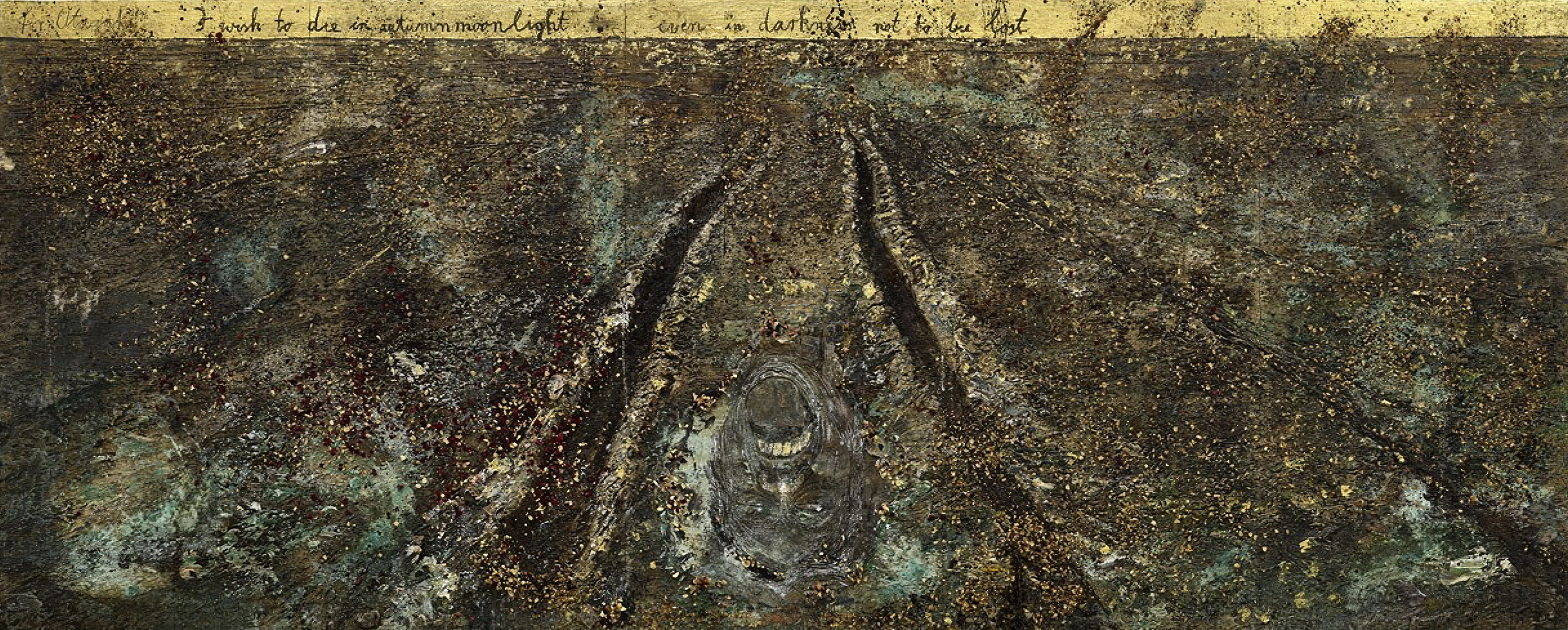
Kiefer’s For Ōtagaki Rengetsu belongs to a format he has used before. The For is not incidental. It is a mode of address: a name is brought into Kiefer’s field and held there by scale, matter, and authorship.
Rengetsu makes that format difficult. Her poems were not titles attached to objects. They were inscribed into vessels — cups, bowls, teaware — where language belonged to use, touch, and clay. The poem did not stand apart from the object. It was part of how the object carried itself.
Kiefer’s dedication works in the opposite register. For Ōtagaki Rengetsu preserves the name through a monumental painting made from Kiefer’s own material vocabulary: gold leaf, sediment, shellac, petals, rocks, and canvas. The painting reaches toward Rengetsu through matter, but the terms remain Kiefer’s. The tribute does not translate Rengetsu’s practice. It absorbs Rengetsu into an existing system of dedication.
That is the pressure. Tribute is not neutral. It decides the form in which a name is allowed to return.
Rengetsu joined poem to vessel. Kiefer joins name to monument. The title asks not to be lost. Kiefer answers by preservation. But preservation is not return. What survives is the name. What cannot survive intact is the scale of the practice that made the name matter.
Ōtagaki Rengetsu joined poem, hand, vessel, and use. Kiefer’s For Ōtagaki Rengetsu preserves her name through another order: monumental painting, material accumulation, and authorial dedication. The Field Note asks whether tribute can honor a practice without absorbing it into the scale of another artist’s world.
Courtesy the artist and Lia Rumma.
All images © their respective rights holders.
Image rights & attribution →