


A tribute asks a painting to give something back from the life.
In a Brussels townhouse, the mantel asks for that return more directly. Above a pale marble fireplace, where a portrait, mirror, or overmantel image might have confirmed the room’s grammar of remembrance, a small linen-toned circle appears. A white ring sits inside the field. The work is quiet, edged, almost bare. It is not a likeness. It is not an ornament. It answers the architecture’s request by refusing it.
That decision repeats through the rooms. Ovals, circles, rectangles, dot fields, and thin vertical works occupy the townhouse without giving the life back as image. They offer no scene, no confession, no symbolic portrait of the man who made them. They give a few elements made accountable: support, edge, surface, placement, and title. The tribute remains in the show’s title and timing, but the paintings route attention away from biography and toward a stranger question: how an object comes to seem necessary at all.
Jones’s paintings are often described through material presence: tactile, object-like, built rather than simply painted. The gallery’s text rightly names the inversion. Painting moves away from optical experience and toward the physical encounter of an object. The works lean rather than simply hang. They occupy space rather than disappear into image.
Material honesty is the first reading. In the townhouse, it is not enough.
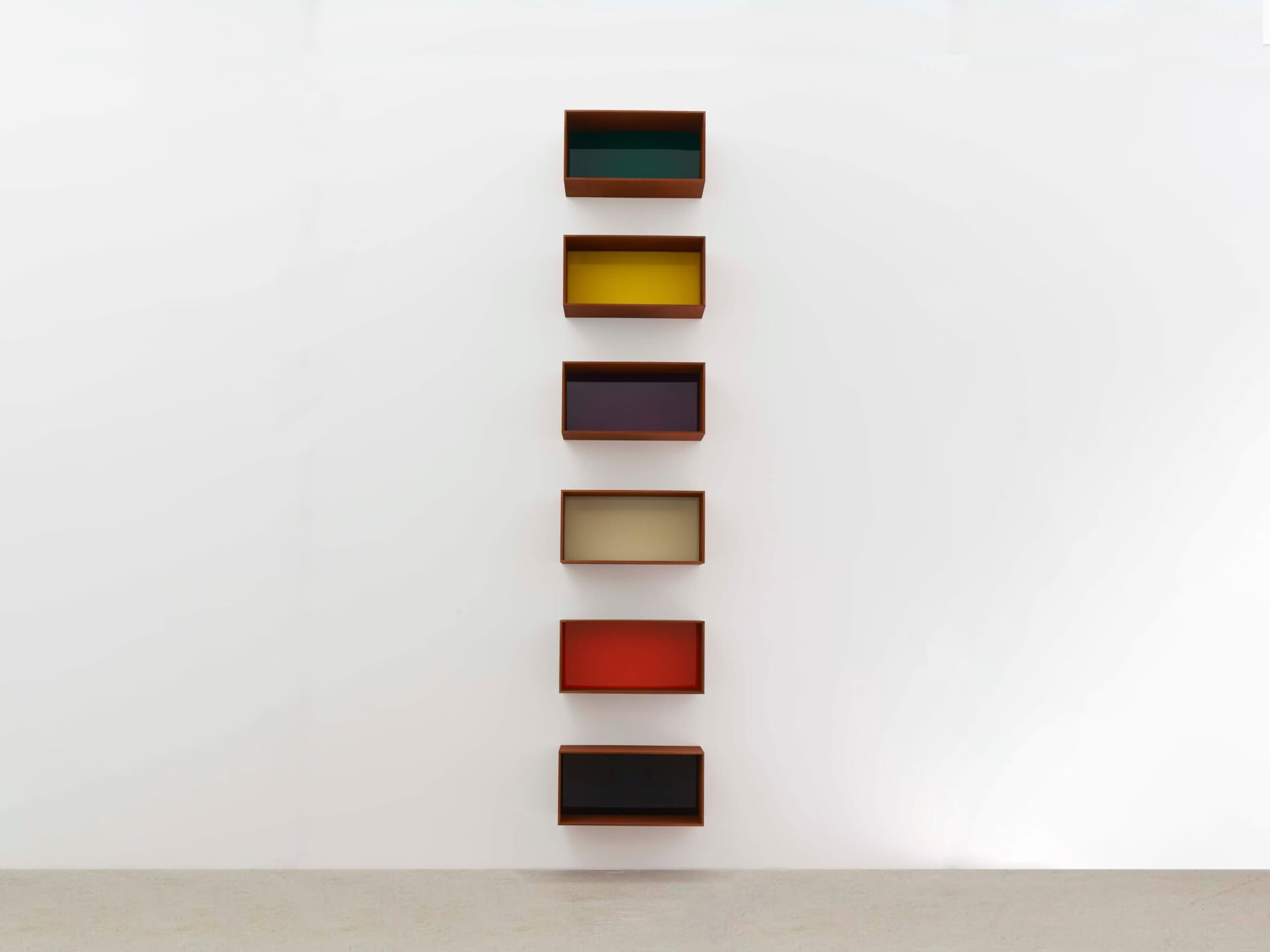
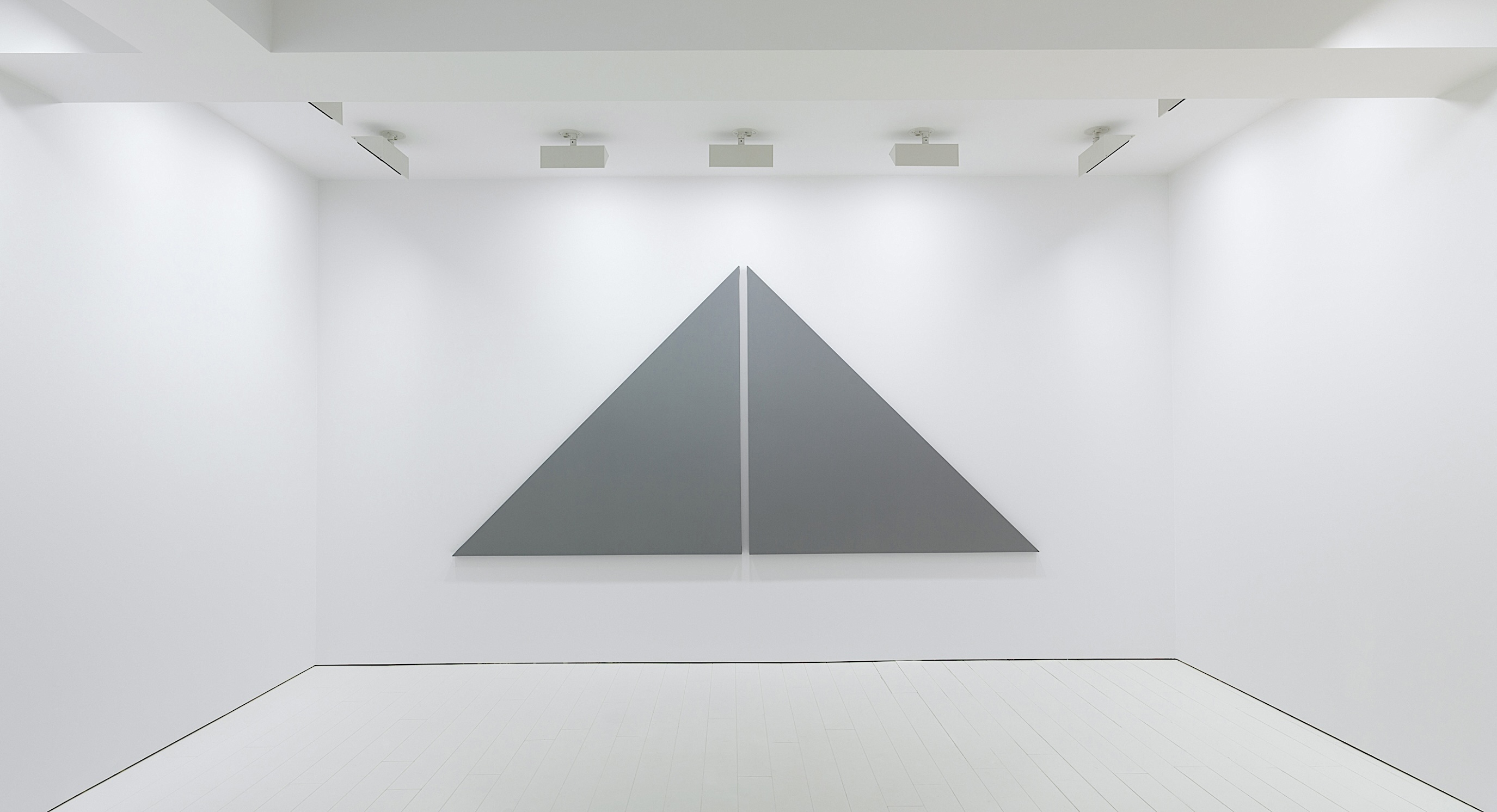
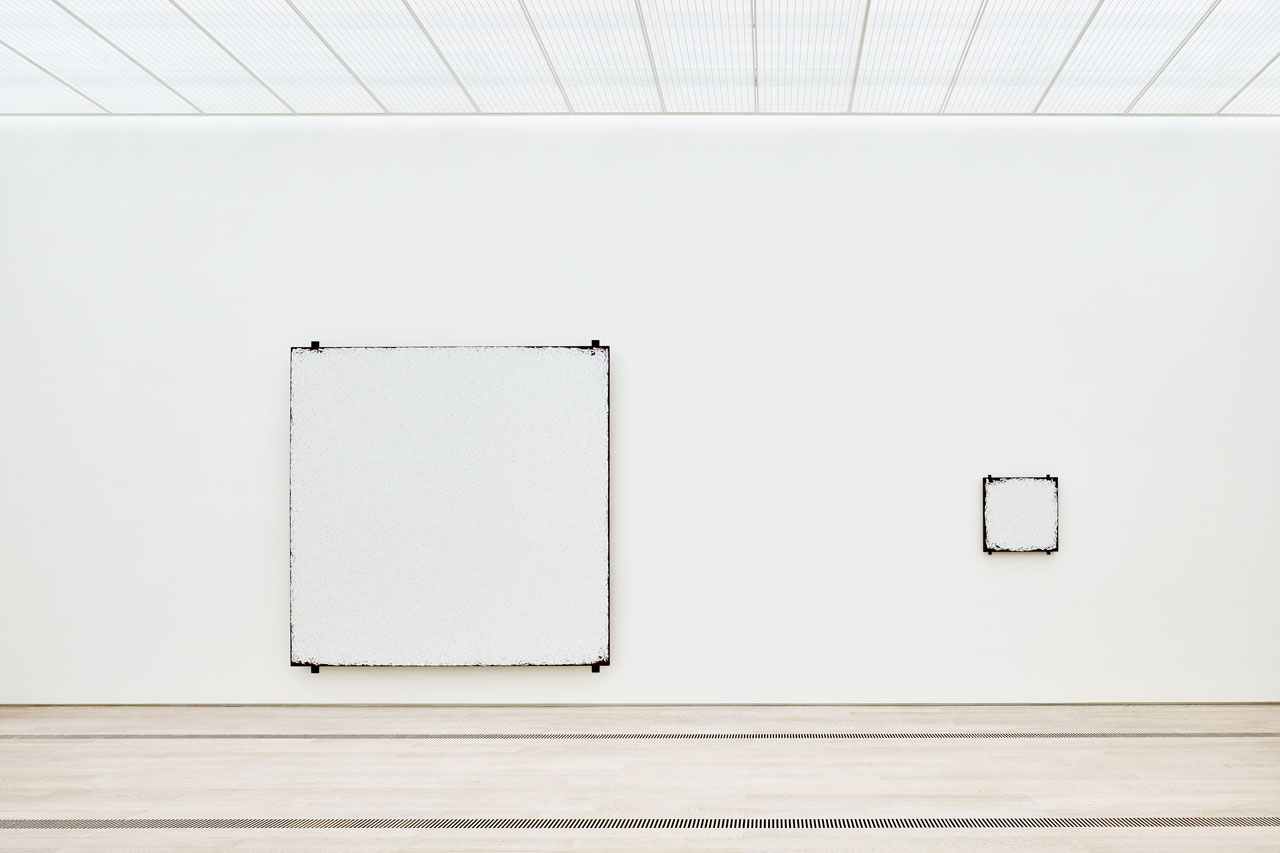
The visual lineage is easy to see. Ron Gorchov gives the easy reach: shaped painting, leaning support, abstraction pulled away from the rectangle. Jones’s ovals and verticals belong near that conversation, and a critically literate viewer will feel the adjacency quickly. But Gorchov is the resemblance more than the relation. The sharper structural comparison is Alan Charlton, whose grey monochromes share almost nothing with Jones on the surface. Charlton works by reducing painting until almost nothing can vary; Jones works by making support, surface, and removal visible as decisions. One makes necessity through uniformity. The other makes it through accumulation and subtraction.
The townhouse tests that difference. If every decision in a Jones painting has to answer for itself, the rooms make the demand sharper because the architecture around the works is already full of inherited answers. The mantel expects the portrait. The doorway frames passage. The threshold stages reception. The molding belongs to a grammar of lineage, continuity, and display. Jones’s paintings enter that grammar without becoming furniture, ornament, fixture, or memorial image. None of the room’s authority transfers to them. The demand falls back onto the works themselves. In a room where the architecture already knows why it is there, nothing in a Jones painting gets to remain background.
Even the support has to refuse what would make it easy.
Jones’s supports were not casually rough. In one interview, he described relying on a carpenter willing to make the shaped supports look as if they had been built by someone “who didn’t have a clue what he was doing carpentry wise.” Clumsiness is the place where construction is least expected. Roughness usually reads as sincerity, directness, the handmade truth that needs no defense. Jones makes it a condition instead. Before pigment, before dot, before title, the object has already been asked to resist competence.
The handmade look has to be built before it can look unbuilt.
That construction is most legible here in the quietest works. A lavender oval occupies a corner with almost no incident. A green horizontal oval sits above an ornate mantel, its worn field held between two small dots near the upper edge. A cream rectangle holds two small black dots. These are pared-down objects, closer to restraint than drama. Their surfaces have been worked, but the first read is spare: field, edge, one or two anchors, a support that will not disappear into the wall. They look easy. They are not. The reduction makes the decisions readable: where the field holds, where the edge interrupts it, where a dot lands, where pigment thins, where the object refuses to become only surface. Subtraction does the work that surface incident might have done.
Language does not release the works from that demand. Jones’s titles often refuse metaphor and stay close to inventory: colors named, circles counted, materials stated. Wash Linen with White Circle does not rescue the painting with poetry. It gives material, color, and form. Green Shape With Two Circles does the same. A title of this kind records a condition rather than interpreting it. The painting is returned to what happened inside it.
Surface is where that pressure slows down. Jones described his paintings as each taking on its own geology. The word can sound atmospheric: earthen, weathered, softened by time. But the geology of these works is not mood. It is closer to stratigraphy: surfaces laid down, thinned, rubbed, adjusted, the visible history of what the painting accumulated and what it relinquished. The quiet surfaces do not need to announce heavy process in order to carry it. Their calm depends on operations that have already happened. The object is not simply built up. It has been edited into necessity.
The vertical works sharpen the question because they carry this necessity upright. Thin, irregular, banded with color in sections, they appear across the rooms between the larger ovals and rectangles. They are not paintings in the conventional sense, but they do not settle into sculpture either. From a distance, they suggest objects with use: narrow upright things that might be held, carried, placed, or handled. Their height and proportion imply function. Their finish withholds it. They look like objects that should already know what they are for. They do not.
A circle above a fireplace once meant remembrance because the room knew how to receive it. A tool once carried use because a social order assigned it. A ritual object arrived with purpose before it arrived as form. Jones’s objects do not receive that kind of reason automatically. Lineage may frame them, and function or ritual may be recalled, but none of these assigns necessity in advance. Whatever force the object has, it has to make.
Jones named the problem directly. He described envying cultures in which objects came with reasons already attached — spiritual, religious, ritual — and said he had to invent such reasons for himself. The statement can sound like longing. It also names the problem the work is built to solve. The vertical works inherit no ritual purpose. The works placed in domestic positions inherit no portrait function. The titles inherit no poetic register. Each part occupies a position that older systems might have filled with given reason. Jones had to make the reason instead.
The rooms make that statement architectural. Mantel, stair, niche, and threshold each carry an inherited reason for objects to appear. The paintings occupy that grammar without accepting its terms. Above the fireplace, the circle or oval does not become an ancestor. Between rooms, the vertical does not become a tool. On the wall, the dot does not become a sign. These objects do not reject meaning by becoming mute. They make meaning harder, slower, more physical.
Material honesty is too small a category. Jones’s paintings are physical, but their physicality is not a guarantee of truth. It is where truth has to be made. The awkward support, the worked surface, the title held flat, the dot placed with restraint, the vertical form that remembers use without becoming useful: each part makes the object answer for itself.
A tribute asked the paintings to return the life. The frame, the timing, the architecture of the townhouse, the slot above the fireplace — all of it was prepared to receive the kind of object that could close a man into image. Jones’s paintings did not provide one. The room expected memory. The works gave something stranger and more exacting: an object made to carry necessity without borrowing it from likeness, function, or belief.
The paintings do not preserve the life. They preserve the work of making an object necessary.
Jones’s paintings enter rooms already fluent in remembrance: mantel, doorway, threshold, portrait position. They accept the placement but refuse the inherited function. Support, edge, surface, dot, title, and awkward construction carry the pressure instead, making necessity from decisions that older systems would have assigned in advance.
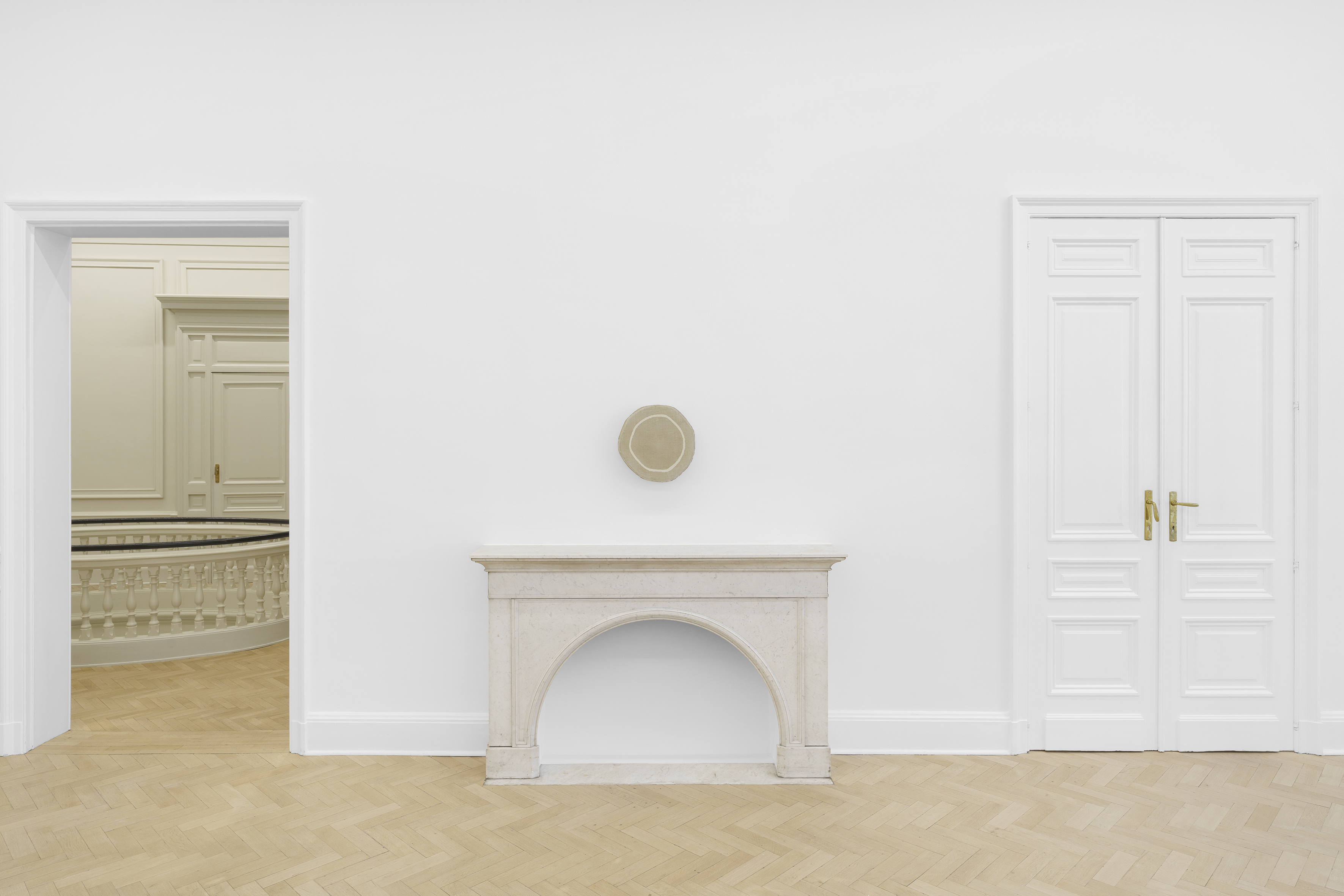
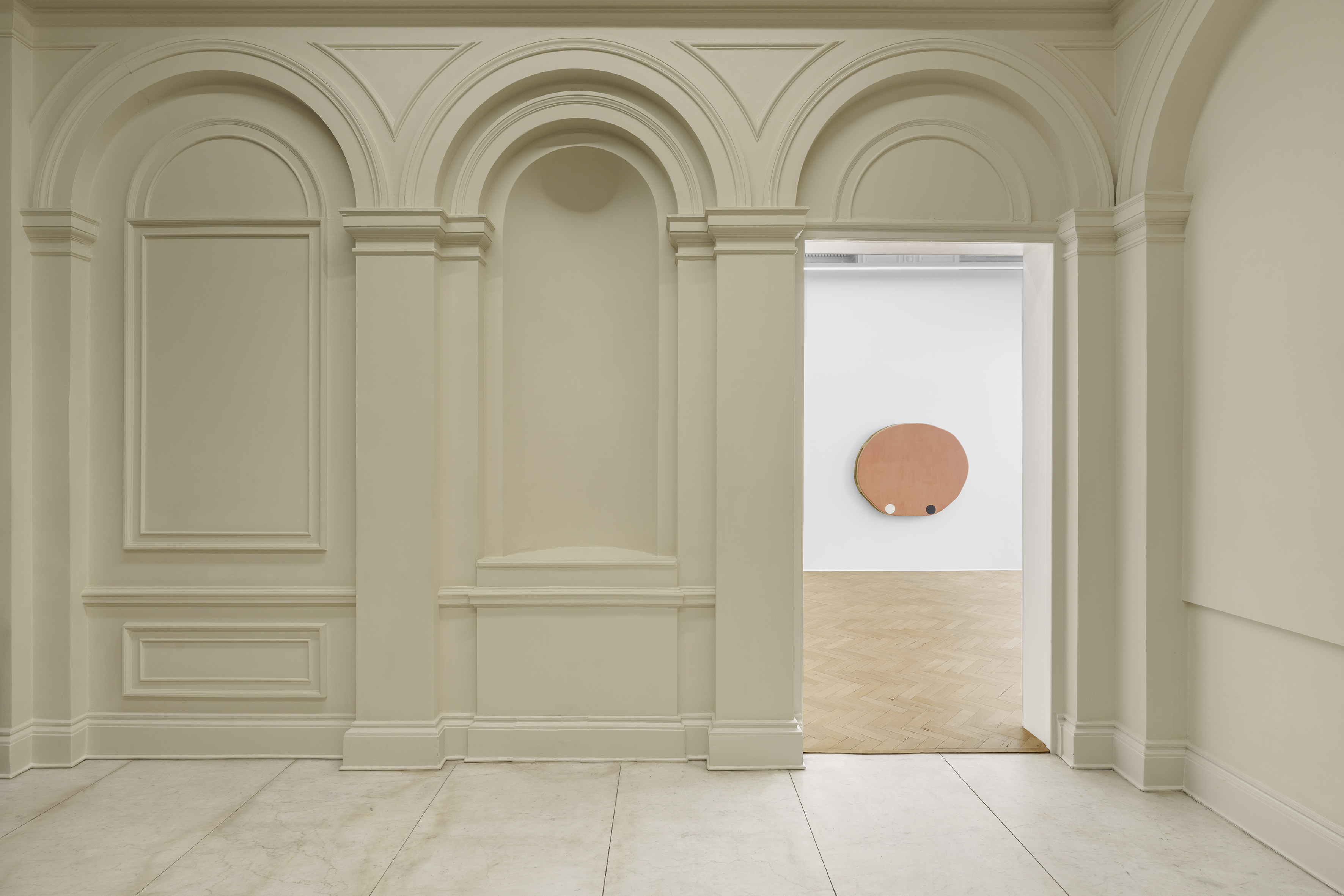
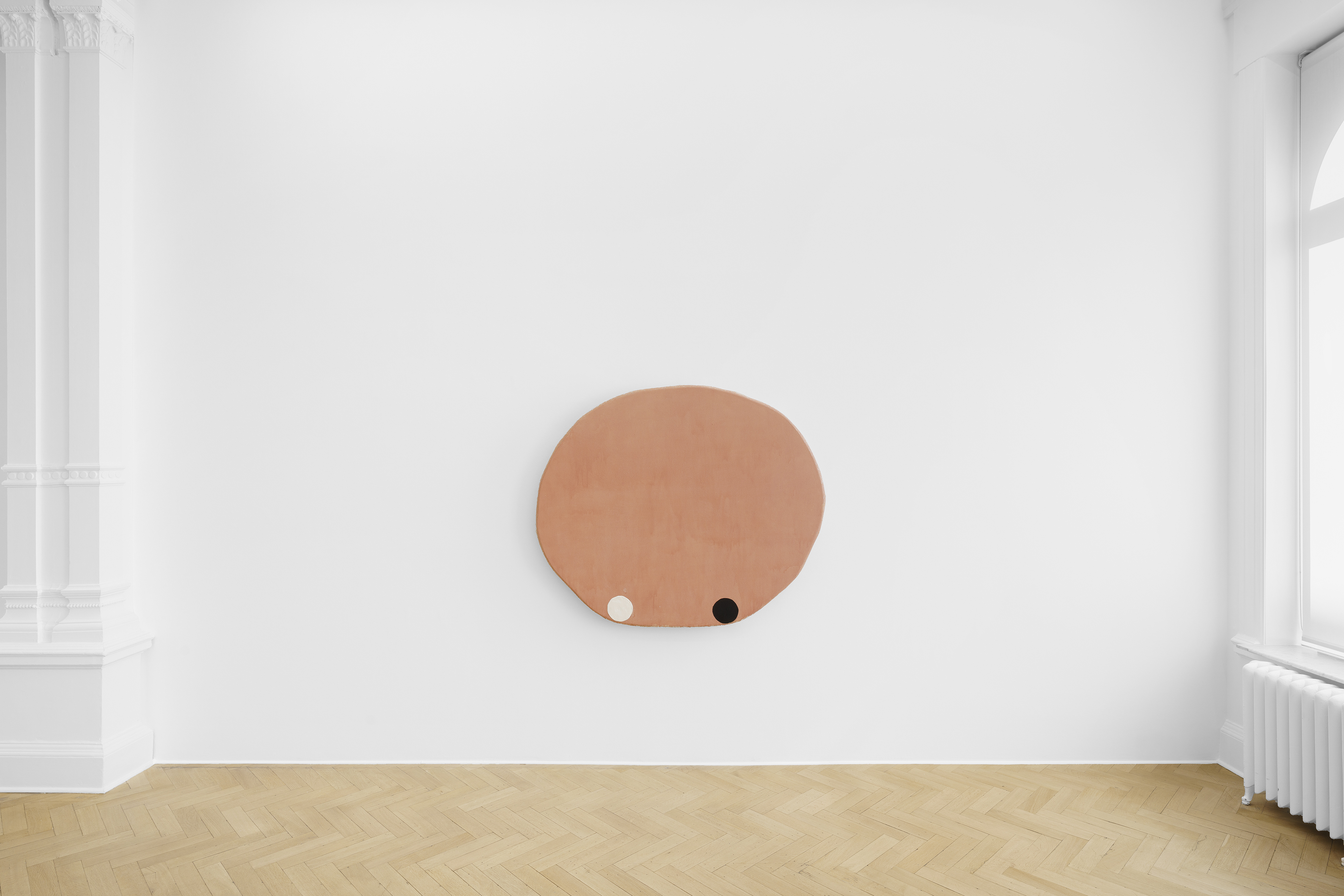
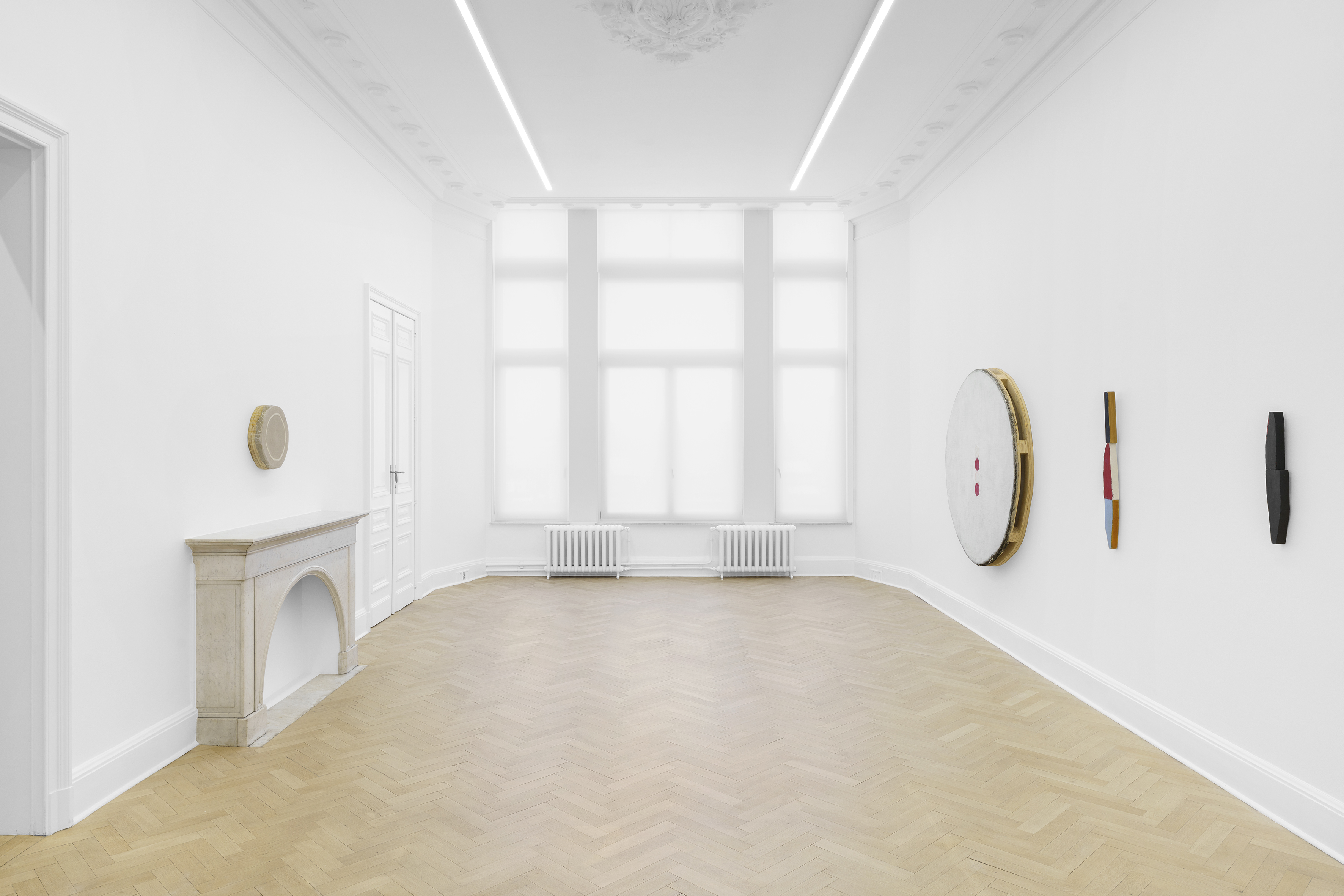
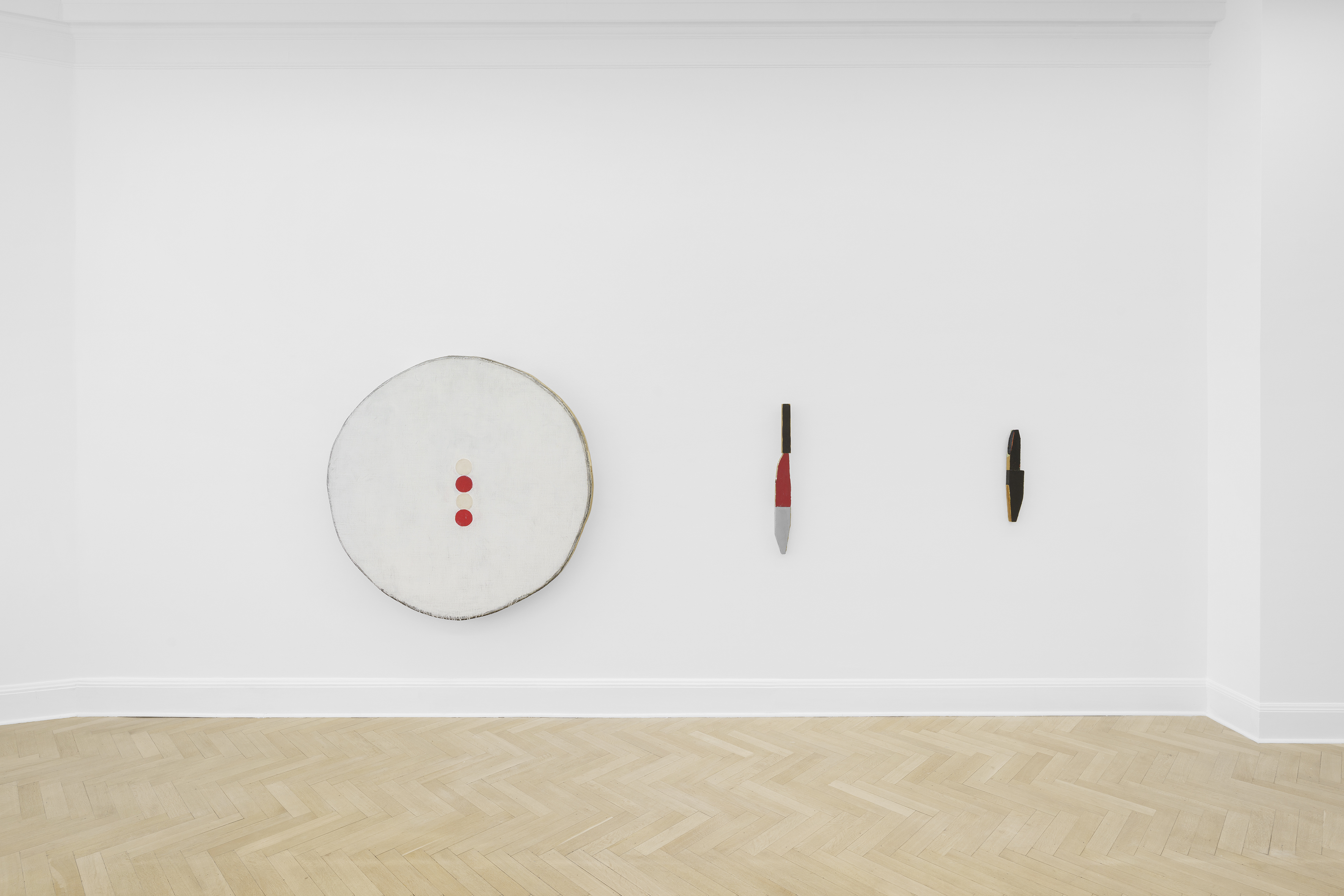
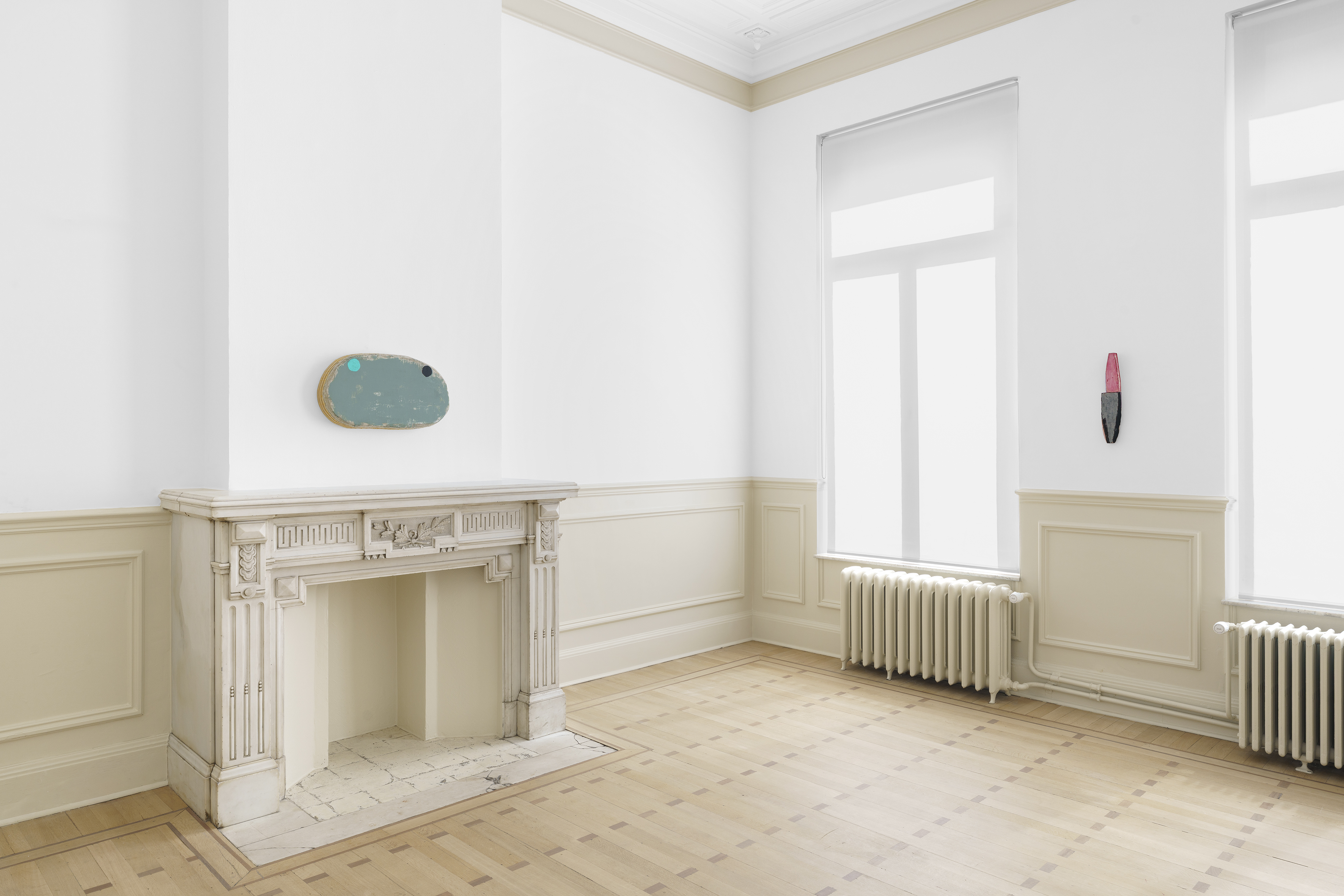
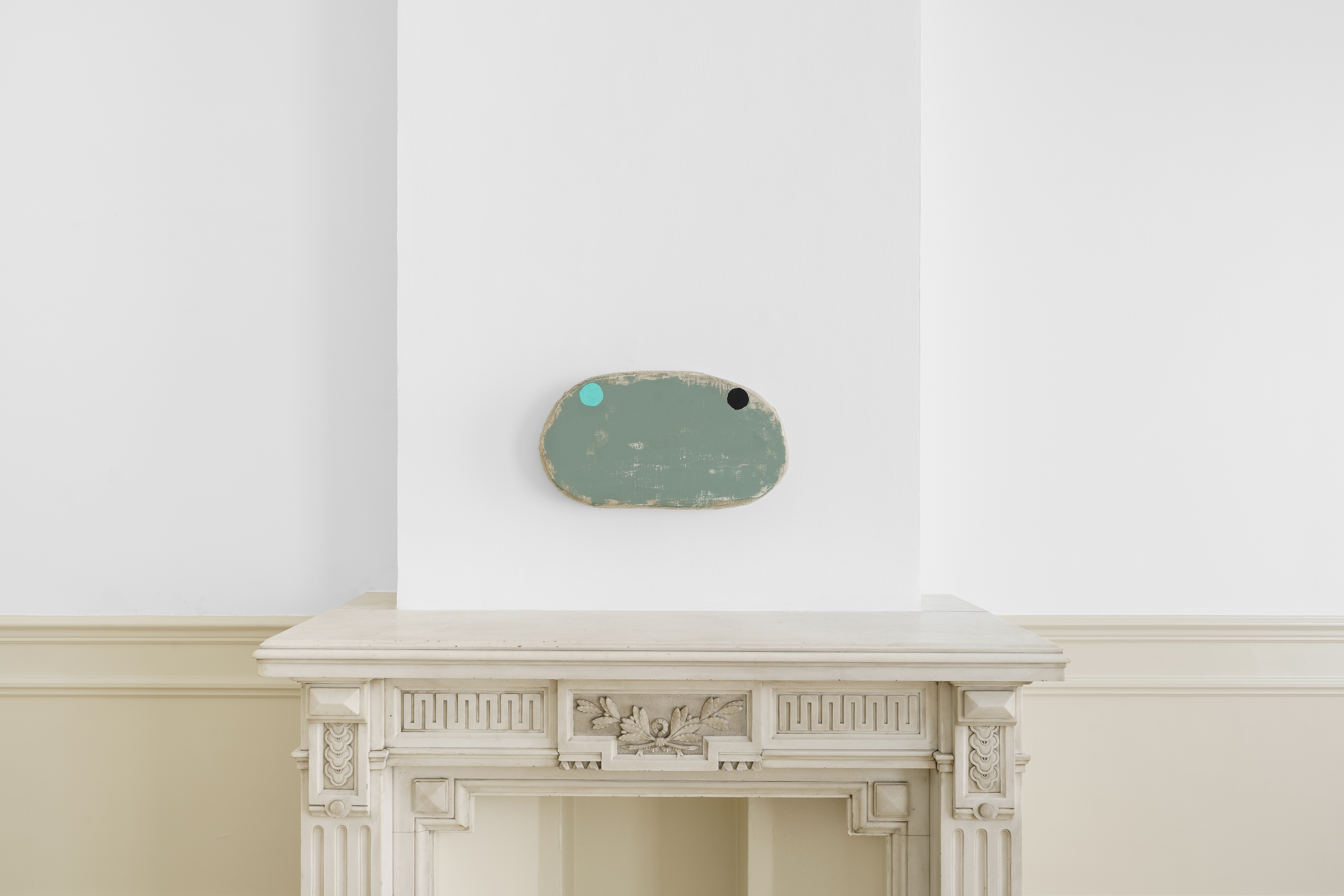
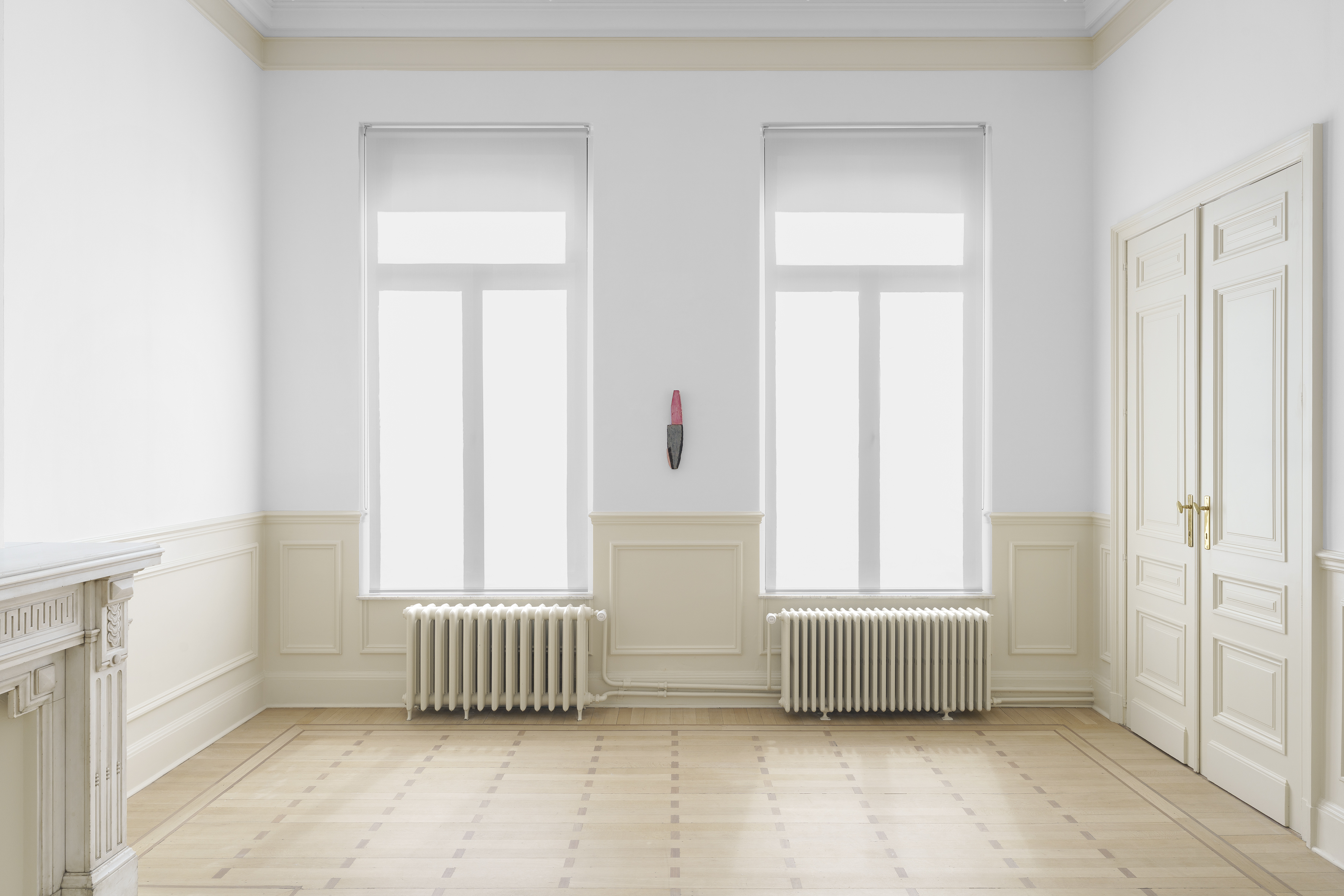
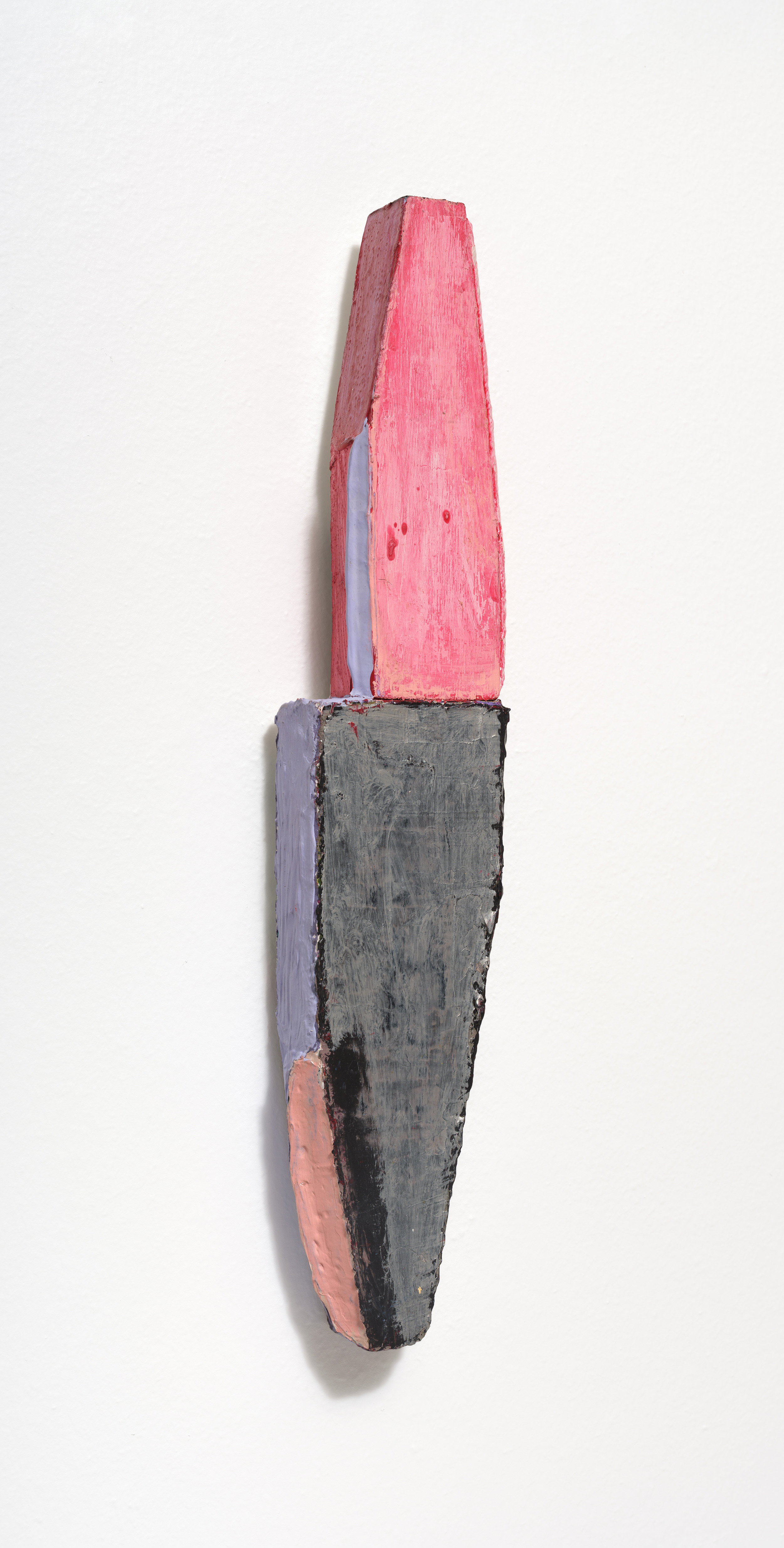
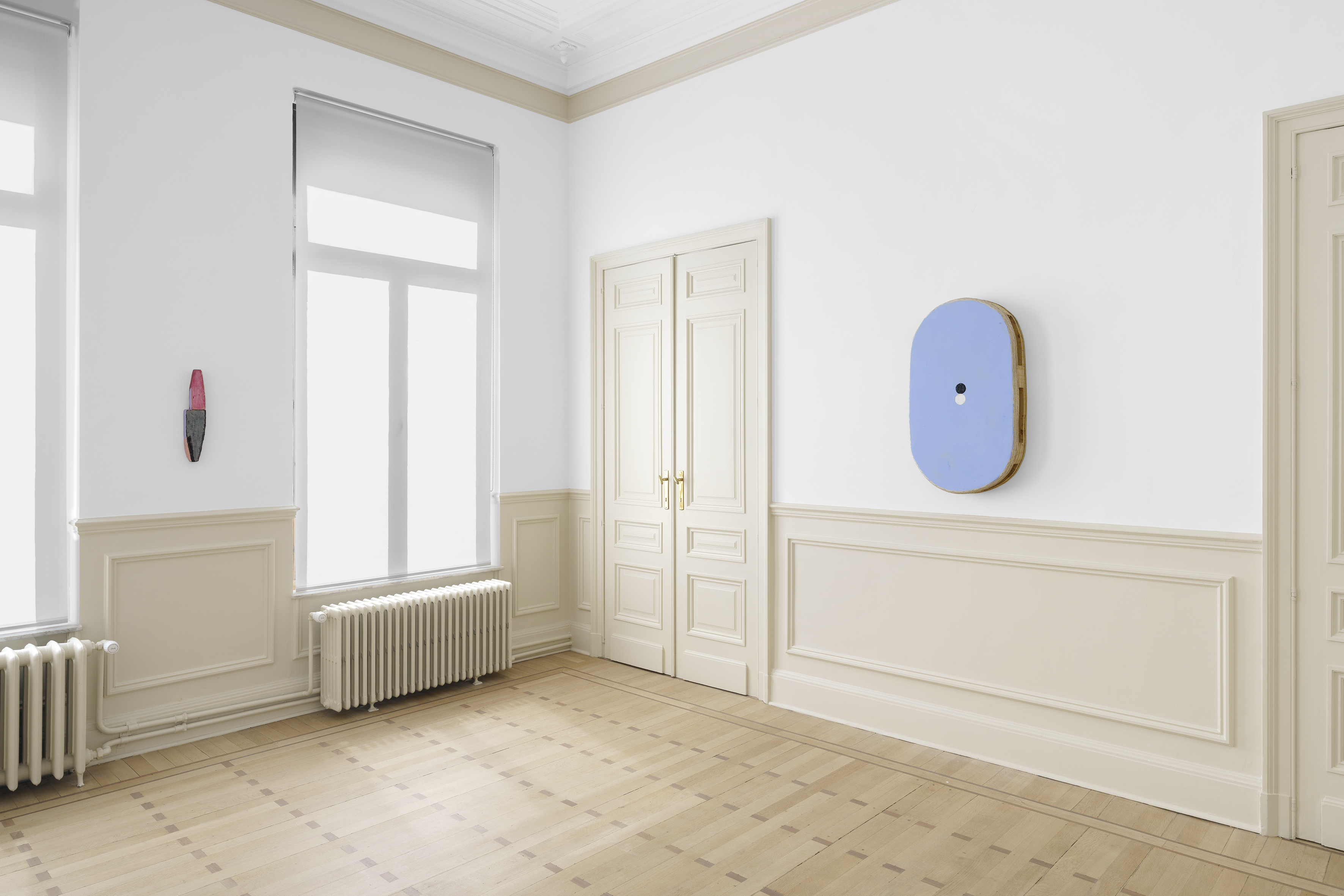
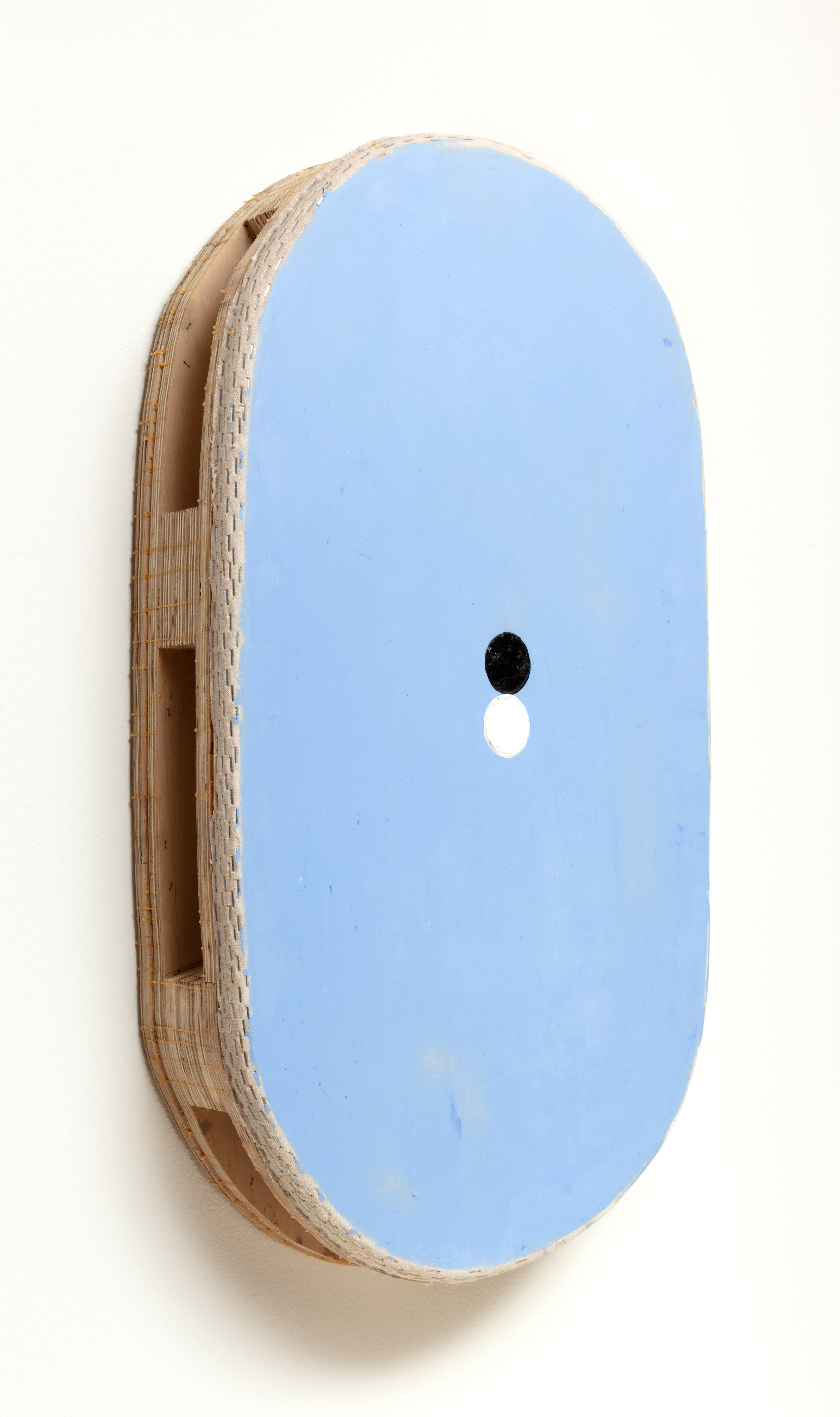
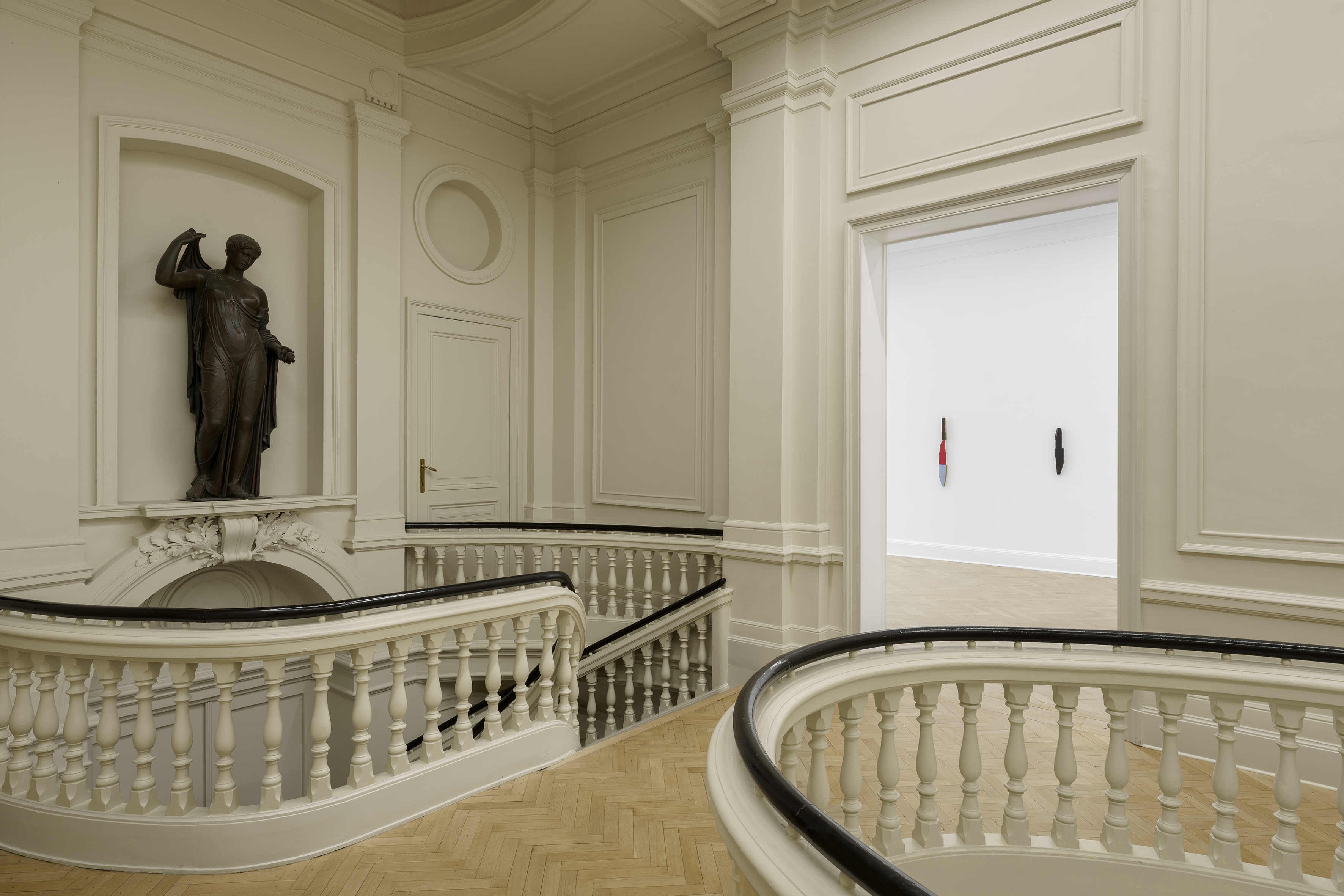
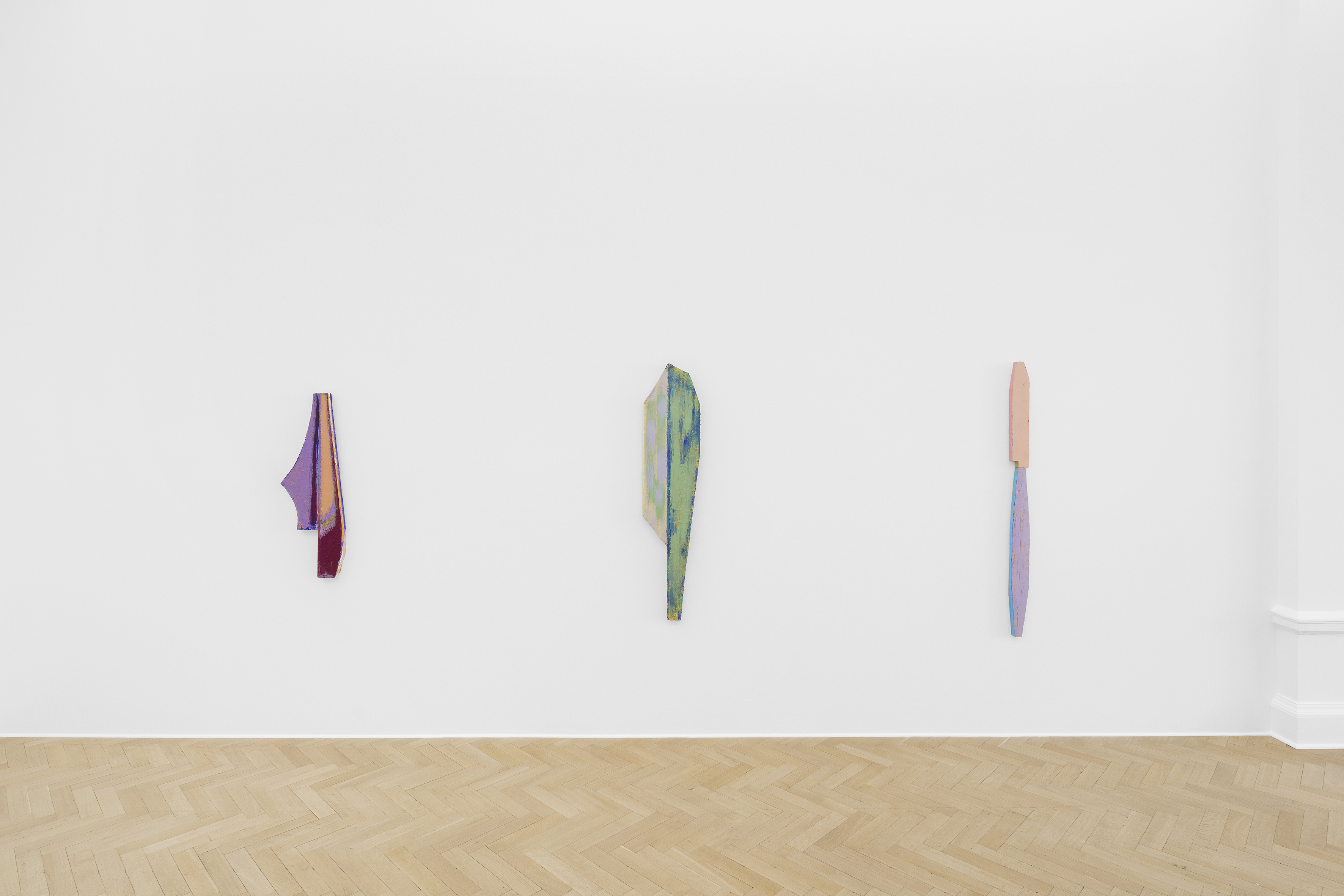
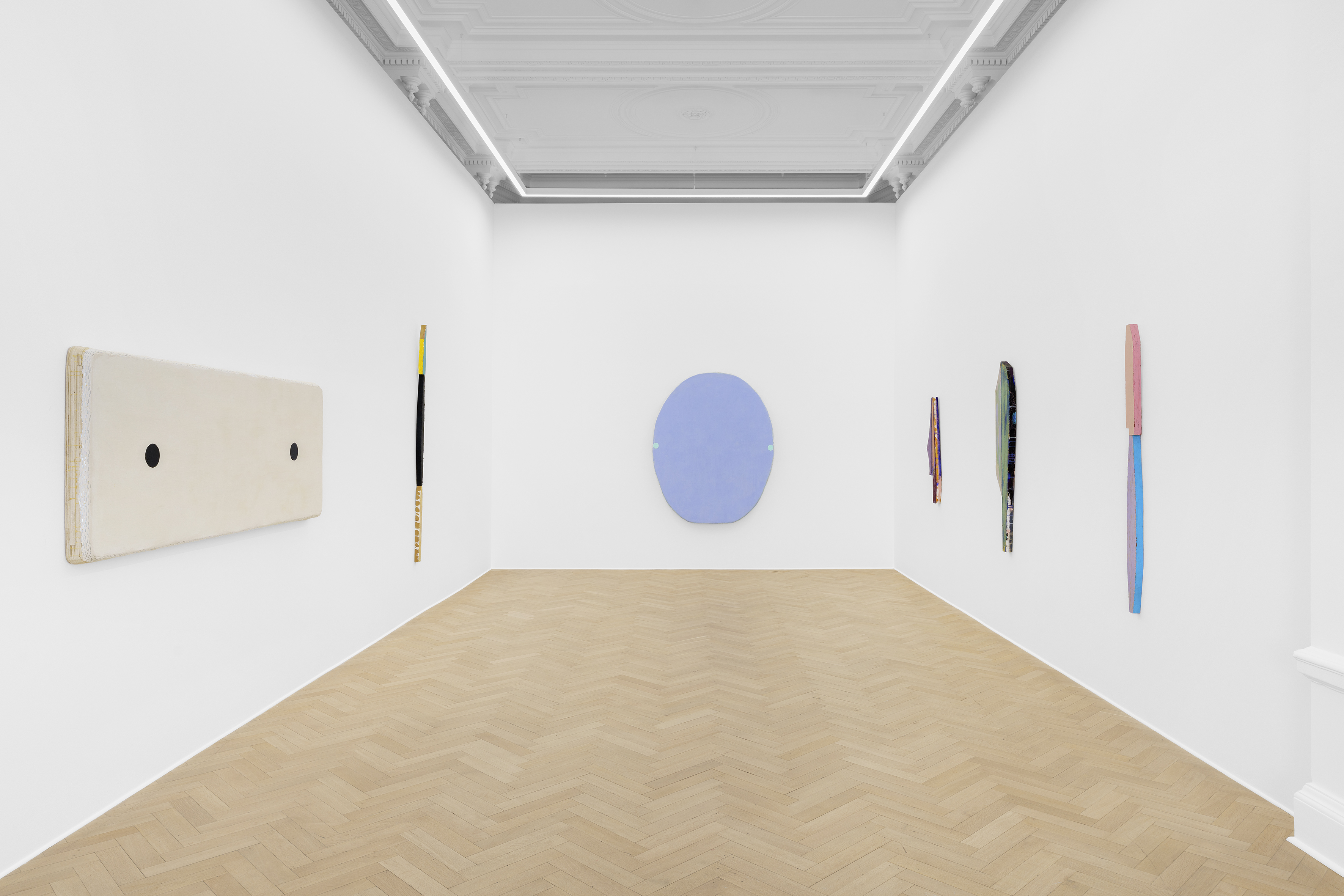
Cover Image: Exhibition view, Tribute to Otis Jones, Sorry We’re Closed, Brussels, 28.05.26 → 04.07.26. © Estate of Otis Jones. Courtesy of the Estate of Otis Jones and Sorry We’re Closed, Brussels.
All images © their respective rights holders.
Image rights & attribution →