
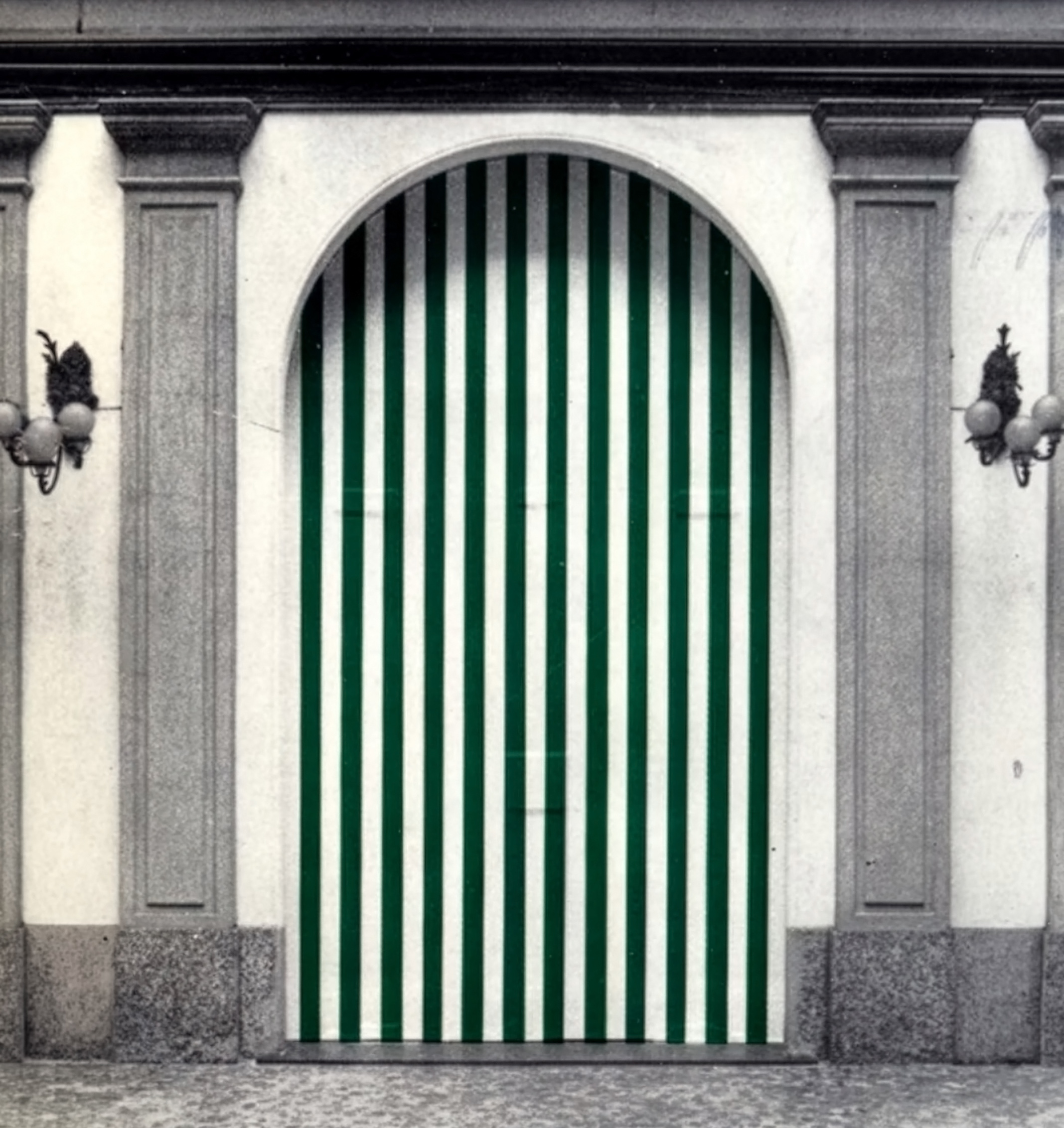


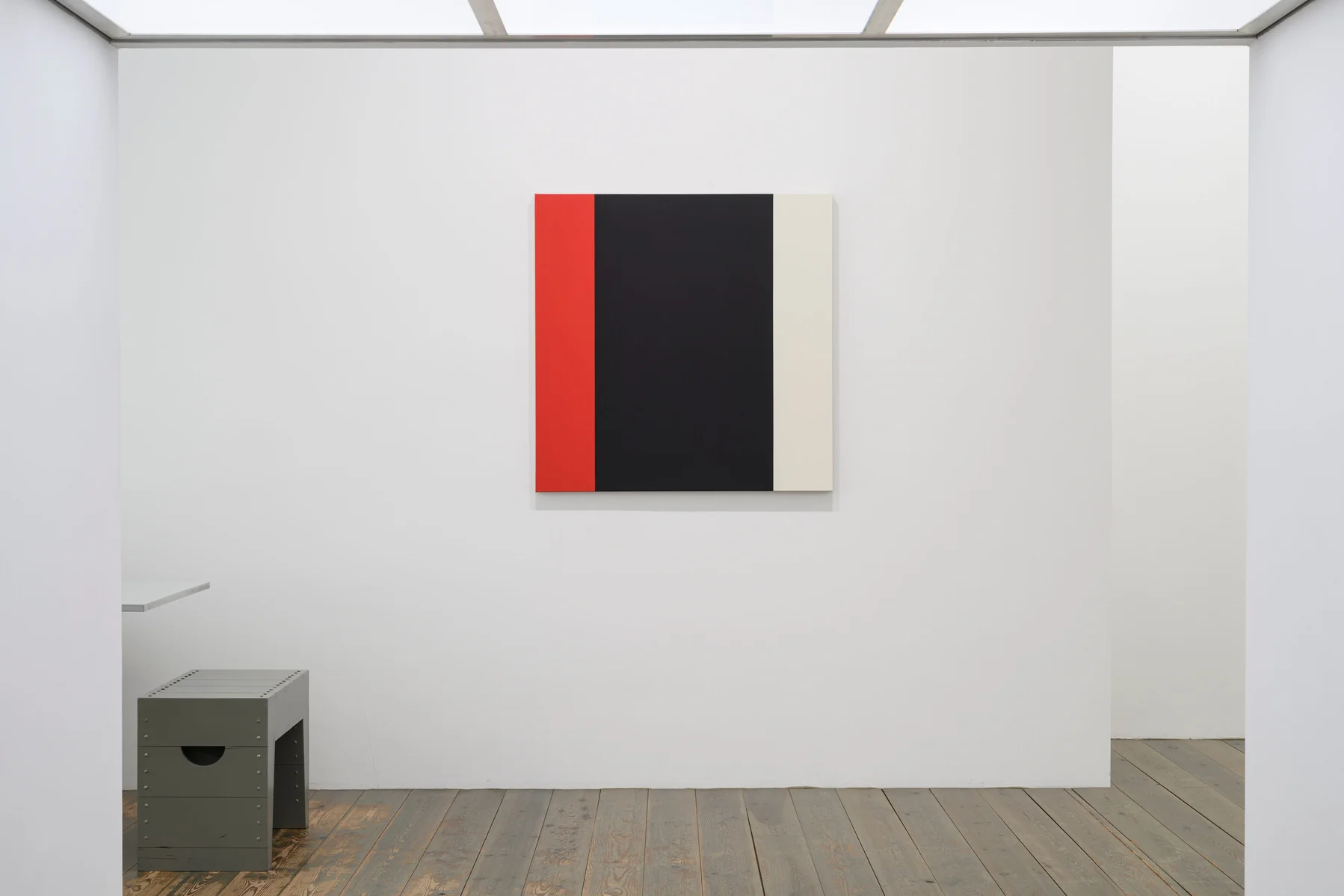
In Passage (Black, White), the arrangement starts to move.
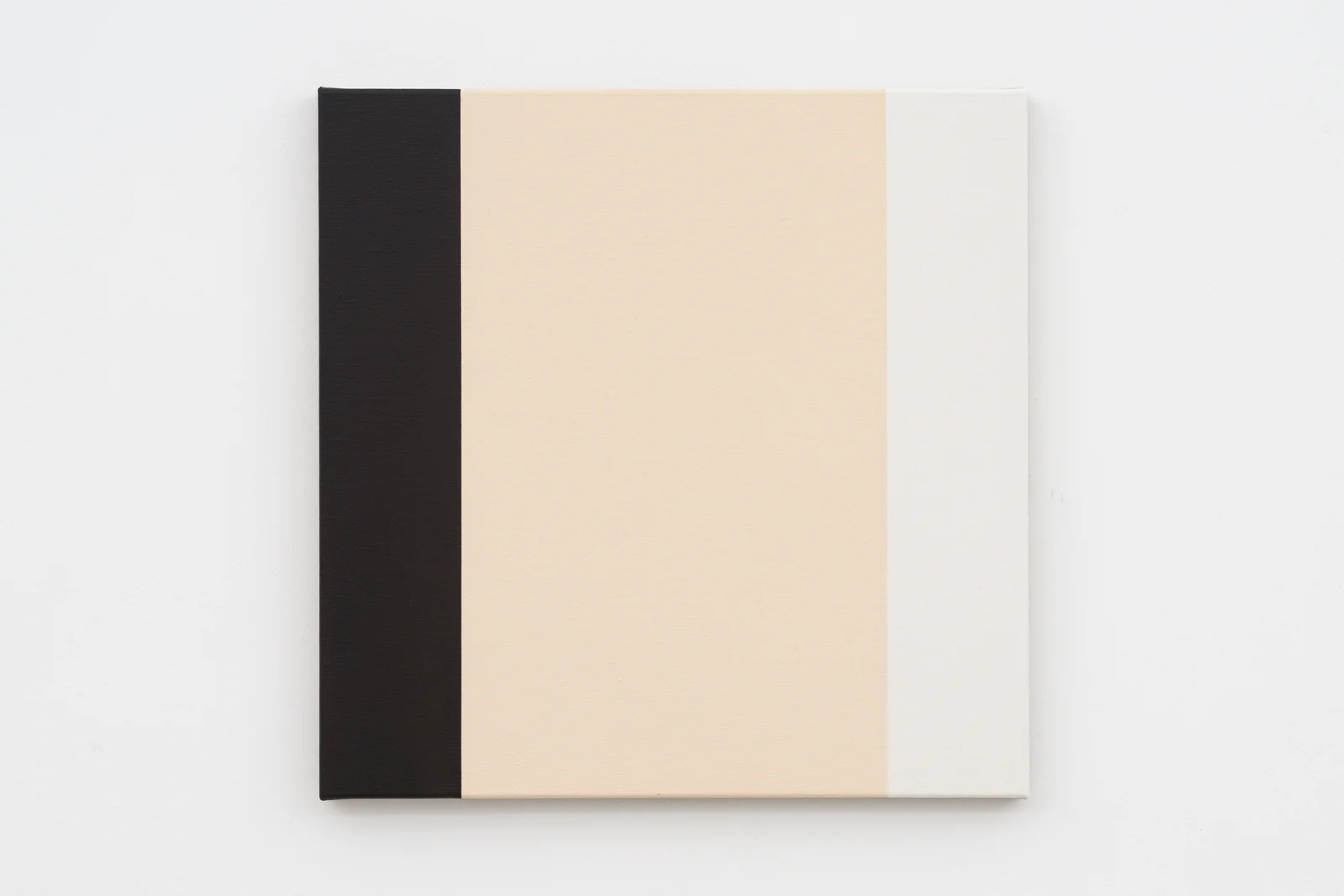
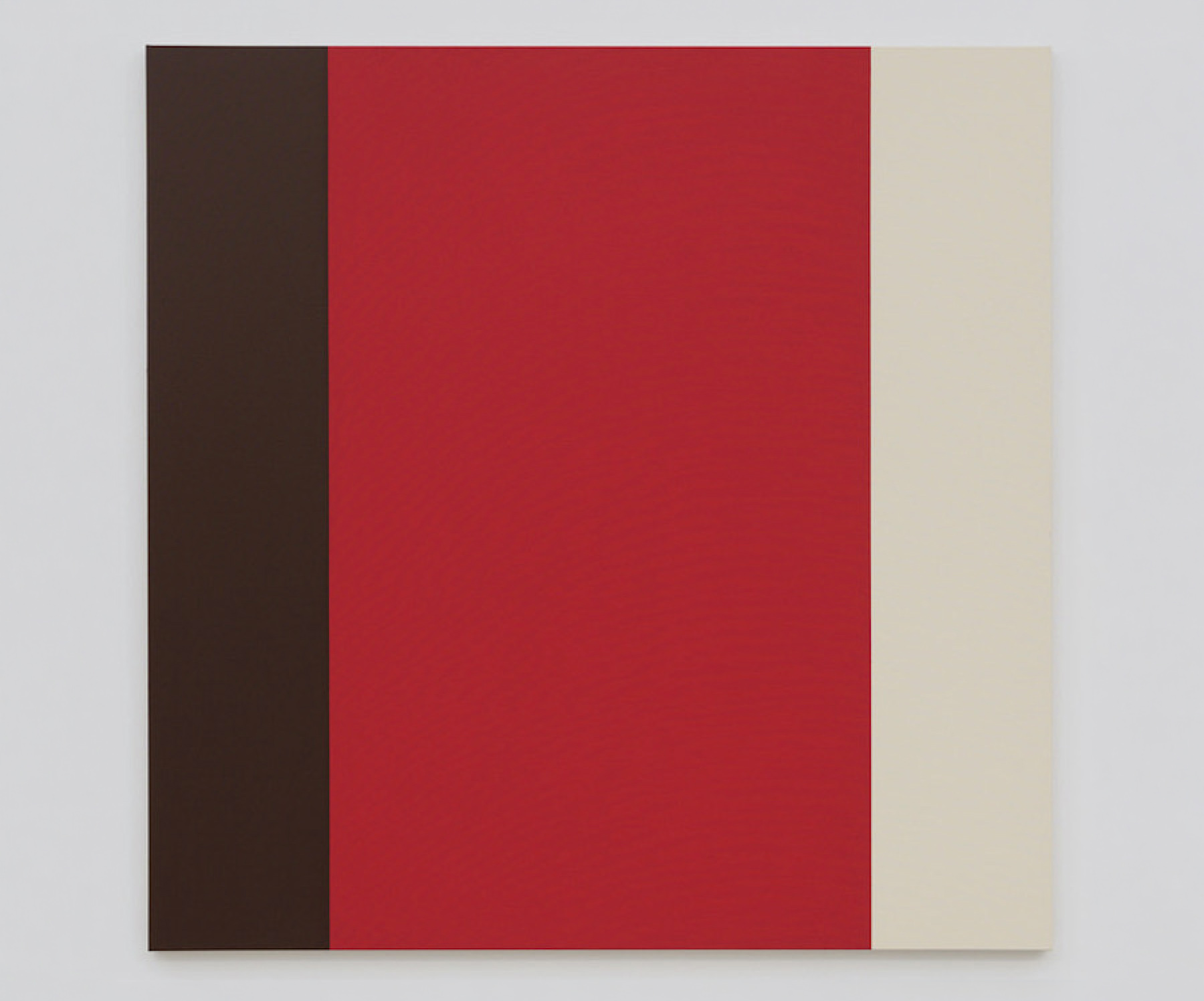
A square painting should hold still. Standing in front of it, the body understands the terms quickly: three vertical fields, hard edges, oil on linen, proportion measured without visible excess. There is no image to enter, no mark to follow, no visible drama of touch. The painting seems already decided.
Then the eye reaches the division between two colors, and the stillness begins to change.
The edge remains hard. One color stops. Another begins. There is no blur, no atmospheric transition, no brushwork easing one tone into the next. But the eye does not stop where the paint stops. It moves across the division and registers the shift as movement from one tonal condition into another. The painting produces movement without loosening the boundary. The eye performs the modulation the paint withholds.
Aalders’ paintings belong to a familiar language of measured abstraction: proportion, color, seriality, the Dutch inheritance of geometric order. That placement is useful. It recognizes the discipline of measurement, the clean division, the belief that a painting can be built from proportion rather than image. But the placement cannot finish the looking. It describes the painting’s order before it registers what that order allows to happen. The division is not only a compositional device. It is the place where relation becomes active.
The edge matters because it keeps the transition from being given in advance. If the colors softened into one another, the paint would carry the passage for the viewer. Aalders keeps the fields distinct, and that clarity leaves the relation to be completed in perception. The hard edge does not prevent movement. It makes movement visible.
Only then does Passage become exact. The title is not a poetic gesture toward transition, travel, or threshold. By the time the word appears, the eye has already done what it names. Passage is descriptive, not figurative. The painting stages transition rather than illustrating it. In painting, passage carries a more precise history: the art-historical term associated with Cézanne’s handling of transitions between planes, where one tone modulates into another across an edge that might otherwise keep them separate. Aalders takes up that problem at a different site. Cézanne lets the edge soften through paint. Aalders keeps the edge intact. The modulation no longer belongs to the surface alone. It begins in perception.
The square matters because it gives the encounter no easy direction. It is not portrait, organized around the figure. It is not landscape, organized around horizon and lateral distance. It holds the body before an object whose movement has to be produced through looking.
The large Passage paintings carry that operation at body scale. Passage (Black, White) makes it most legible because the tonal distance is wide. The eye moves through a strong sequence of difference, from one condition into another, while the divisions hold firm. In the other large squares, the same operation becomes less immediate. The passage is still there, but it appears through chromatic adjustment, delay, and closer looking.
The smaller Passage works compress the problem. At 50 by 50 centimeters, the paintings ask for a nearer kind of attention. The body comes closer. The eye does the same work in a tighter field. The crossing is no longer carried by scale or strong tonal distance alone. It happens quietly, at the scale of reading. The threshold contracts, but the edge keeps its role.
Aalders does not dissolve one color into the next. He places colors in conditions where relation has to be experienced as movement. The paint does not blend, dramatize, or carry transition through touch. It leaves the edge clear enough for looking to cross it.
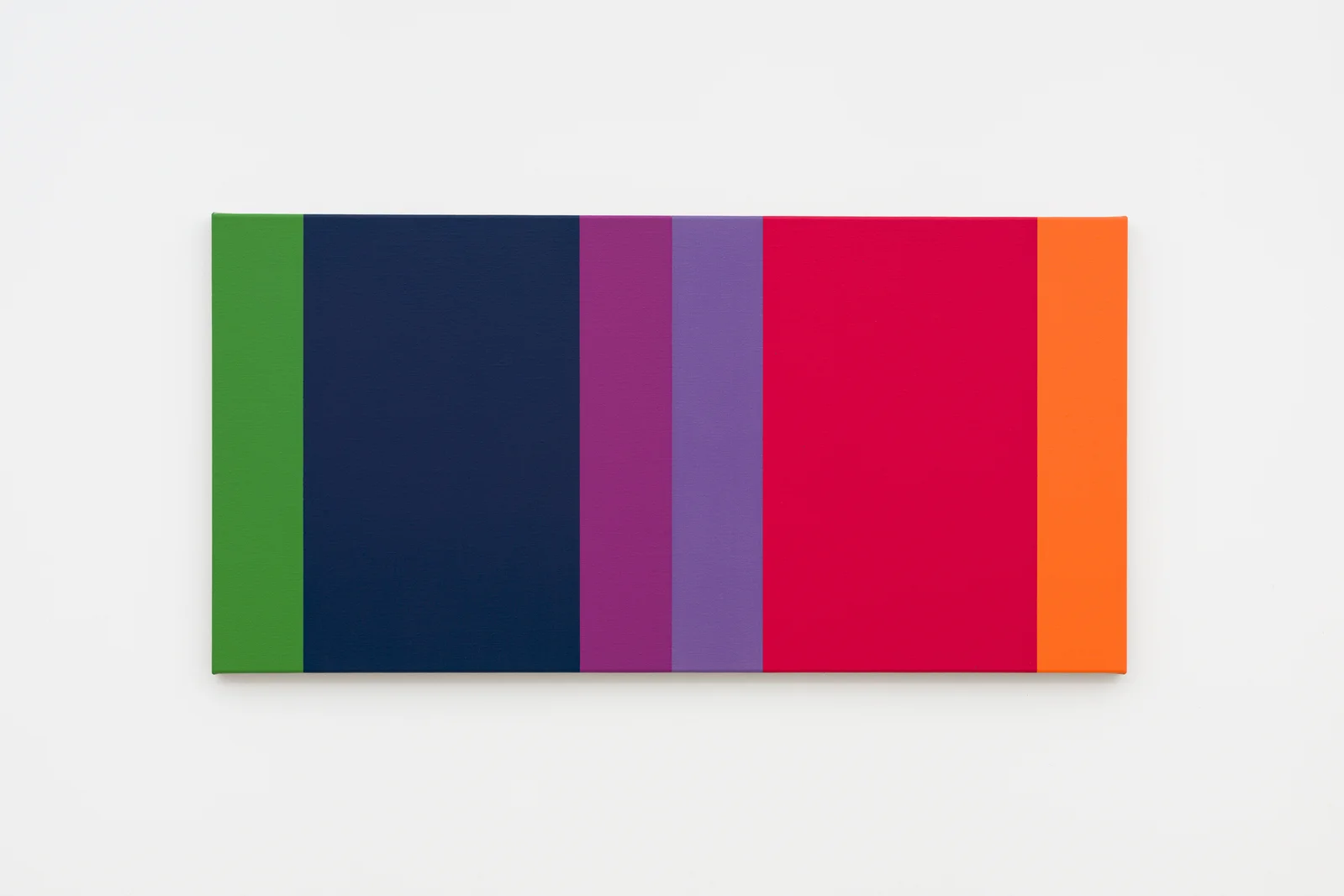
Bridge changes the format and gives the same problem another behavior. In Bridge (Orange), the painting turns horizontal: 50 by 100 centimeters, a one-to-two rectangle built for lateral scan. Passage is square, frontal, vertical, tied to the standing body and the crossing of tonal steps. Bridge is horizontal, extended, closer to reading. The eye moves along it rather than into it.
Bridge is not simply a wider Passage. The grid is doubled. The color count expands. Where Passage holds three colors in a frontal sequence, Bridge holds six colors in a wider network of adjacency. No color settles into isolation. Each one is read through its neighbors, and those neighbors are changed by the colors beside them. Across the Bridge paintings, the horizontal format makes relation continuous. Color is no longer encountered as one threshold, but as a sequence of linked positions.
Passage and Bridge are not two parallel motifs. They are two verbs of the same structure. In the square paintings, division produces crossing: the eye moves from one tonal condition into another across a hard edge. In the horizontal paintings, division produces connection: color is read through adjacency, sequence, and lateral relation. The format changes the behavior. The logic remains.
Aalders has been working with division, sequence, proportion, color, and optical relation for years. Passage does not announce a break from that practice. It gives a more active name to something already present in it. What could be called order now appears as action.
Stand before the paintings long enough and the geometry recedes without disappearing. The restraint remains. The divisions remain exact. Passage is not a metaphor because nothing has to be imagined. The movement has already taken place in the looking.
Steven Aalders’ Passage and Bridge paintings turn division into an active site. The square works make color cross; the horizontal works make color connect. The title is not metaphor because the movement has already taken place in the looking.
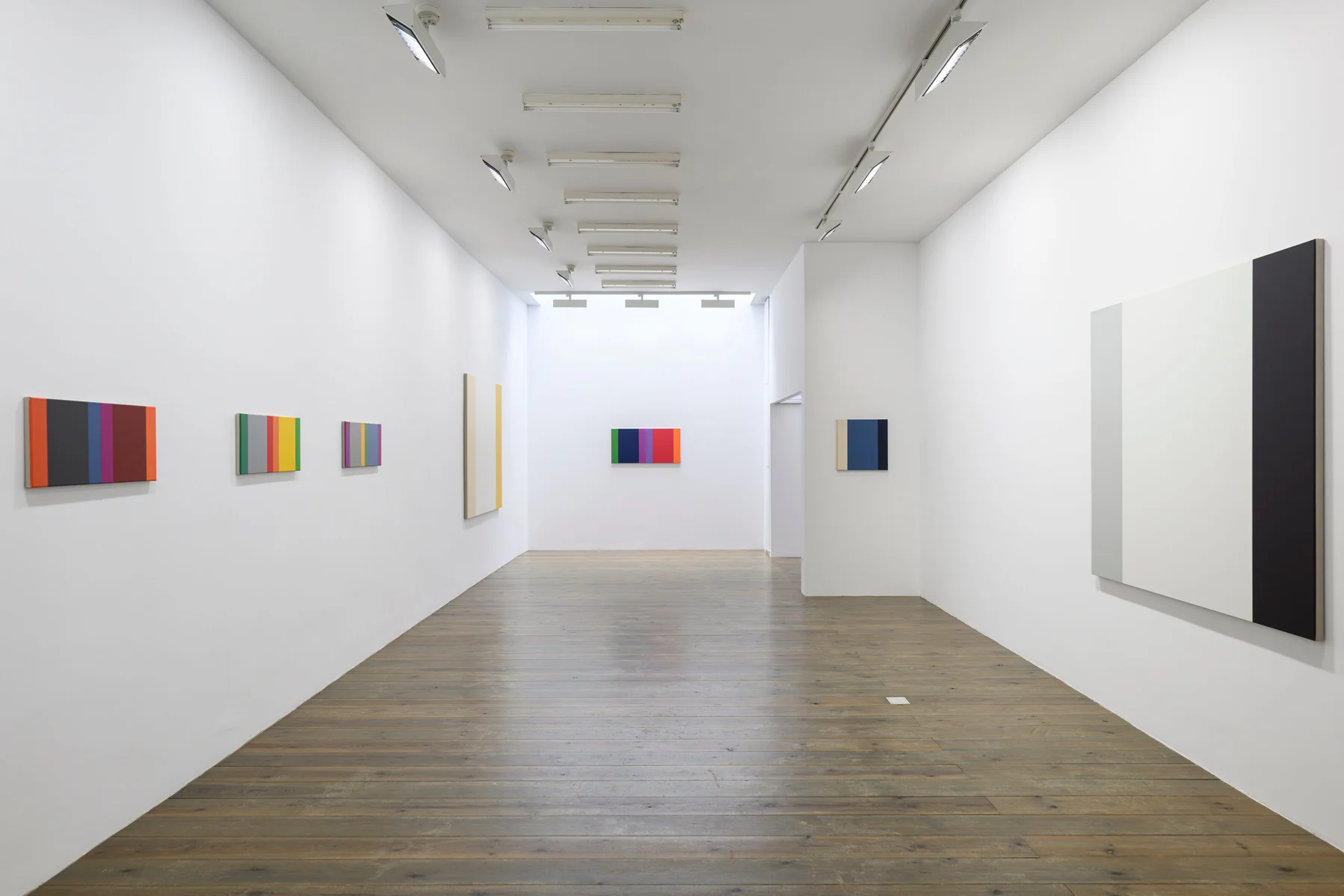


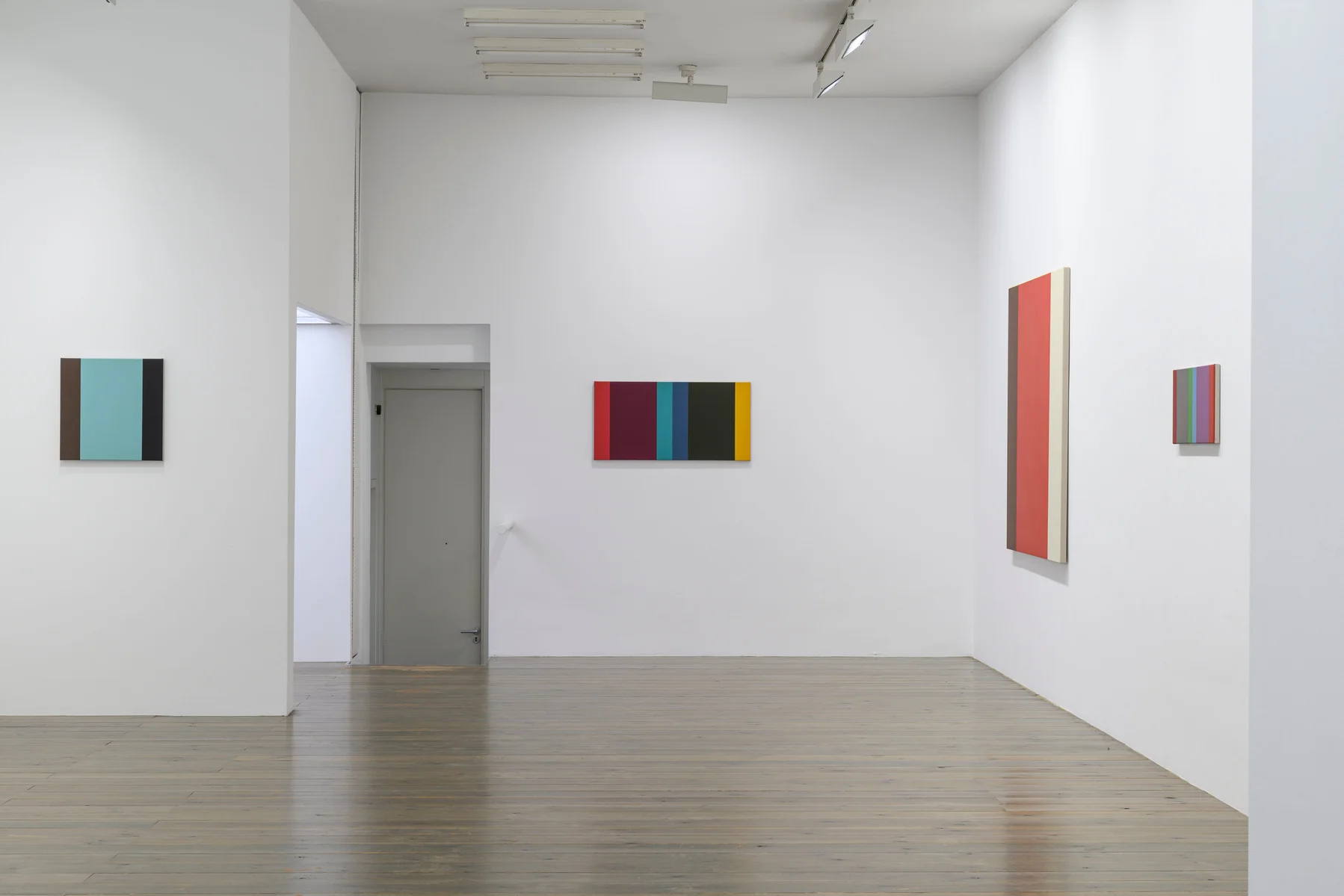
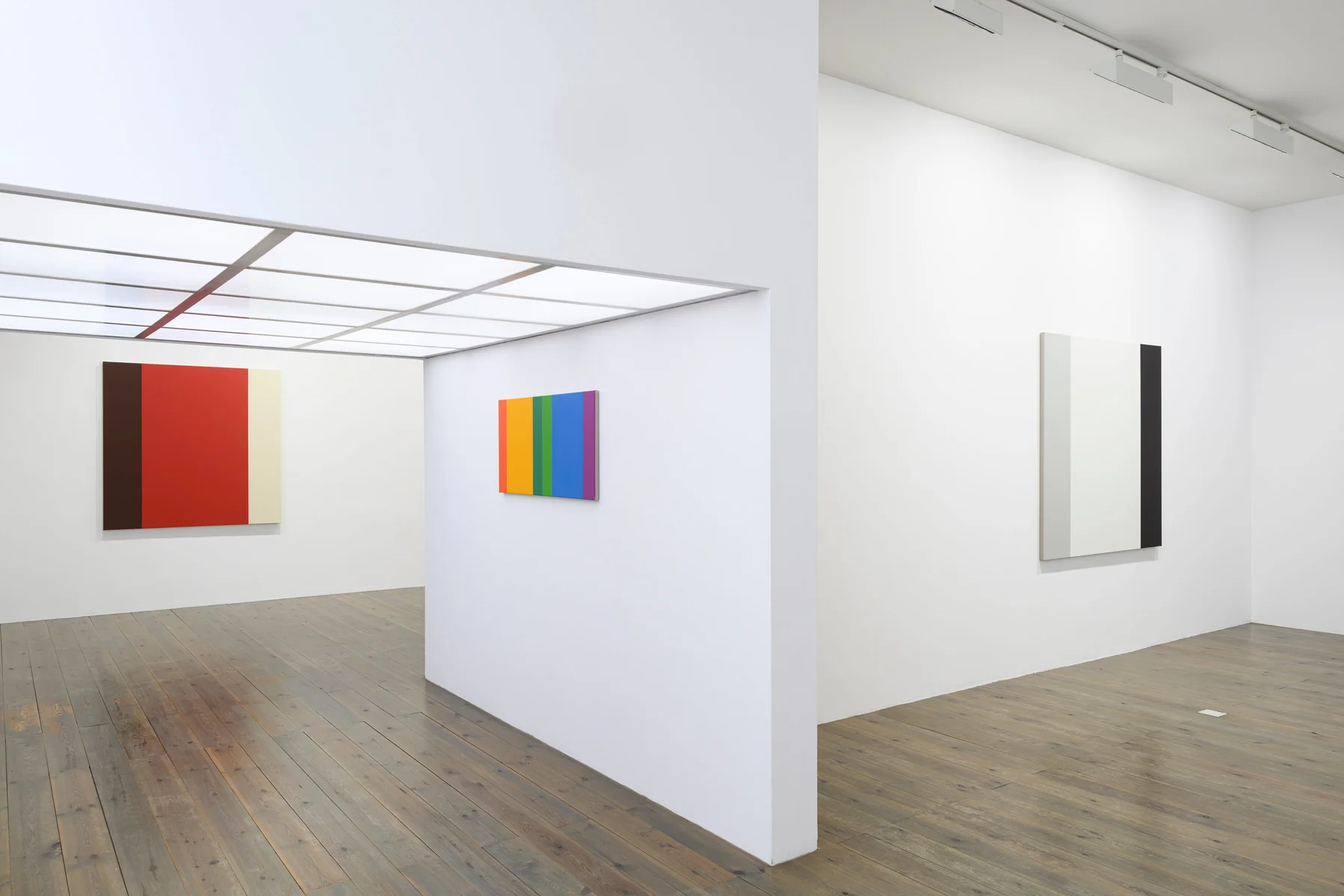
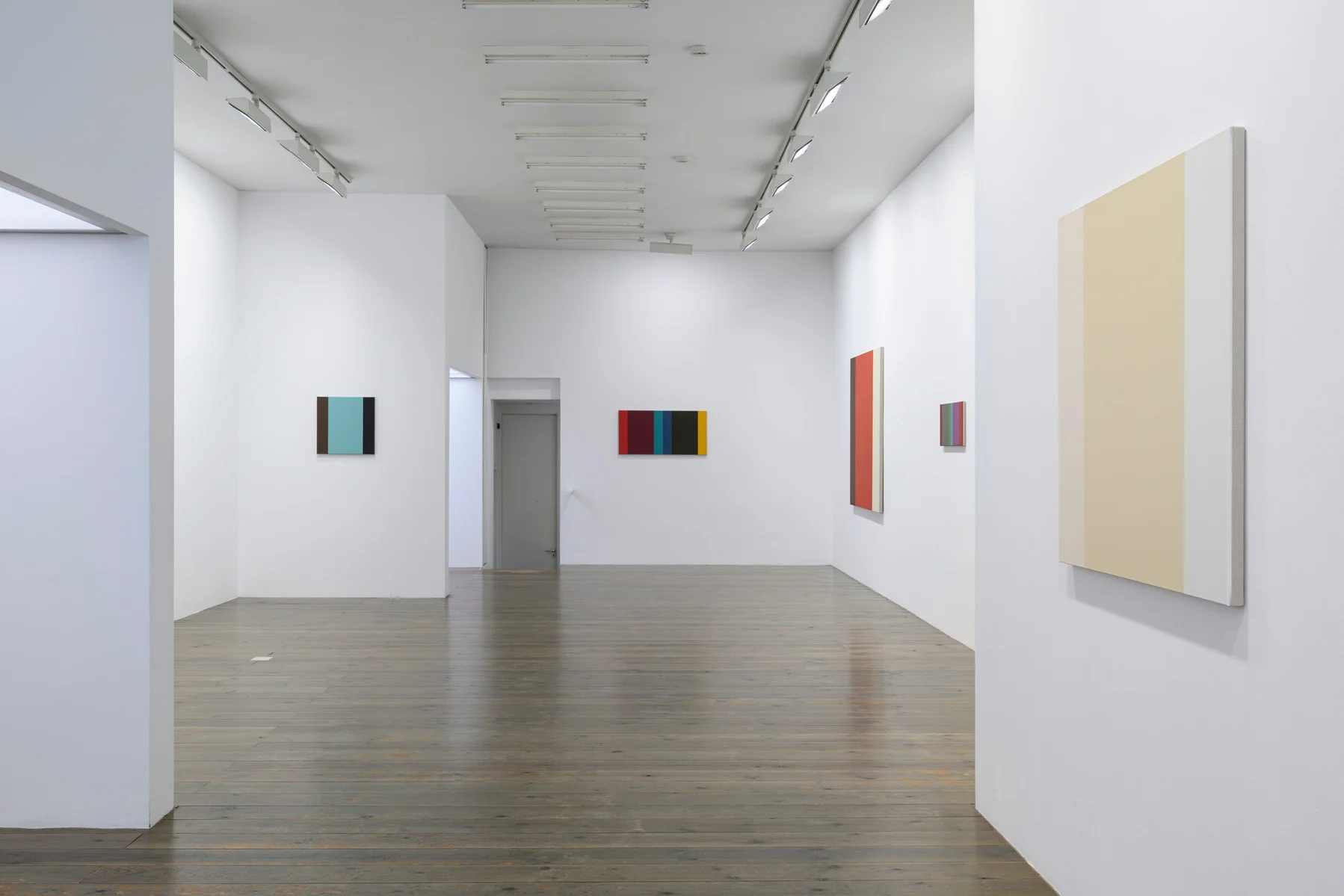
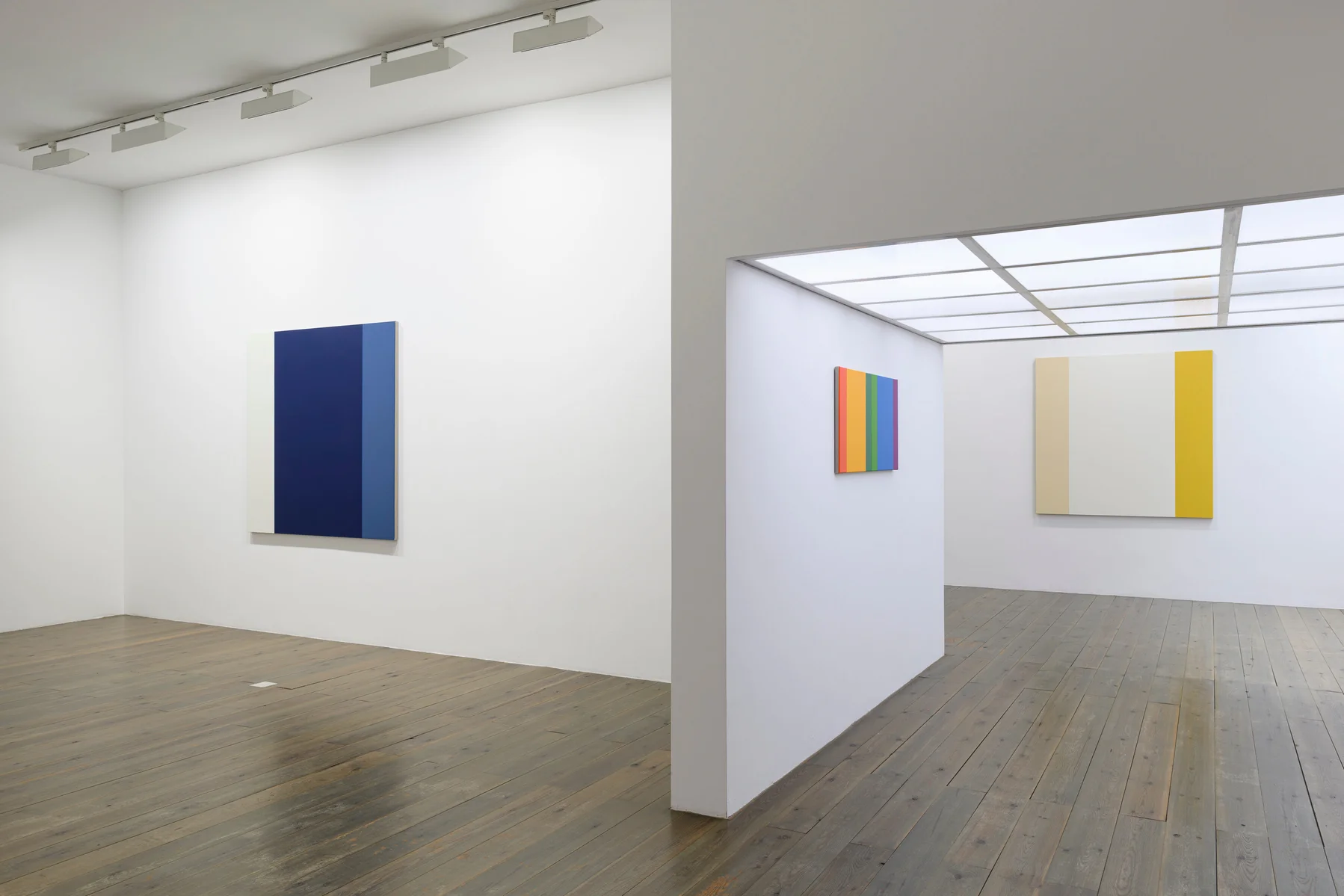
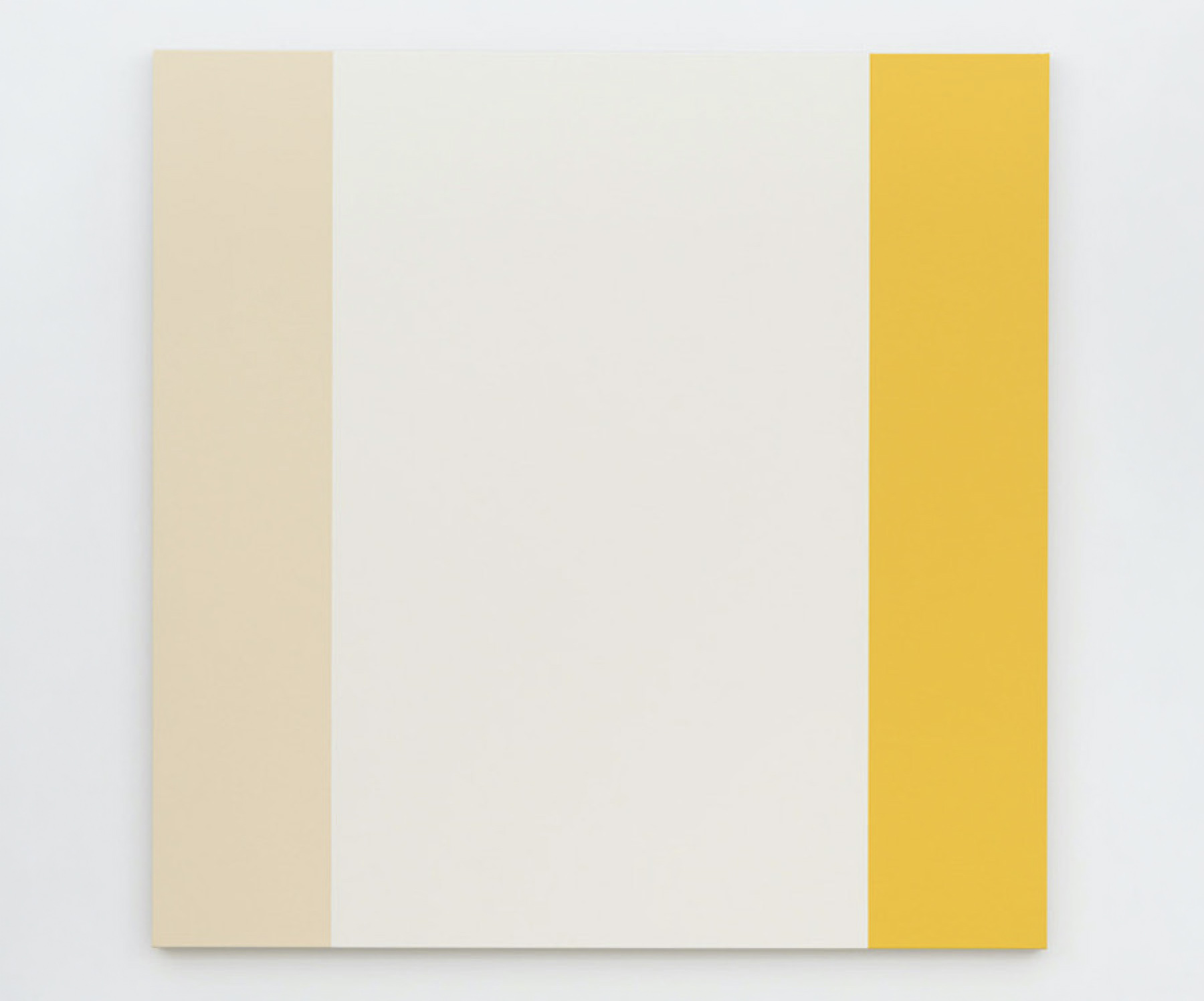
Cover: Steven Aalders, Passage, installation view, Slewe Gallery, Amsterdam, May 23 – June 20, 2026. © Steven Aalders. Photograph: Peter Cox. Courtesy Slewe Gallery, Amsterdam.
All images © their respective rights holders.
Image rights & attribution →