
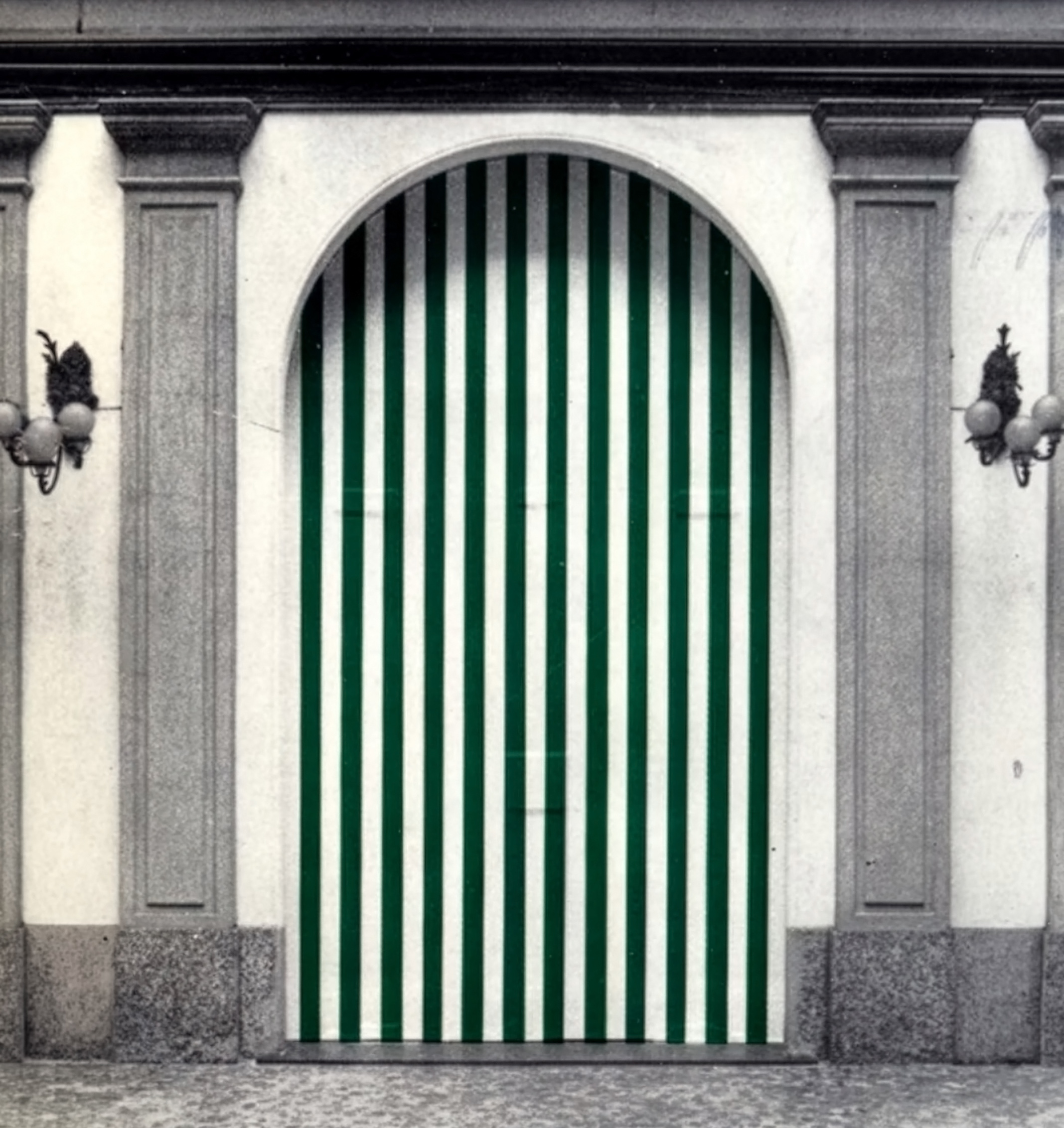
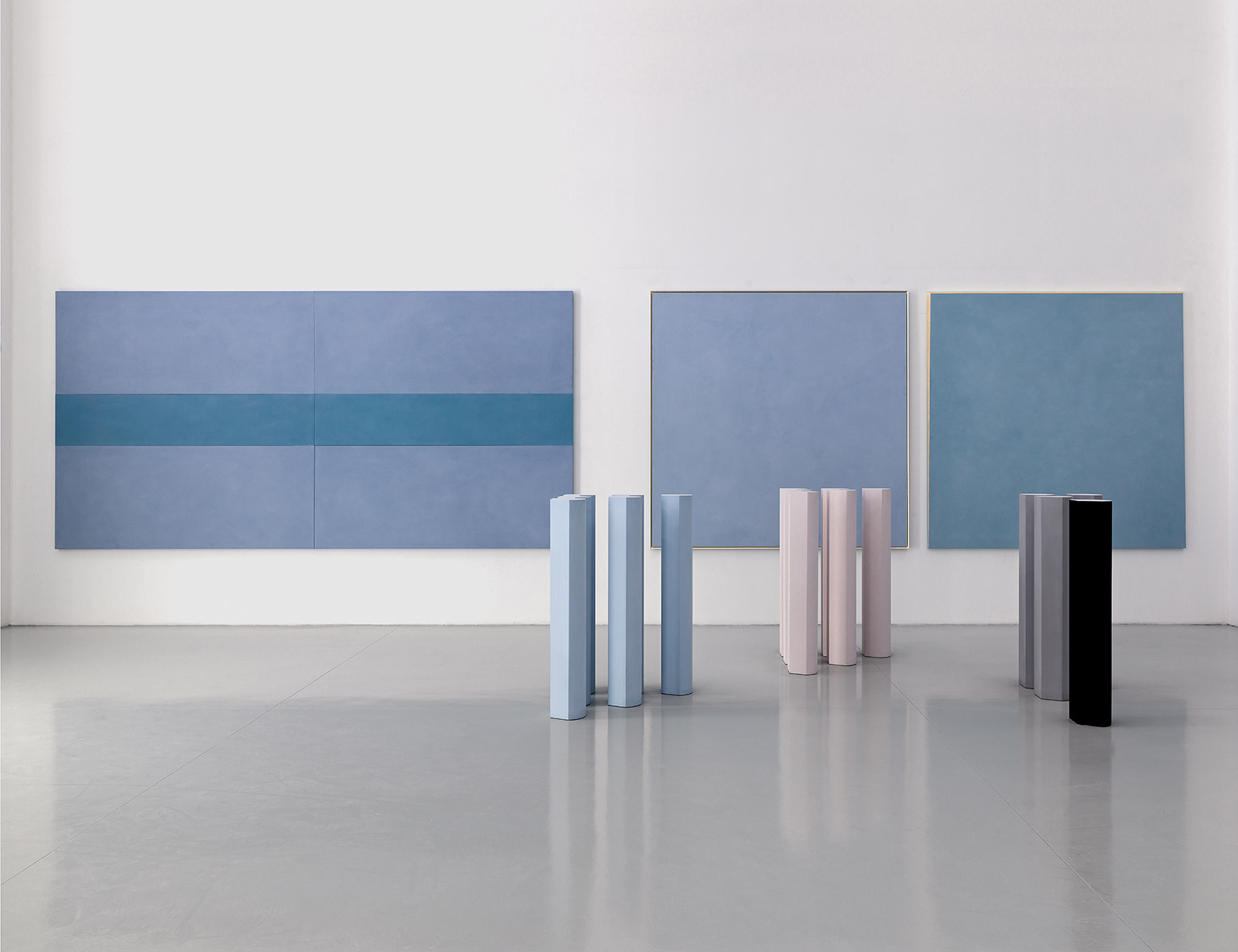
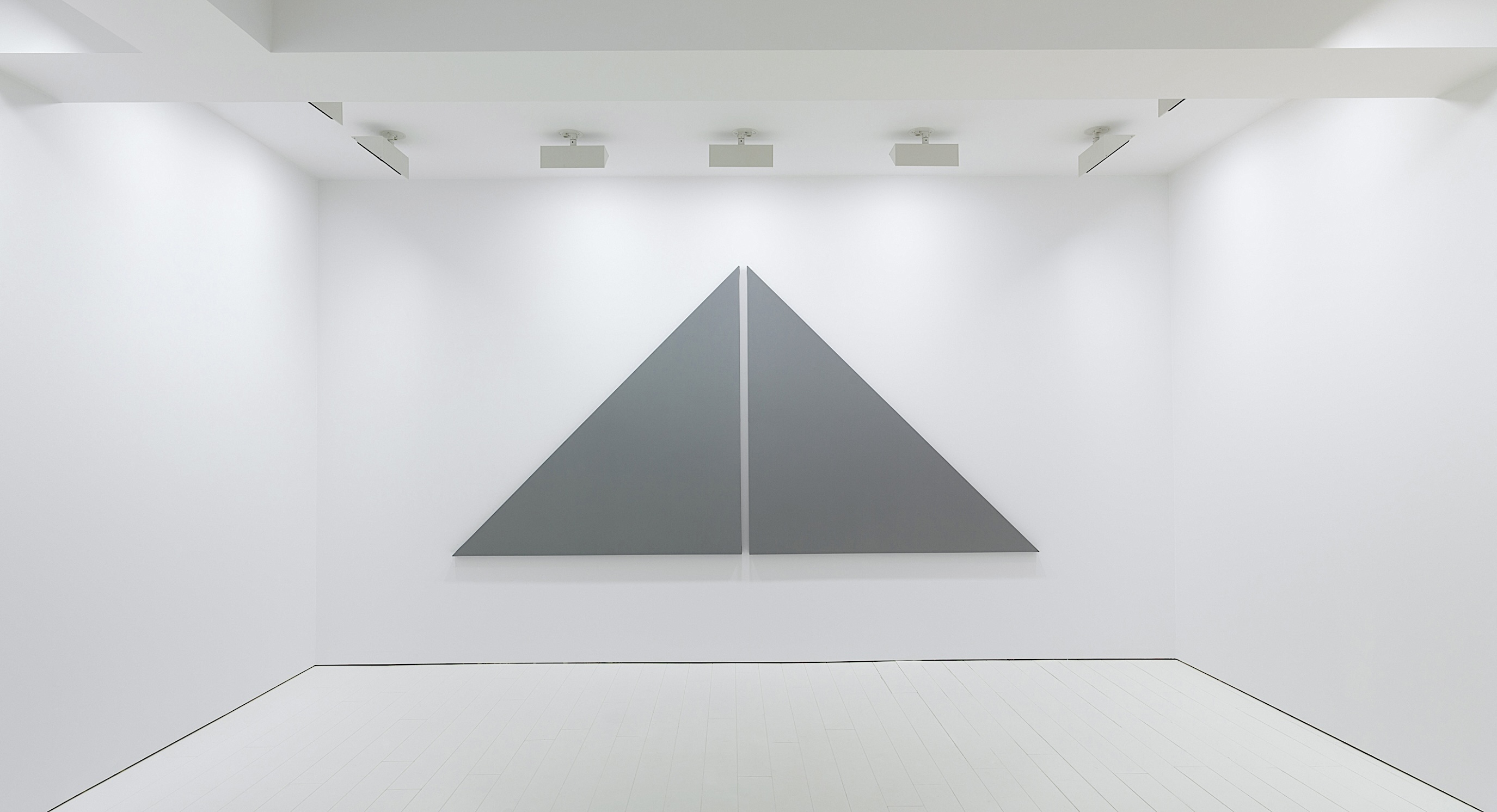


In a Vermeersch wall painting, the wall does not wait for the viewer. Color reaches out first. It expands across architecture, slows along corners, turns plaster into atmosphere. The viewer steps into a condition rather than approaching a work. Distance is something the gradient has already crossed.
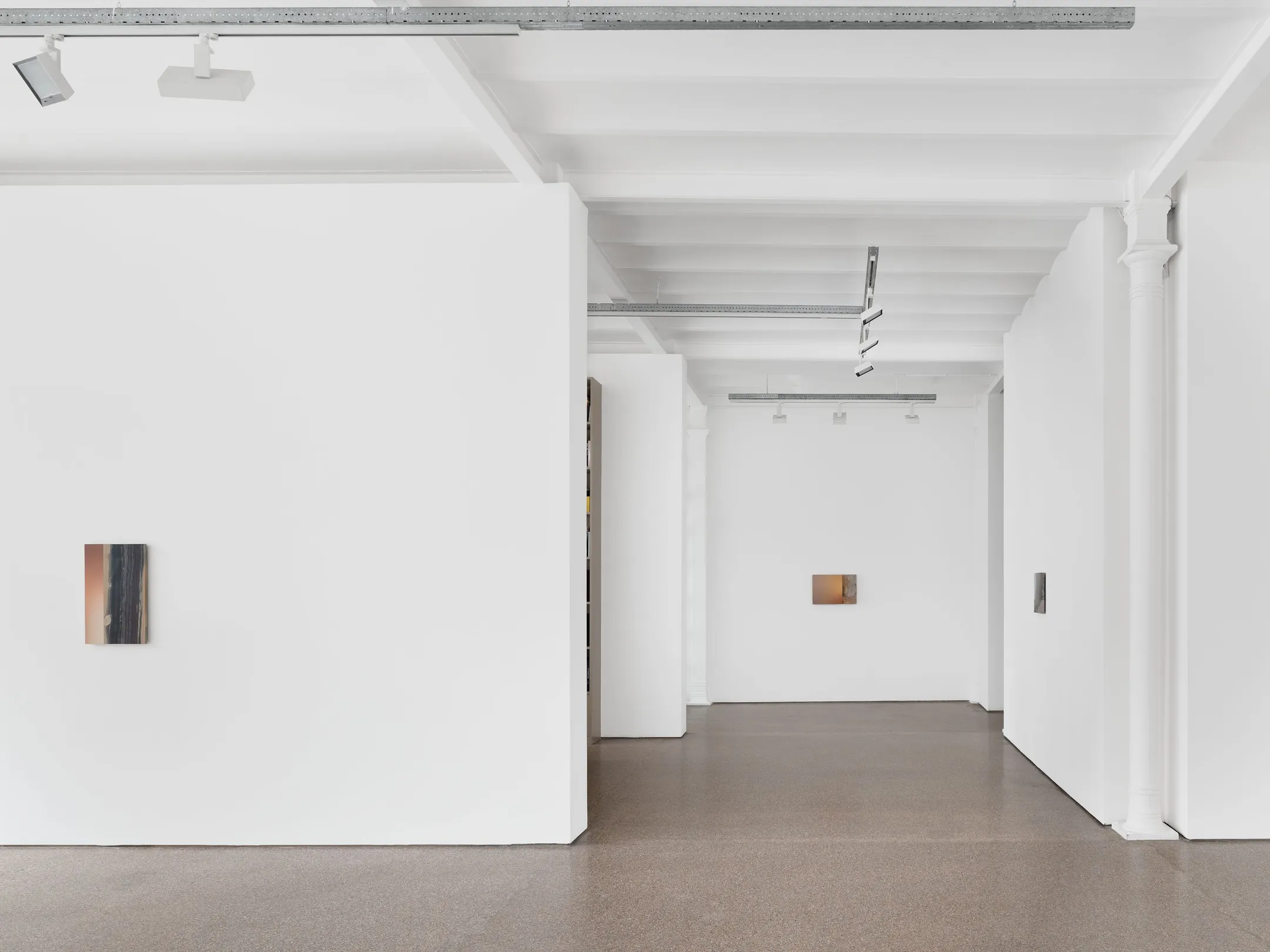
In Double Trouble, the walls stay white. There is no painted architecture, no gradient field, no color extending across the room’s surfaces. The works are small. The walls are large. The panels wait, and the viewer has to come forward. The first change is distance.
The viewer crosses that distance because Vermeersch no longer lets the gradient cross it first. His color has often worked on supports that yield: wall, room, canvas, photographic source, silkscreen. A gradient depends on that yielding. It needs a support it can pull toward atmosphere, a surface it can make less certain of itself. Marble does not yield in the same way. It has its own composition, its own depth, its own time. The gradient cannot turn this surface into climate. It has to do its work by lying across it.
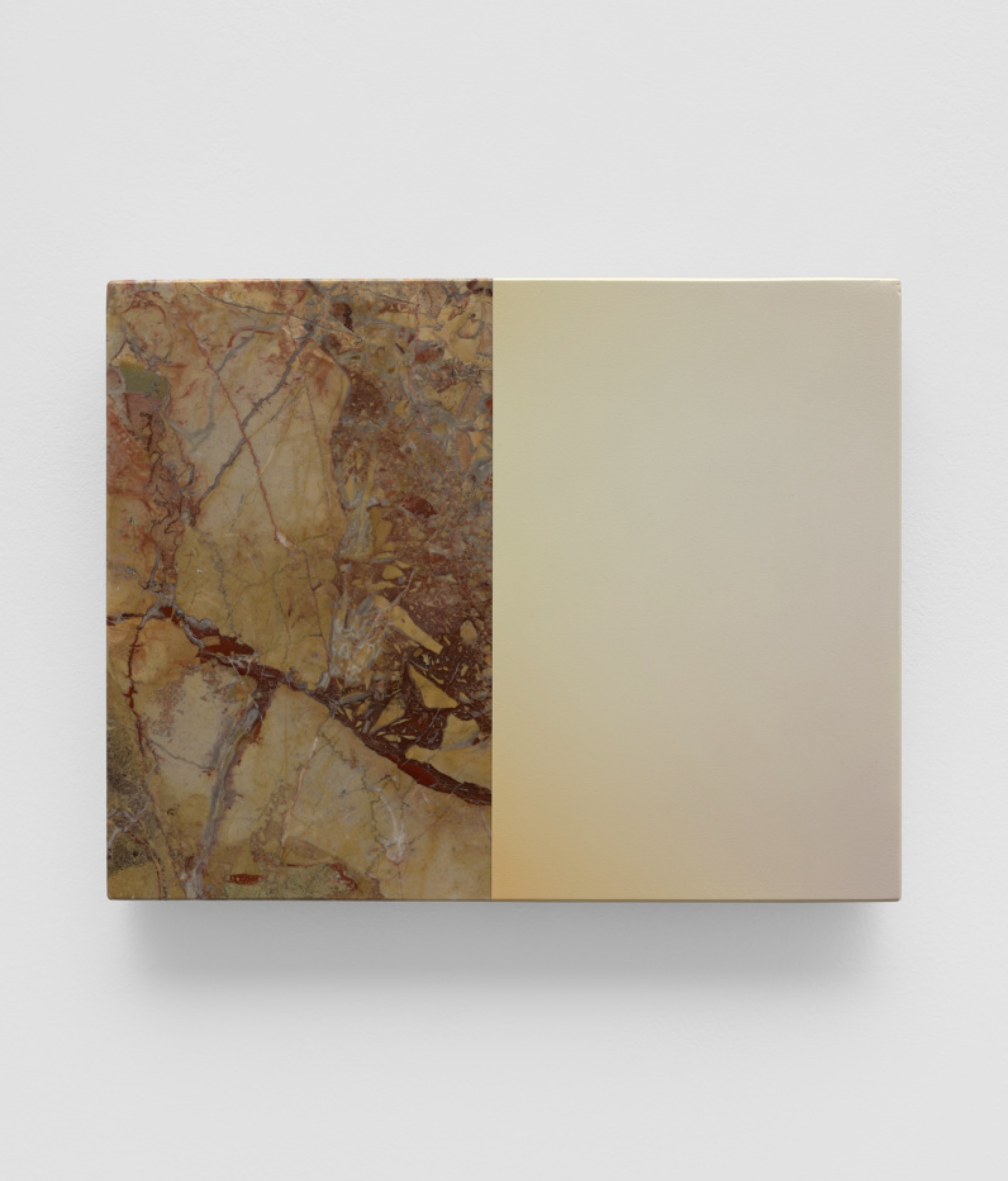
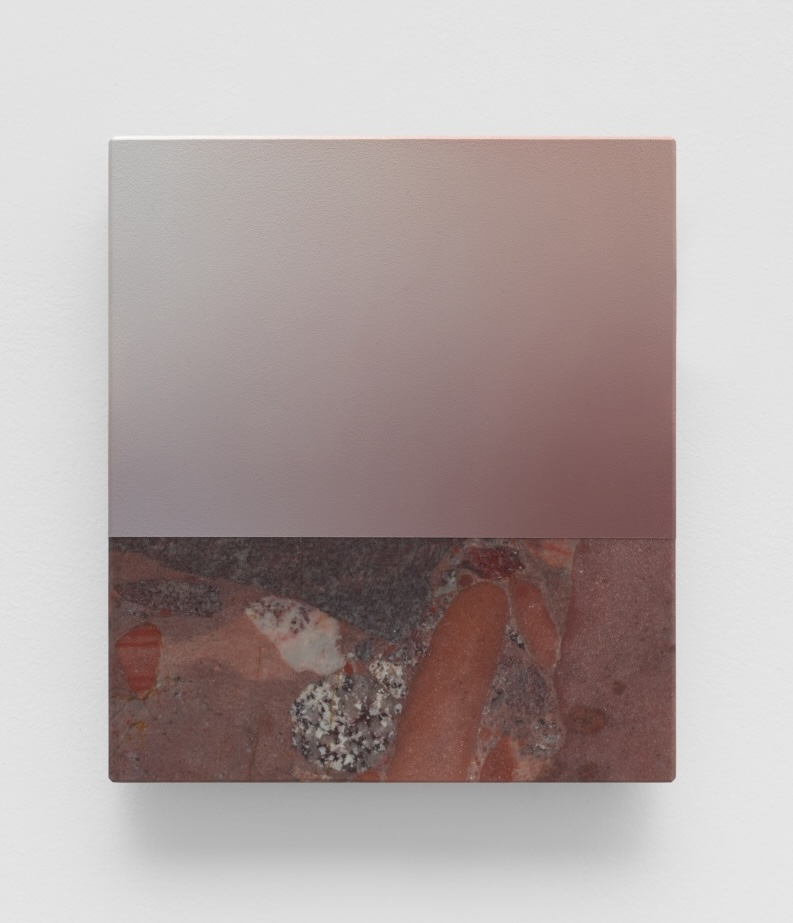
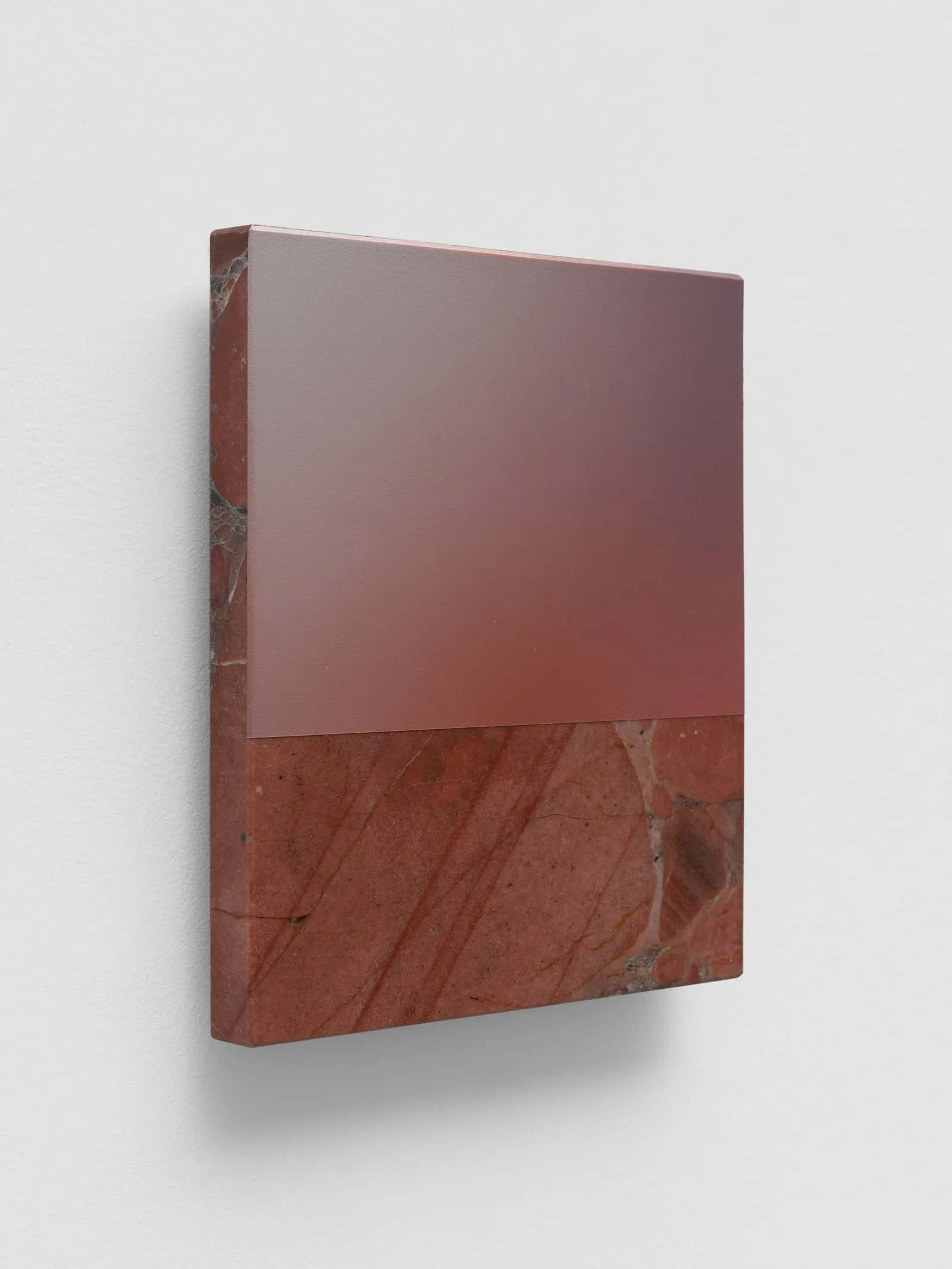
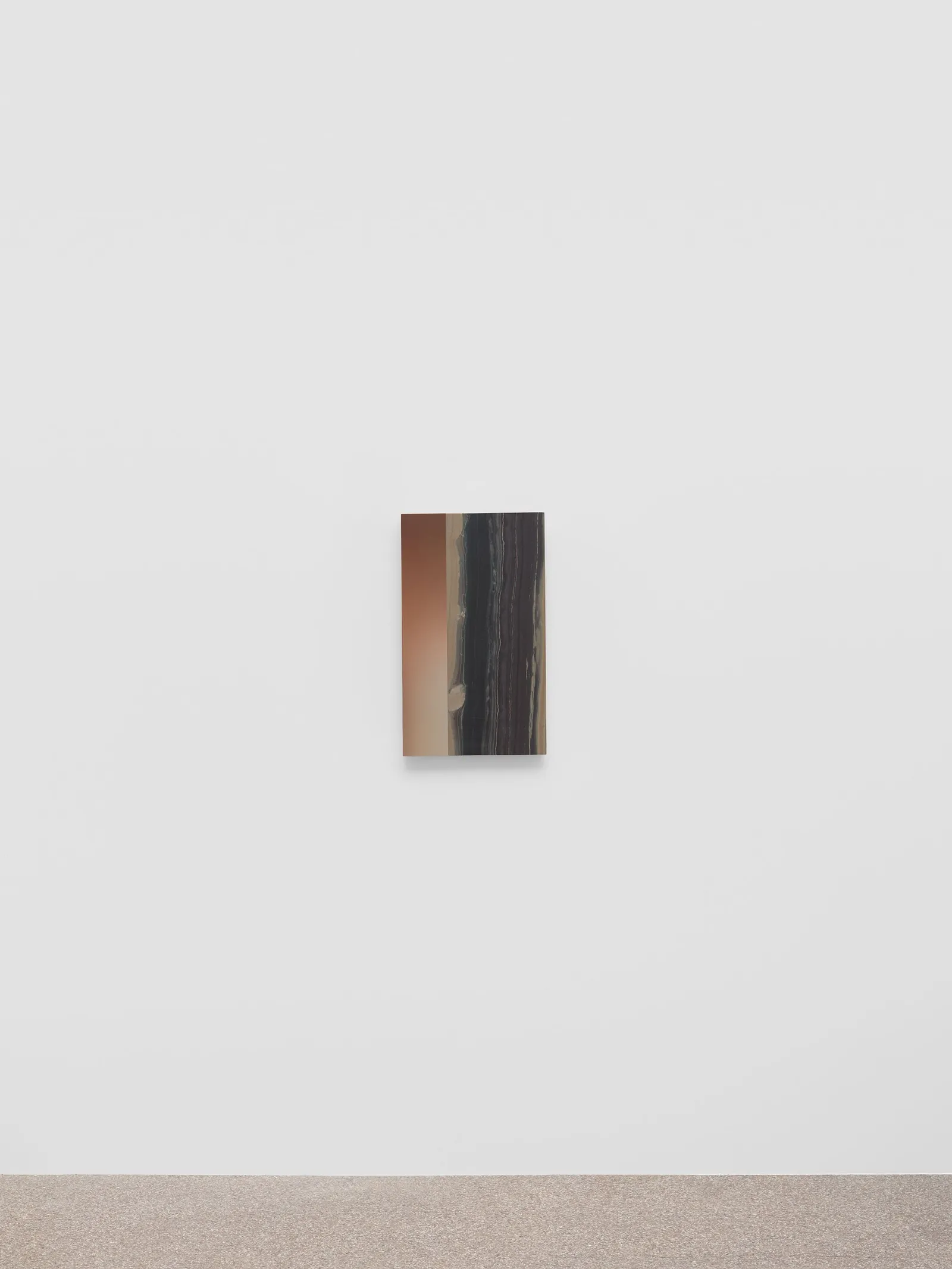
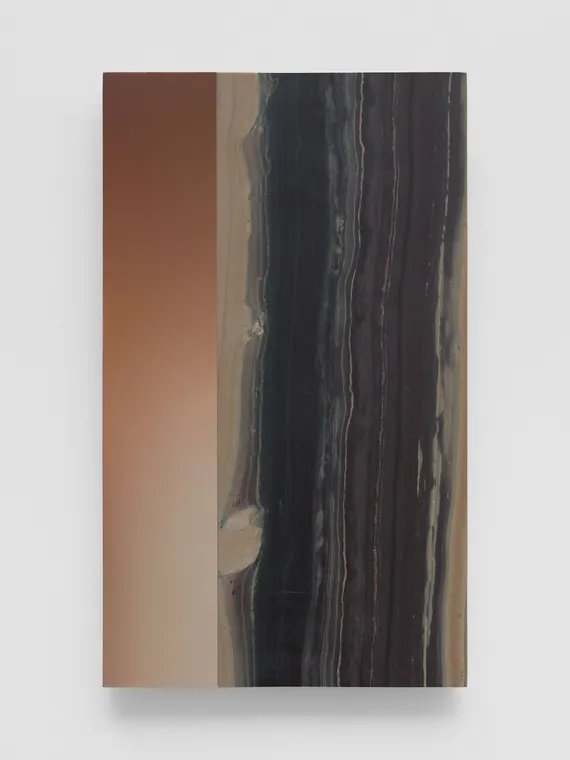
Approach one of the panels and the marble is already active. Veins move through it before the painting begins. Stains gather and thin. Fault lines drift into something the eye reads as composition, not because anyone arranged them, but because stone has already produced its own image. Some slabs are green and veined; others dark, ochre, cream, or fissured red. The color of the paint has to meet that prior image: navy darkening into deeper navy, copper moving toward peach, gray cooling against green. This activity is not background. It is what the gradient lives against.
The slab has thickness, edge, shadow, weight. It is not only surface; it is body. The painted gradient takes half the front, or one side, or a band. The division is clean. The paint stops at a line. The stone begins at the same line. Where the paint stops, the stone continues — at the edge, the side, the lower band, the adjacent zone. The two sit in proximity without becoming one surface. One image has been laid across another, and the cut between them keeps the relation awake.
The exhibition text has reason to speak of threshold. Marble is already image, and paint arrives as another order of image. But the works keep refusing the passage that threshold implies. They return to partition: a painted plane held against exposed stone, a straight cut that does not dissolve, a relation that stays doubled. Threshold promises crossing. These works stop short of it.
There are eleven panels, all Untitled, all 2026, all oil on marble. The repetition matters less as count than as method. One relation is tried again and again against different stone bodies. The painted plane remains held. The marble keeps its geological identity. Across the works, the relation does not resolve. It holds.
In Hubble Trouble, Vermeersch’s previous exhibition at the gallery, marble could receive an image of itself: photographic images of marble silkscreened back onto marble, the stone becoming both support and reproduction. The surface folded into tautology, marble carrying marble’s image. Double Trouble removes that device. No silkscreen. No marble-image laid back onto marble. No photographic return of the stone to itself. What remains is older and more exposed: oil painted directly onto stone, a painted plane held against a stone body.
The title sits closer to the works than the language around them. Double Trouble does not promise resolution. It names a held doubling: the painted plane and the stone body, the atmospheric and the geological, the made and the found. Trouble is already visible at the edge where paint stops and stone continues.
The trouble is not that paint and stone become one. The trouble is that they do not.
At the end, the viewer is still close to the panel. The wall has not become color. The stone has not become painting. Vermeersch has given the gradient neither architecture to occupy nor a neutral support to soften. He gives it stone: an image already made, a body already formed. The wall is no longer the support of color; it remains as distance. The stone remains the first image. The gradient becomes the second. Double Trouble holds them at the cut, close enough to meet, too separate to become one.
In Double Trouble, Pieter Vermeersch gives the gradient neither architecture to occupy nor a neutral support to soften. He gives it stone: an image already made, a body already formed. The works hold paint and marble at the cut, close enough to meet and too separate to become one.
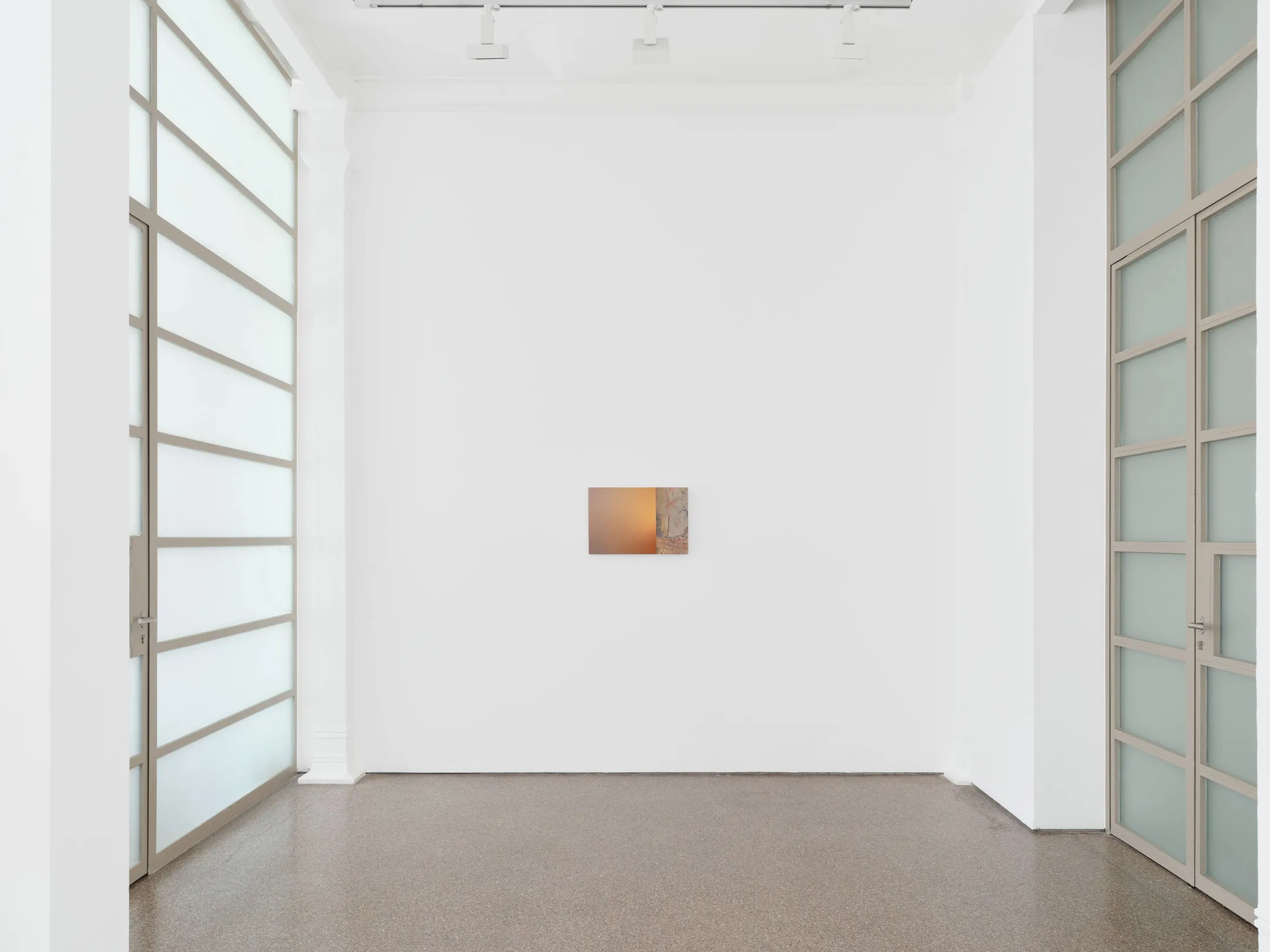

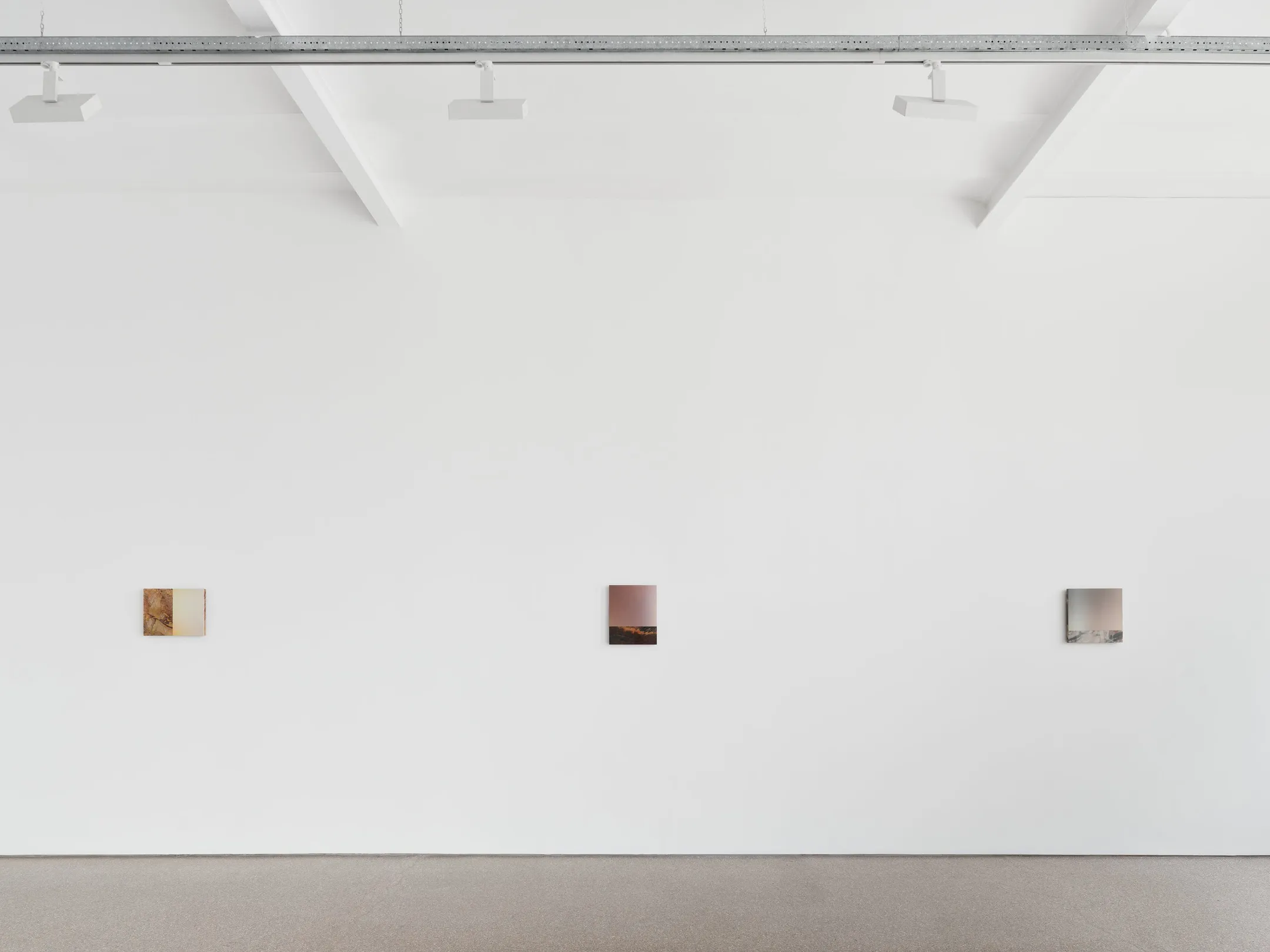
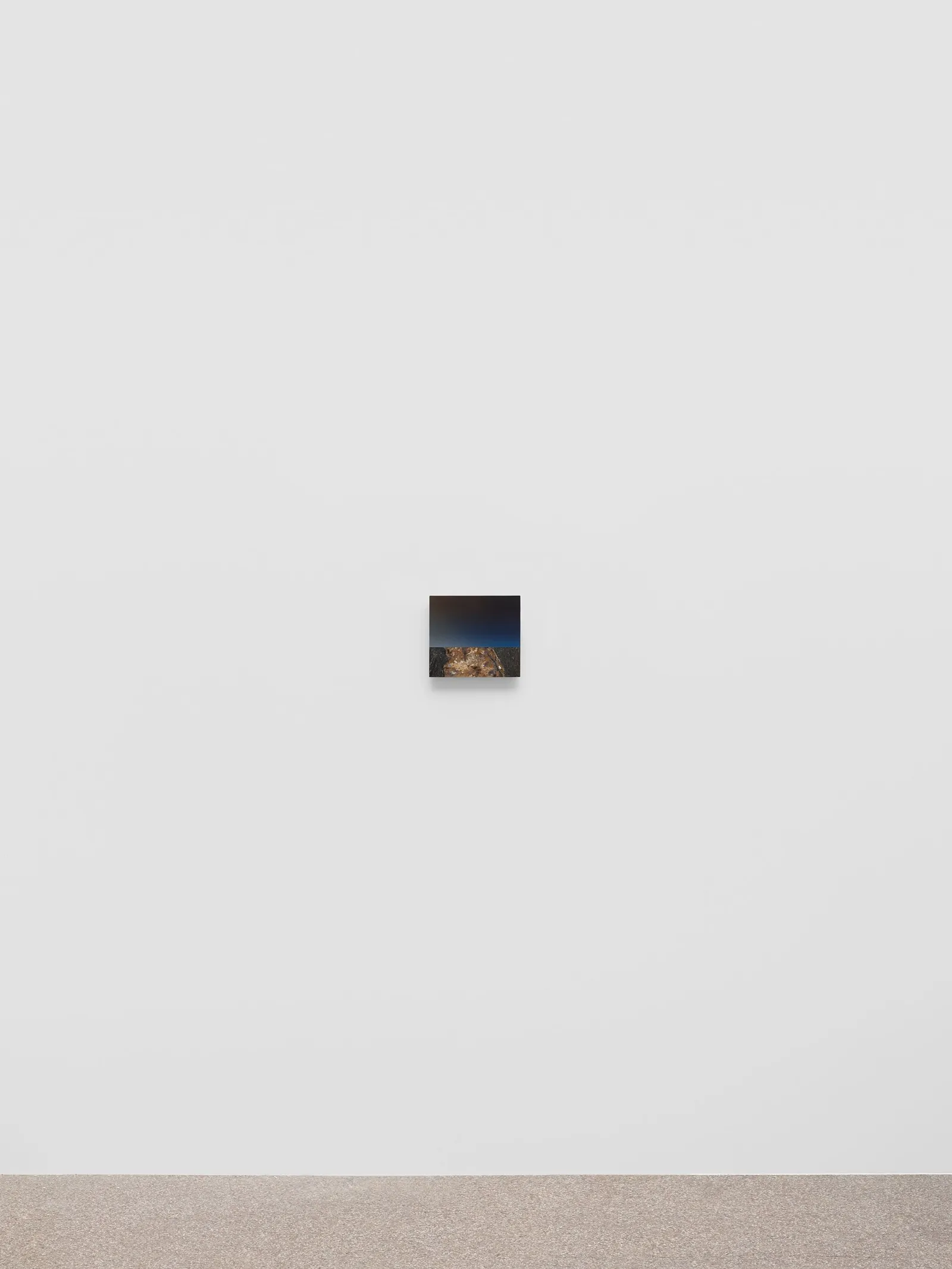




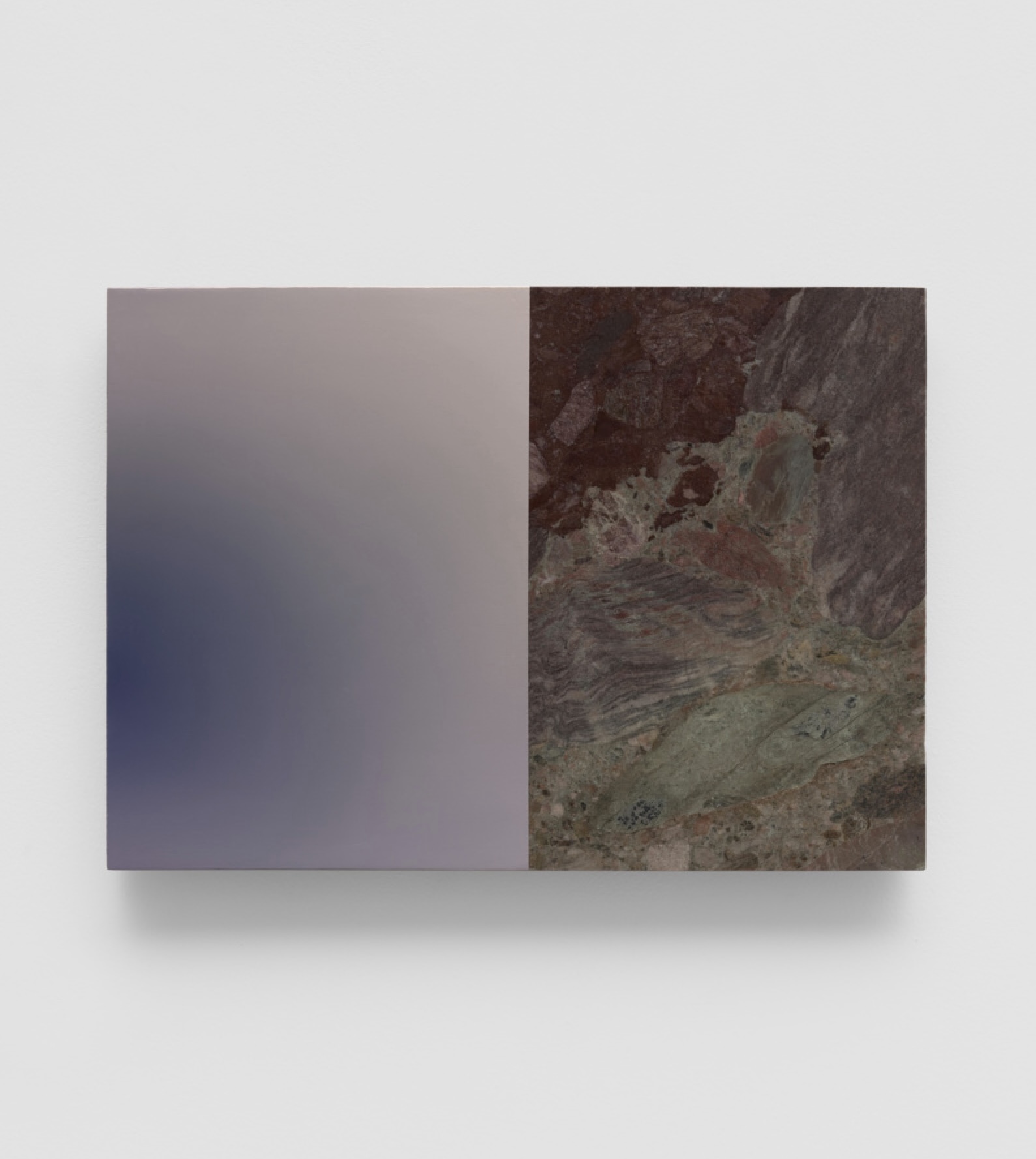
Cover: nstallation view: Pieter Vermeersch, Double Trouble, Galerie Greta Meert, Brussels, 21 May–4 July 2026. Courtesy the artist and Galerie Greta Meert. Photo: Nicola Morittu.
All images © their respective rights holders.
Image rights & attribution →