

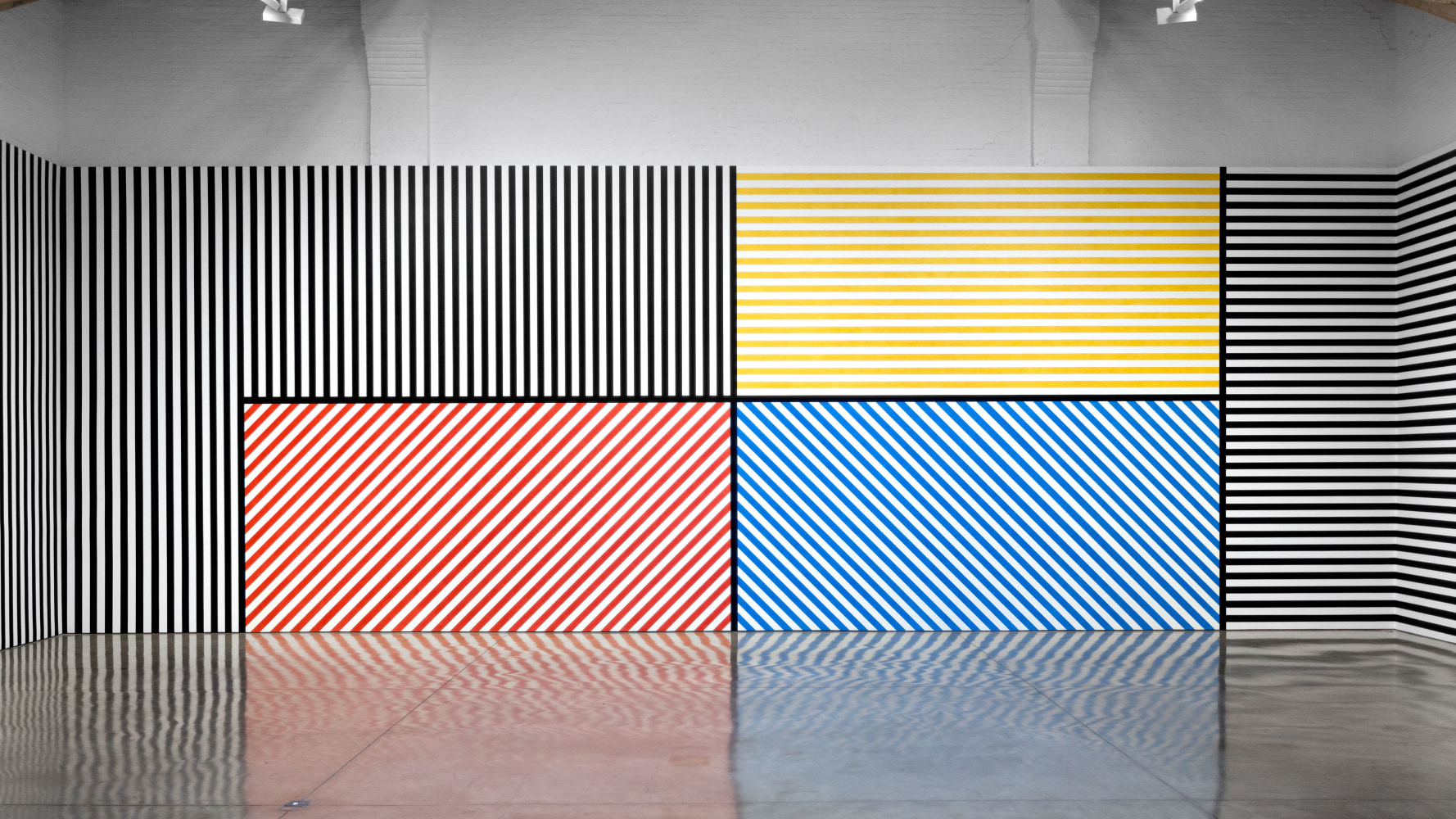
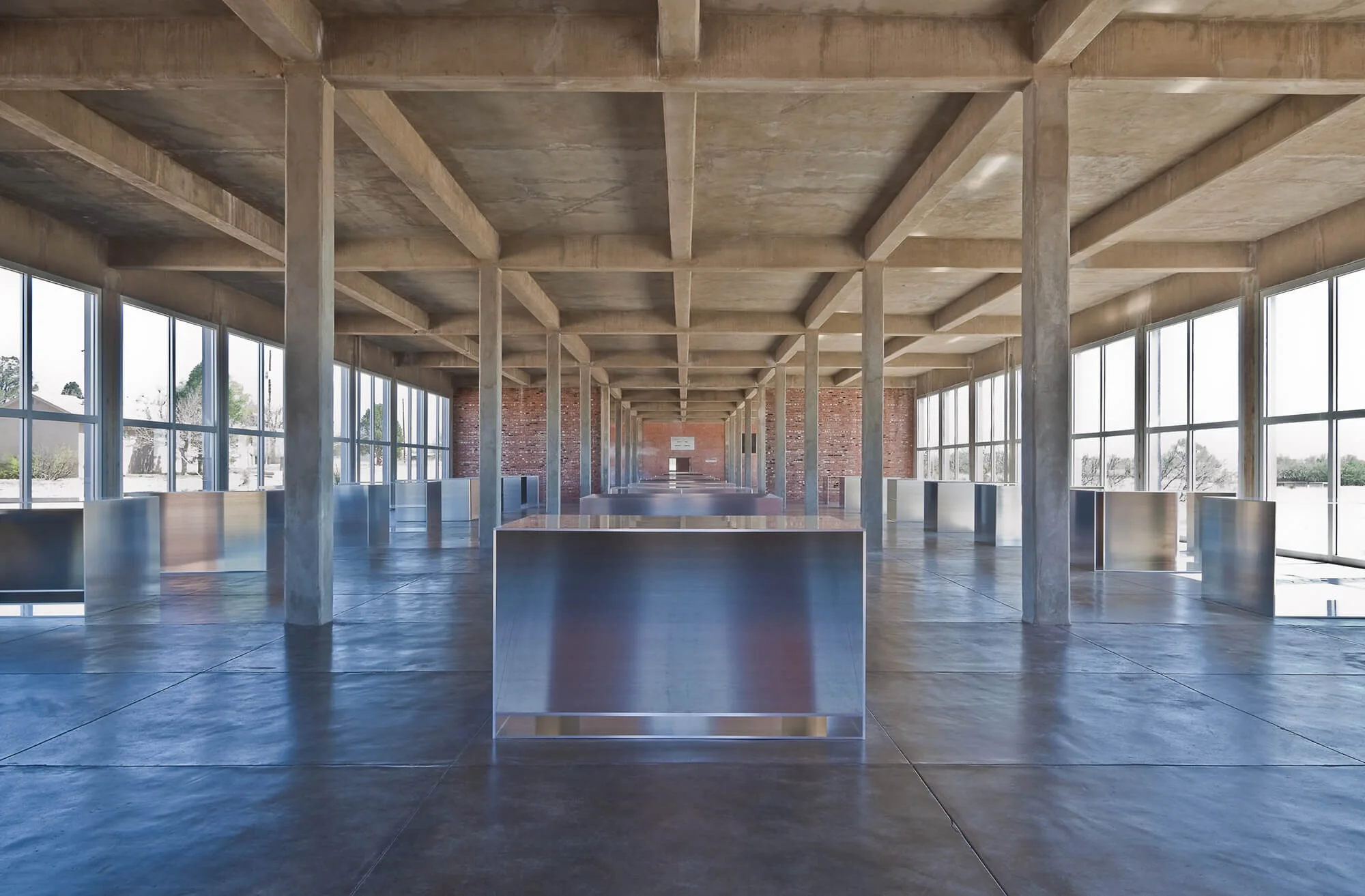


Sol LeWitt is the artist who converts form into protocol — and makes protocol visible.
At Paula Cooper Gallery, Works From the 1960s isolates the decade when that shift first becomes legible. In the 1960s, this meant treating a work of art not simply as an object to be made, but as a set of decisions to be specified in advance. The artwork begins to shift from something constructed by hand into something structured by rule.
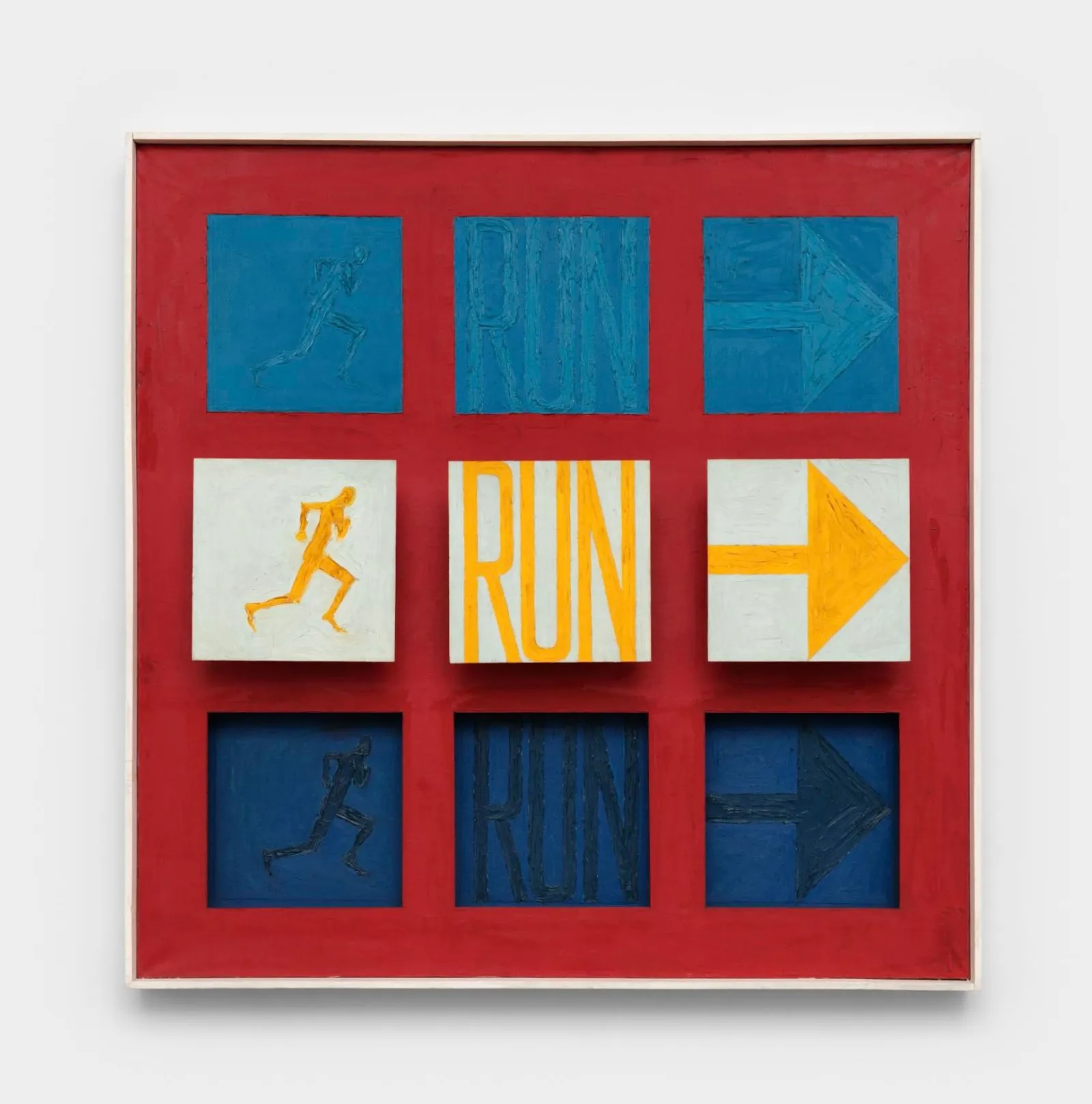
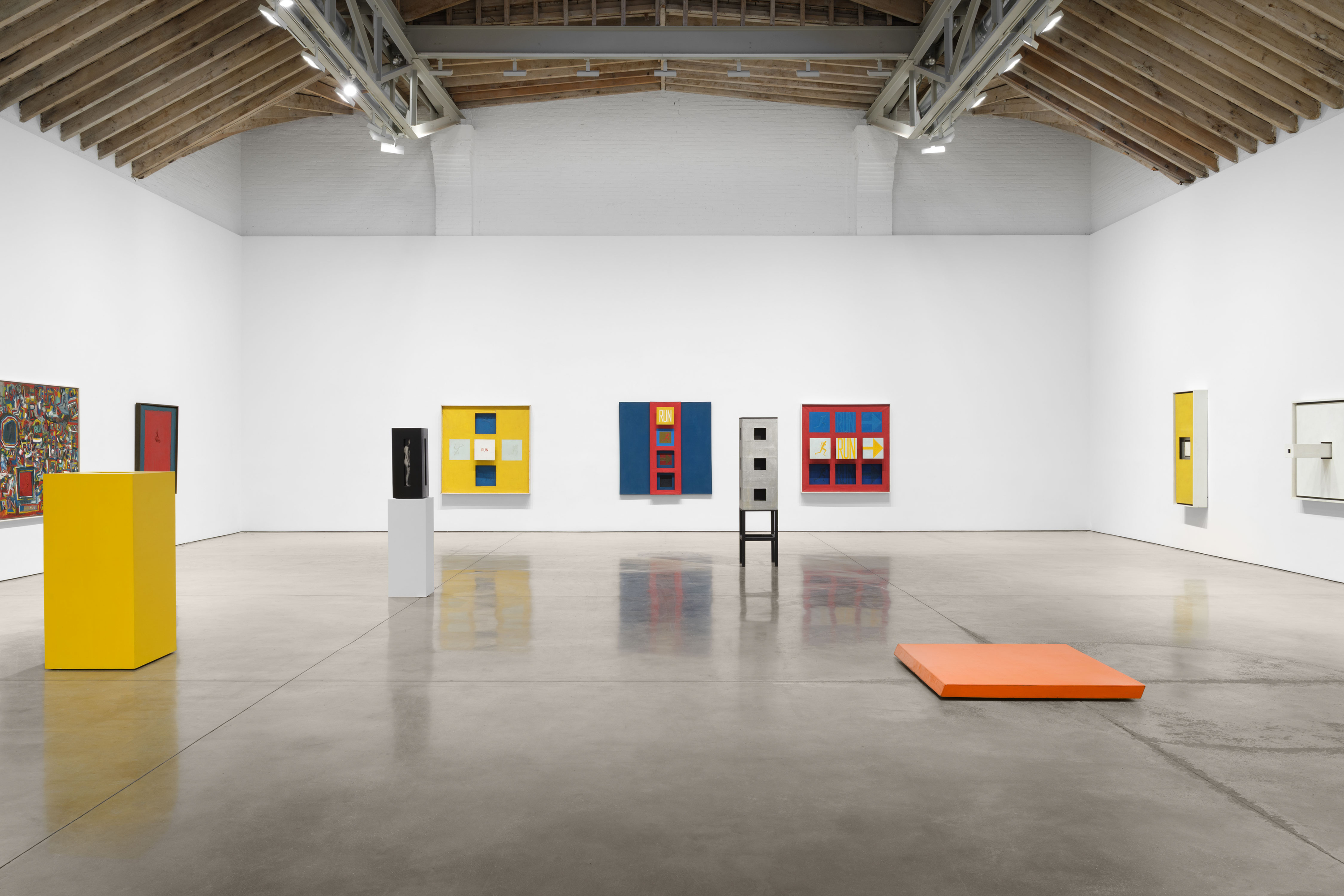
Geometry no longer functioned as a reduction of expression. It became a way of organizing decisions. LeWitt’s early Run paintings still depict the body in motion, derived from sequential studies, but what holds them together is not figuration. It is segmentation. The surface is divided into measured units, each interval regulating the next. Movement becomes sequence. Sequence becomes structure.
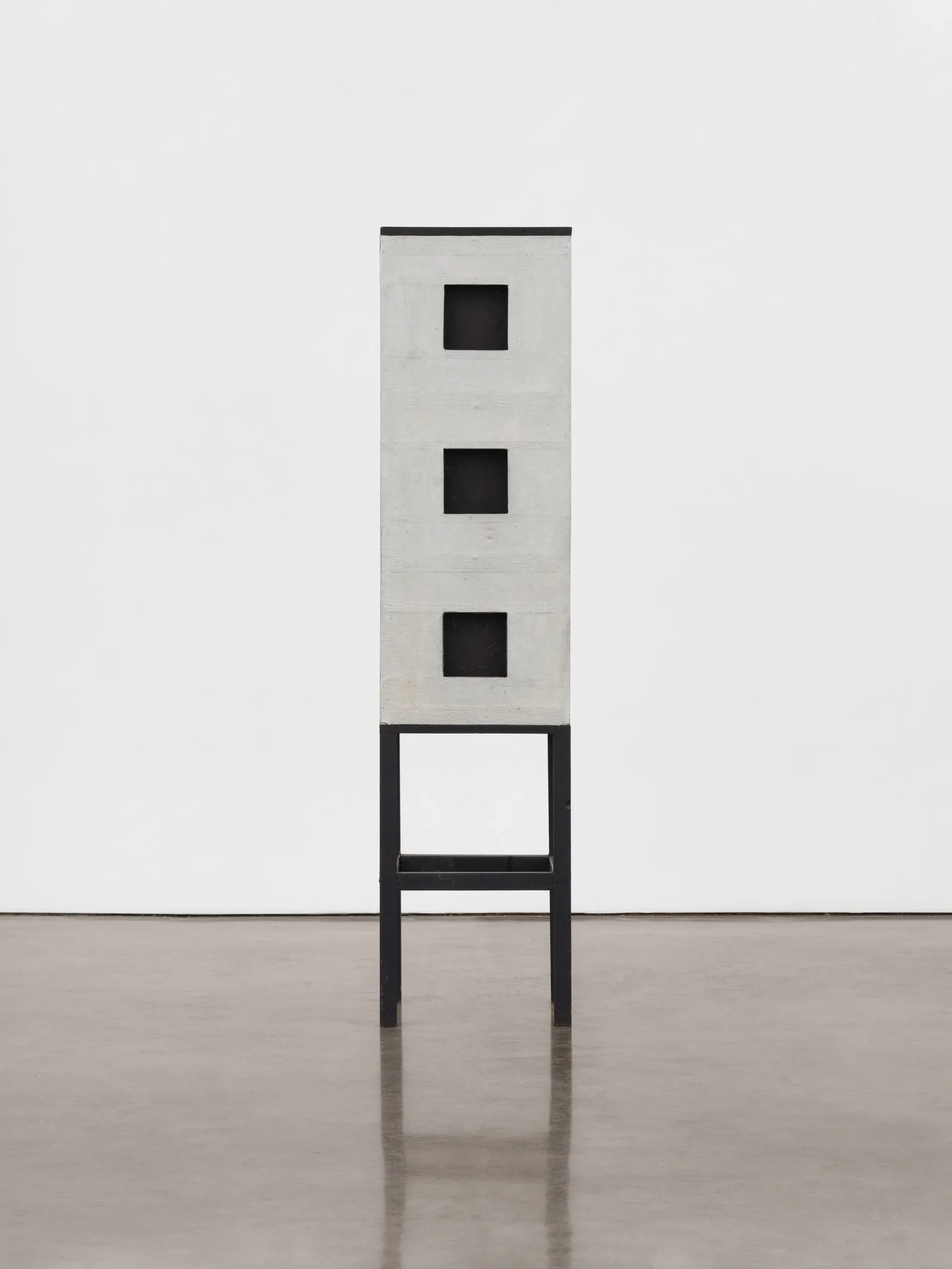
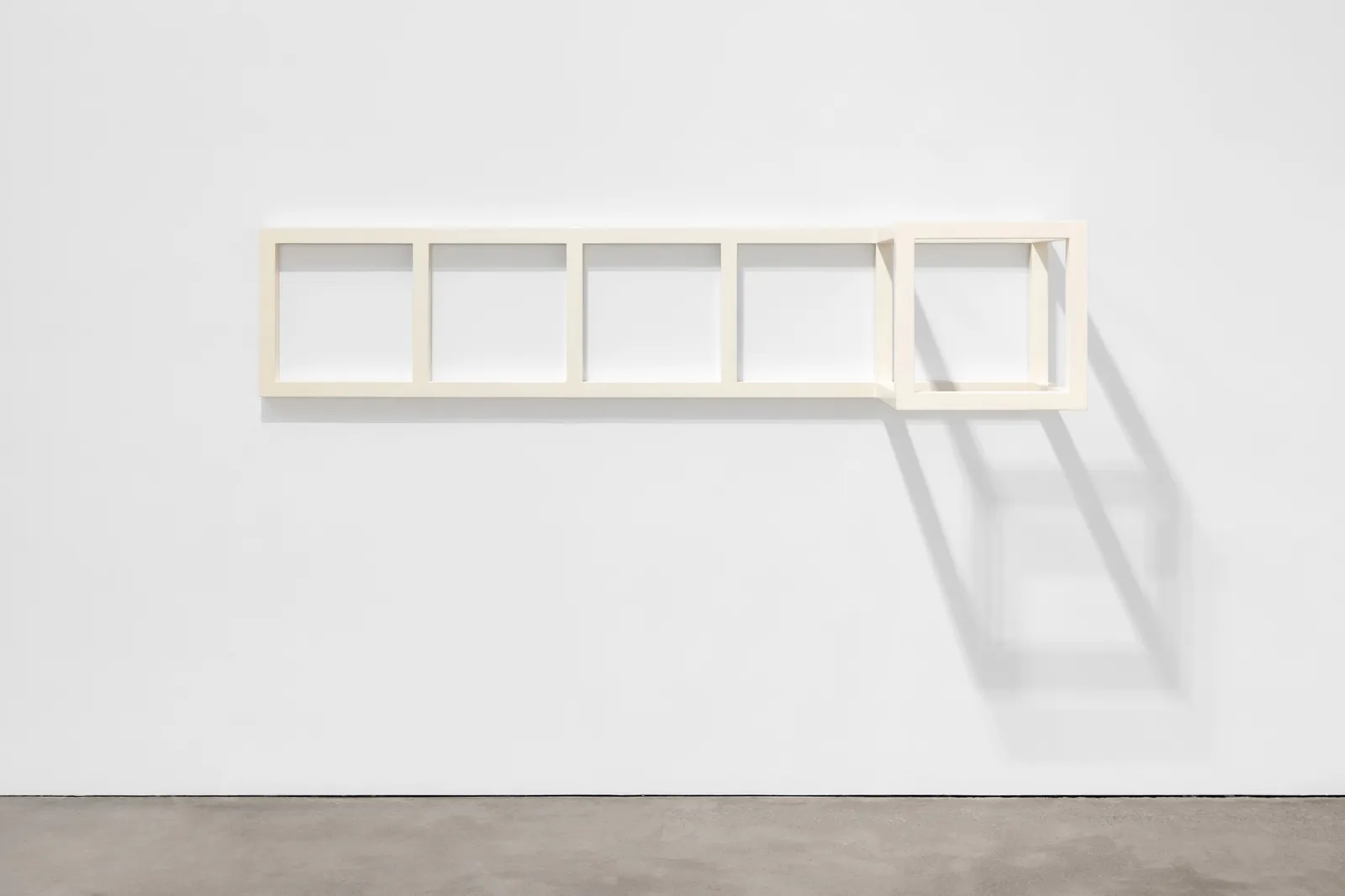
By the mid-1960s, the figure disappears and the cube takes its place. A cube is a simple form. But simplicity, for LeWitt, was never about reduction. It was about reliability. The cube is neutral, measurable, repeatable — extended, permuted, or combined without losing coherence. Its neutrality allows it to function as a stable unit within a larger set of variations. In works such as Modular Cube (1966), no single element dominates. What matters is not the object in isolation but its capacity to participate in a system. The cube does not express; it operates.
The RUN works included here make this shift explicit. The body, the word, and the arrow are placed on equal terms. Each occupies the same square, the same interval. The runner is no longer a subject but a module. Movement is not depicted; it is segmented. Meaning does not reside in any single panel but in the ordering of panels across the grid.
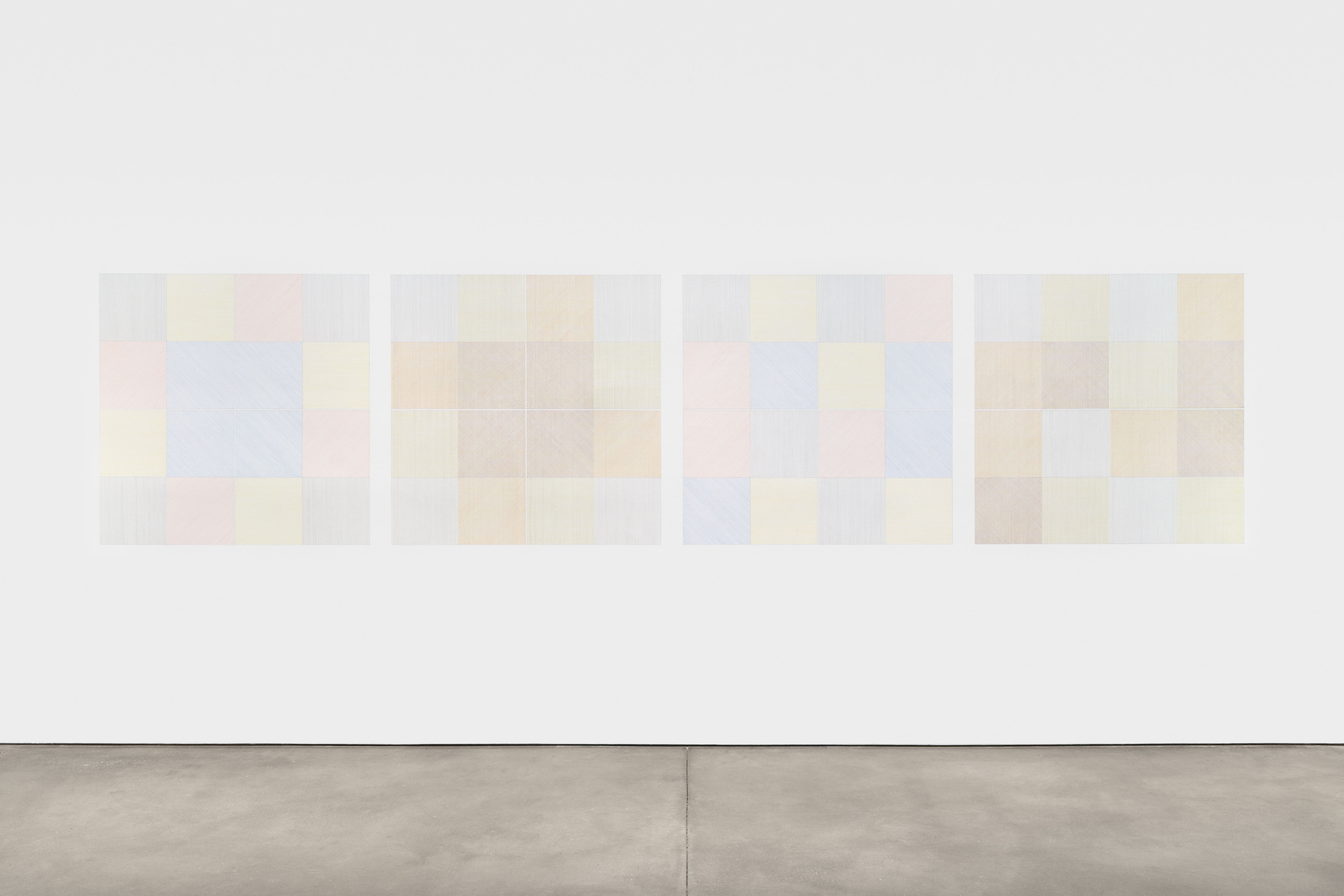
This logic expands in the multipart structures and, more radically, in the wall drawings. When a drawing can be carried out by someone other than the artist, something shifts. With the wall drawings, conception and execution become distinct stages. The work is specified in advance through written instructions; its realization is carried out by others. The hand remains present, but no longer as origin. It follows a defined structure, shifting slightly from installation to installation. The drawing on the wall is not a unique artifact but the visible outcome of a prior set of rules.
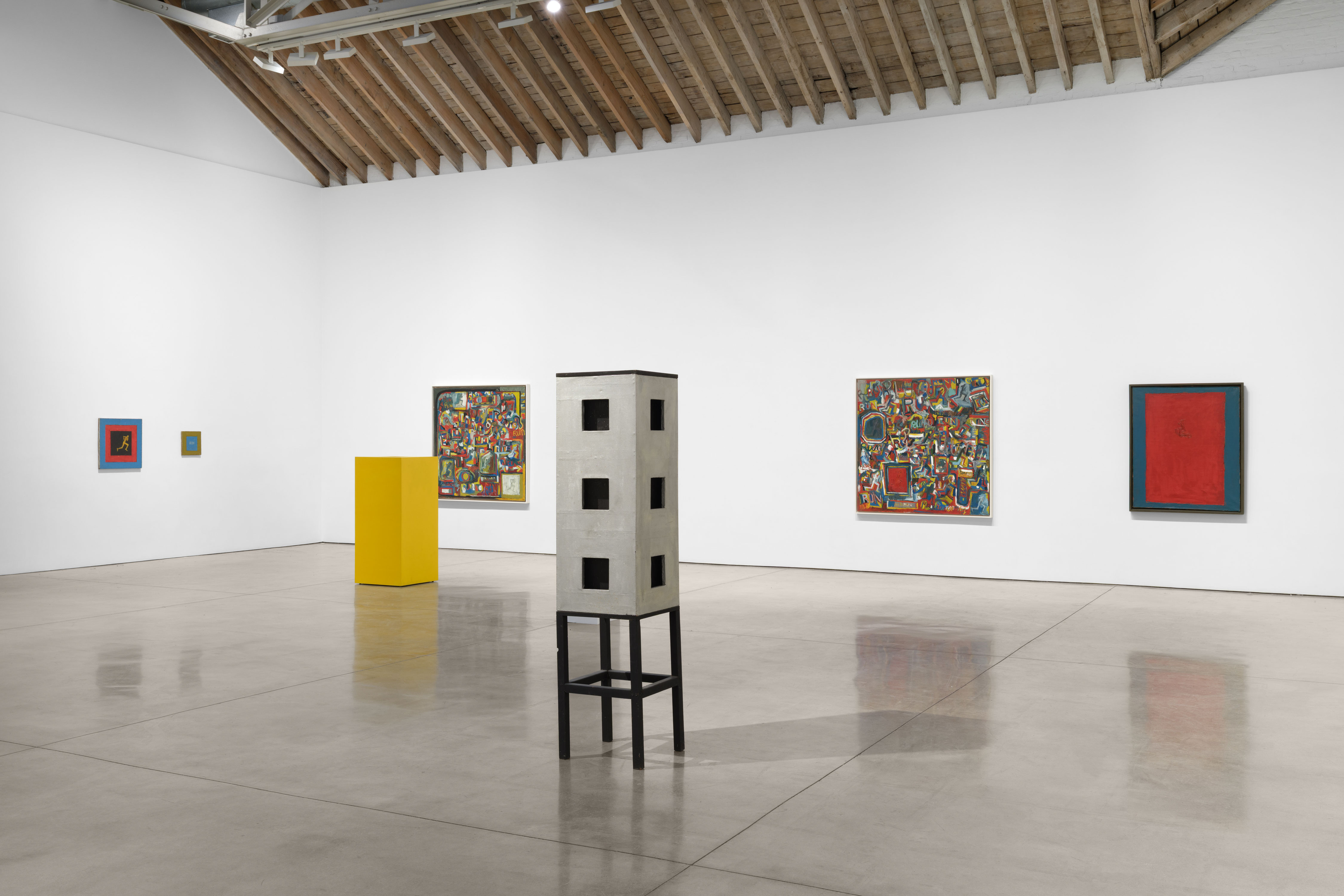
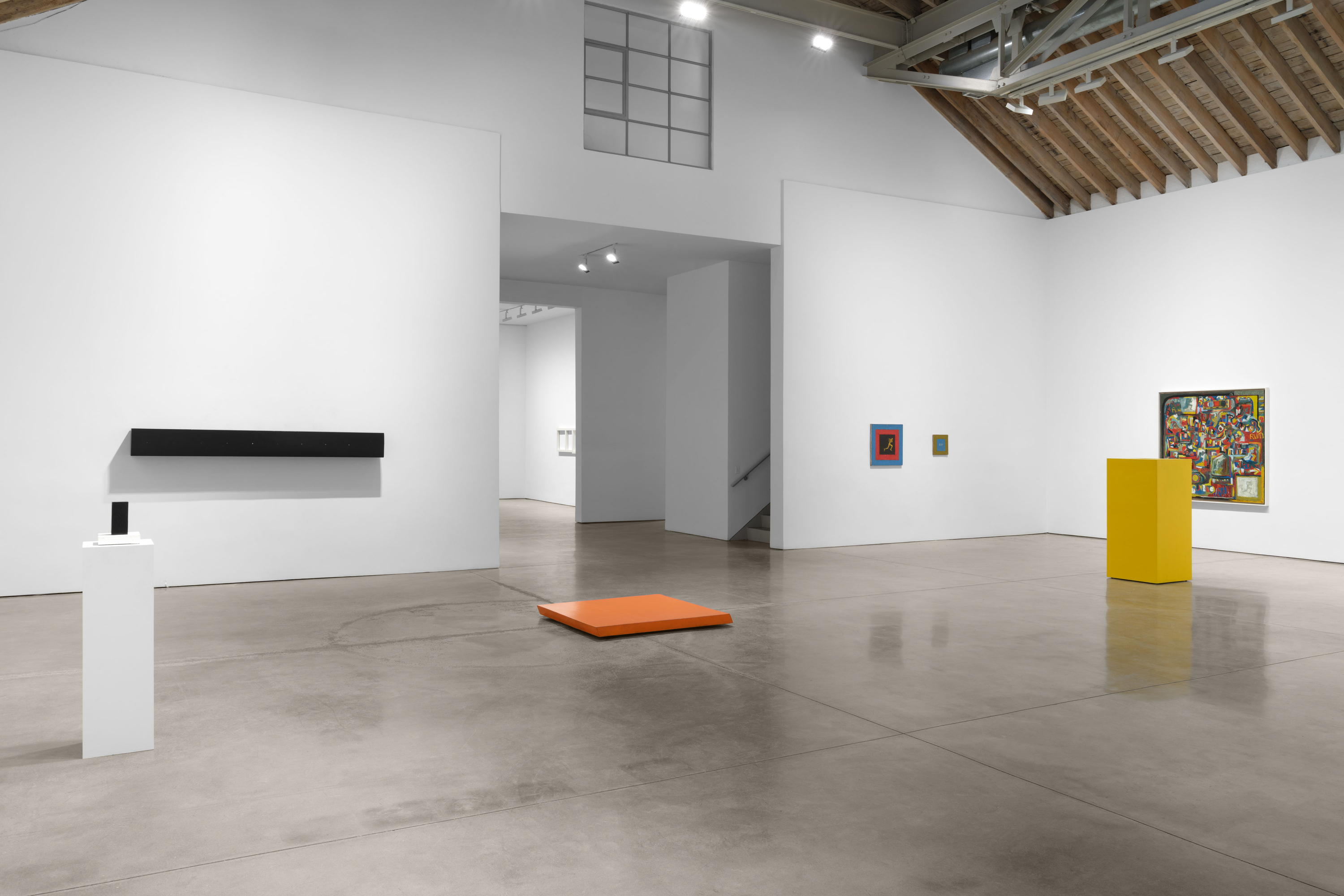
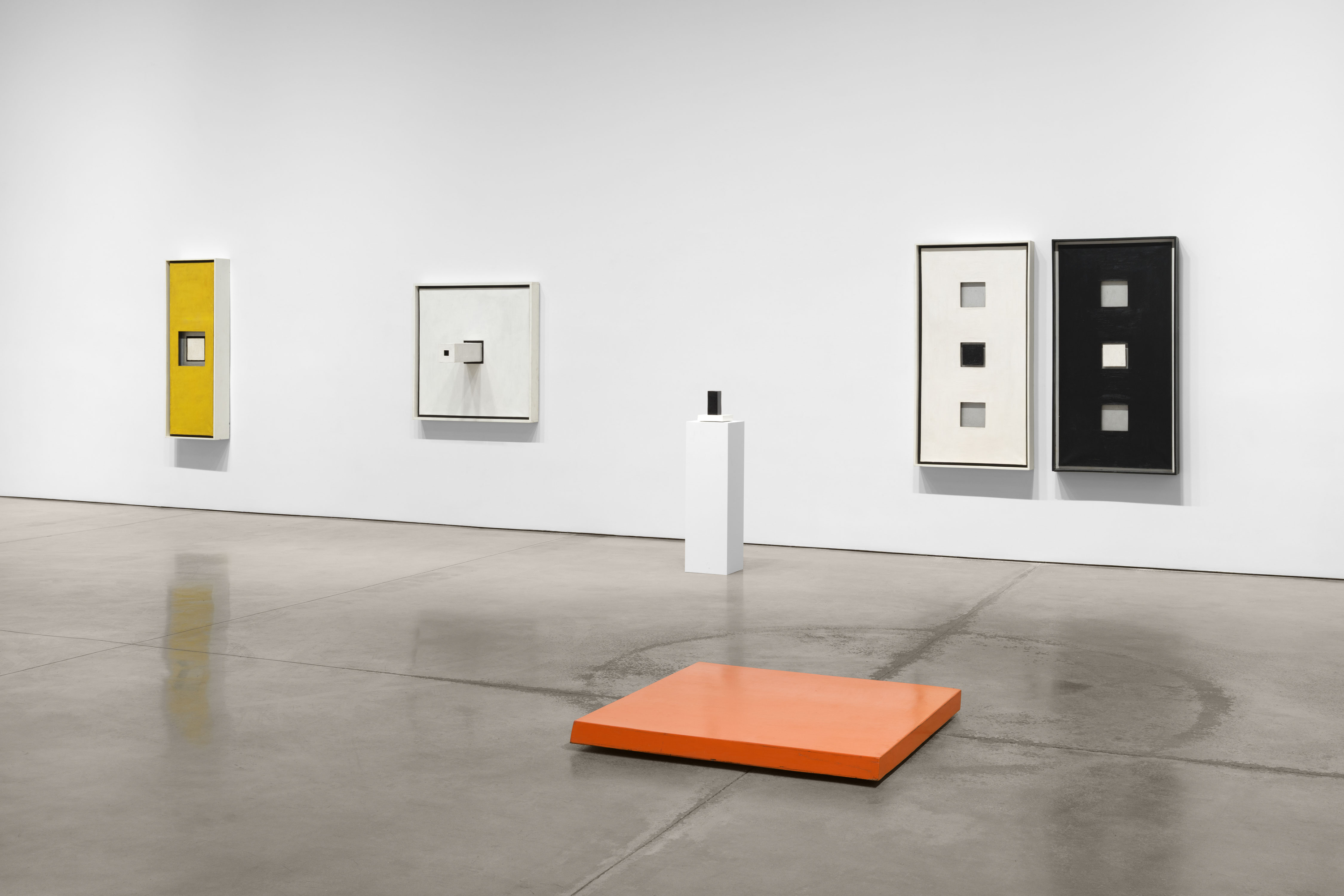
This separation becomes tangible in the gallery space. Cubes sit low and dispersed, their intervals structuring the surrounding floor. Wall drawings extend across entire surfaces, their density and scale determined by instruction rather than improvisation. The room is not filled by objects; it is organized by relation. What the viewer encounters is the manifestation of a system.
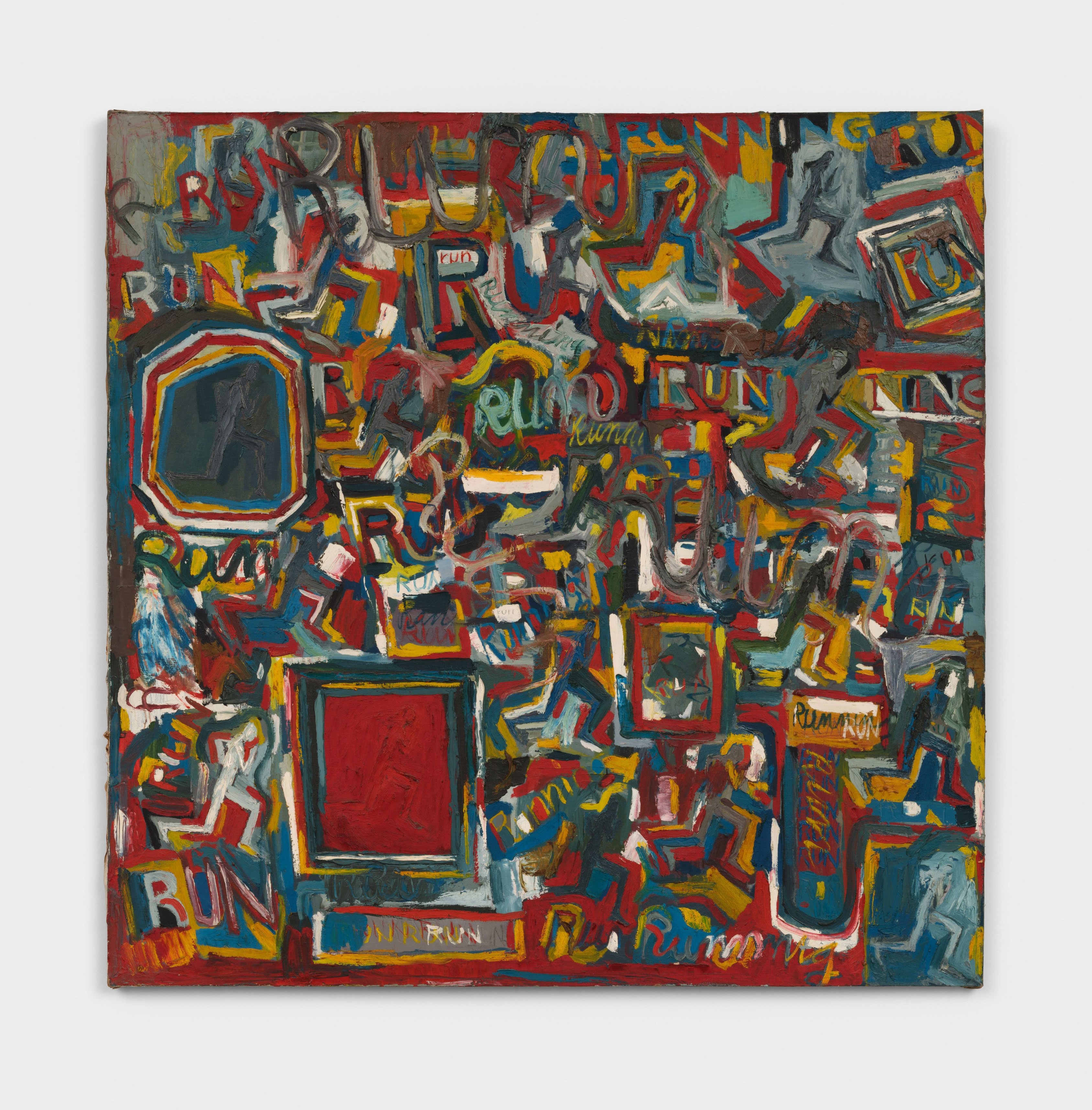
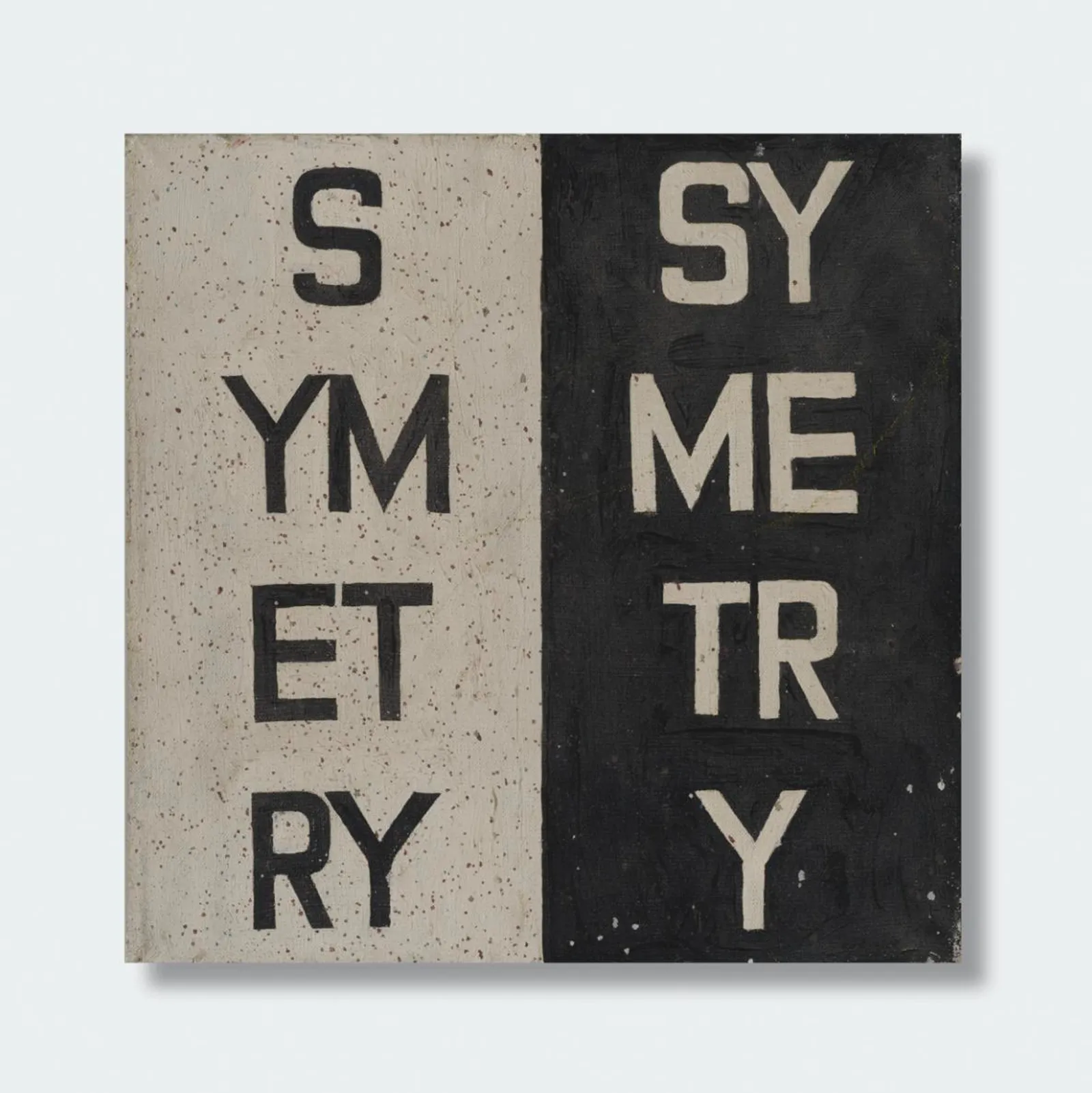
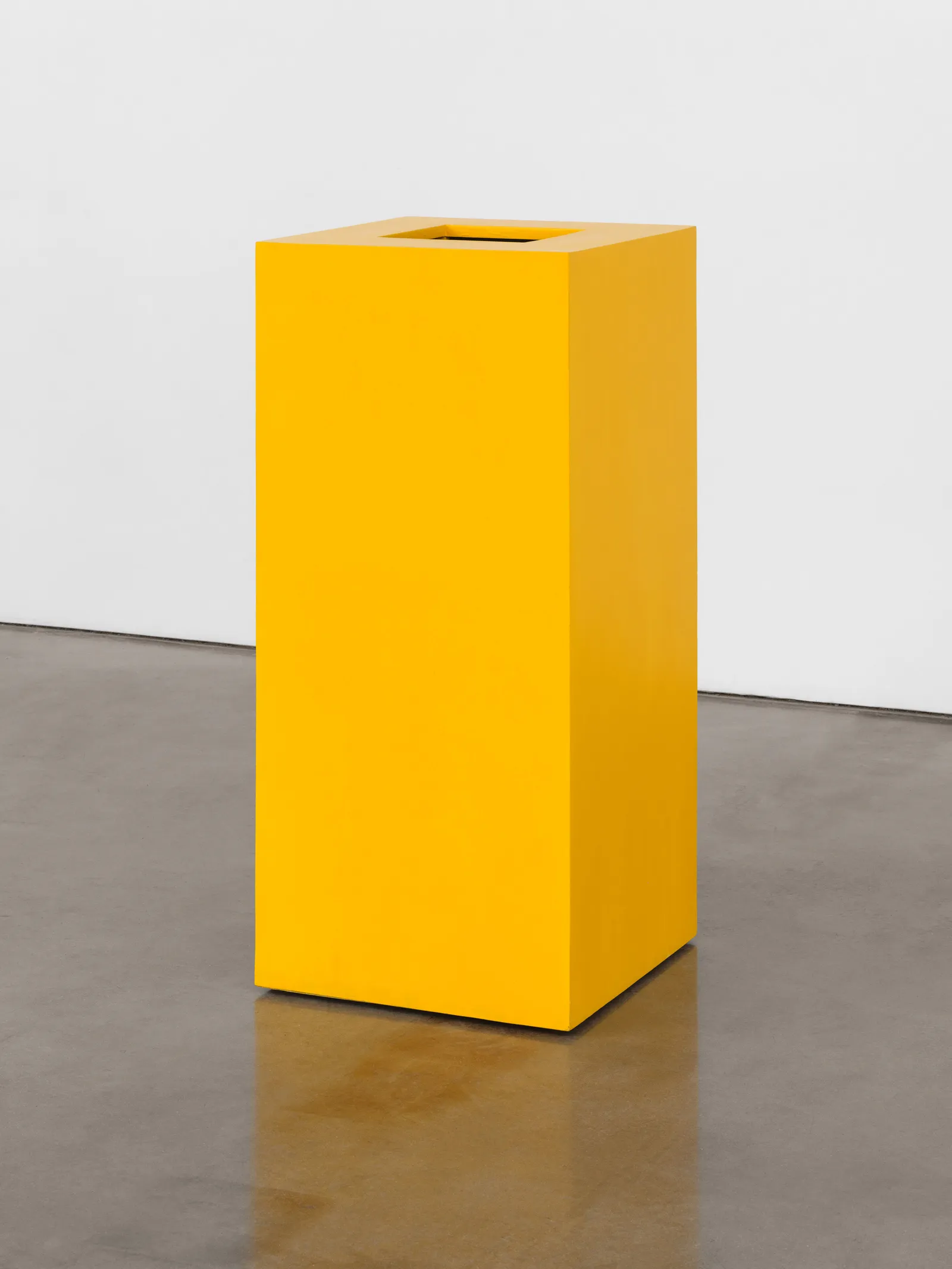
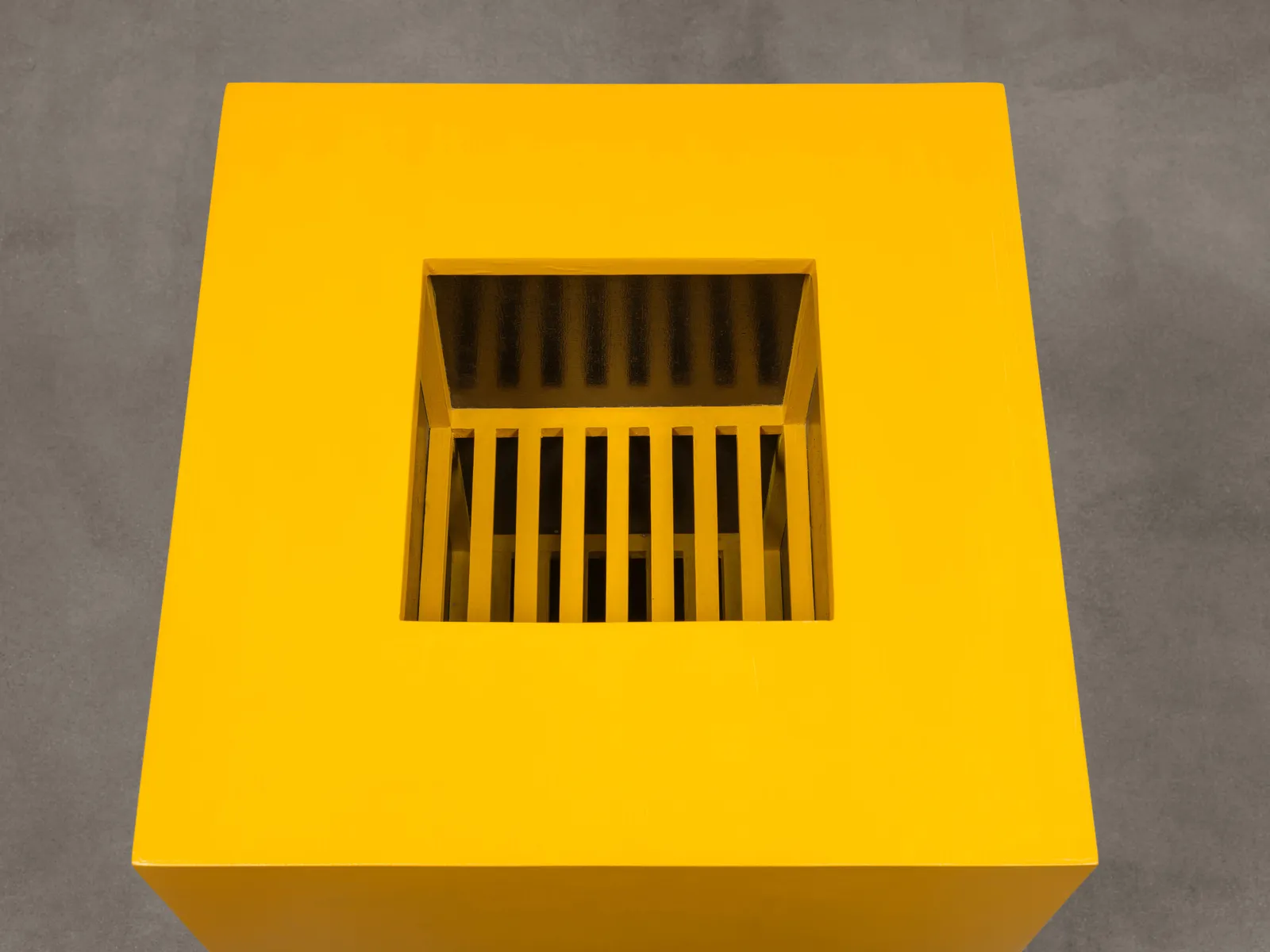
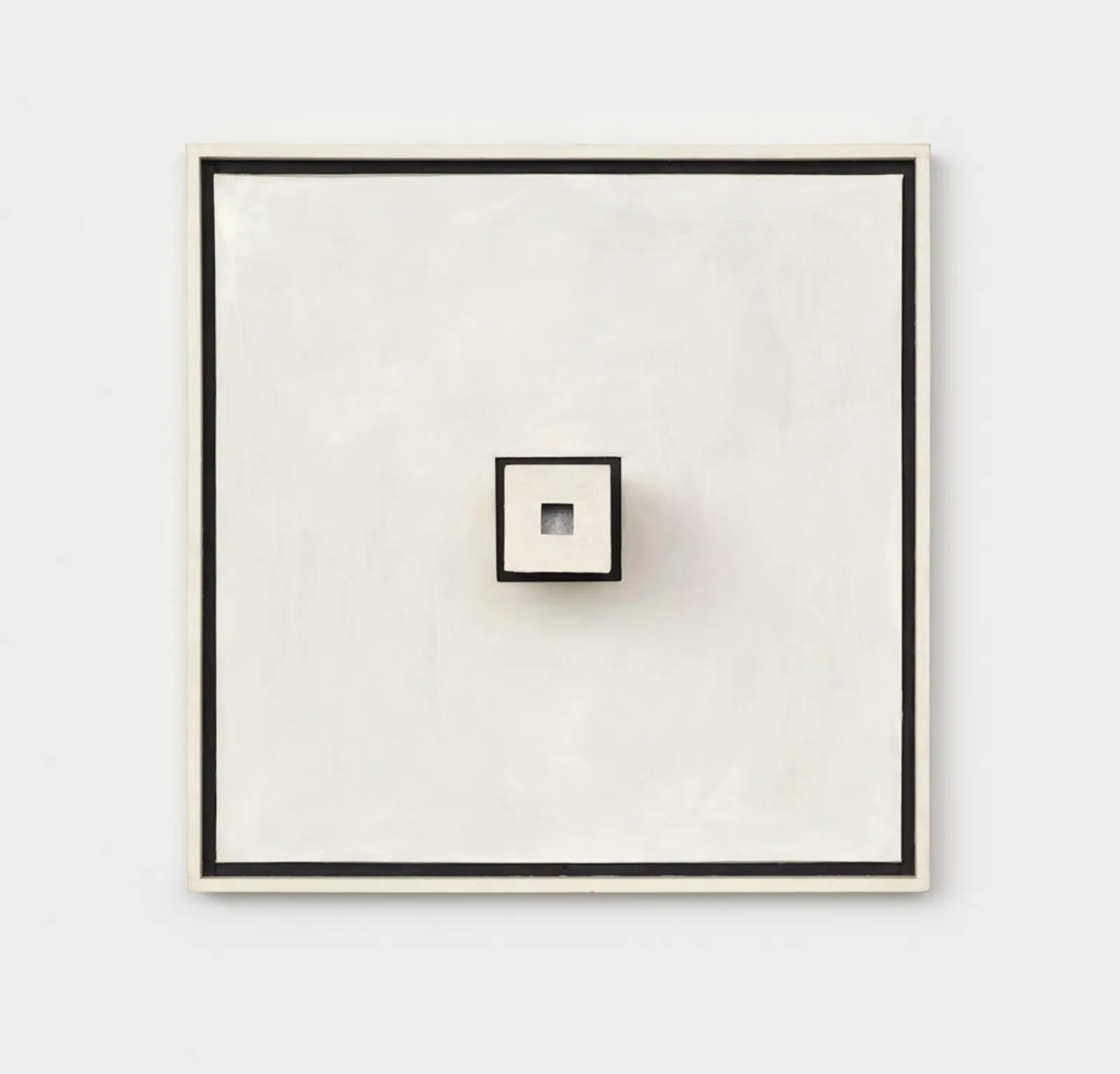
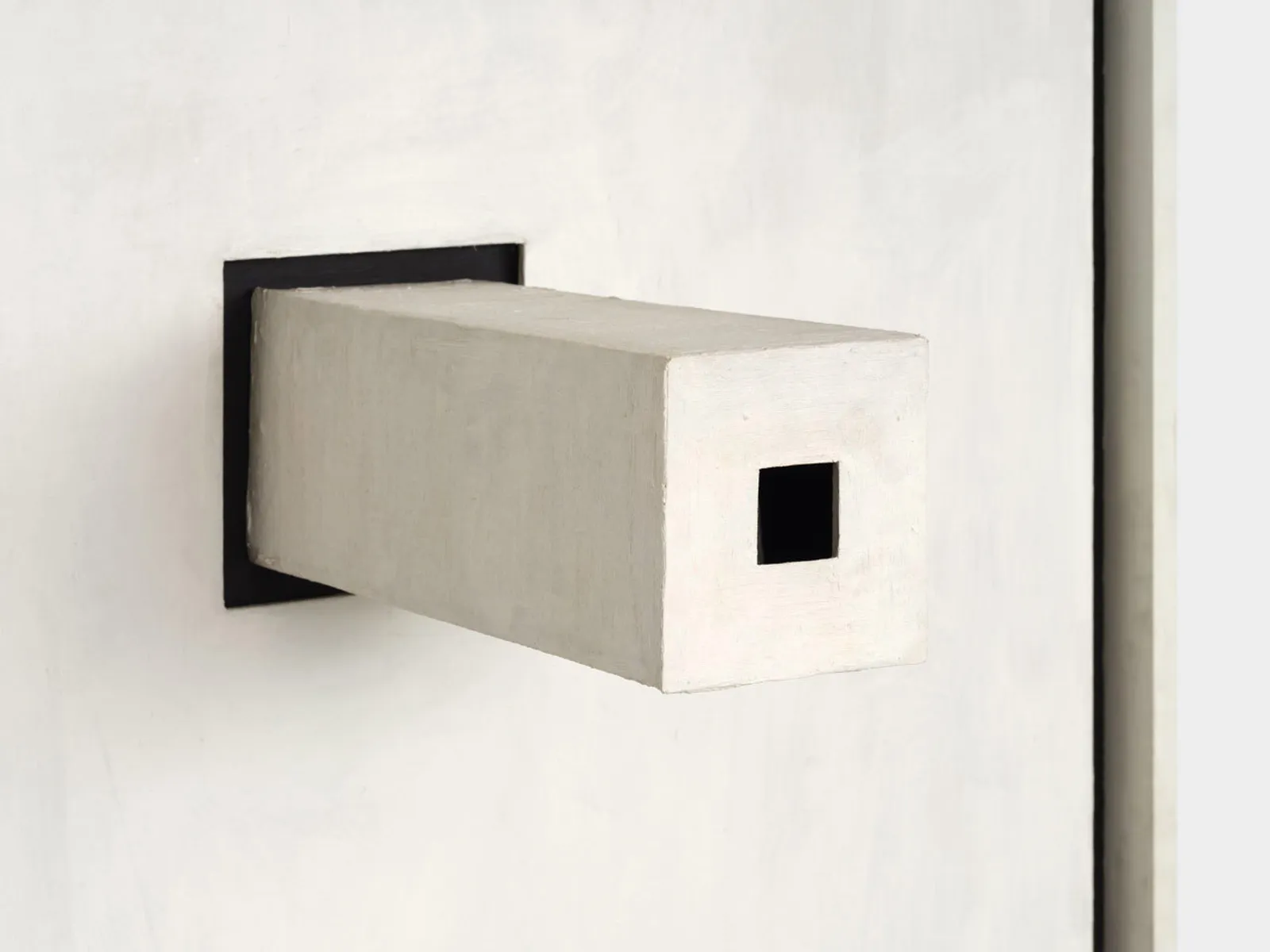
The rule persists across mediums without altering its internal structure. A relief square pushes outward from a white panel, testing how far a unit can leave the surface without losing its identity. A bright yellow cube, hollowed and structured internally, makes the module architectural. In the word paintings — RUN, SYMMETRY — language itself becomes a unit, repeated and inverted like form. The system does not remain confined to one format. It migrates.
LeWitt’s shift was not stylistic but structural. By specifying the conditions under which a work can be made, he repositions authorship as design rather than execution. The wall drawing on view is not the first realization of its instruction, nor will it be the last. The artwork is no longer a fixed thing but a structure capable of being realized again. Its persistence lies not in permanence but in repeatability.
What remains consistent is not a single form, but the rule that produces it.
LeWitt’s shift was not stylistic but structural. By separating the conception of the work from its execution, he repositioned authorship within the governing logic rather than the hand. The wall drawings make this separation visible: the rule produces the form. The artist designs the structure; others realize it. What persists is not the object but the system that generates it.
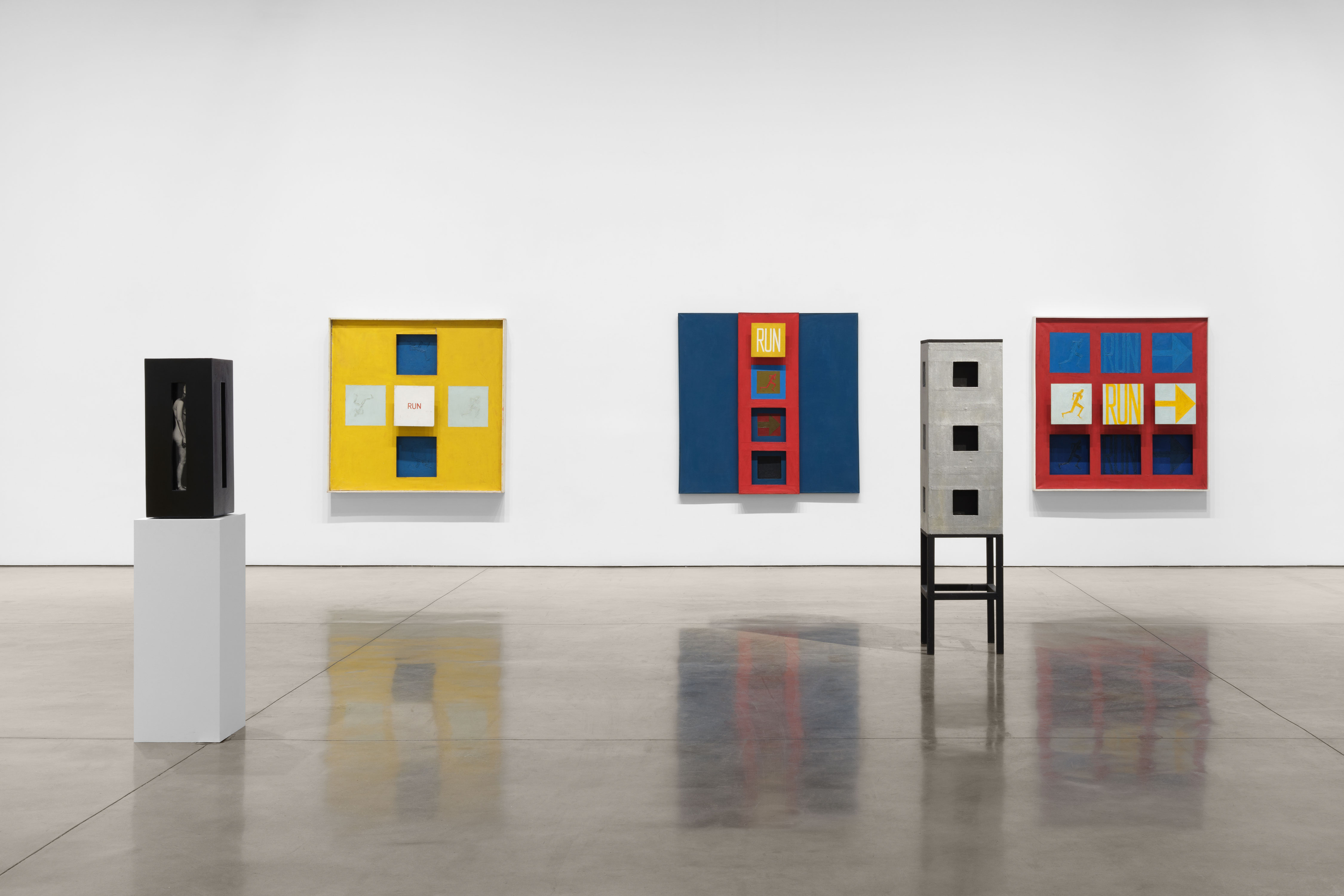
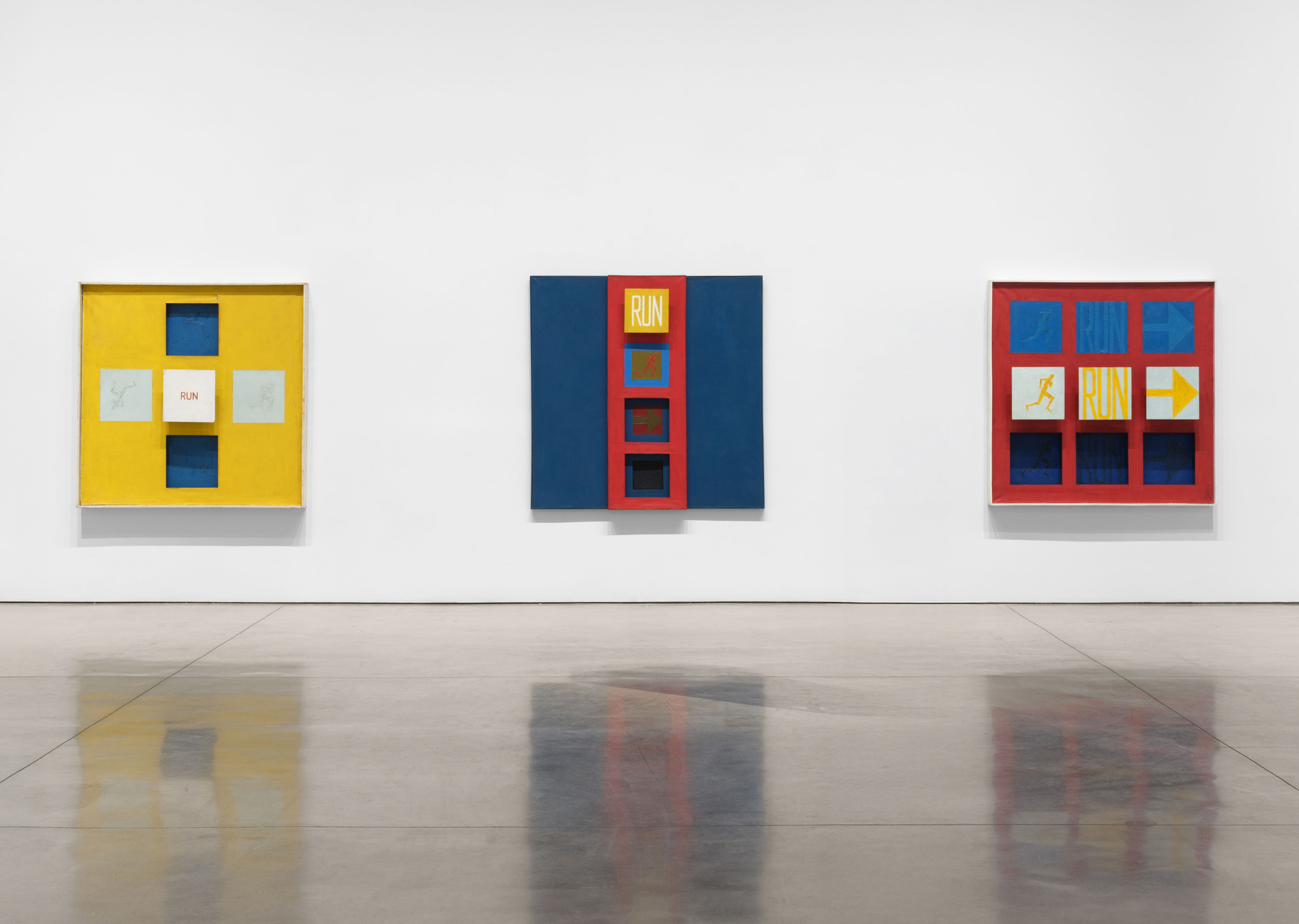



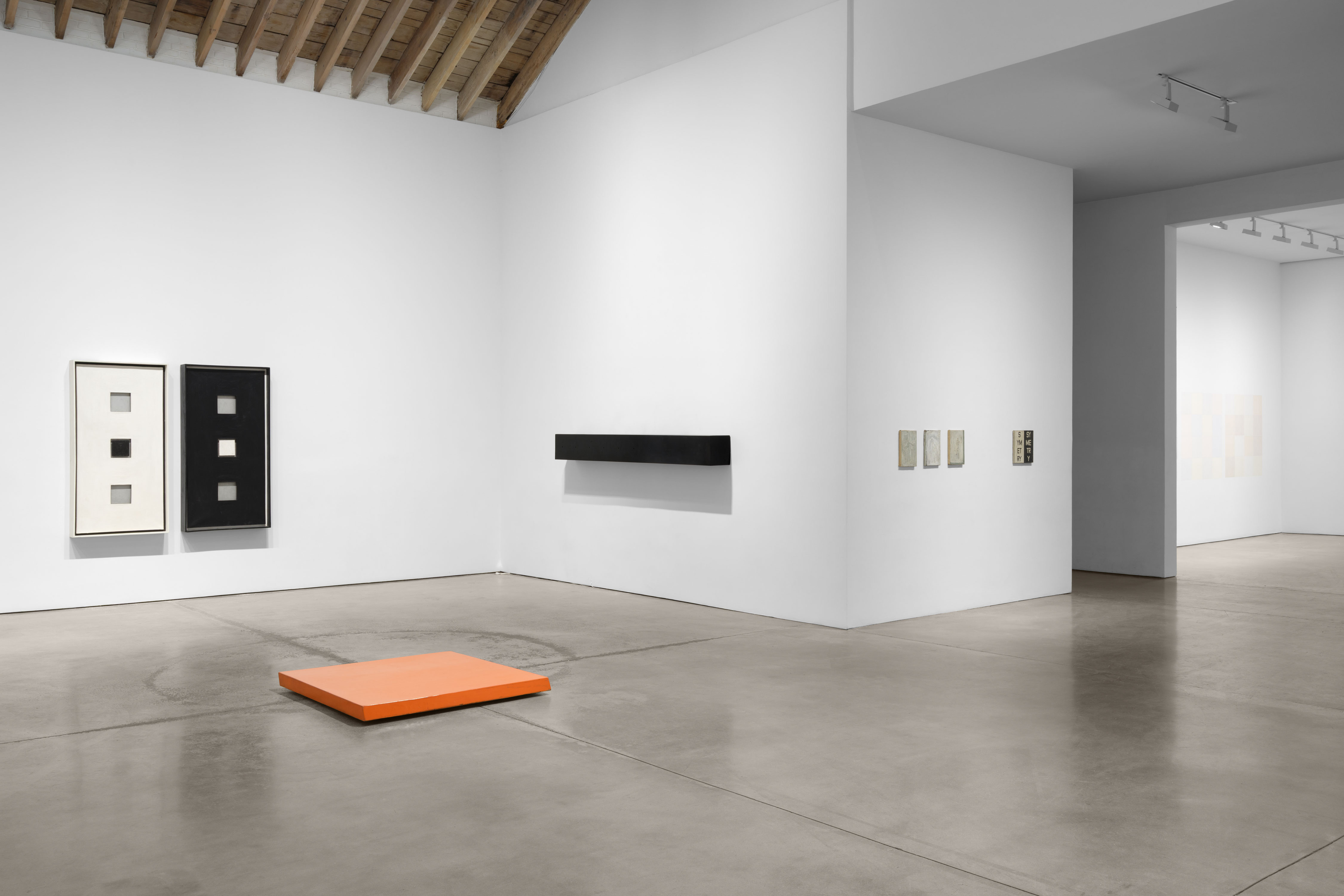
1. Exhibition view: Sol LeWitt, Works from the 1960s, Paula Cooper Gallery, New York, 15 January–28 February 2026. © 2026 The LeWitt Estate / Artists Rights Society (ARS), New York. Courtesy Paula Cooper Gallery, New York. Photo © Steven Probert.
2. Sol LeWitt, Run I, 1962. Oil on canvas, painted wood, 154.9 × 154.9 × 20.3 cm (61 × 61 × 8 in). © 2026 The LeWitt Estate / Artists Rights Society (ARS), New York. Courtesy Paula Cooper Gallery, New York. Photo © Steven Probert.
3. Exhibition view: Sol LeWitt, Works from the 1960s, Paula Cooper Gallery, New York, 15 January–28 February 2026. © 2026 The LeWitt Estate / Artists Rights Society (ARS), New York. Courtesy Paula Cooper Gallery, New York. Photo © Steven Probert.
4. Exhibition view: Sol LeWitt, Works from the 1960s, Paula Cooper Gallery, New York, 15 January–28 February 2026. © 2026 The LeWitt Estate / Artists Rights Society (ARS), New York. Courtesy Paula Cooper Gallery, New York. Photo © Steven Probert.
5. Sol LeWitt, Floor Structure, 1962. Oil on canvas and painted wood, 188.3 × 45.1 × 45.1 cm (74 1/4 × 17 7/8 × 17 7/8 in). © 2026 The LeWitt Estate / Artists Rights Society (ARS), New York. Courtesy Paula Cooper Gallery, New York. Photo © Steven Probert.
6. Exhibition view: Sol LeWitt, Works from the 1960s, Paula Cooper Gallery, New York, 15 January–28 February 2026. © 2026 The LeWitt Estate / Artists Rights Society (ARS), New York. Courtesy Paula Cooper Gallery, New York. Photo © Steven Probert.
7. Sol LeWitt, Run, 1960. Oil on canvas, 152.4 × 146.7 cm (60 × 57 7/8 in). © 2026 The LeWitt Estate / Artists Rights Society (ARS), New York. Courtesy Paula Cooper Gallery, New York. Photo © Steven Probert.
8. Exhibition view: Sol LeWitt, Works from the 1960s, Paula Cooper Gallery, New York, 15 January–28 February 2026. © 2026 The LeWitt Estate / Artists Rights Society (ARS), New York. Courtesy Paula Cooper Gallery, New York. Photo © Steven Probert.
9. Sol LeWitt, Double Wall Piece, 1962. Oil on canvas and painted wood, two panels, 160.7 × 82.6 × 14.6 cm (63 3/8 × 32 5/8 × 5 3/4 in). © 2026 The LeWitt Estate / Artists Rights Society (ARS), New York. Courtesy Paula Cooper Gallery, New York. Photo © Steven Probert.
10. Exhibition view: Sol LeWitt, Works from the 1960s, Paula Cooper Gallery, New York, 15 January–28 February 2026. © 2026 The LeWitt Estate / Artists Rights Society (ARS), New York. Courtesy Paula Cooper Gallery, New York. Photo © Steven Probert.
11. Sol LeWitt, Symmetry, 1963. Oil on canvas, 30.5 × 30.5 cm (12 1/8 × 12 1/8 in). © 2026 The LeWitt Estate / Artists Rights Society (ARS), New York. Courtesy Paula Cooper Gallery, New York. Photo © Cultural Preservation Technologies.
12. Exhibition view: Sol LeWitt, Works from the 1960s, Paula Cooper Gallery, New York, 15 January–28 February 2026. © 2026 The LeWitt Estate / Artists Rights Society (ARS), New York. Courtesy Paula Cooper Gallery, New York. Photo © Steven Probert.
13. Sol LeWitt, Floor Structure ("Well"), 1963/1964. Painted wood, 132.7 × 61 × 61 cm (52 1/4 × 24 1/8 × 24 1/8 in). © 2026 The LeWitt Estate / Artists Rights Society (ARS), New York. Courtesy Paula Cooper Gallery, New York. Photo © Steven Probert.
14. Detail view: Sol LeWitt, Floor Structure ("Well"), 1963/1964. Painted wood, 132.7 × 61 × 61 cm (52 1/4 × 24 1/8 × 24 1/8 in). © 2026 The LeWitt Estate / Artists Rights Society (ARS), New York. Courtesy Paula Cooper Gallery, New York. Photo © Steven Probert.
15. Exhibition view: Sol LeWitt, Works from the 1960s, Paula Cooper Gallery, New York, 15 January–28 February 2026. © 2026 The LeWitt Estate / Artists Rights Society (ARS), New York. Courtesy Paula Cooper Gallery, New York. Photo © Steven Probert.
16. Sol LeWitt, Wall Structure, White, 1962. Oil on canvas and painted wood, 99.1 × 99.1 × 59.1 cm (39 1/8 × 39 1/8 × 23 3/8 in). © 2026 The LeWitt Estate / Artists Rights Society (ARS), New York. Courtesy Paula Cooper Gallery, New York. Photo © Steven Probert.
17. Detail view: Sol LeWitt, Wall Structure, White, 1962. Oil on canvas and painted wood, 99.1 × 99.1 × 59.1 cm (39 1/8 × 39 1/8 × 23 3/8 in). © 2026 The LeWitt Estate / Artists Rights Society (ARS), New York. Courtesy Paula Cooper Gallery, New York. Photo © Steven Probert.
18. Exhibition view: Sol LeWitt, Works from the 1960s, Paula Cooper Gallery, New York, 15 January–28 February 2026. © 2026 The LeWitt Estate / Artists Rights Society (ARS), New York. Courtesy Paula Cooper Gallery, New York. Photo © Steven Probert.
19. Exhibition view: Sol LeWitt, Works from the 1960s, Paula Cooper Gallery, New York, 15 January–28 February 2026. © 2026 The LeWitt Estate / Artists Rights Society (ARS), New York. Courtesy Paula Cooper Gallery, New York. Photo © Steven Probert.
20. Sol LeWitt, Modular Wall Piece with Cube, 1965/1977. White-painted wood, 53.5 × 244 × 53.5 cm (21 1/8 × 96 1/8 × 21 1/8 in). © 2026 The LeWitt Estate / Artists Rights Society (ARS), New York. Courtesy Paula Cooper Gallery, New York. Photo © Steven Probert.
Cover. Sol LeWitt, Modular Wall Piece with Cube, 1965/1977. White-painted wood, 53.5 × 244 × 53.5 cm (21 1/8 × 96 1/8 × 21 1/8 in). © 2026 The LeWitt Estate / Artists Rights Society (ARS), New York. Courtesy Paula Cooper Gallery, New York. Photo © Steven Probert.
All images © their respective rights holders.
Image rights & attribution →