



The quietest painting in the room gives the show away.
It appears to offer the white cube the thing the white cube understands best: a pale monochrome, over two meters, hung in even light. The room knows what to do with that — distance, reverence, the long look reserved for paintings of almost nothing. The first reading arrives on schedule: raw field, empty ground, a rest between the patterned works. Then you get close and the surface turns. A single line, no thicker than thread, meanders across the entire field, edge to edge, doubling and turning, leaving no region untouched. The painting was never blank. You did what painting trained you to do — you saw ground — and the work let you, for exactly as long as it took to cross the room.
Painting rests on an agreement so old it no longer feels like one: the surface begins as nothing. Ground is painting's word for the part of the work it does not have to account for — the neutral field that waits until design arrives. The white cube extends the same agreement to the scale of architecture: white walls, gray floor, a room pretending to be no one's. Untitled (Weshé, 2026) takes the agreement and returns it unsigned. The pale field is not what comes before design. It is design at its lowest volume. The large pattern has withdrawn, and what it withdrew from is still fully at work.
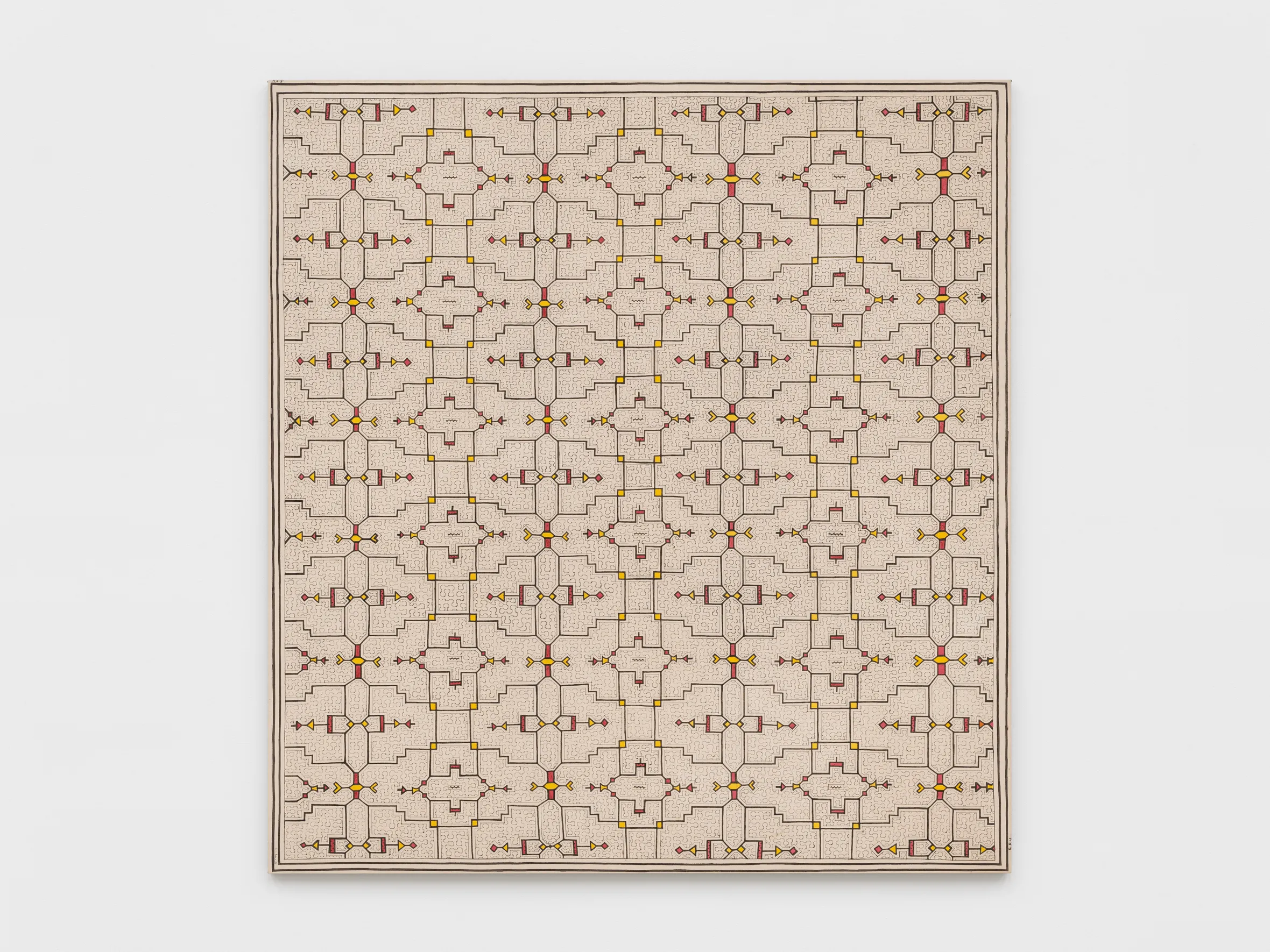
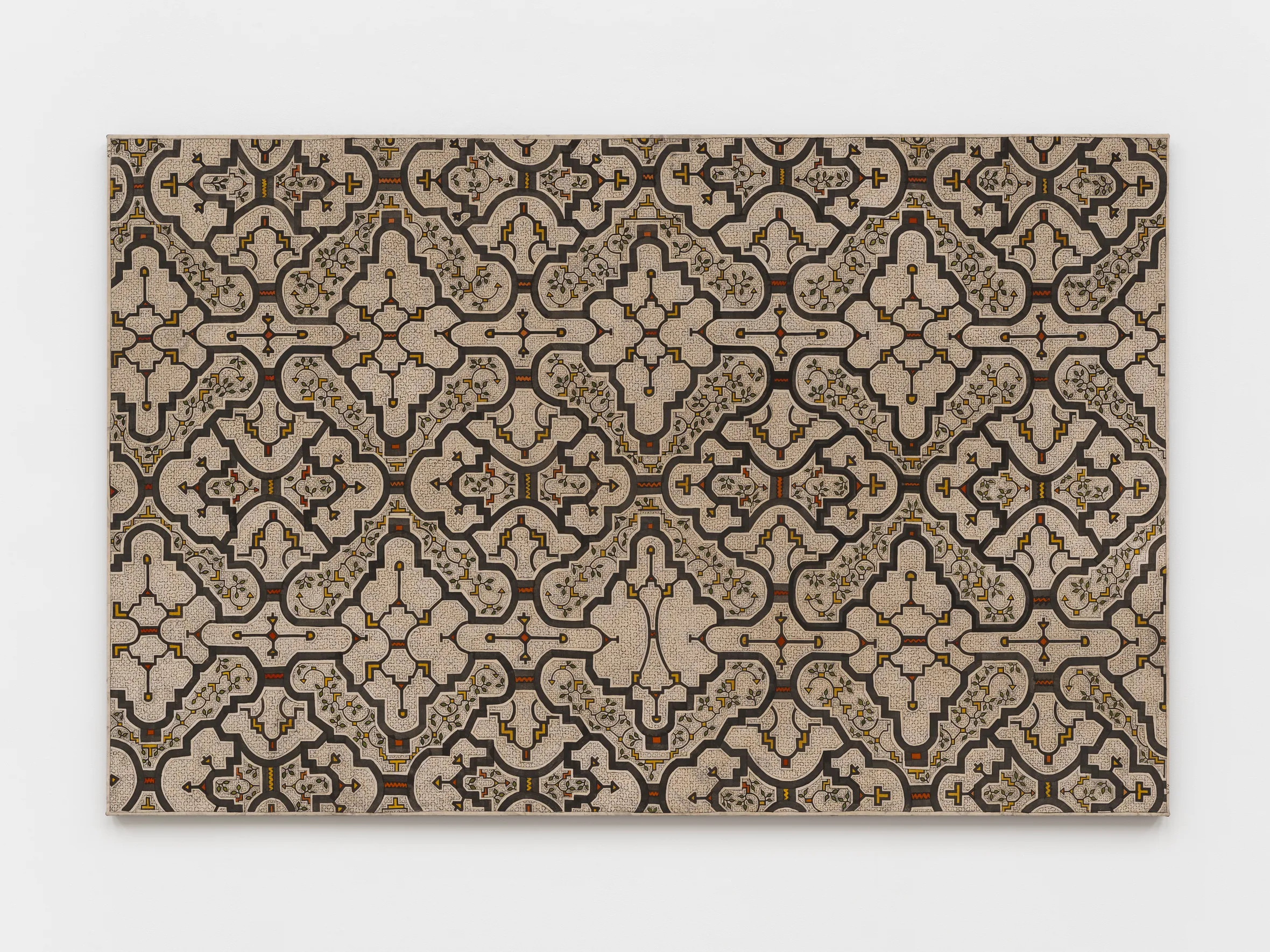
Walk back through the show after that and every canvas has changed. The bold geometry is where you left it — the stepped crosses, the interlocking medallions, the long armatures of line — but the pale zones between the forms no longer read as background. The same fine line is running there too, at a scale the viewing distance softens. The category fails quietly, canvas by canvas. What looked like ground was never waiting behind the pattern. It is the field the pattern comes from.
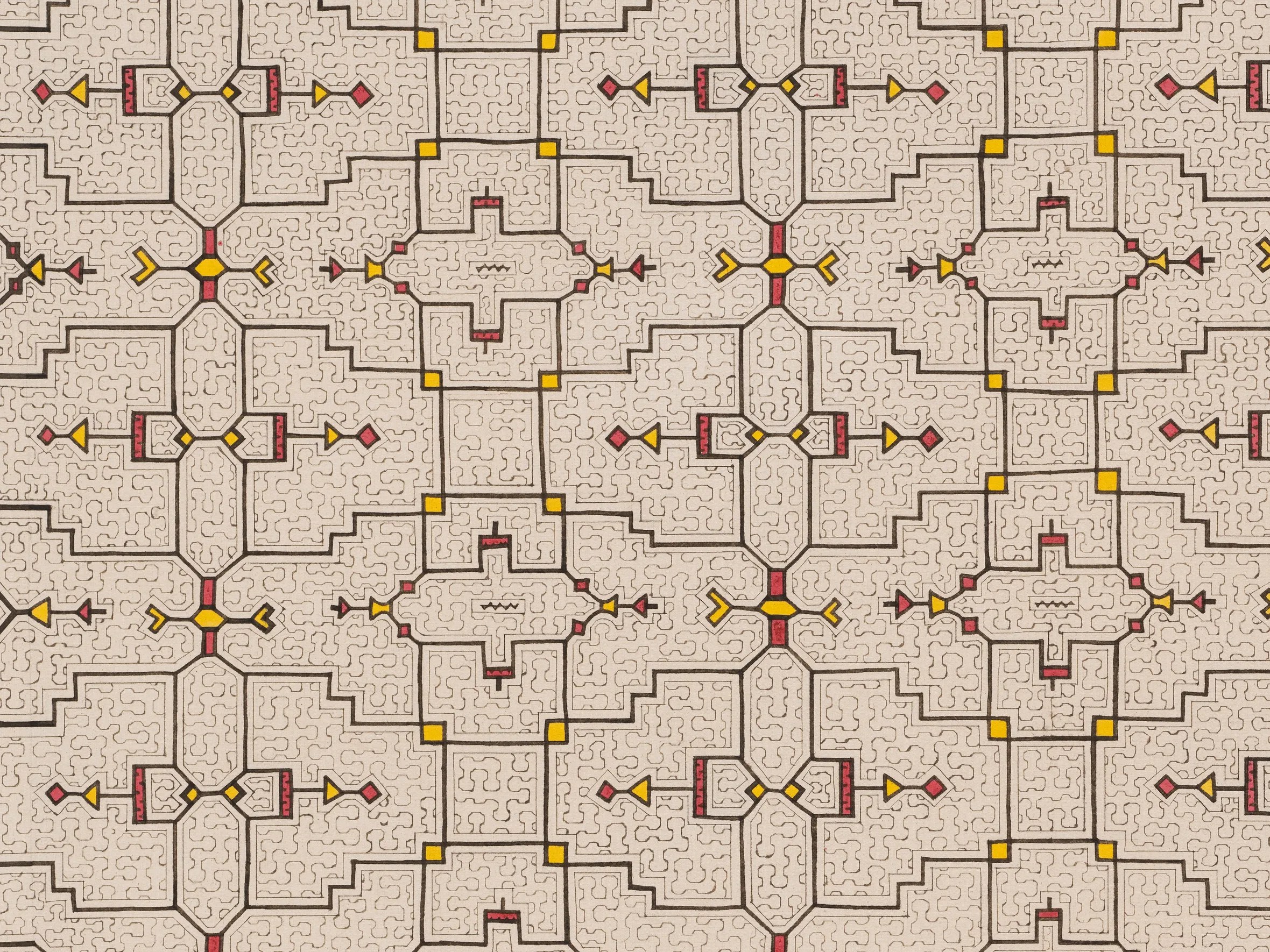
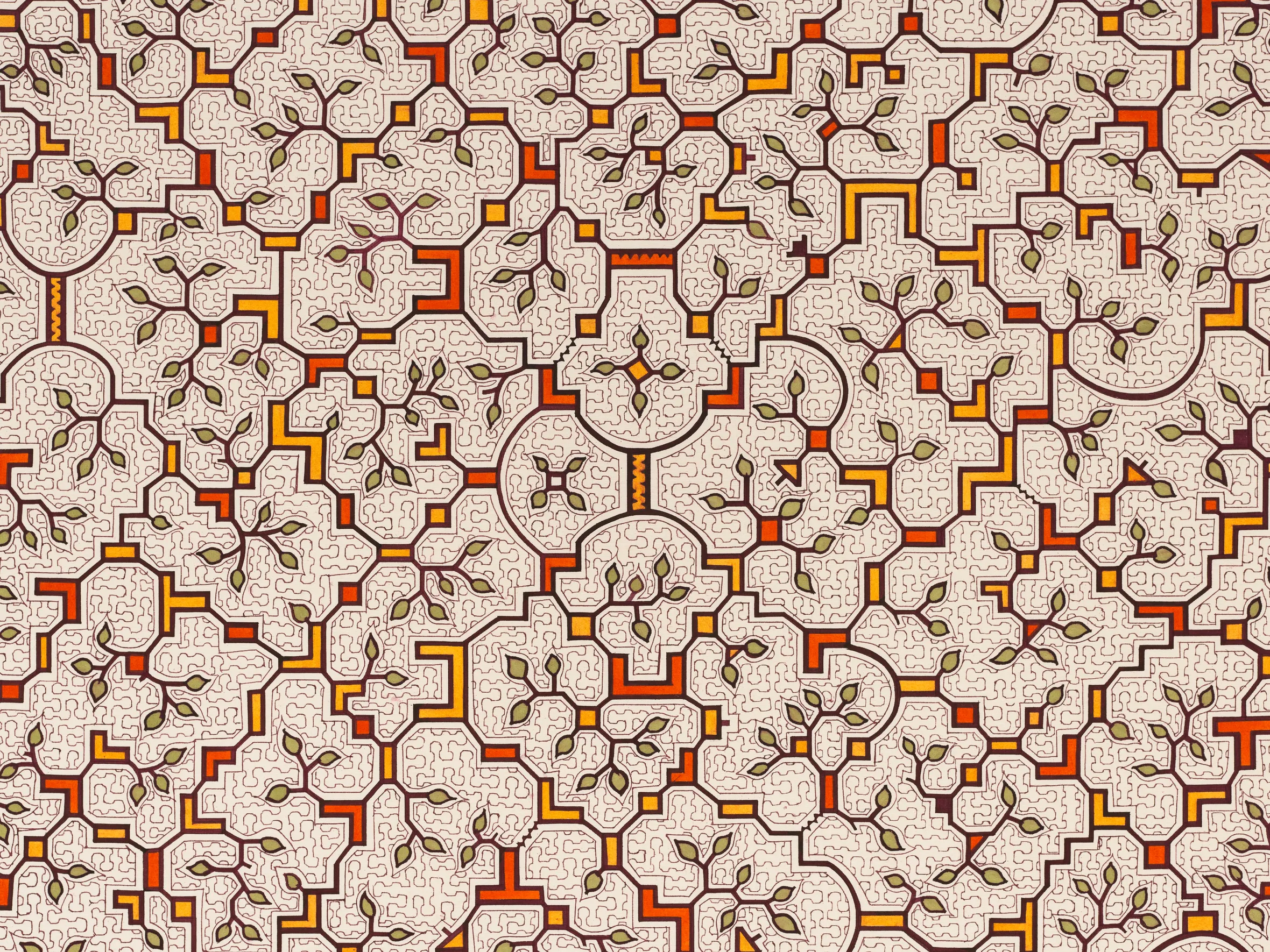
Stand close and the drawing sorts into three weights. A form line sets the large structure. An echo runs beside it, shadowing every turn. And a fill line, finest of all, takes whatever remains, so that no part of the surface is left unaccounted for. There is no leftover in this system — no zone where the surface is off duty. Shipibo-Konibo descriptions of Kené reach for paths, roads, the meanders of the Ucayali: line as movement through a field, not a mark placed on a support. Flores, who has drawn these systems for five decades, has said that design is too small a word. The pale square is the third register shown alone, with nothing above it — the register painting mistakes for absence.
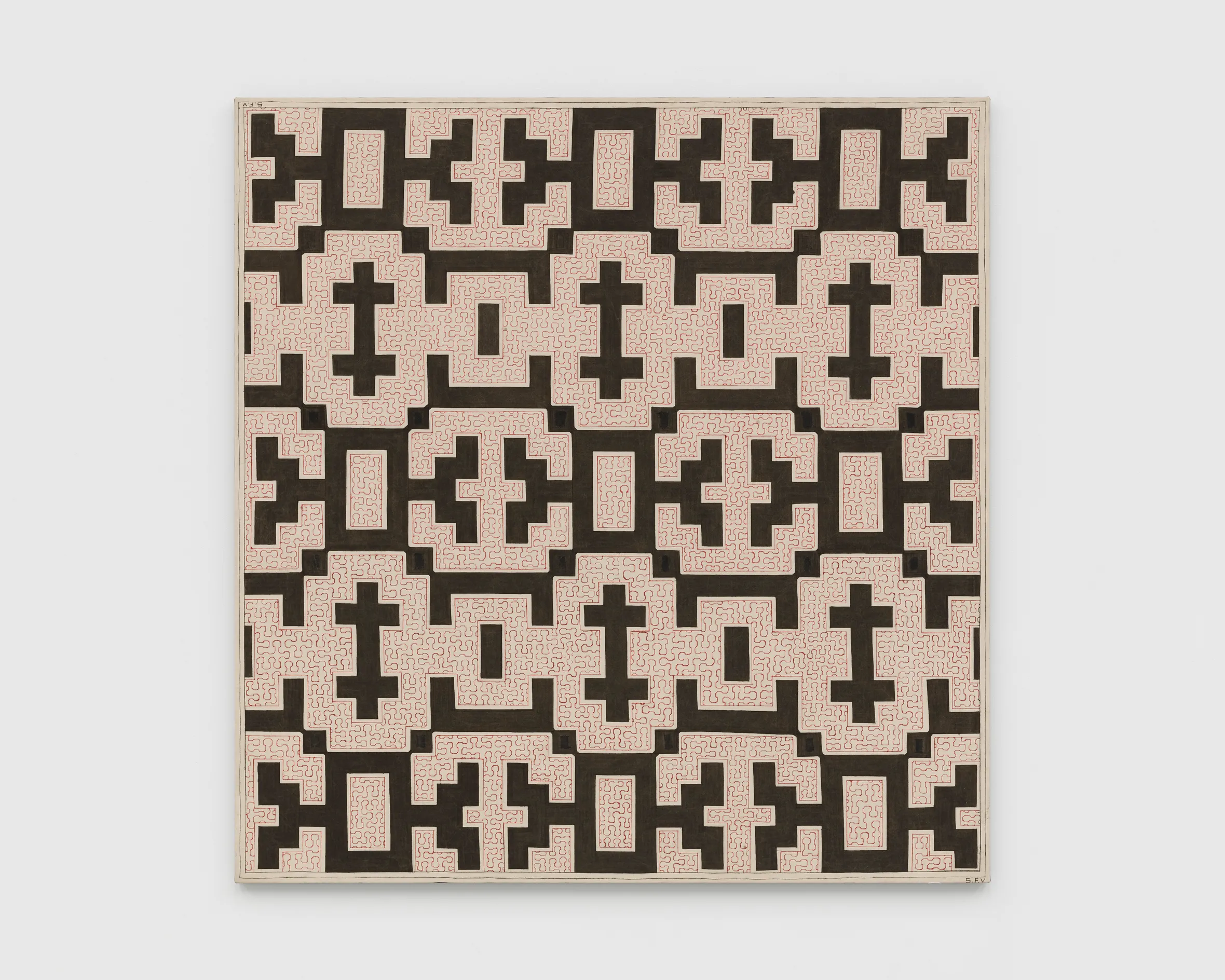
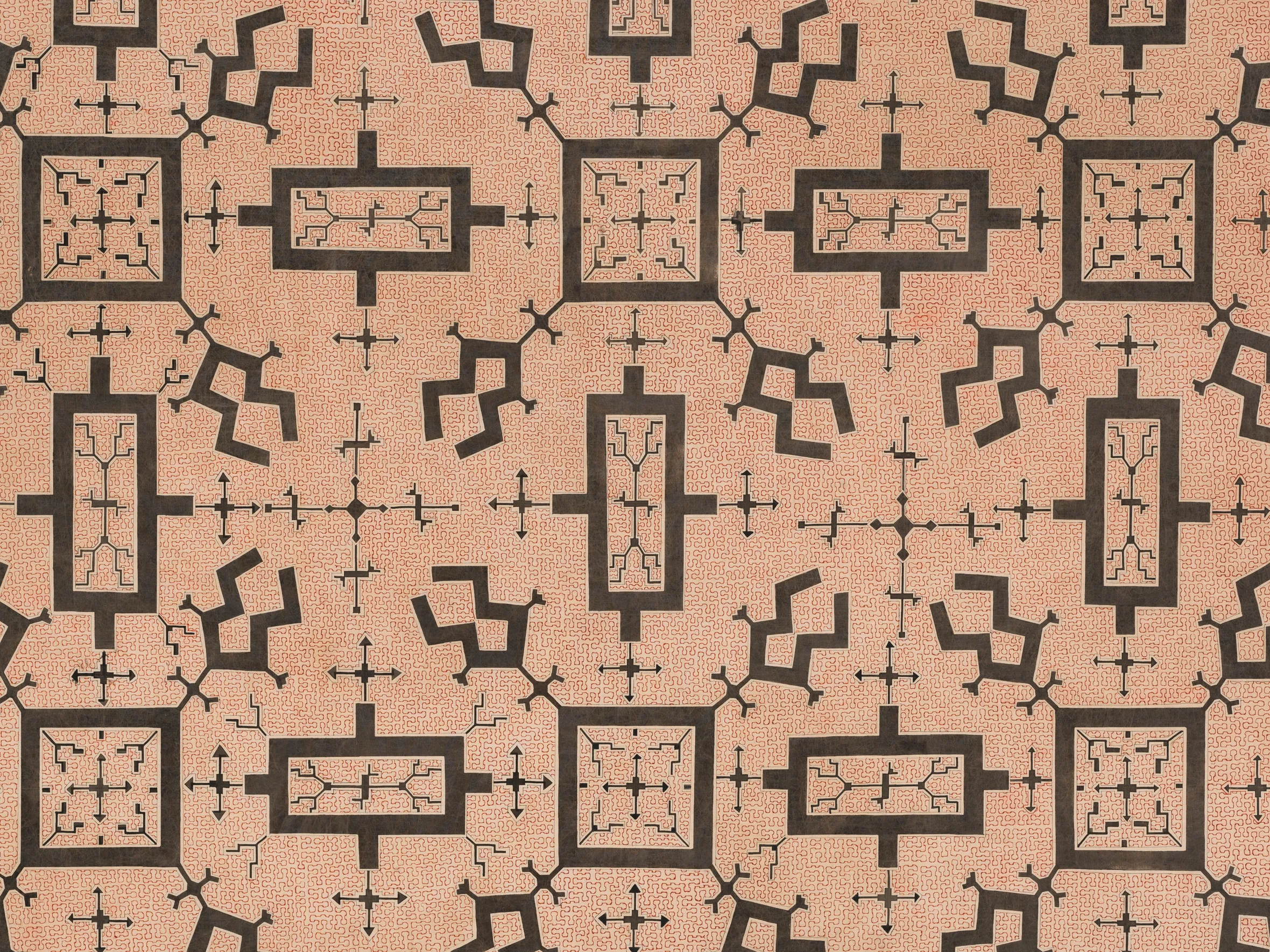
The oldest work in the room looks, from a distance, like the one that accepts painting's terms. Untitled (Maya Kené, 2012), made in dyes alone, sets blocky near-black forms at the highest contrast in the exhibition — dark figure, pale field, the oldest arrangement painting knows. Up close, the field is red. The fine line filling every pale zone is drawn in a different color from the structure it surrounds, so the two systems can be told apart: structure in one register, movement in another, nowhere a surface that is merely waiting. The work that looks most like figure on ground is the one that shows the ground drawn.
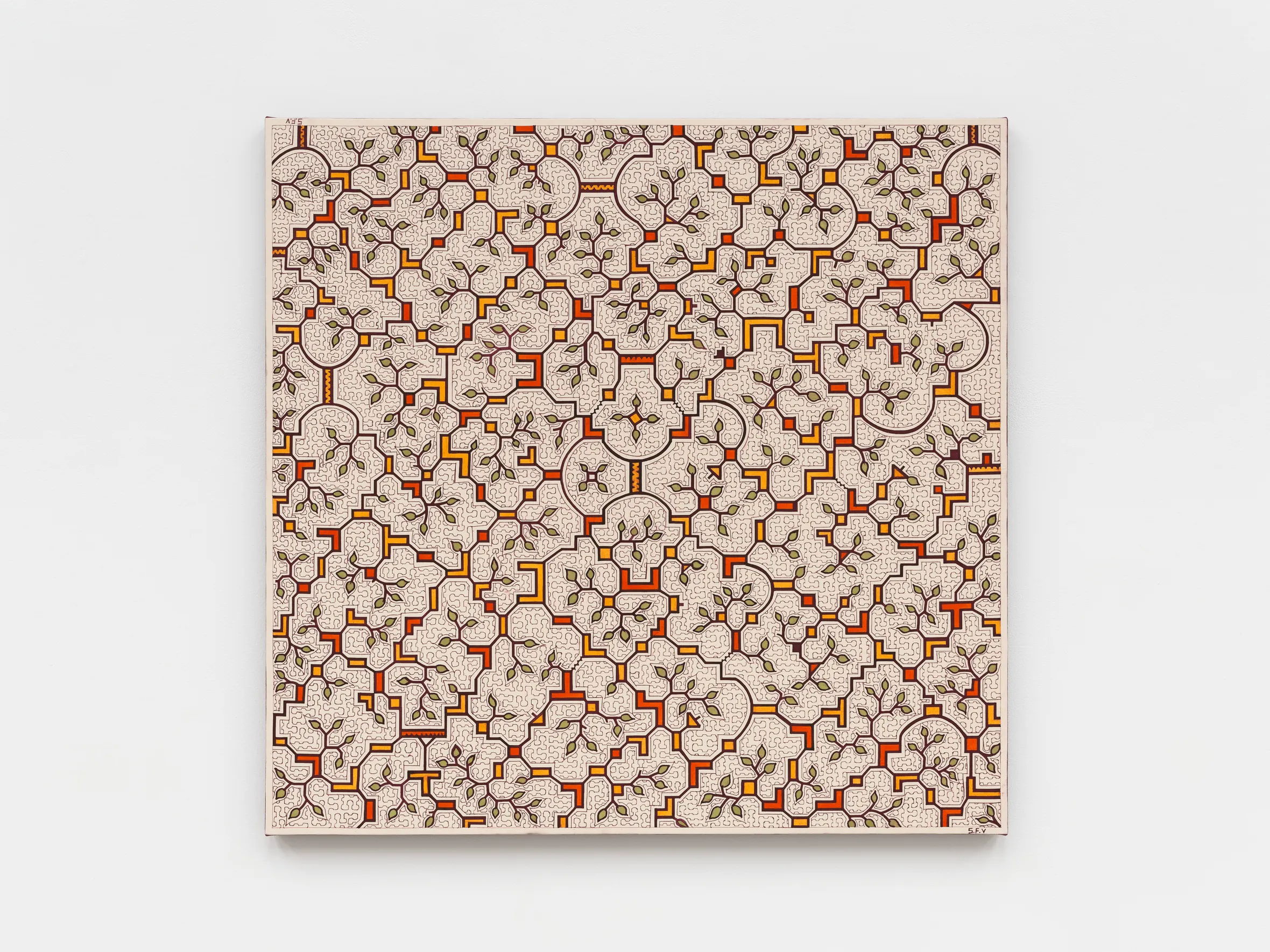
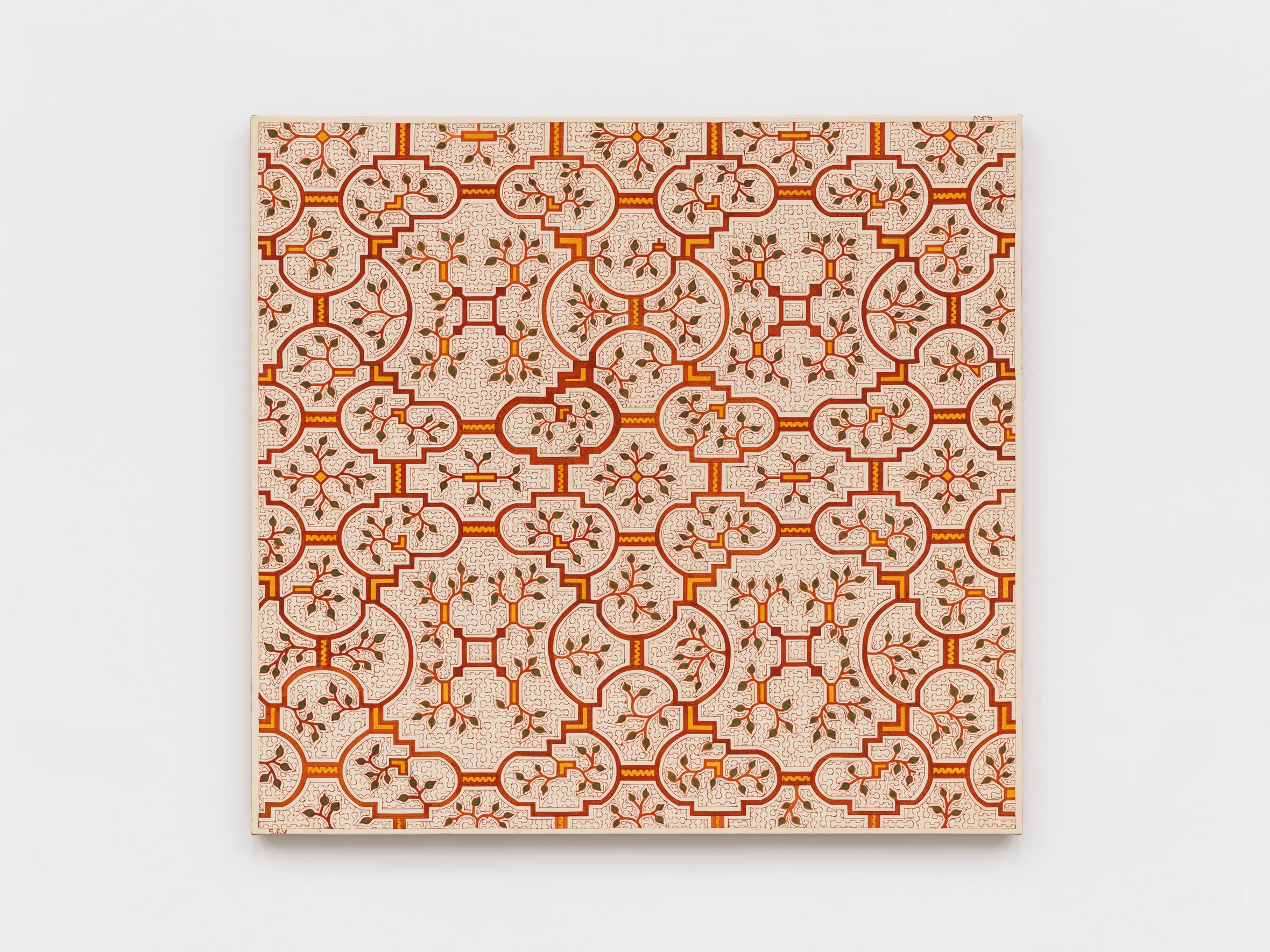
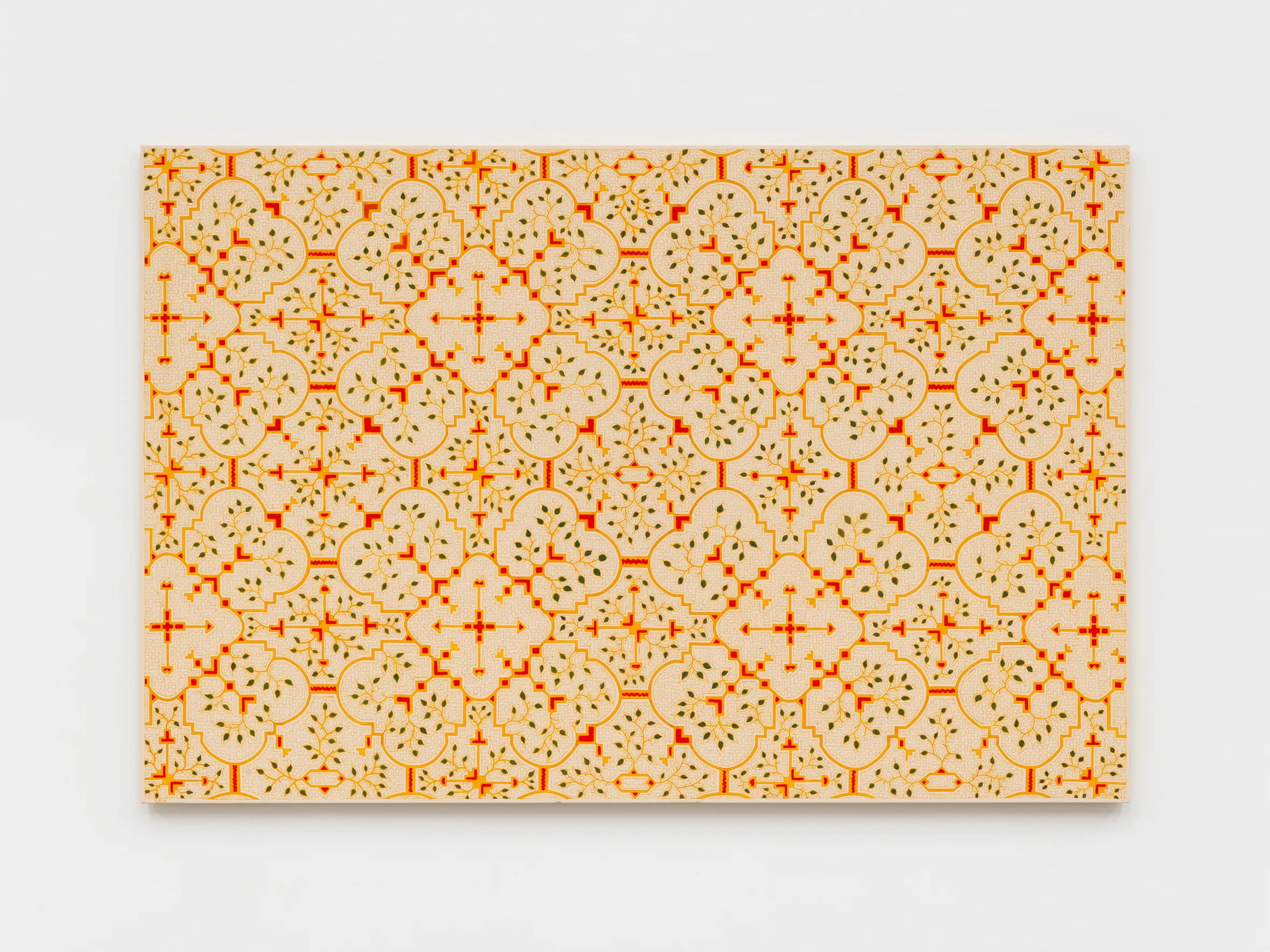
The recent canvases stop separating the systems, and two of them do it under one name. Untitled (Pei Maya Kené, 2026) hangs here twice — one canvas just under a meter square, the other barely larger — the same pattern named twice and executed twice. In the smaller, the form line rounds into linked ovals in burnt orange, sprays of green leaves filling each cell the structure encloses. In the other, the same forms run in deep maroon, and the leaves scatter across the armature until the geometry reads as branching. The rule is shared; the fields differ everywhere. Both panels are signed S.F.V. twice, at opposite corners, one signature upside down — as is the 2012 square. The canvases are signed for a surface with no fixed top: the logic of cloth, worn and spread and turned, carried into the format of the wall.
Across the room, the repetition never behaves like printing. Local symmetry is strict; across the full field, axes slip, a unit widens, the registration wanders and recovers. Flores works with her daughters, as the pattern has always been worked, and Akinananti — together, with love and joy — names it. The surface does not hide the collaboration. It gives it a structure: shared rule, repeated form, slight drift. Even what painting would call the ground arrives inherited.
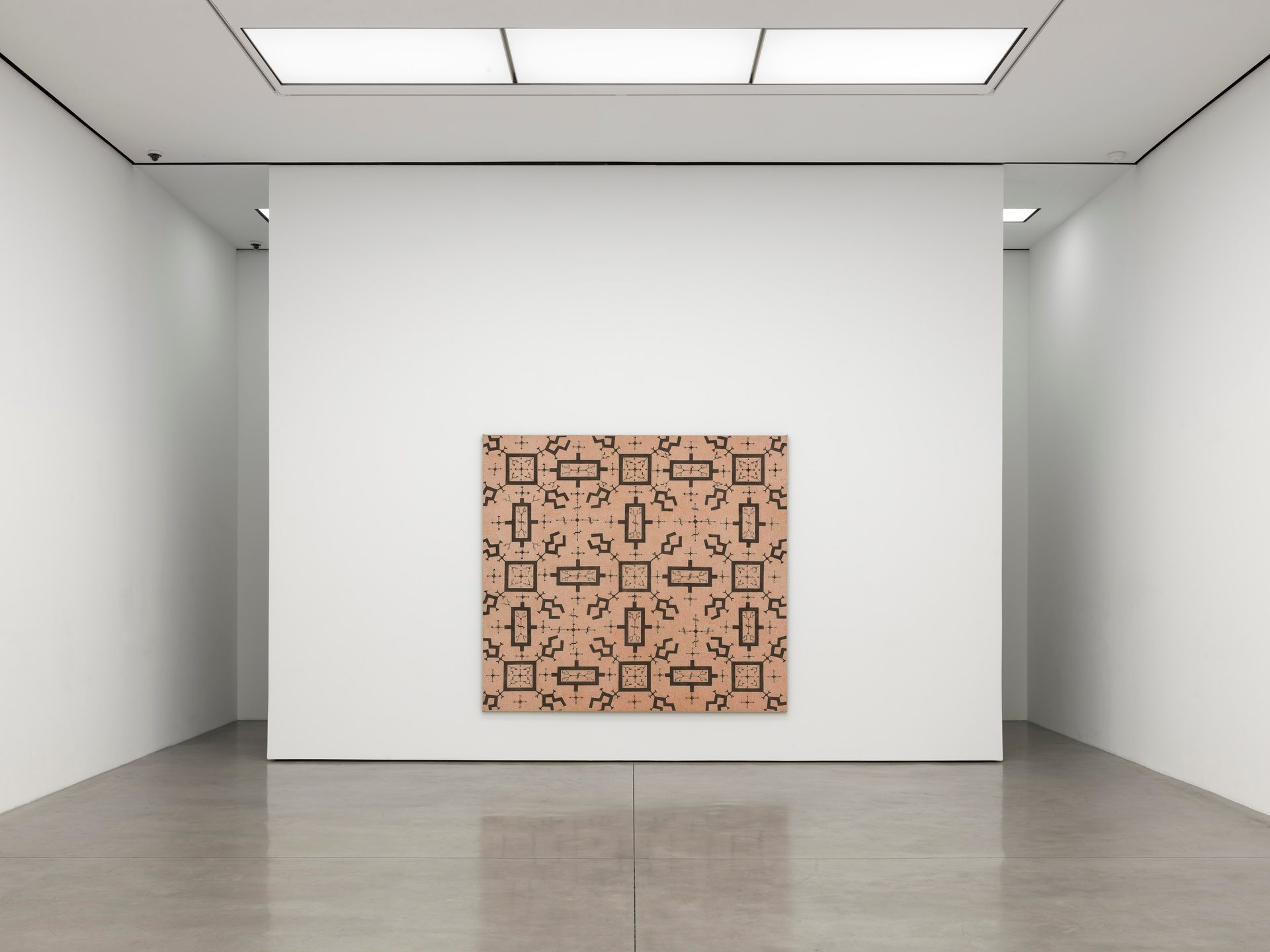
One canvas comes close to giving painting its ground back. Untitled (Shao Kené, 2026), alone on the freestanding wall at the center of the show, is the only work whose field carries open color — a salmon wash, warm and material, the weave of the wild cotton visible through it, under a dark, sparser pattern. For a moment the category returns: color as ground, pattern on top. Then the recovery runs the other way. A dyed field is not a neutral one. The color was gathered, cooked, and laid in; the ground is as made as the line above it. In the one place the exhibition looks like pattern on support, the support turns out to be an act.
Two horizontal canvases from 2025 show how the mistake gets manufactured. Untitled (Pei Maya Kené, 2025) is the densest surface in the show — band, network, fill, accent, stacked until rest disappears; nothing in it can be read as ground from any distance. Untitled (A Window onto Endlessness) 2, at almost five meters, works the other direction: a fine, open module repeated across such length that from the middle of the room the network softens into a pale shimmer — the painting turning back into "ground" in real time as you step away. Distance is the instrument the room uses to make blankness, and the panorama lets you watch it happen.
The catalogue offers Josef and Anni Albers, the Bauhaus, the grid. The reference splits as soon as it reaches the cloth. Josef’s squares stage color against a ground. Anni’s weaving complicates the separation itself: structure and surface are produced together, and her account of that intelligence runs through the weavers of ancient Peru, whom she called her great teachers. She does not supply Flores with a Western precedent. She records one route by which Western modernism learned from an Indigenous textile knowledge already there. The works enter the wall as painting. Their system begins elsewhere.
The last look belongs to the pale square. It no longer reads as the quiet painting in the show. It reads as the whole system at its lowest volume: the line that was under everything, shown without anything over it. Fourteen canvases have entered the gallery under the conditions of painting, and the gallery has given them what it gives paintings — a wall, a frame, a viewing distance. The white cube gives the works a wall. It was never in a position to give them their ground. They arrived with it.
Painting often treats ground as the part of the work that does not have to answer for itself: support before image, field before form, surface before meaning. Flores’s Kené paintings remove that exemption. What appears pale, open, or backgrounded is already active: line, dye, fiber, repetition, authorship, and care. The ground is not waiting to receive structure. It is structure at its lowest volume.
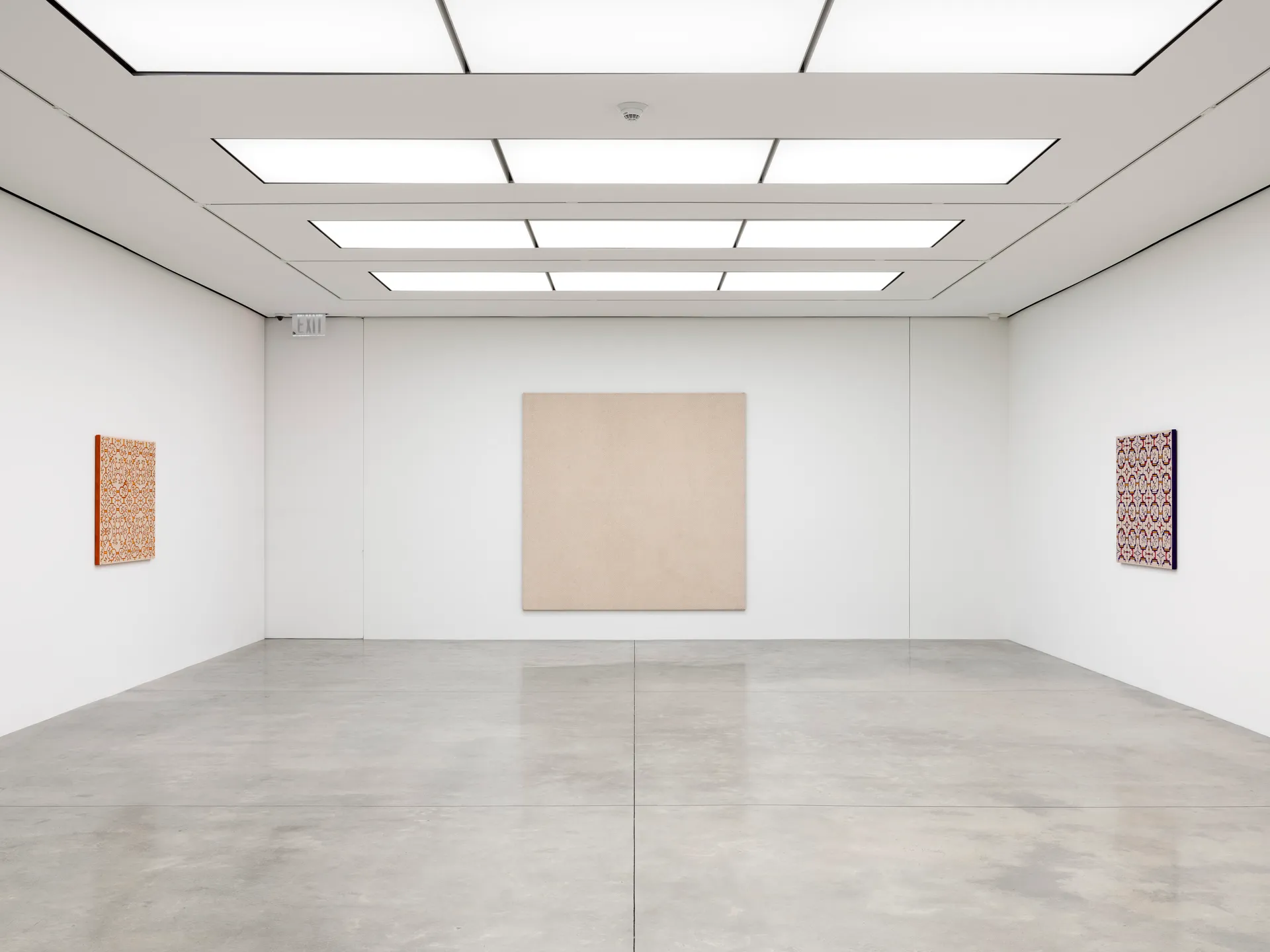

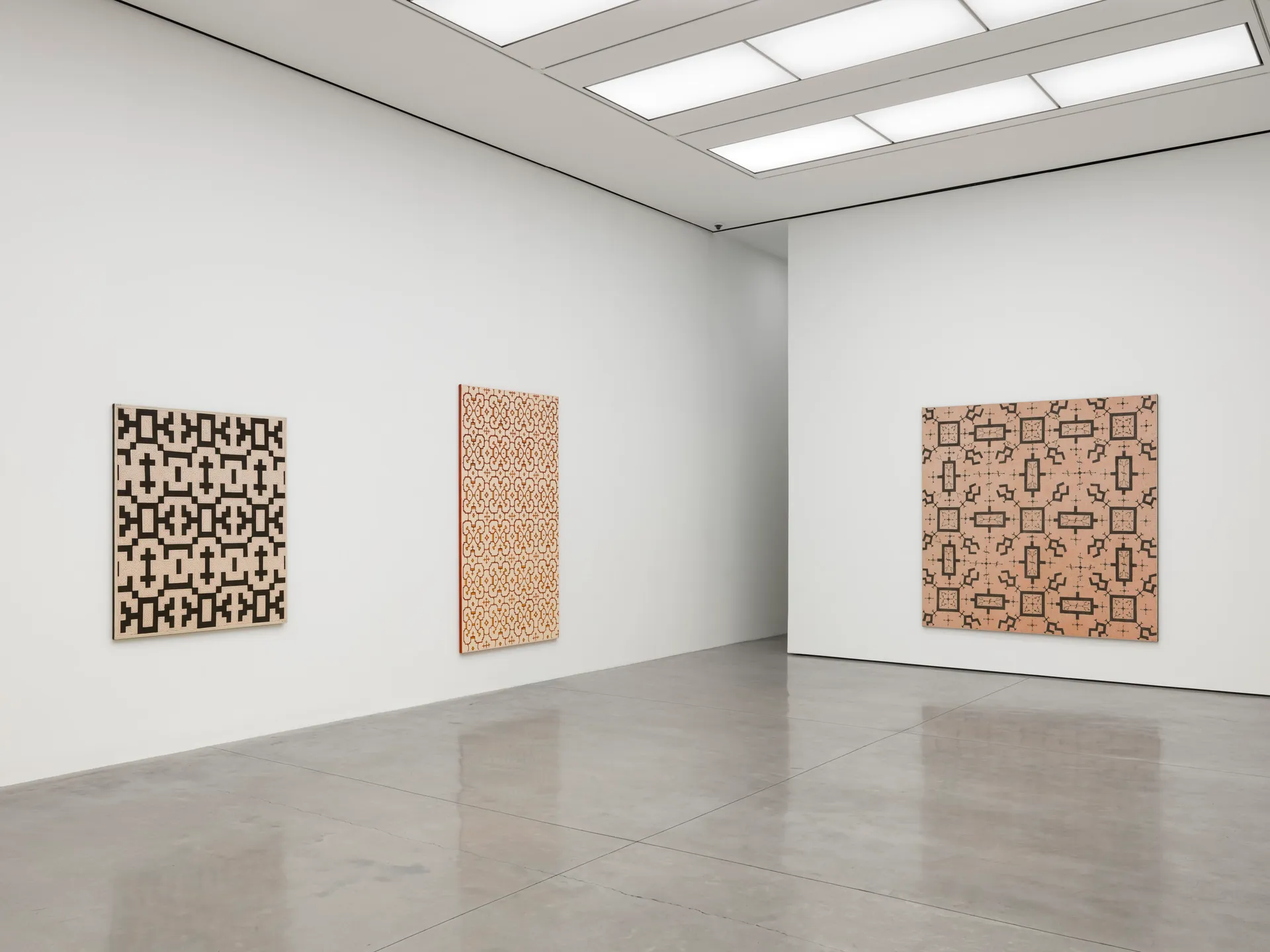

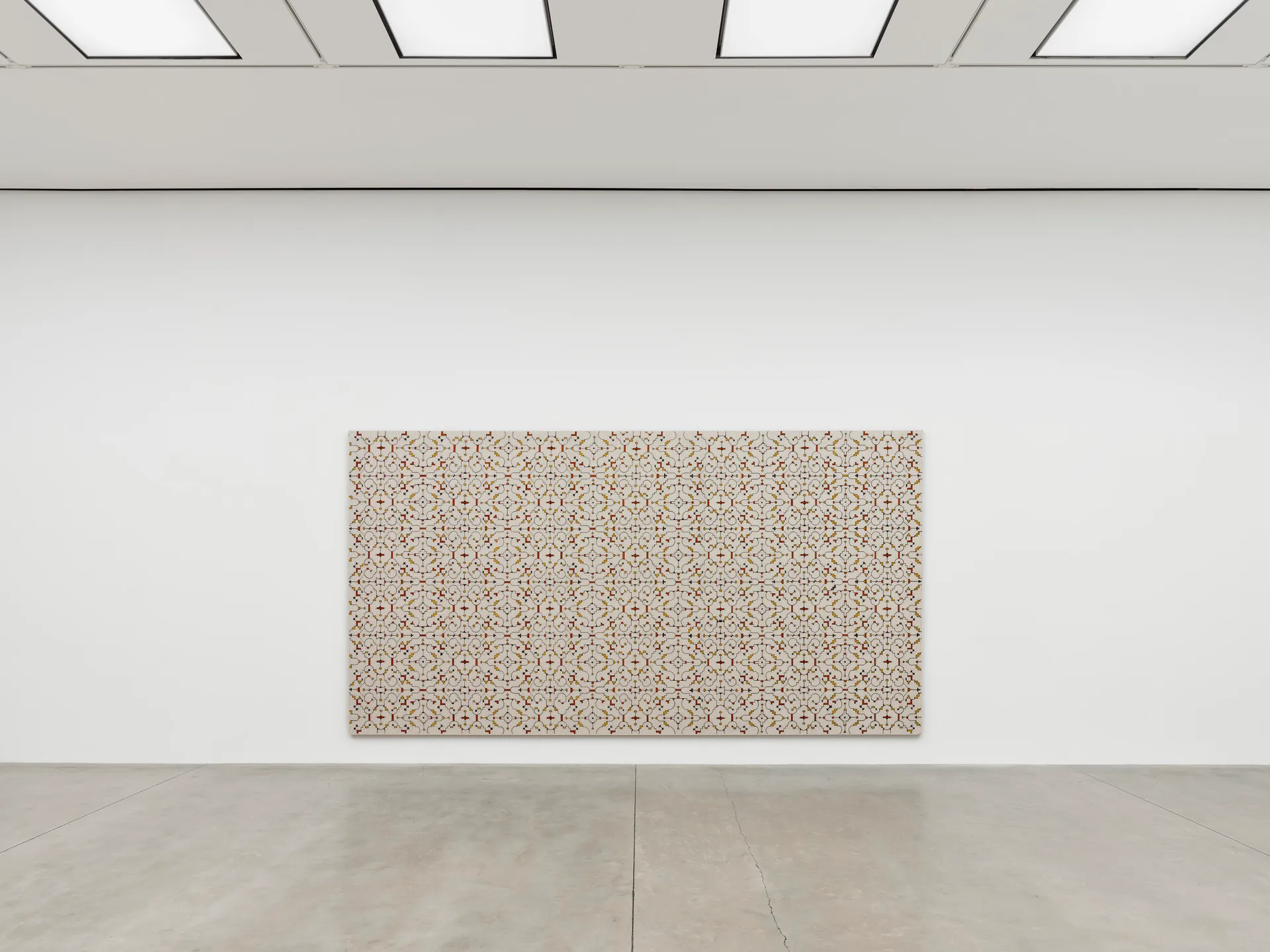
Cover Image: Installation view, Sara Flores, ‘Akinananti’, White Cube New York, 25 June – 14 August 2026. © Sara Flores. Courtesy White Cube. Photo © White Cube