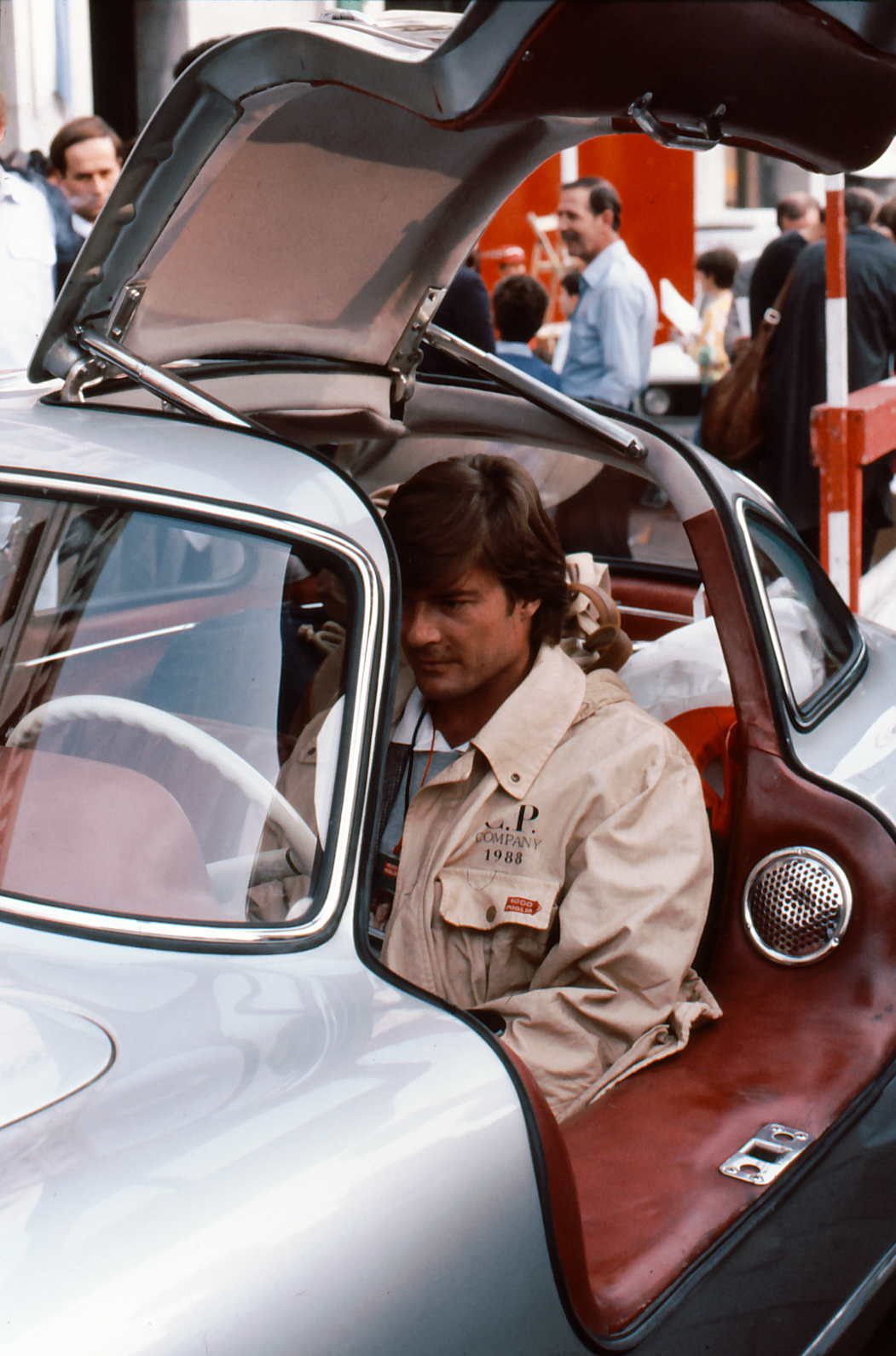
The family was trying to make a book. The material was not the difficulty; there was more than enough of it. The difficulty was that everyone who tried kept making the book about the football terraces. The clothes were known through the culture that had adopted them, and the culture kept becoming the subject, until the work disappeared into the thing it had been worn into.
There was an order of events underneath this that took me years to weigh properly. Lorenzo had discovered that culture only after his father died — strangers writing to the family, asking to visit, to pay homage — and that devotion was the engine for making a book at all. The story the book had to escape was the reason the book existed.
I was running a design studio then, used to organizing large bodies of material, and the family had asked me to help think through the archive — the book, the framework, the question of how to organize a body of work that kept slipping out of every container built for it. I came at it as a problem of classification. I drafted an outline — a way the material might be sorted that did not let the loudest surrounding story swallow the rest. It was not a theory of Massimo. It was a container.
One afternoon during that work, Massimo's wife brought out the paper.
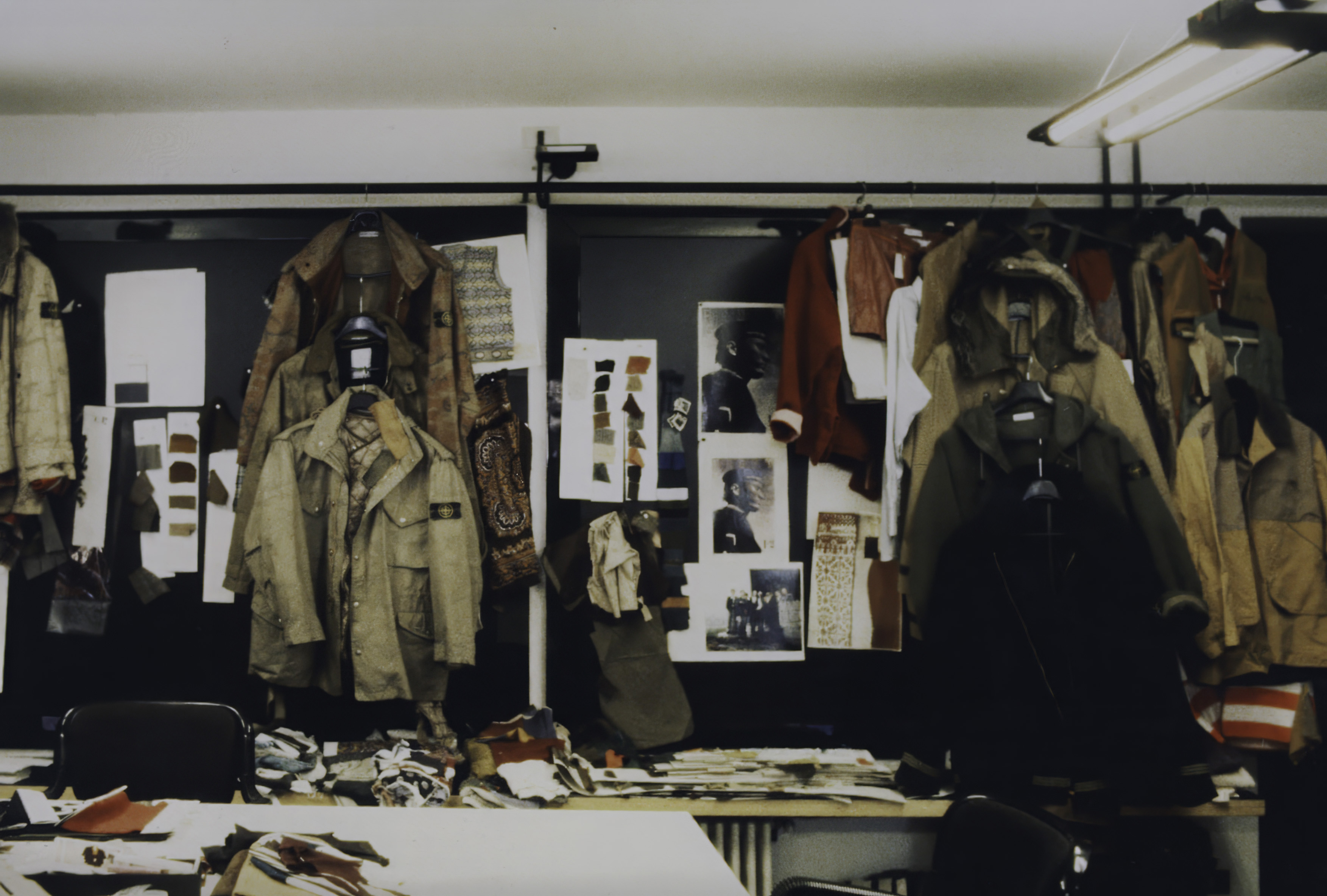
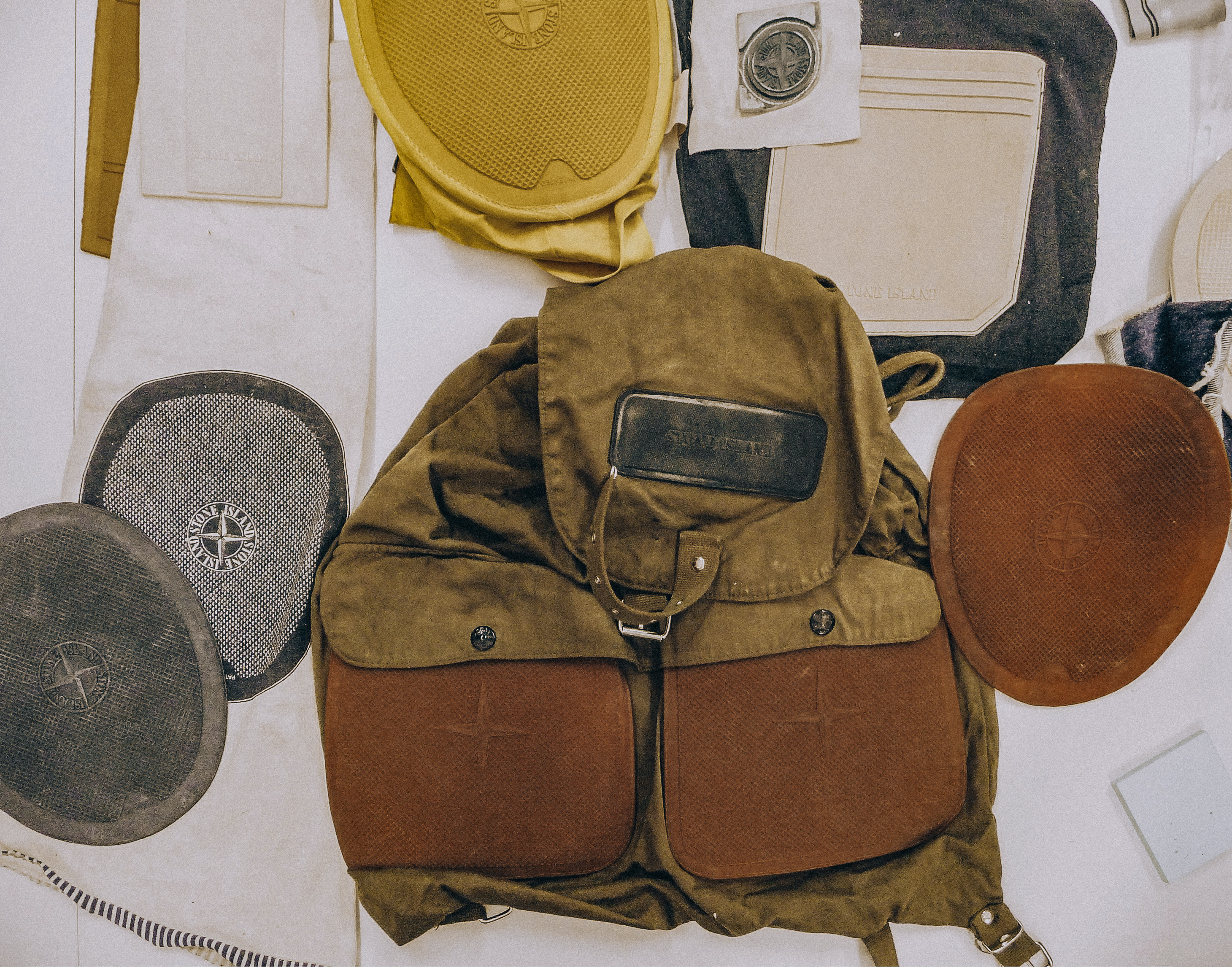
Sheets of photocopies, sketches, tracings, and full-scale shapes cut from paper. A military pocket copied from one garment and moved onto another. Collars redrawn. Flaps, panels, and reinforcements pinned or taped directly onto existing jackets so their scale and placement could be judged before anything was fixed. Some proposals became whole assemblies of paper and tape; others remained annotations laid across real cloth, the garment itself serving as the surface on which the next version was worked out. She handled them the way another family would handle photographs.
His own record — sketches and models — sat beside the garments he collected: military, workwear, protective, sporting. None were kept at a respectful distance. He drew from them, photographed and photocopied them, cut their working parts into templates, and placed new shapes directly onto their bodies. His own record remained active too: drawn over, cut, taped to cloth, carried forward into the next proposal. Preservation was present in the fact of the room. It was not its governing purpose. Use was.
I did not understand until much later that I had seen the whole problem in that one afternoon — because the word archive would come to mean the opposite of what I watched his wife hold.
The existing accounts begin, correctly, with invention: garment dyeing, fabric research, C.P. Company, Stone Island. The more serious ones register the paradox — the cult attached itself to the product more than to the designer. Both readings are true. Neither explains why it happened. The answer is not outside the clothes. It is built into how they work.
"If you look closely at a heavily worn work jacket," Osti told an interviewer, "you can notice a certain deformation in the elbow area, which arises from the constant tension of the fabric in this place. What prevents me from including this detail in a new garment from the outset?"
The jacket is heavily worn, and that is the premise: the deformation is a record, cloth holding the evidence of what an arm did to it over time. He is not admiring the look of a worn elbow. He is naming the mechanism that produced it, and proposing to move the mechanism's result — not its image — into a garment no one has worn yet. Copying the appearance of wear would be decoration. This is a different act: the used garment read as a specification use had already written, and the new one built to it, from the outset.
The dye bath is the process everyone names and almost no one reads.
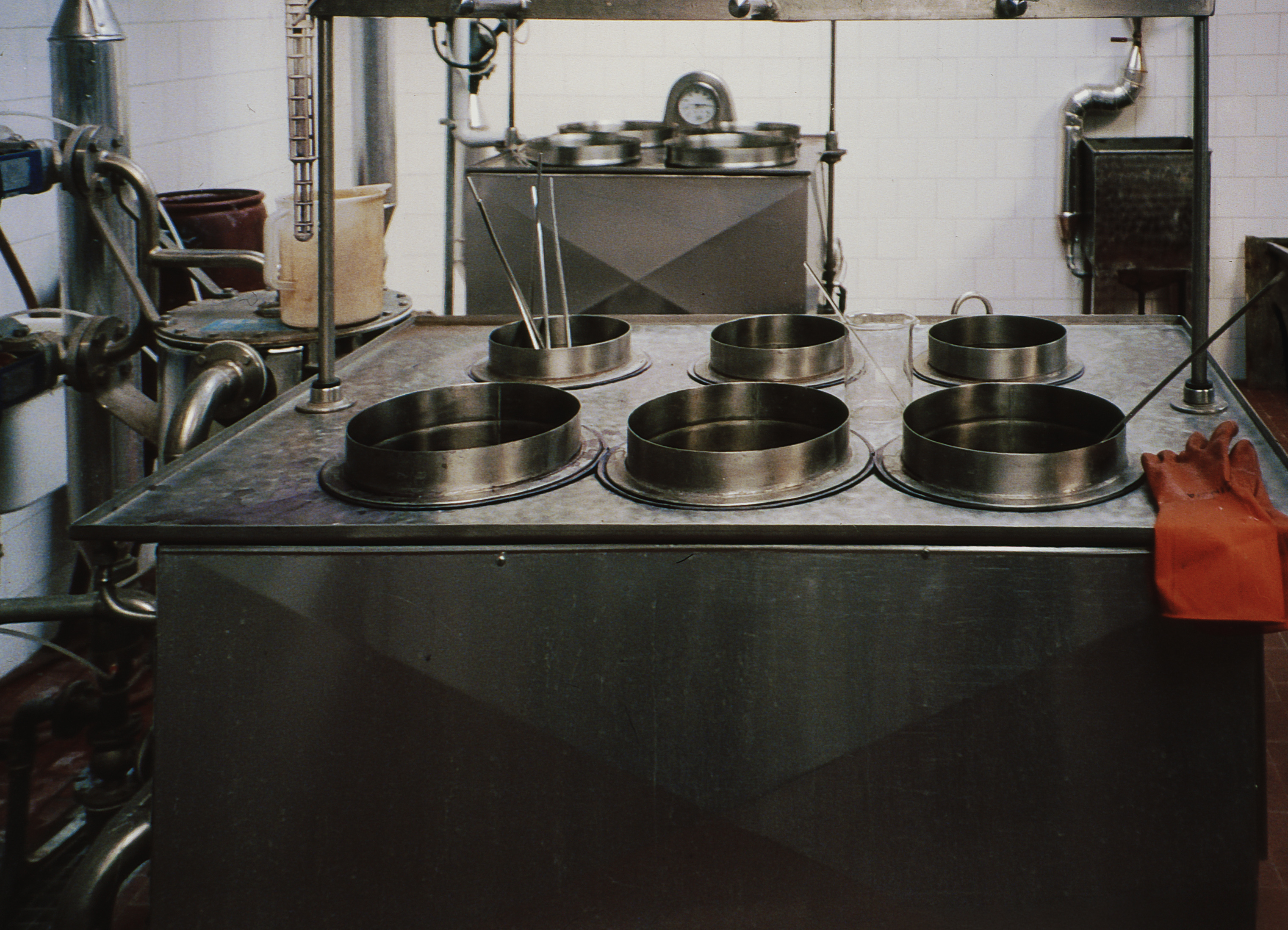
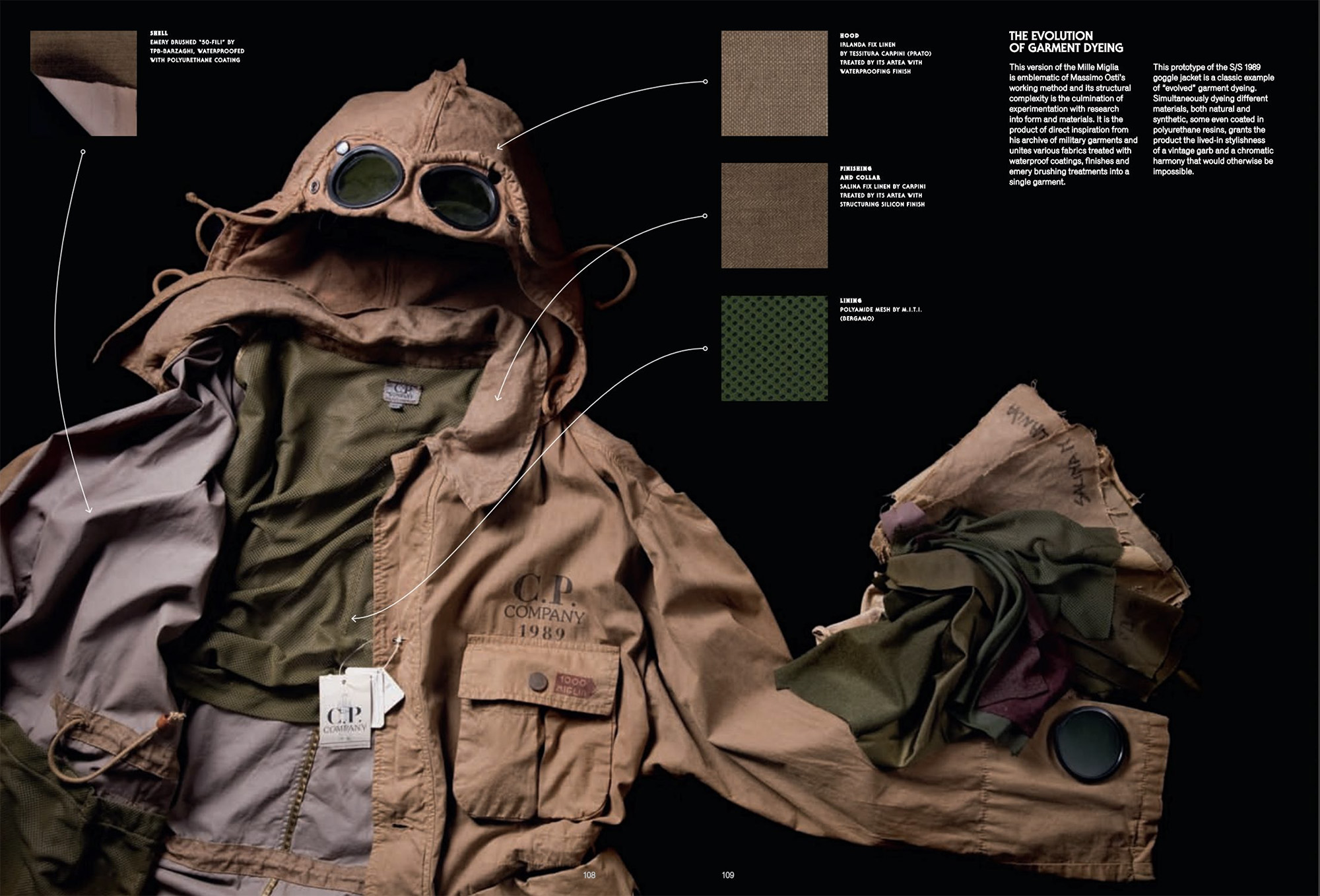
Working in Bologna, at the company that became C.P. Company, Osti made tinto in capo — garment dyeing — central to his production: the whole finished garment entering the bath rather than the cloth being dyed first, an existing technique refined until its irregularities could be handled at scale. His own account of finding it survives. Dyeing a garment made of two different materials, he noticed that each took the color its own way, throwing off tone-on-tone effects nobody had asked for. He set the conditions. The bath returned consequences he could not specify one garment at a time.
A designer who dyes the cloth first decides the color and then builds the garment. Osti reversed it: he built the garment and let the dyeing decide part of how it would look, knowing different fabrics would answer differently. No two garments left the bath identical, and the exact variation that reached a wearer had not been individually chosen.
That is one face of the bath. He named the other himself. A garment dyed whole, he said, "acquires some special charm, an initial relaxedness, an unforcedness" — and it "will no longer 'sit down' in washing — an excellent opportunity to save money in mass production." A relaxedness ordinarily associated with prior wear came out of the bath already present. The shrinkage of first washes was removed before a first wash existed. One consequence of use delivered in advance; another struck out entirely — decided in the factory, before any wearer appeared, and irreversibly: a garment dyed whole cannot be undyed. In one immersion the bath opens the garment's future at the level of color and settles it at the level of cloth.
The fabric was never only the fabric. It was a way of beginning something the garment would carry elsewhere: into weather, abrasion, washing, use — and in the heat-answering coating the future stayed live, arriving differently each time it was worn. But the elbow and the bath complicate the word beginning: some consequences were left for use to produce, some installed before use began, some prevented from arriving at all. The specification explains the object, not the life the object went on to have.
The label is where he tells the wearer the life was intended.
On most clothing the label gives a brand and a size and disappears. On these garments the interior reads like a page — fabric names, treatments, the logic of what was done. The work the outside refuses to advertise appears on the inside, but only to someone close enough to read it. The garment does not announce its intelligence. It withholds it, and gives it to the one person near enough, and interested enough, to open the thing and look.
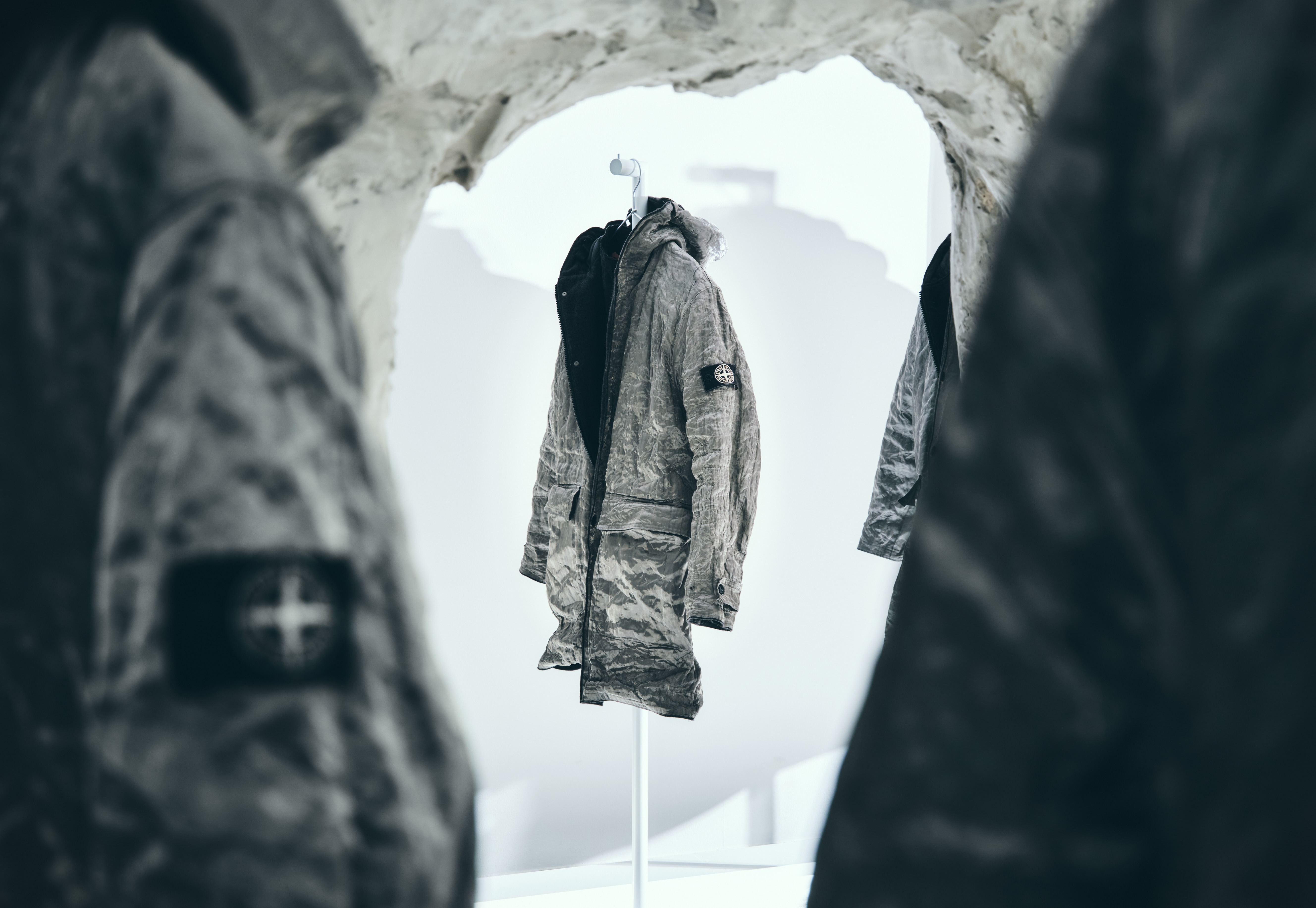
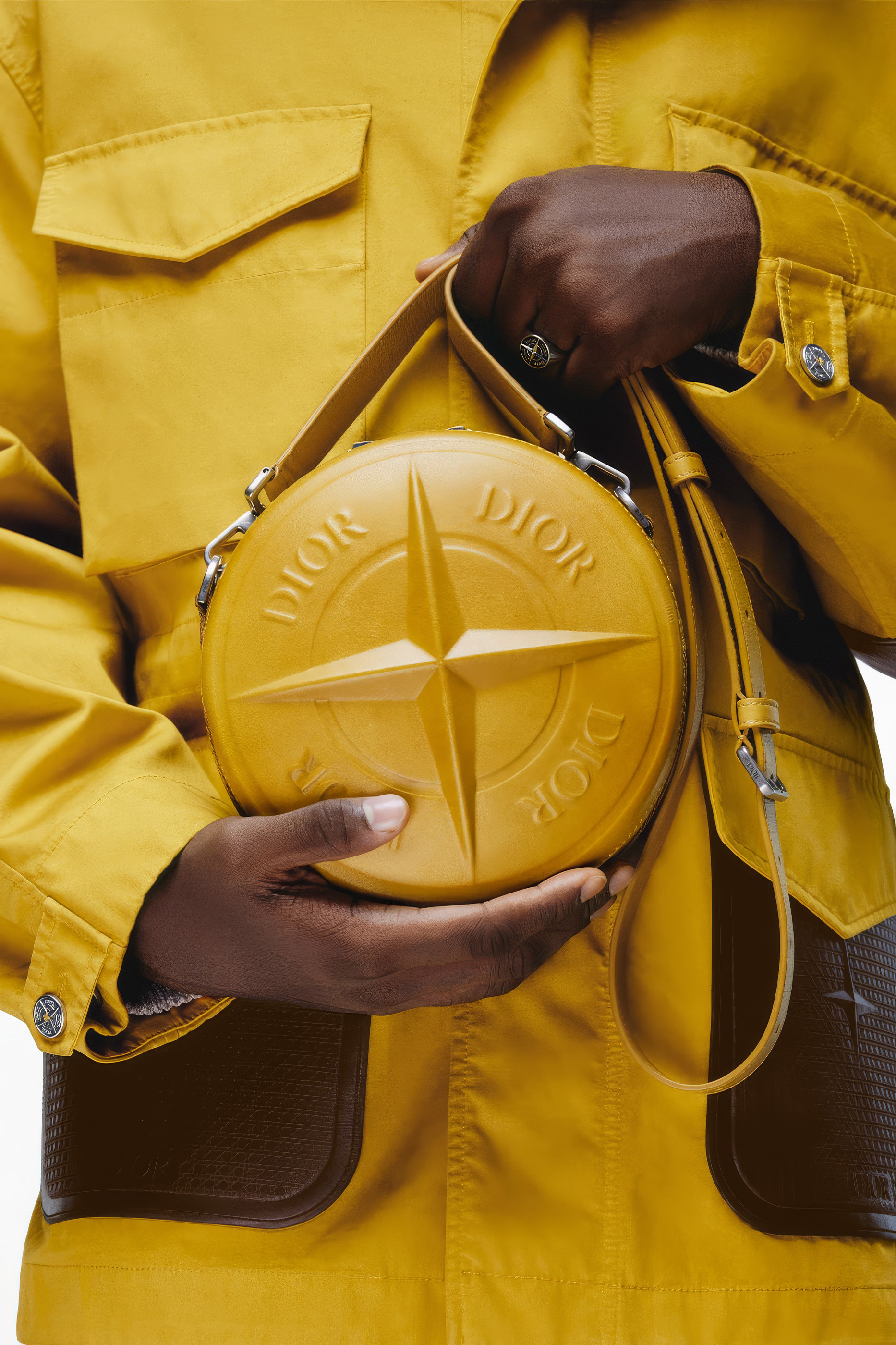
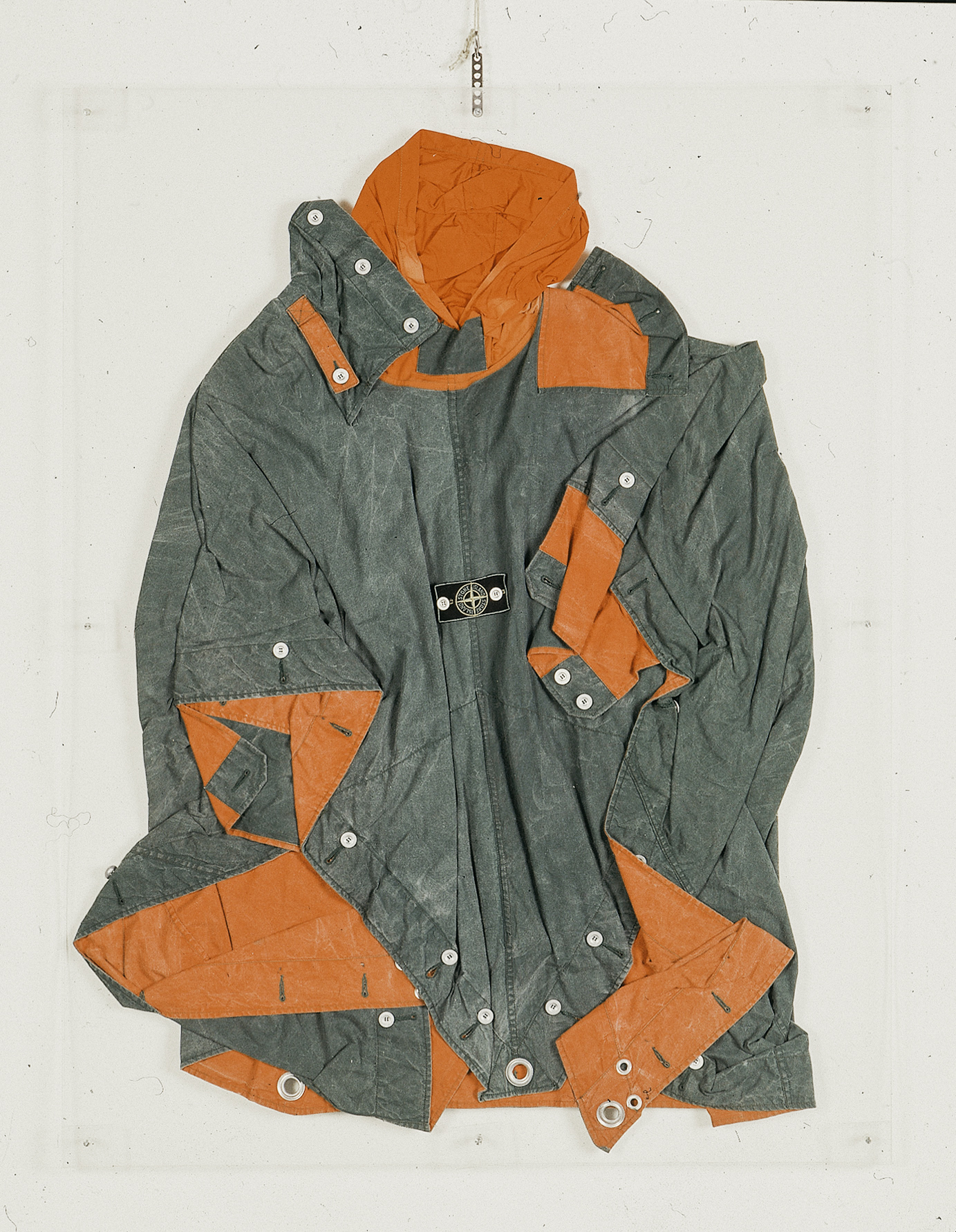
The badge makes the same argument outward. The Stone Island compass is not stitched on. It is buttoned, two buttons on the left sleeve, and it comes off. Wearers removed it, swapped it between garments, took it off entirely when the attention it drew was the wrong kind. There is a phrase in the culture — get the badge in — and an account with two hundred thousand followers where people post theirs. The loudest sign the work has, and Osti made it detachable: whether it shows at all, on which garment, in which company, was never going to be his decision. The compass itself came off the wind-rose of his own sailboat. A private thing, turned into the most public signature in menswear, and then handed over.
Lorenzo and I had been circling this for years before either of us said it plainly.
The conversation I keep returning to began with labels. I had been describing an old idea of mine — that his father had moved part of the garment's intelligence off the surface and into the inside language of the piece, where only the wearer would find it. Lorenzo followed the thought, and was generous about the language. Then we got onto the opposite danger: that language can also become a prison around work, fixing a garment inside the terms used to explain it. And somewhere in that exchange the conversation reached his father's intent.
In Lorenzo's account, Massimo did not believe the designer's intention was what finally mattered. Each person experienced the garment differently and formed a relationship with it of their own, whatever he had meant. The wearer's experience was not a misreading of the design. It was the point at which the garment entered its real life.
I have heard Lorenzo describe this more than once, over years, and the temperature of it stays with me more than any single phrasing. It is not the warm version — the designer who wants you to make it your own. It is colder and more radical than that. The designer's authority stopped at the garment's edge. He could set the conditions. He could not govern what followed, and he did not think he should.
The clothes had been saying it all along. The dye bath that finishes itself. The label that waits to be read. The badge that comes off in the wearer's hand. And the wearers heard it — first the style-obsessed kids in mid-eighties Milan, then the football fans who carried garments home from European aways and made them the uniform of the terraces, then collectors, designers, grime artists, men on touchlines, people who bought a jacket for the rain and never knew an archive existed.
And the largest of those afterlives happened without him. Massimo never knew about the terraces. He understood that the brand was loved in England, and little more; he did not speak the language, and no one ever had the conversation with him.
I brought up Rauschenberg with Lorenzo once, because I had been thinking about transfer — the way an image is lifted off one surface and set down on another, changed by the move. It seemed to describe something about how his father worked.
Lorenzo did not treat it as foreign. He became animated and told me that Massimo had met Rauschenberg and visited him at his apartment — a story I know through Lorenzo's telling. What matters in it is not the prestige of the name. It is that the son of the man who cut up photocopies recognized the procedure instantly, from inside the family, without needing the argument.
The paper I saw in his mother's hands made transfer visible. A pocket could be drawn, copied, cut, and placed against another garment until it stopped behaving as a quotation and acquired a new job. One dated case stands for the rest: the German Army Zeltbahn, a cape that could also serve as part of a tent, entered the archive and emerged as Stone Island's Zeltbahn Cape for Spring–Summer 1982. The borrowed structure was not quoted but re-employed, given new work to do.
But transfer was not the only reading the room performed. Transfer moves forms: the pocket leaves one garment and takes a job on another, and what travels can be traced, photocopied, pinned to paper. The worn elbow travels differently. Tracing the shape would not carry what matters; what moves is a reading of what use had done — a consequence carried backward into manufacture. One reading takes the source's parts. The other takes what time and tension left on it. It would survive, if anywhere, in the garments themselves — and what we have is the sentence.
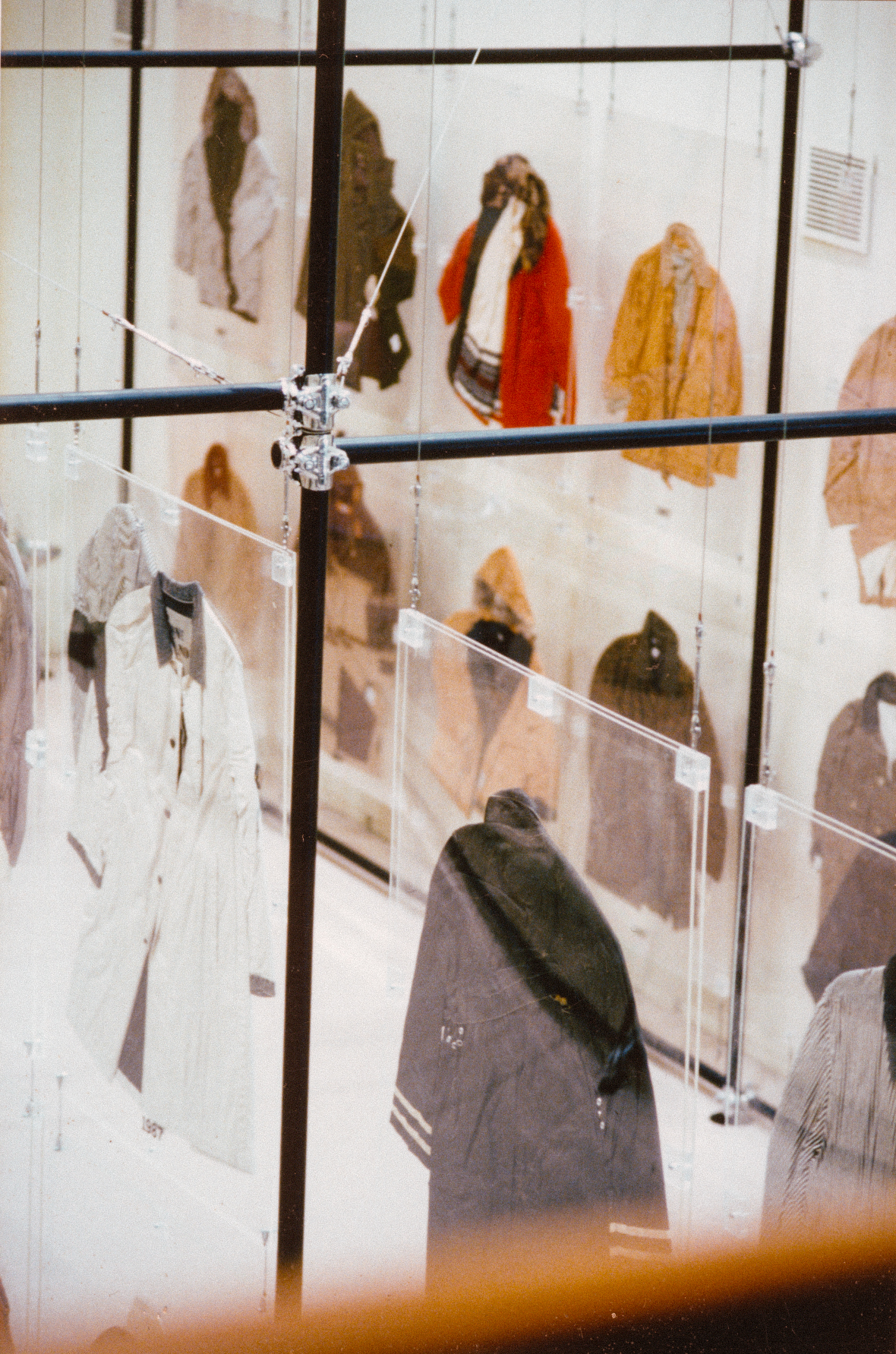
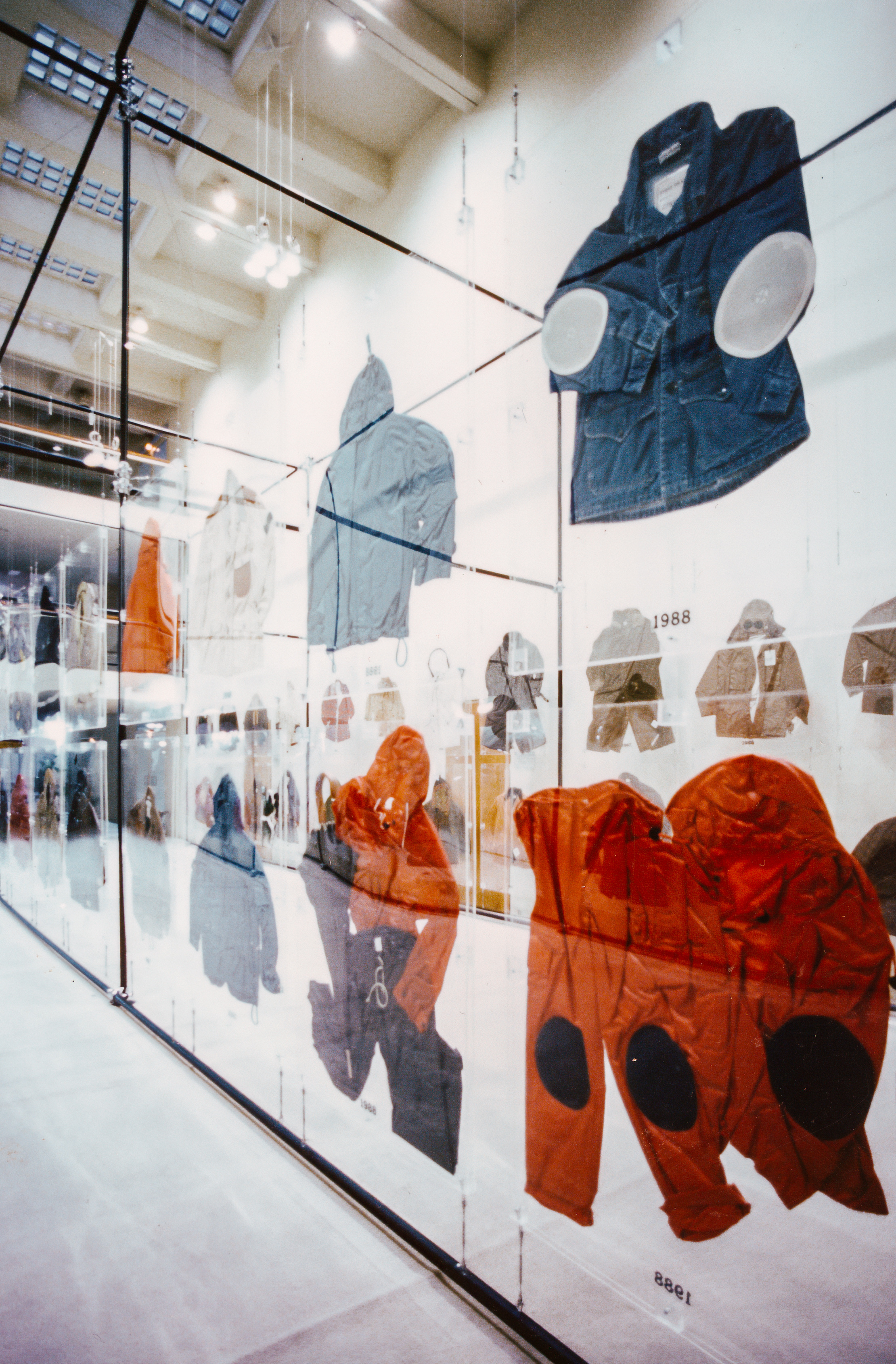
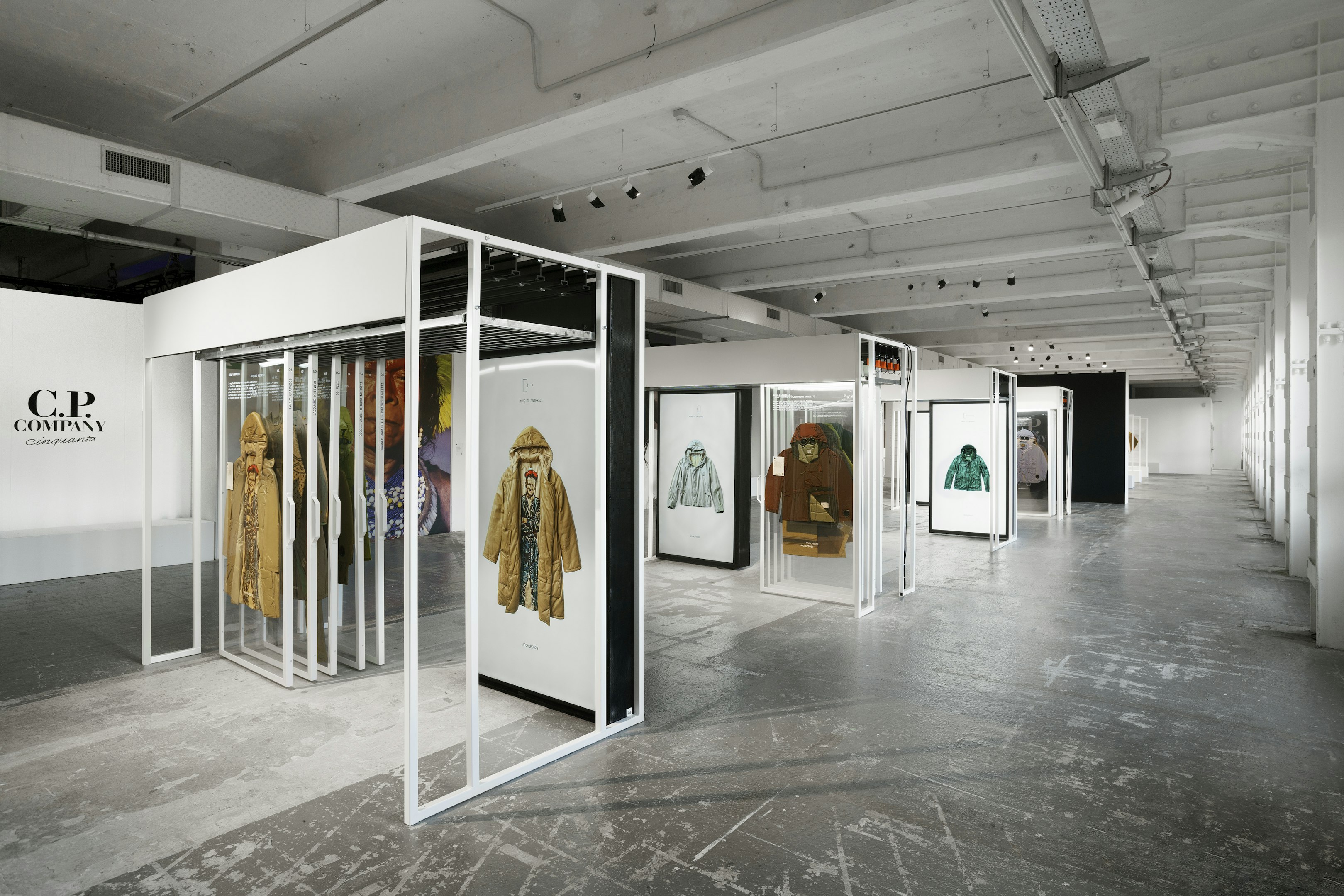
In 1987 the West Berlin Senate invited Osti to mark three anniversaries at once — Berlin's 750th, a hundred and fifty years of German ready-to-wear, his own fifteenth in the work — with an exhibition and a show at the Reichstag. On the 19th of September he staged what would be his first and only fashion show. There were no models. Two mimes from Circus Roncalli acted out scenes of work and leisure, and the garments themselves — seventy-two of them — were shown held flat between transparent panels.
A mannequin finishes a garment too quickly. It gives the cloth a body, a posture, an implied life, and completes the fantasy before the viewer has done anything. The transparent panels held the garment still and kept the body out. The mimes carried the idea of use off to the side, with their own bodies, instead of letting a dressed figure do the wanting for you.
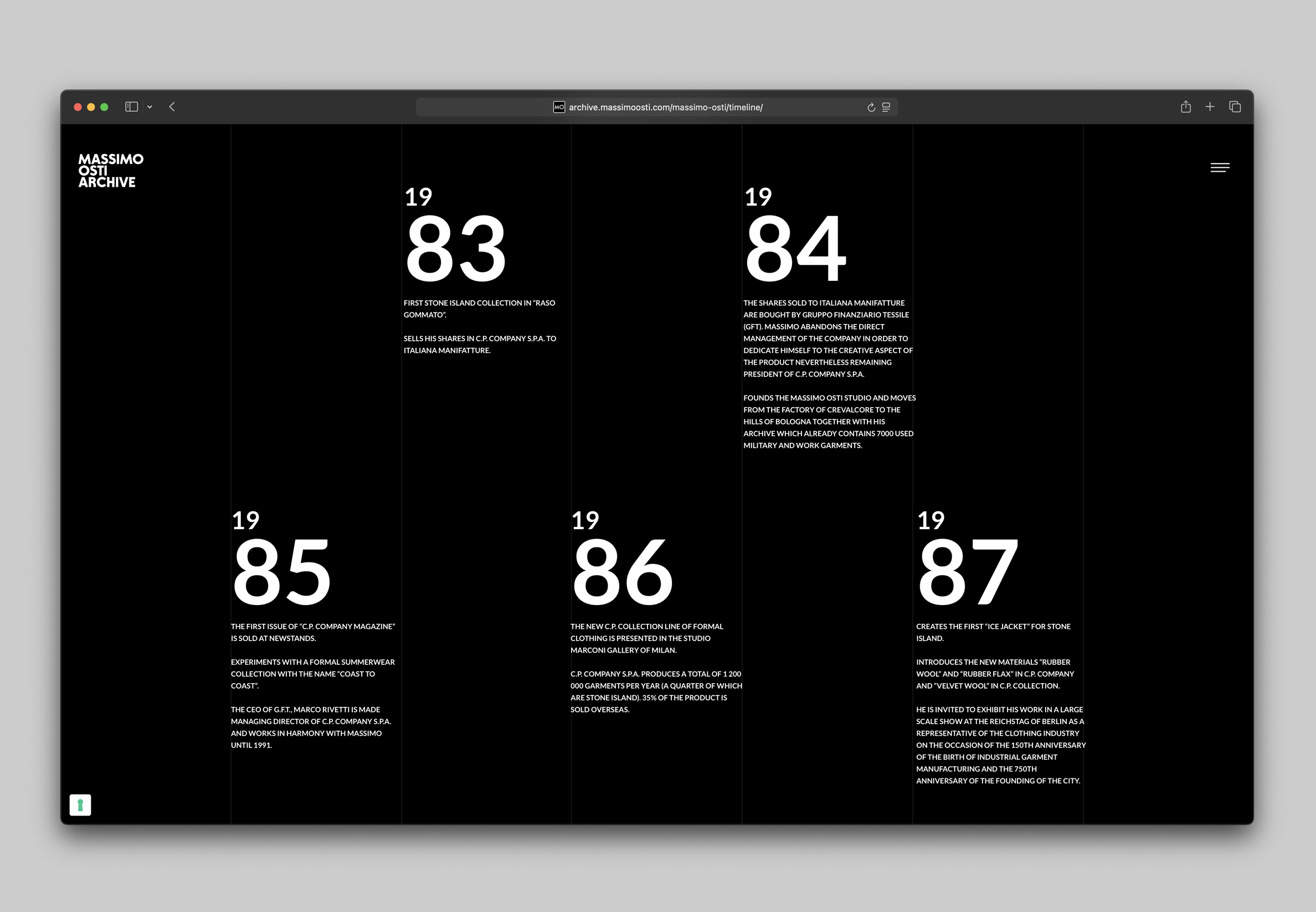
It would be easy and wrong to say Massimo failed commercially. He had given up his majority stakes in the early eighties; by the mid-nineties he had left the companies he built entirely, and started over under his own name — Massimo Osti Production, 1995, much of it deliberately without visible branding, the sober opposite of a signature line. By the archive's own account, Production was selling on the order of twenty-five billion lire a year and was still forced to close after three years, for financial troubles that, in Lorenzo's telling, did not directly involve him. The work sold. There was good work after, too — the Left Hand label ran well, projects for others followed — and the name faded anyway. The problem was quieter and worse than failure.
The standard account explains the fading by temperament. He disliked the auteur theater of Made in Italy and took pleasure in puncturing it; he was privately passionate rather than fame-seeking; behind him was Bologna — the movements, the university, a laissez-faire that never learned to want the spotlight. All of it is true. Disposition can account for a man declining fame. It cannot account for garments accumulating devotion without him.
There is a difference between absence used as a signature and absence produced by objects that continue too well. Osti's disappearance came from the garments — from thirty years of making clothes that did not need their maker. The clothes kept working after his hand left them: passed around, restyled, re-meant, worn for decades by people who never heard his name. A garment that will not announce its intelligence can be reduced to its surface by anyone who does not open it. The market rewarded what did not ask you to come closer.
By the time he died in 2005, the cult belonged to the product. The man had receded behind the thing he made — pushed there, in part, by his own best decisions.
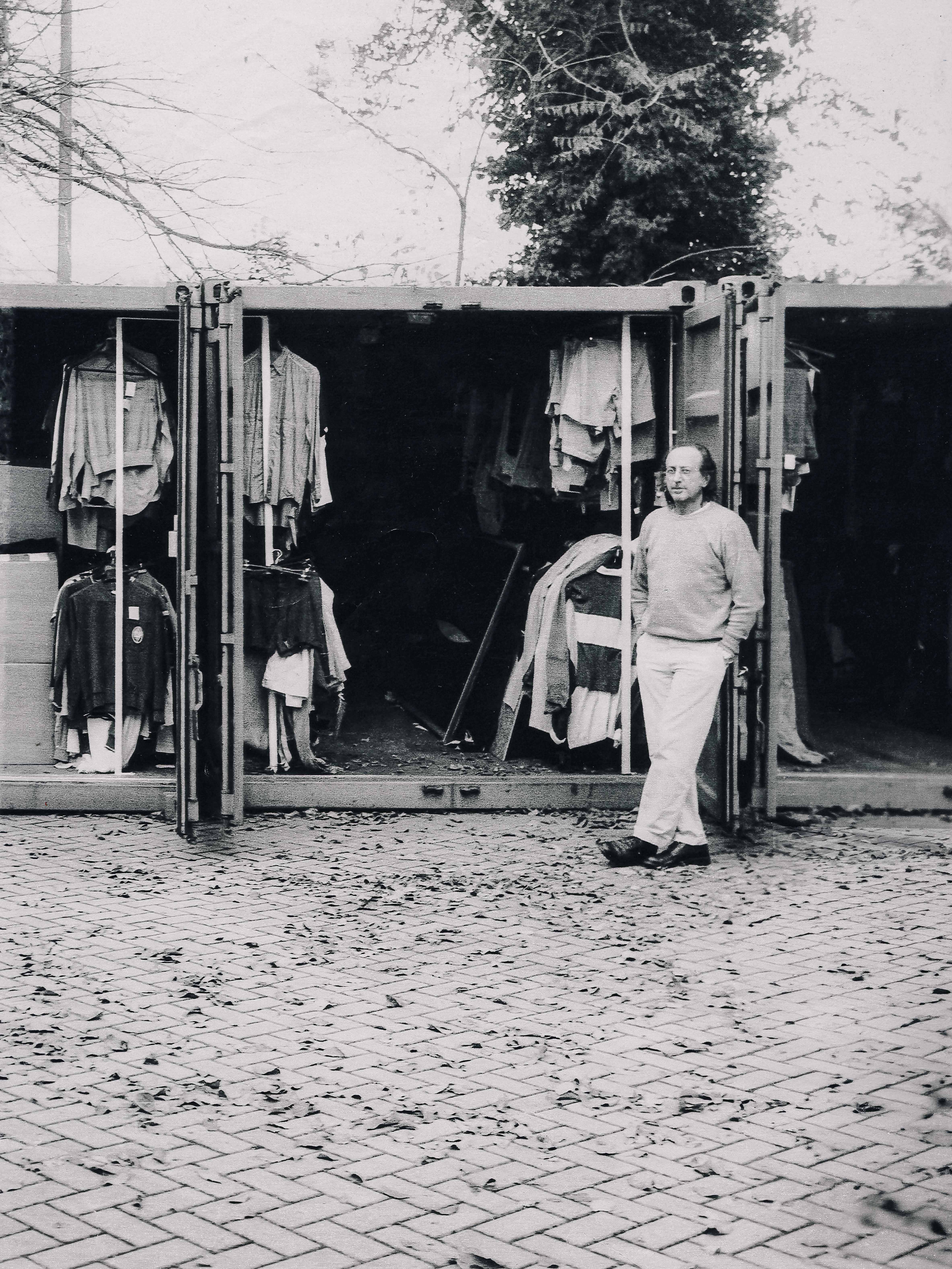
The archive did not survive its maker in the form he had used it. Massimo kept obsessively, but he did not keep as a custodian. By the late nineties the collection had grown to something like thirty-eight or thirty-nine thousand pieces — industrial containers of it parked outside, too much for any building and, in the way that mattered to him, too much for any use. So he got rid of it. The whole archive was sold — to David Chu, the owner of Nautica — and the family held back a core of essential garments. Then he started collecting again, for the projects that followed, the quarry refilling because the work required one. After his death, Lorenzo and the family rebuilt: roughly five thousand pieces today, catalogued, photographed, barcoded, databased. Every garment named, dated, fixed, findable.
The room everyone now defers to was not recovered. It was reconstructed — assembled by the keepers, after the maker, out of what he had let go and what they gathered back. Working material, then surplus, then commodity, then reconstruction, then database. Nobody chose the transformation. Each step was the right decision at the time, made by people trying to keep the thing alive. It happened anyway, the way it always does, one act of care at a time.
The paper survived the sale. The Xeroxes, the cut and taped copies, the proposals that survived as drawings, templates, and paper assemblies — the family kept all of it, and it is categorized now, numbered like everything else. Lorenzo calls the paper the most interesting part of the archive; the garments, he says, others own too. The paper his mother handled like photographs is itself in the database.
Every decision the family makes now is checked against it — by the market, by the collectors, by the licensees, by the family themselves. Reissue a piece, and the archive is the standard the reissue is held to. Decline to reissue, and the archive is the reason. When Lorenzo and his sister Agata built Massimo Osti Studio and declared it would refuse any nostalgic journey — releasing work in chapters, experimenting the way his father did rather than reissuing what he made — even that refusal was measured against the archive. You cannot refuse a standard without confirming it is the standard. Nobody applied for that authority on its behalf. It accumulated it by existing.
Massimo kept an archive his entire working life. In September 2000, in Bologna, he described one to an interviewer in the present tense: "I have assembled a large archive: all my sketches and models, and also a huge collection of old clothing, military uniform, work suits. For twenty-five years I collected these things all over the world." His own record and other people's garments, named in one breath.
The record does not settle which collection the sentence describes. Assembling one and letting one go were, within a single working life, ordinary events. The room was organized toward what its sources could make possible next. The paper shows the taking — pockets copied, structures cut into templates — because that was the work the paper was made to do; it records no custodial obligation toward the sources. In Osti's practice, reading a source could end in another object.
The archive the family rebuilt also reads garments as evidence. It examines them closely, dates them, makes them say what they know — a dye read off a surface, a construction confirmed against a template, a deformation that records how a piece was worn. What changed is what the reading is permitted to cost. A custodian may spend nothing of the object: it has to stay whole for the next reading, because the reading is no longer a step toward a new garment but a ruling about an existing one. He read garments whose authorship did not govern their status in the room, on his way to work of his own. They rule on garments whose author is the entire point.
What the keepers inherited was never chiefly a collection — most of that he had let go, and what stands catalogued in Bologna they gathered back themselves. The rebuilt archive still reads the way he read: closely, causally, for what the object can say. What may be done with what it learns is the part that no longer belongs to him.
Keeping sounds like a passive act — you protect what exists, you hold it still. It is not. To keep a body of work, someone names each piece. Someone dates it, authenticates it, stores it, photographs it at its best state. Someone decides what gets shown and what stays in a drawer, what gets reissued and what is withheld, how much wear a garment can carry before it stops being itself, which version is the reference when two survive. None of these acts is neutral. Every one is a decision made on behalf of someone who can no longer make it. The afterlife of a work is not the absence of the maker's choices. It is other people's choices, standing in for his.
Art has lived with this problem longer than fashion has, because estates, conservators, galleries, and heirs have had to live inside it. Conservation is one practice inside that field, and it has developed an exact language for works made of process, decay, replacement, and change — for keeping what was built to not last. From the artist comes intention — the idea, facing forward, what the work was for. From everyone who touches the work afterward comes attention charged with memory: how the work should look, how it looked before, what it must be kept as. Christian Scheidemann, the conservator who has spent his career keeping what contemporary art is actually made of — chocolate, fat, latex, food built to rot — gave that second side its name, attentionality, and the point of the name was never that one side is right. It was that no one who handles the afterlife of a work is free of the tension, and the only honest position is to know you carry it.
The classic failure has a lemon in it. Joseph Beuys's Capri-Batterie — a lightbulb socketed into a real lemon, the old physics of copper, zinc, and citrus. The lemon was meant to run down and be exchanged; the work is the process, the rot and the replacement, the institution made to go find someone who cares. In museum after museum, someone solved the problem with a silicone lemon. It looks exactly right, and it is completely wrong. The work was never the appearance of a lemon. Preserved perfectly, it stopped being Beuys. Conservation had kept the material. What the work required in order to remain itself was a harder question, and it was never a conservation question alone.
These garments live with the same danger. Their content is what happens to them — dye that takes unevenly, resin that wears, coatings built to answer heat and light and to change in the answering, cloth designed to be finished by weather and use and other people. A garment like that, conserved to stop changing, photographed at its ideal state, held as the reference every future version is checked against, is the silicone lemon. It looks exactly right. And the thing it preserves is the appearance of a process whose whole point was to keep running. The question is never whether the garment changes. It is which changes continue the work, and which replace it with another account of it.
To keep a garment, an archive has to fix what it is. Every wearing was one activation of the work, and an archive cannot store an activation; it can only store the object the activation ran through. The afterlife pulls the meaning back and attaches it to the maker: this is what he intended, this is why it matters, this is where it belongs. The work built to be finished by a stranger becomes a thing to be authenticated by an estate. The relic, the grail, the piece revered instead of completed. None of this is bad faith. It is attention doing what attention does — and the people it moves through are not the enemies of the work. They are the ones trying to save it.
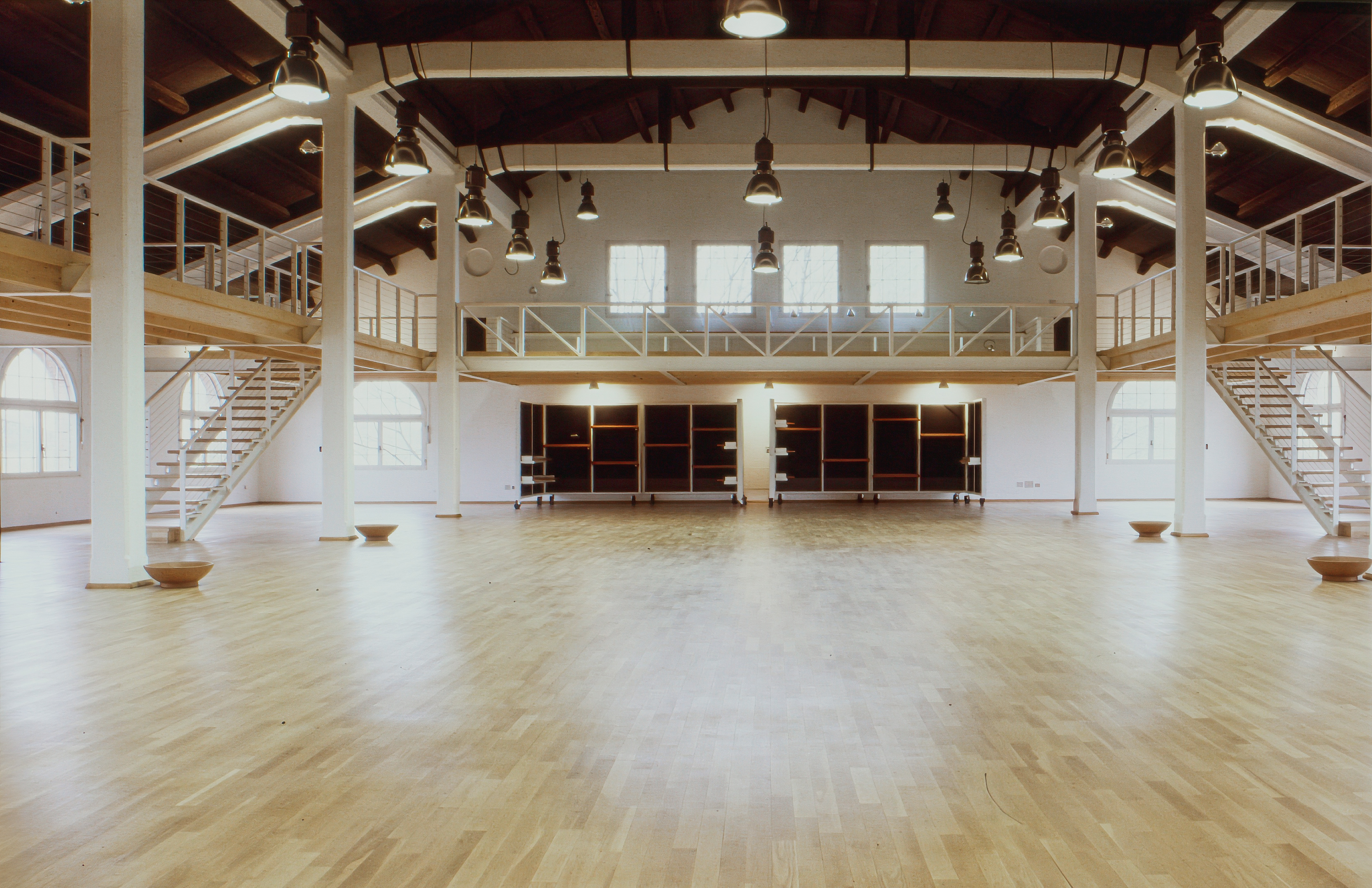
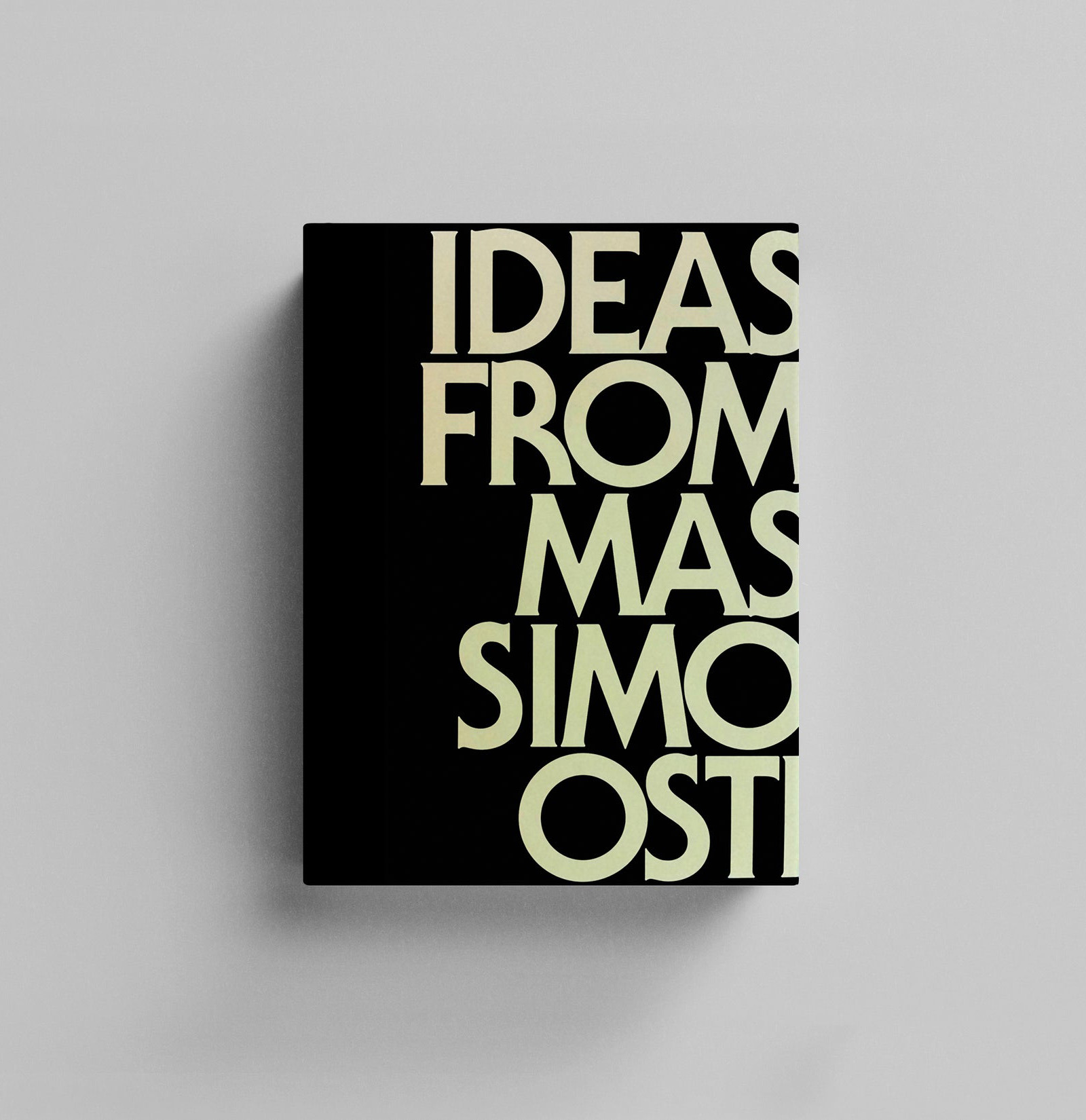
In the summer of 2025, twenty years after his death, the family gave the archive its largest public form. An exhibition opened at Palazzo Pepoli in Bologna, and it took the name of the book they had once struggled to make. What met visitors first was the studio — the room from Via Gaibola, rebuilt: the worktable, the clippings, the notes, the photocopies pinned across the walls with garments hanging among them, cloth and paper occupying a single field, filed together the way they had been used. The room was not sealed behind glass. Visitors walked in and stood where the work had happened.
The reconstruction was the keepers' own act — curated by C.P. Company and Massimo Osti Studio with the archive, the same operation that had rebuilt the garments and catalogued the paper. Their own label called the room a reproduction. Conservation could keep the table, the paper, the cloth; the exhibition had to decide how those things would stand together again — what counted as the room, once the work that had joined its materials was no longer in it.
Consider what crosses his desk. A licensee wants a piece brought back; the archive holds three versions and someone must rule which one is the reference. A collector writes for authentication; the answer will move a price and settle an argument. A fabric from 1988 can no longer be milled; the choice is a substitute or a refusal, and both will be read as a statement. The Studio's next chapter is due, and every direction it could take will be measured against a man who is not here to measure it. Each decision requires him to determine what his father would have wanted — for a father whose deepest position, the one the dye bath and the label and the badge and the glass all argue, was that what he wanted should not govern.
An estate is administered in nothing but intent. Every act of keeping — what to reissue, what to withhold, what to license, what to fix, what to leave loose — is an imposition of intent on work that was built to refuse it. Massimo could abdicate. Lorenzo cannot. Abdication, for the person holding the estate, is just a slower way of letting the work die. He must steward, with intent, the work of a man who removed it.
And he does not get to resolve it cleanly, because the machinery is one machine. C.P. Company keeps Massimo recognizable at scale — product, continuity, a heritage language that lets the work go on being made and worn. The Studio that refuses nostalgia sits inside the same group that keeps the work recognizable, and keeping the experiment alive depends on the recognition that flattens it. His father's life is the warning underneath: the less recognizable half was the part Massimo needed most, and it is the part the world let go of first.
Conservation begins with a prohibition: you cannot make the work more beautiful than the artist already made it. It sounds like modesty. It is the whole discipline — the tension confessing itself, memory agreeing to serve the work instead of perfecting it. Every keeper of a dead maker's work fails that standard a little, daily, in ways they mostly cannot see. The ones worth trusting are the ones who know it.
The object comes last because the work was never only the object. The garment mattered as engineering, and it mattered for everything that happened after it left the designer: who wore it, how they read it, which signs they chose to show, what the archive later fixed, what stories carried it on. The intelligence really was inside — but inside as an invitation, not a sealed secret, waiting for someone to come close enough to finish it.
What the family keeps in Bologna is not the answer to what his work means. The archive does not answer the question; it keeps producing it. His work was built so that the question would never close — so that every wearer, every keeper, every essay would have to answer it again, and get it slightly wrong, and pass it on.
Years ago, when the Osti family asked how they should pay me, I asked for a jacket.
When payment came up for the archive work, I told them that if I charged them properly they could not afford me, and asked instead for a jacket that had belonged to Massimo. They found it funny, and kept finding it funny. Lorenzo told the story at a lunch years later, and it came back to me afterward through a friend, changed a little in the telling. By then the jacket had been a garment, a payment, a joke, and a story that reached me through someone else's mouth. It changed category four times before I ever thought to use it as evidence. Now it is evidence in an essay — one more change — and nothing about it has physically altered. It has been all of these things without ever stopping being a jacket.
The clearest view I have of how Massimo Osti's work survives is one I was handed, as payment, by the people who keep it. I asked for the jacket, and I have used it to make a point. The object has been pulled toward the maker again — made to mean him, made to prove something about him — by someone who wanted only to keep it. That is attentionality, running the way it runs through everyone who holds a work after its maker. I am not standing outside any of this. I am one more set of hands, narrowing the thing a little in the act of holding it. I knew, and did it anyway.
It was built, like the work around it, to pass through hands. It is in mine now.
Massimo Osti collected garments in order to take them apart: photocopying pockets, collars, and whole structures, isolating their working parts, then moving them into new constructions where they could perform another task. After his death, the garments, images, samples, and components through which this work had developed were catalogued, authenticated, and made authoritative. The archive survived, but its function reversed—from material for making new work into a record against which later work would be measured.
A note on method. This essay grew from years of conversation with Lorenzo Osti and the conservator Christian Scheidemann, whose thinking materially shaped its account of use and preservation. Lorenzo Osti read the finished text before publication. The interpretation remains Quiet Modernism’s.





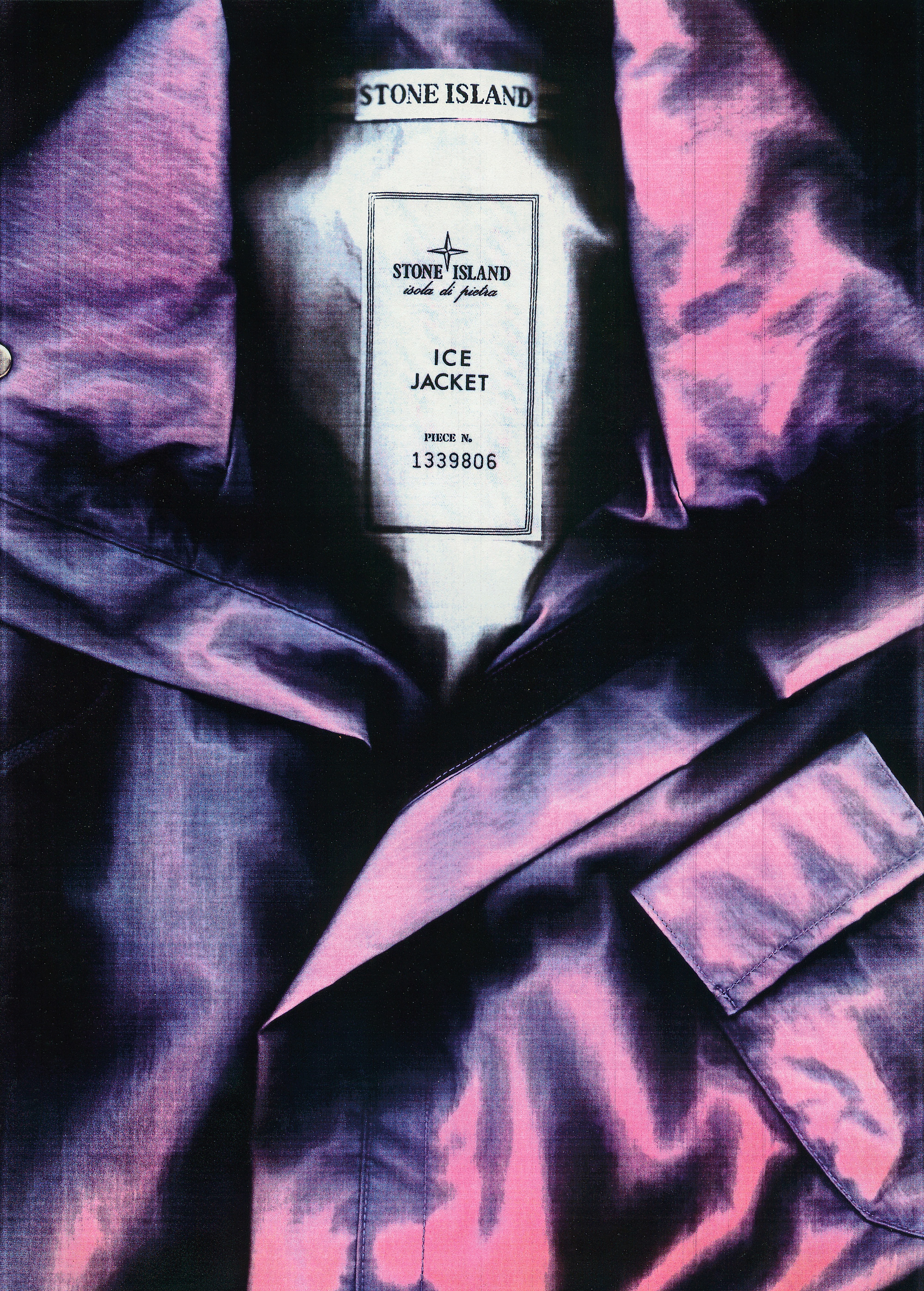

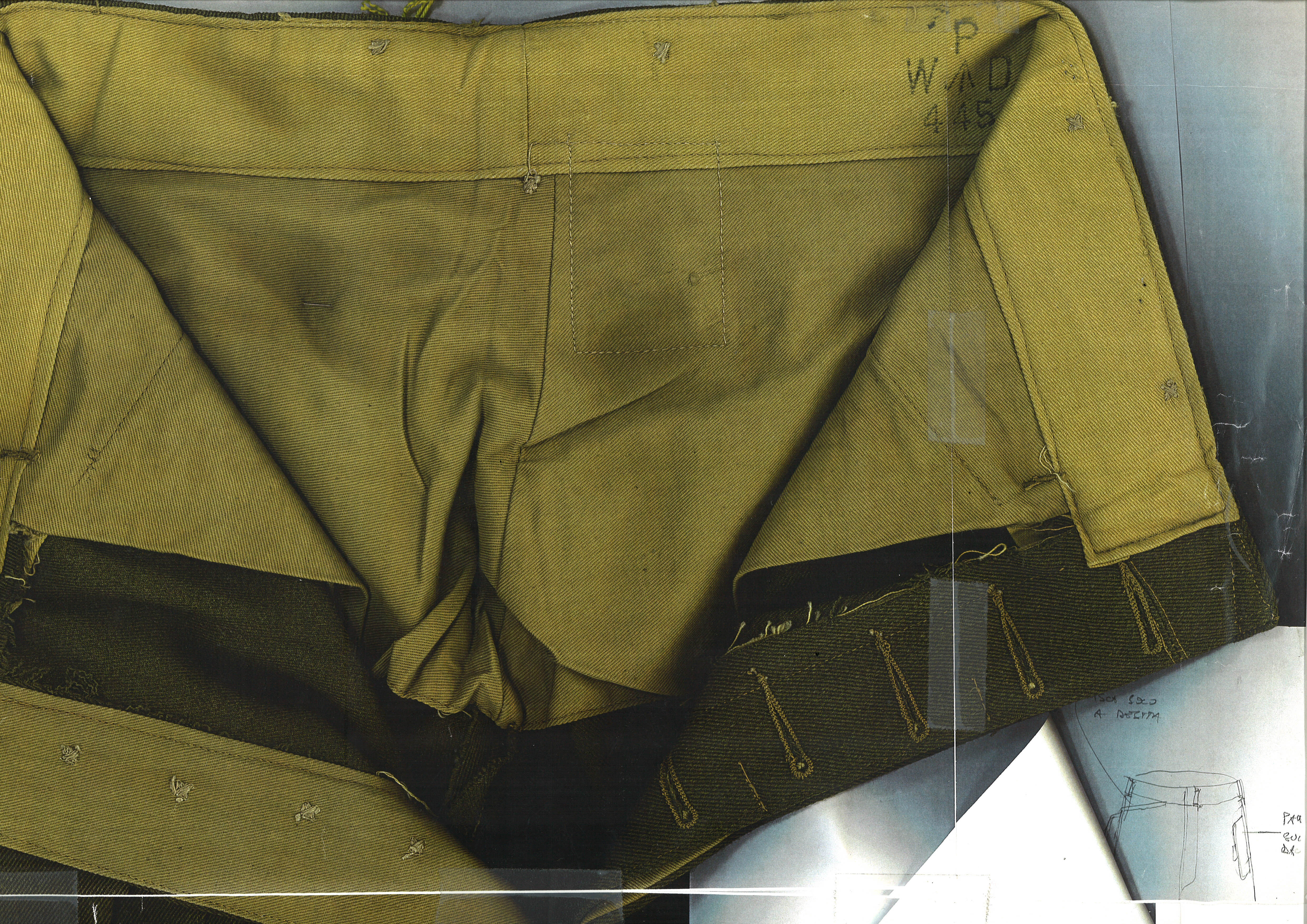
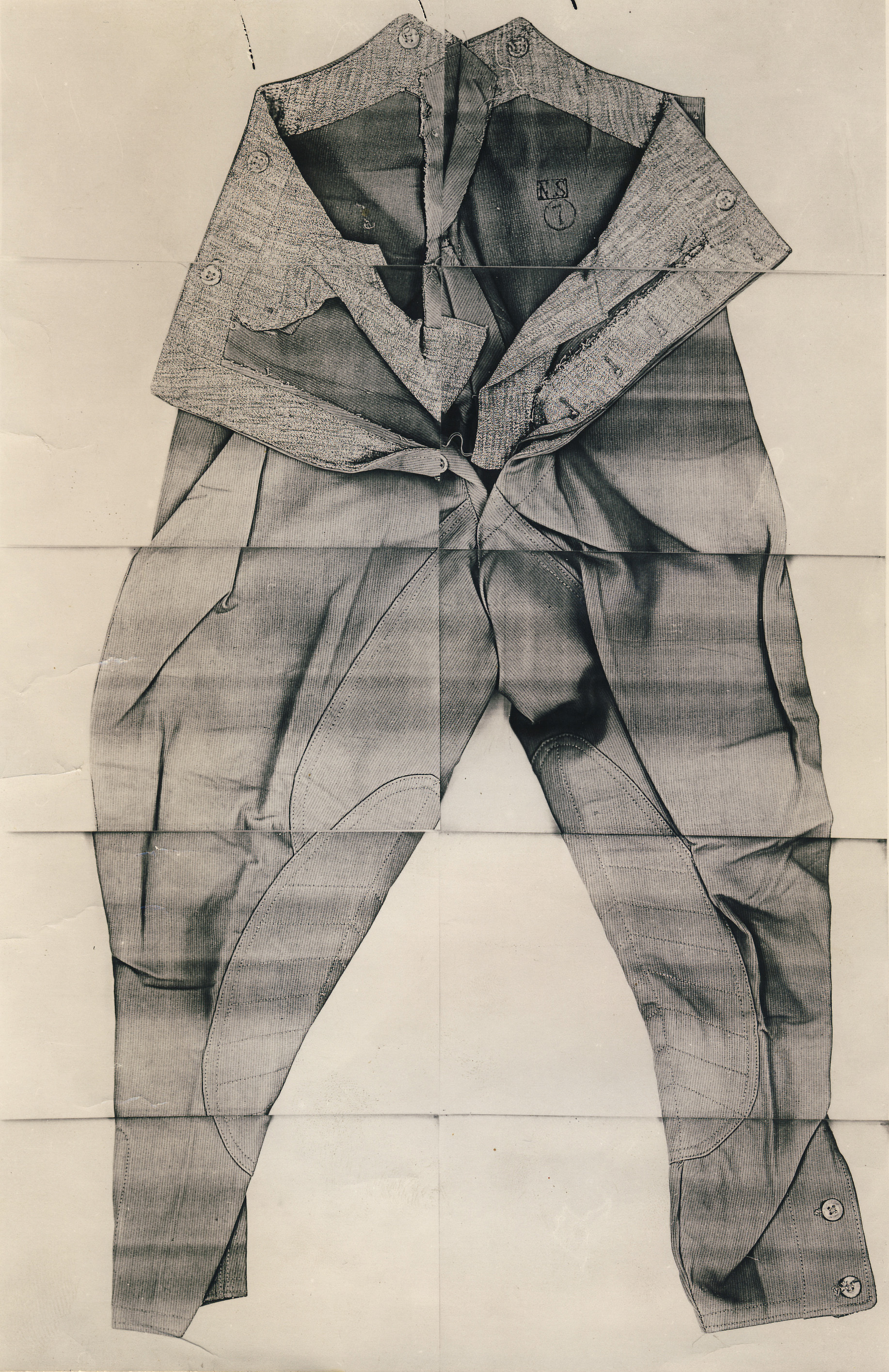

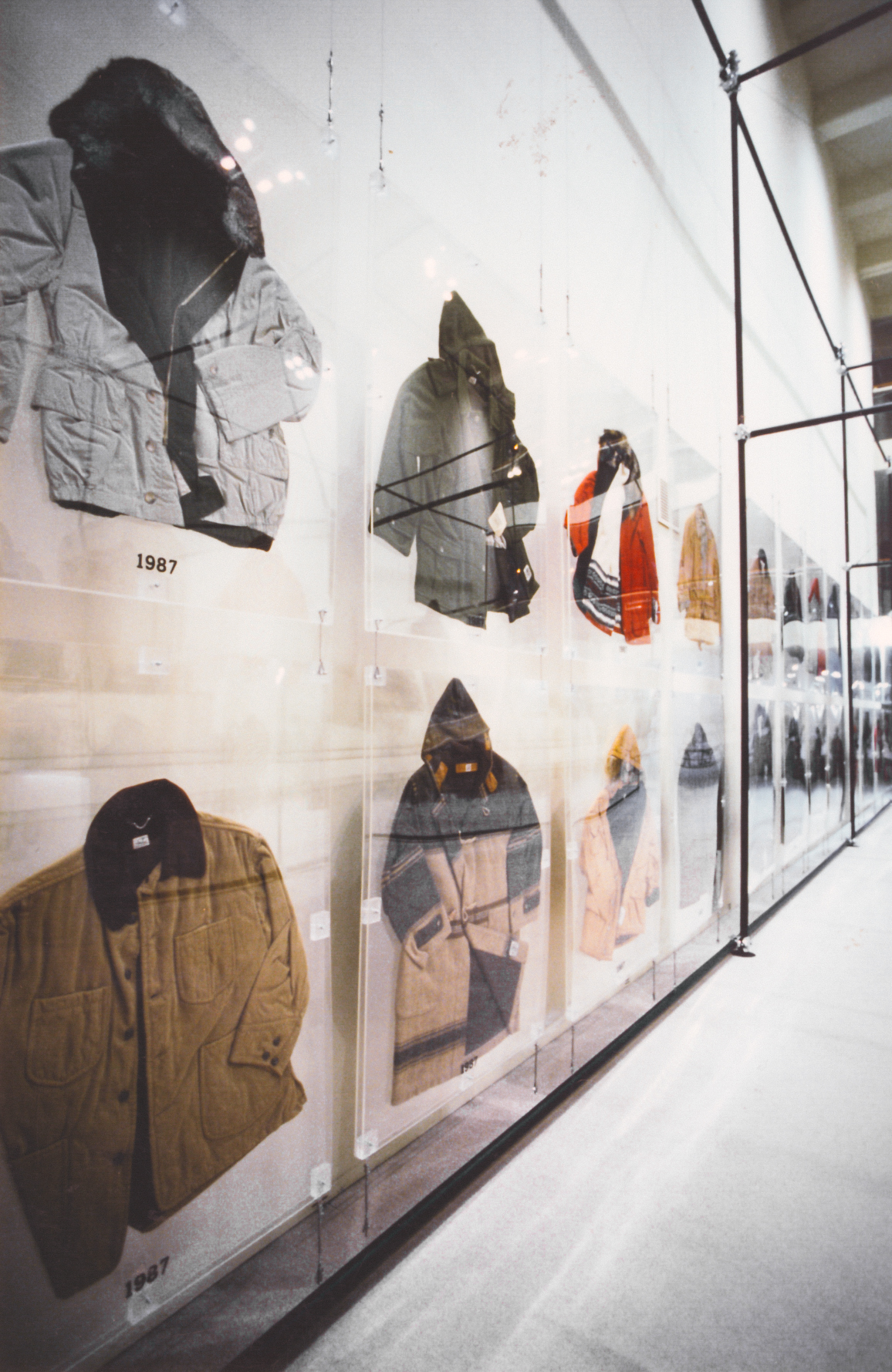

Cover: Osti meets the archive through an instrument of looking; before the work becomes record, he is the person making the record. The archive preserved this photograph in mirrored form, and it circulated backwards for years. It is presented here in its correct orientation. Image Credit: Massimo Osti taking a photograph, Bologna, 1983. Courtesy of Massimo Osti Archive.
All images © their respective rights holders.
Image rights & attribution →
Notes on Image Production
The visual essays are prepared using the best historical material available. Where necessary, images are restored, colour corrected, reconstructed from multiple sources, or replaced with higher-quality examples to improve legibility and fidelity to the original object.
The aim is not enhancement or reinterpretation. It is to remove the accidents of reproduction that obscure the historical record, allowing garments, artworks, and documents to be encountered with greater clarity while remaining faithful to the original sources. This work prepares historical evidence for viewing rather than altering it.