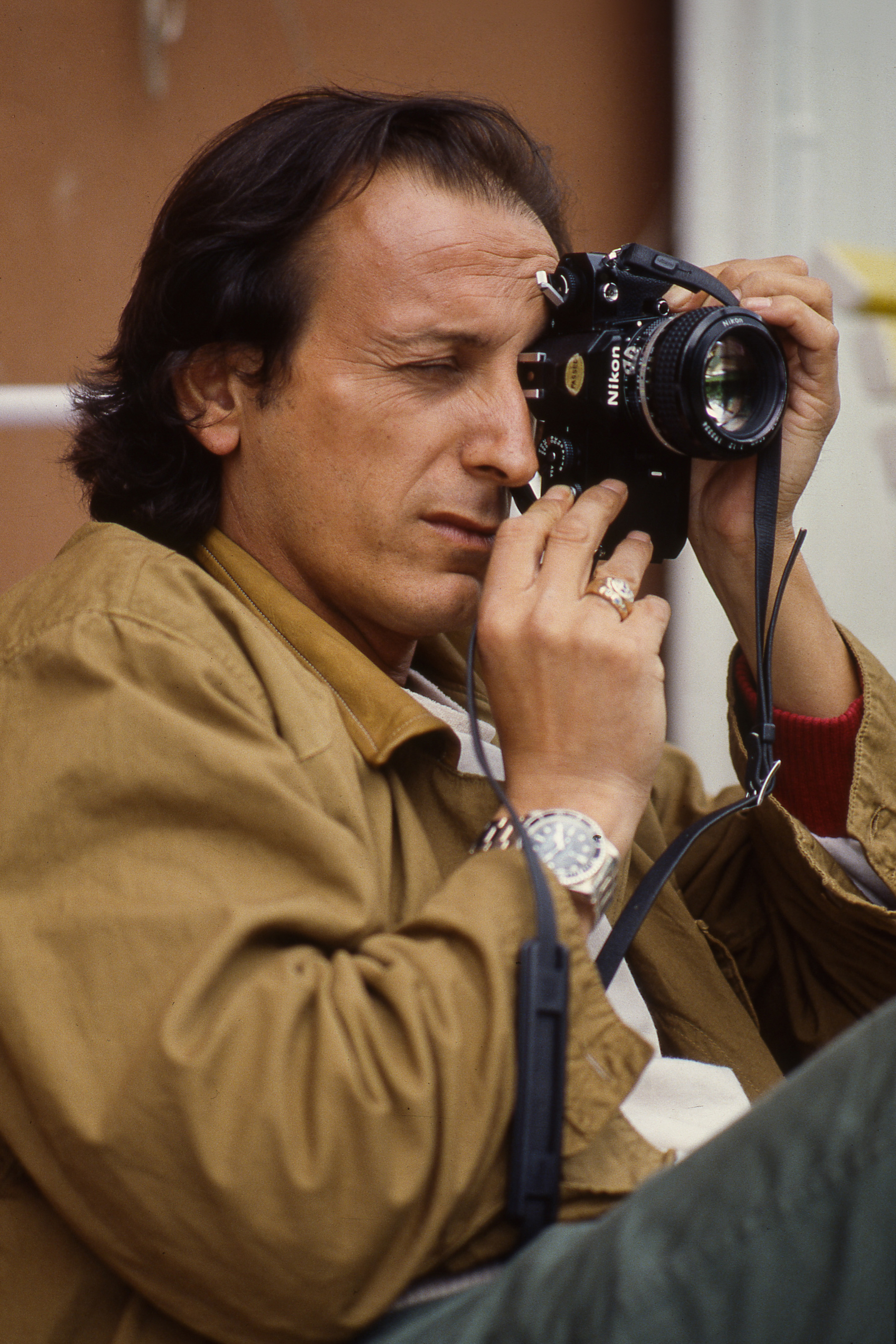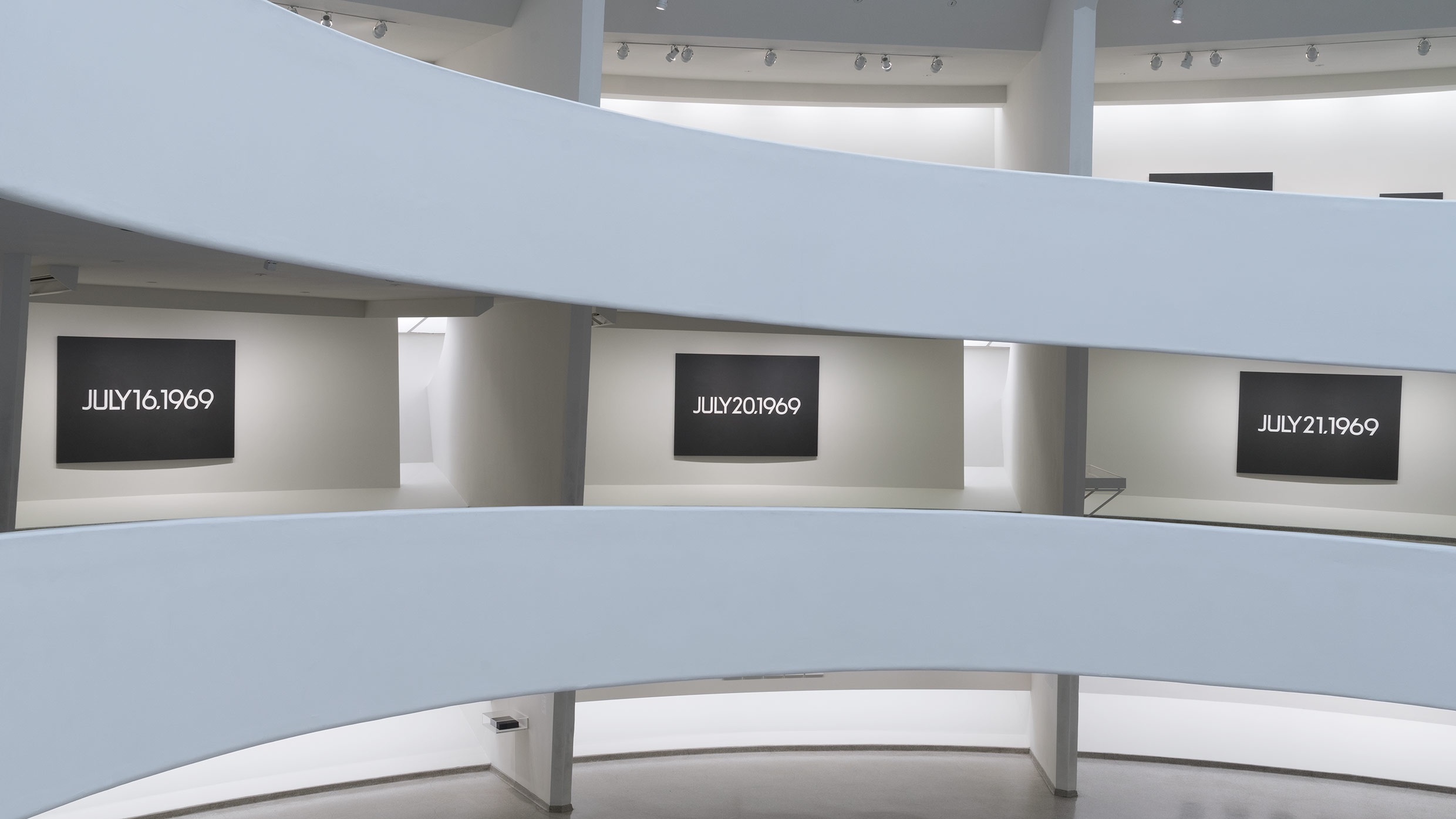


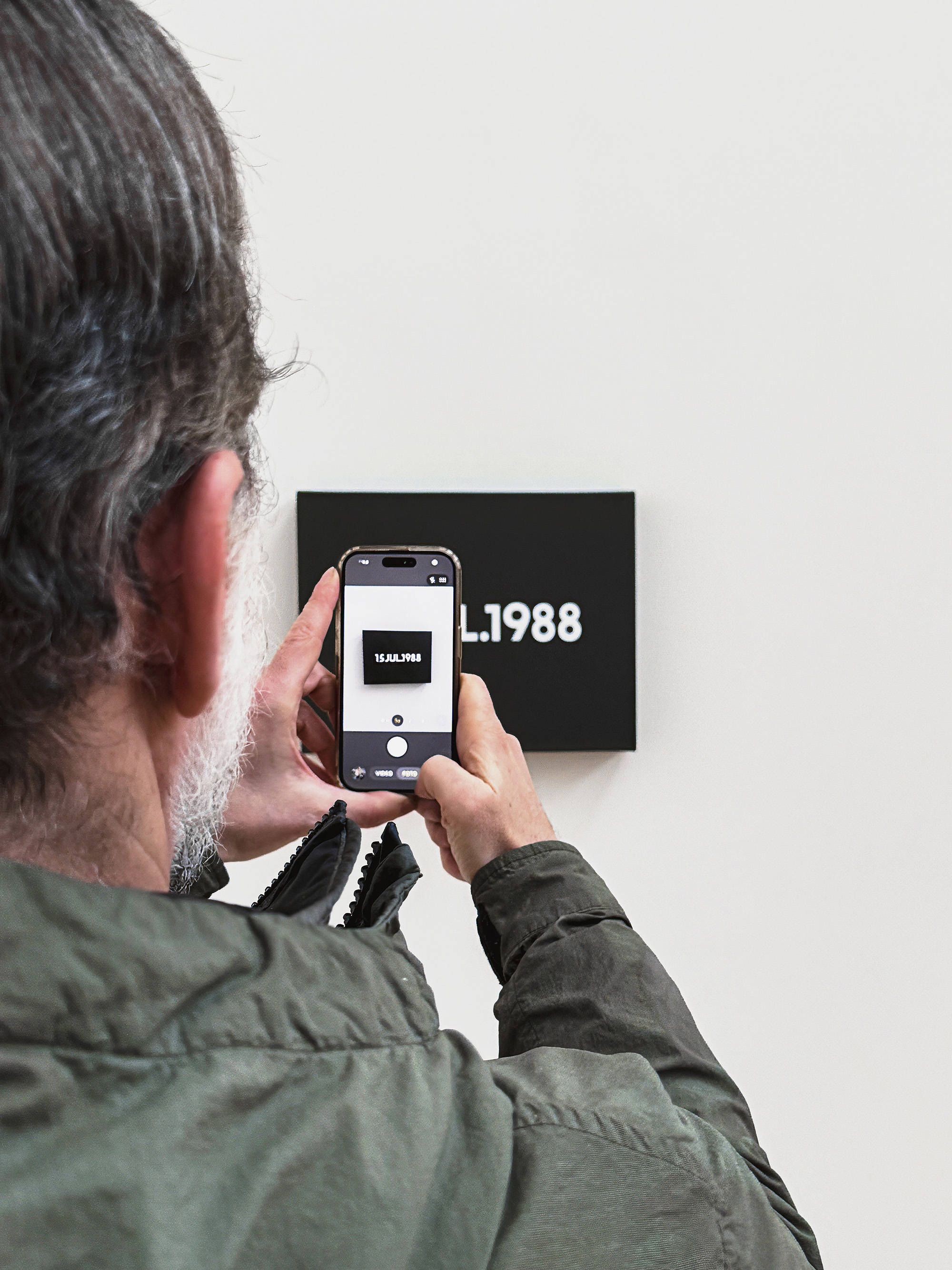
He went to the Kawara wall before I was through the doorway, phone already up — not aimed at any single canvas, held back wide, taking the whole run of them. He was reading the series before any one painting could stop him.
Then, without turning around: "The sequence has absences built into it."
Kawara worked under one rule: any date painting not finished by midnight was destroyed. So the wall at Dia is a record with holes in it, and the holes are structural — days the rule consumed, a series made of what survived its own condition. Fabio had seen it from across the room, and the first place he put it was not the room. There are Plurimus garments, he told me, that were designed and never produced. He would not call them failures. The moment was wrong, or the fabric he needed did not yet exist.
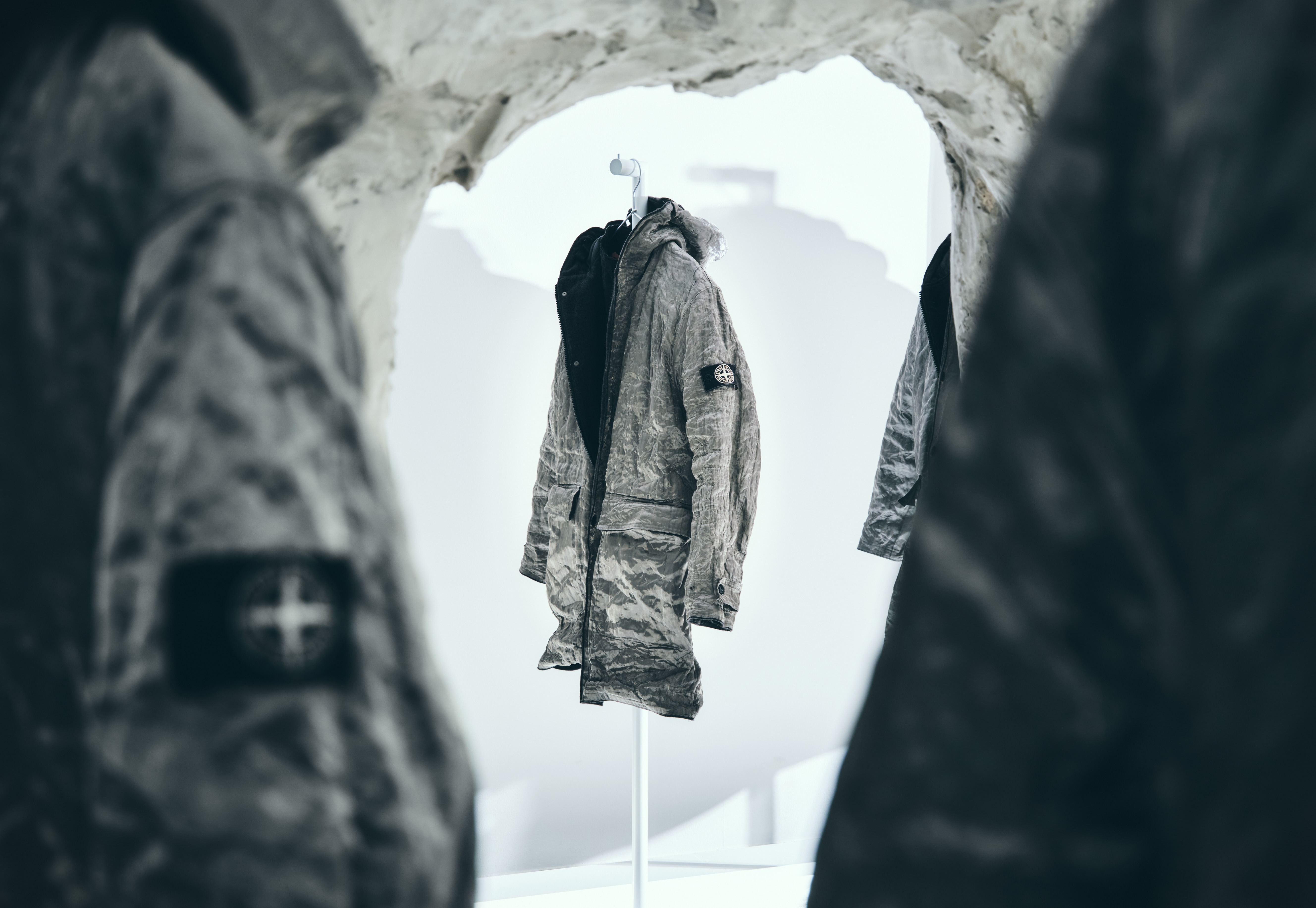
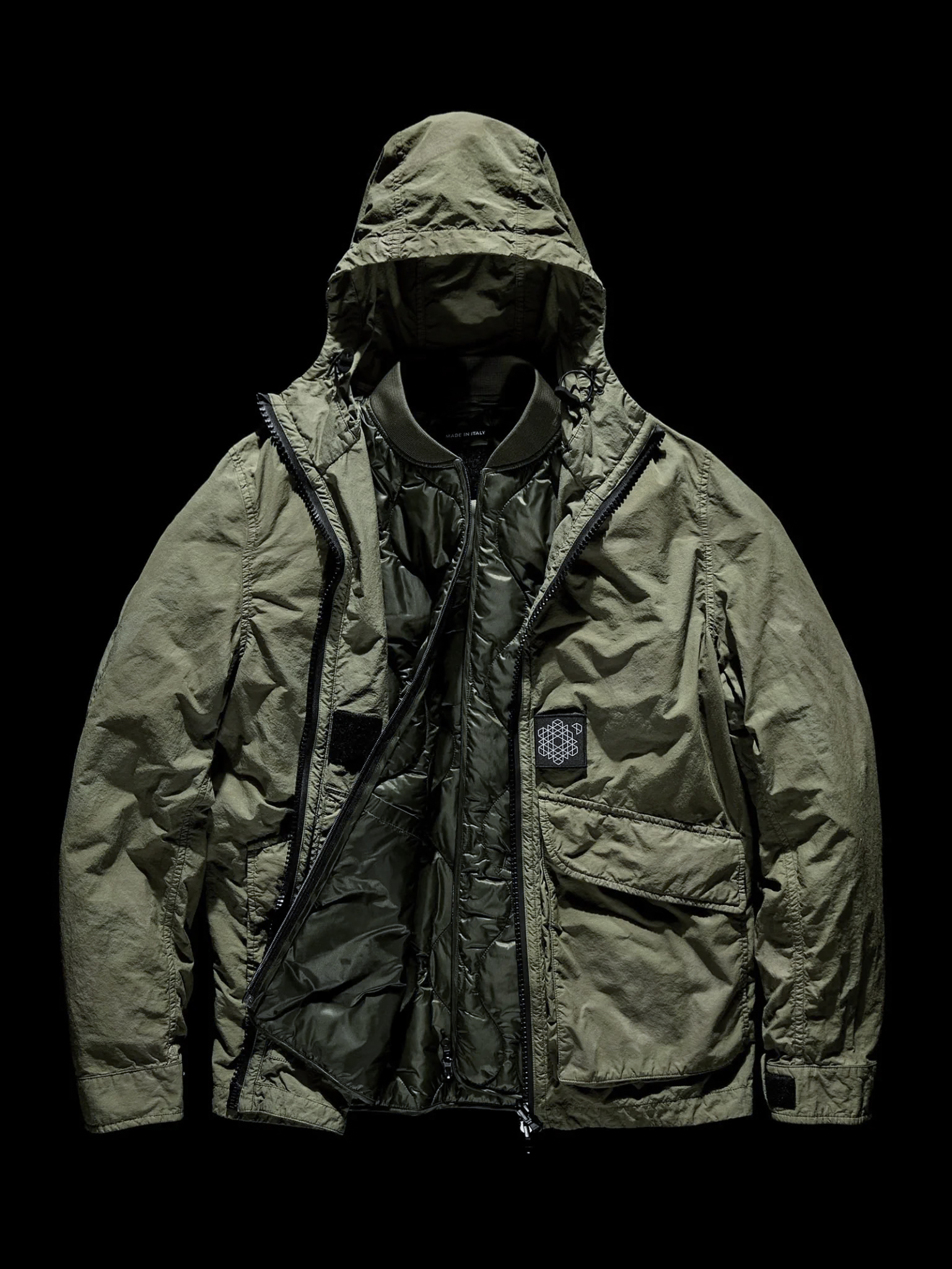
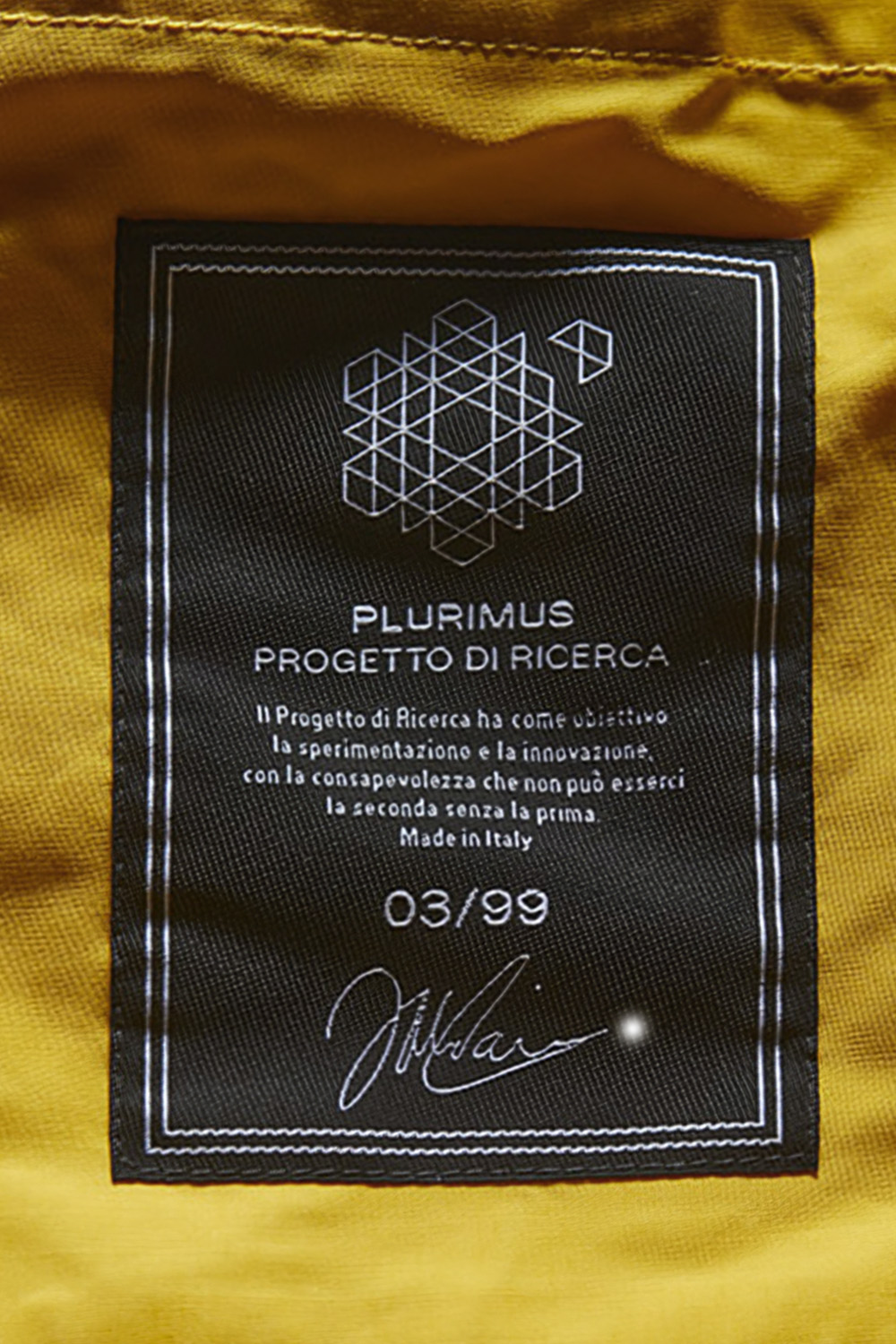
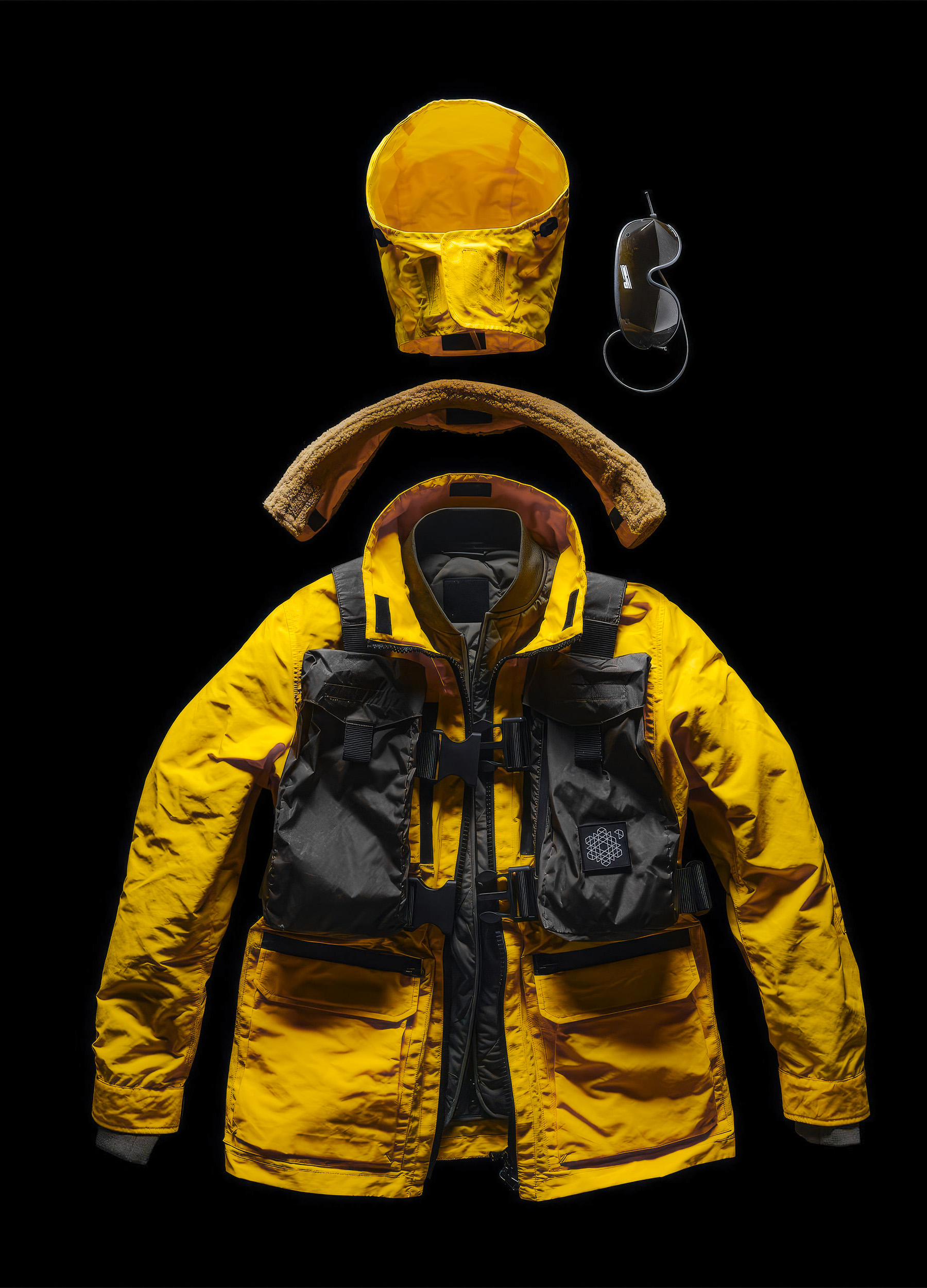
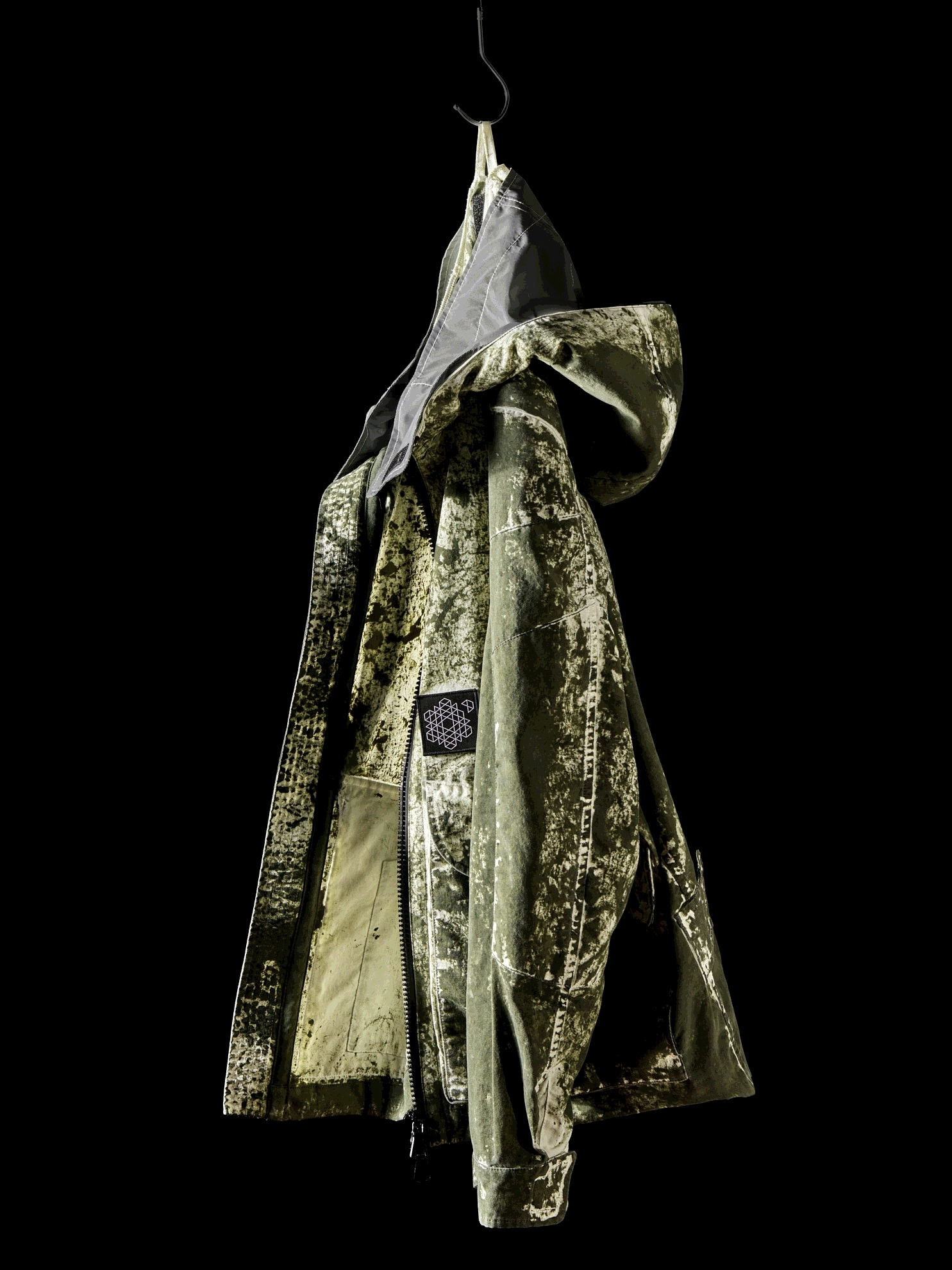
In fashion, what is not produced usually has no public existence. He could be that exact about one because of how the work is organized. Plurimus pieces carry no season and no style name; each is identified by its position in a numbered structure, and each set is built around a central outerwear piece. A position can be determined before anything is cut — which means a garment can hold a place in the structure without ever entering the world. Designed, numbered, absent. Standing in front of a wall partly constituted by destroyed paintings, he already had somewhere to put that.
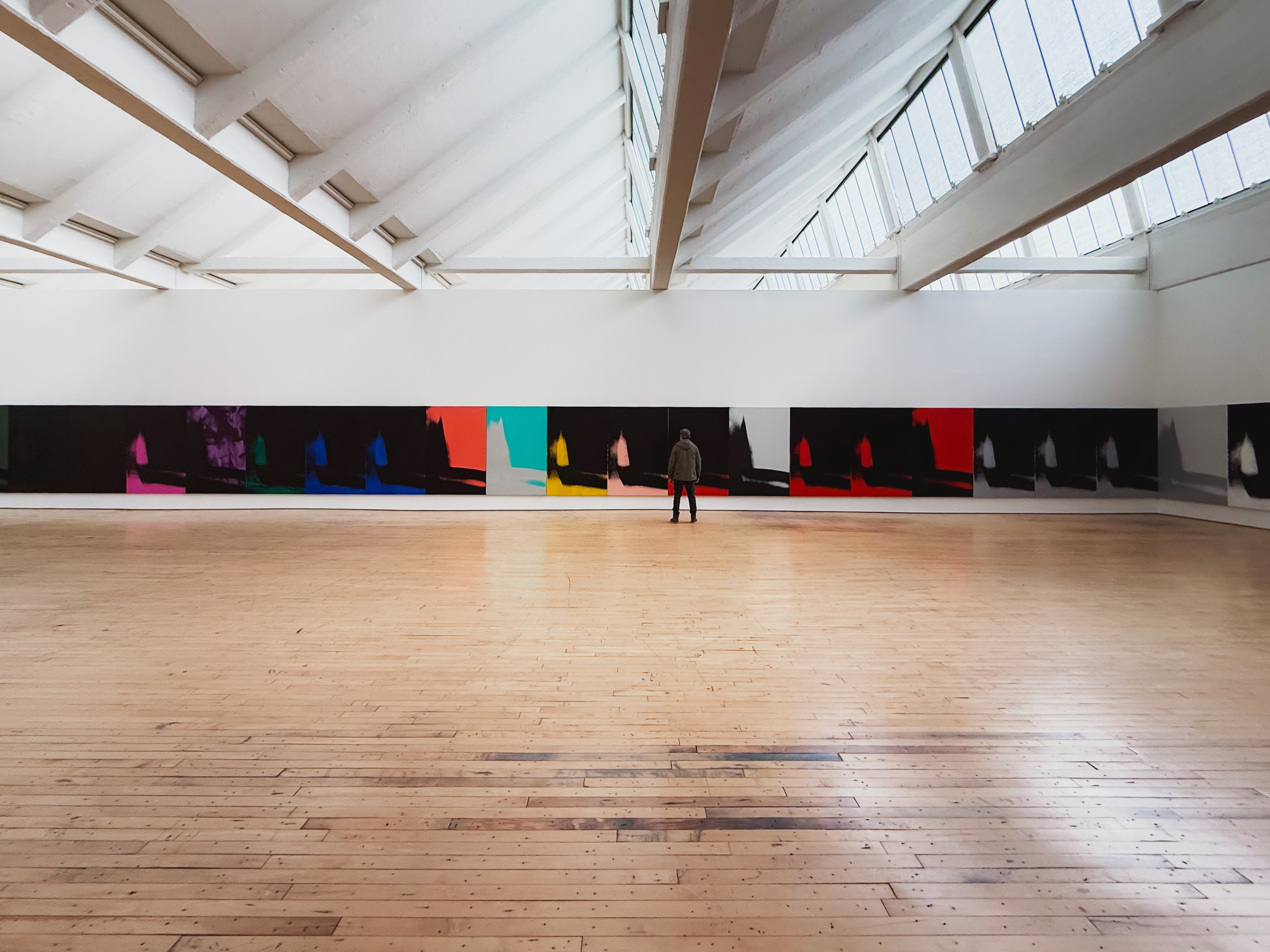
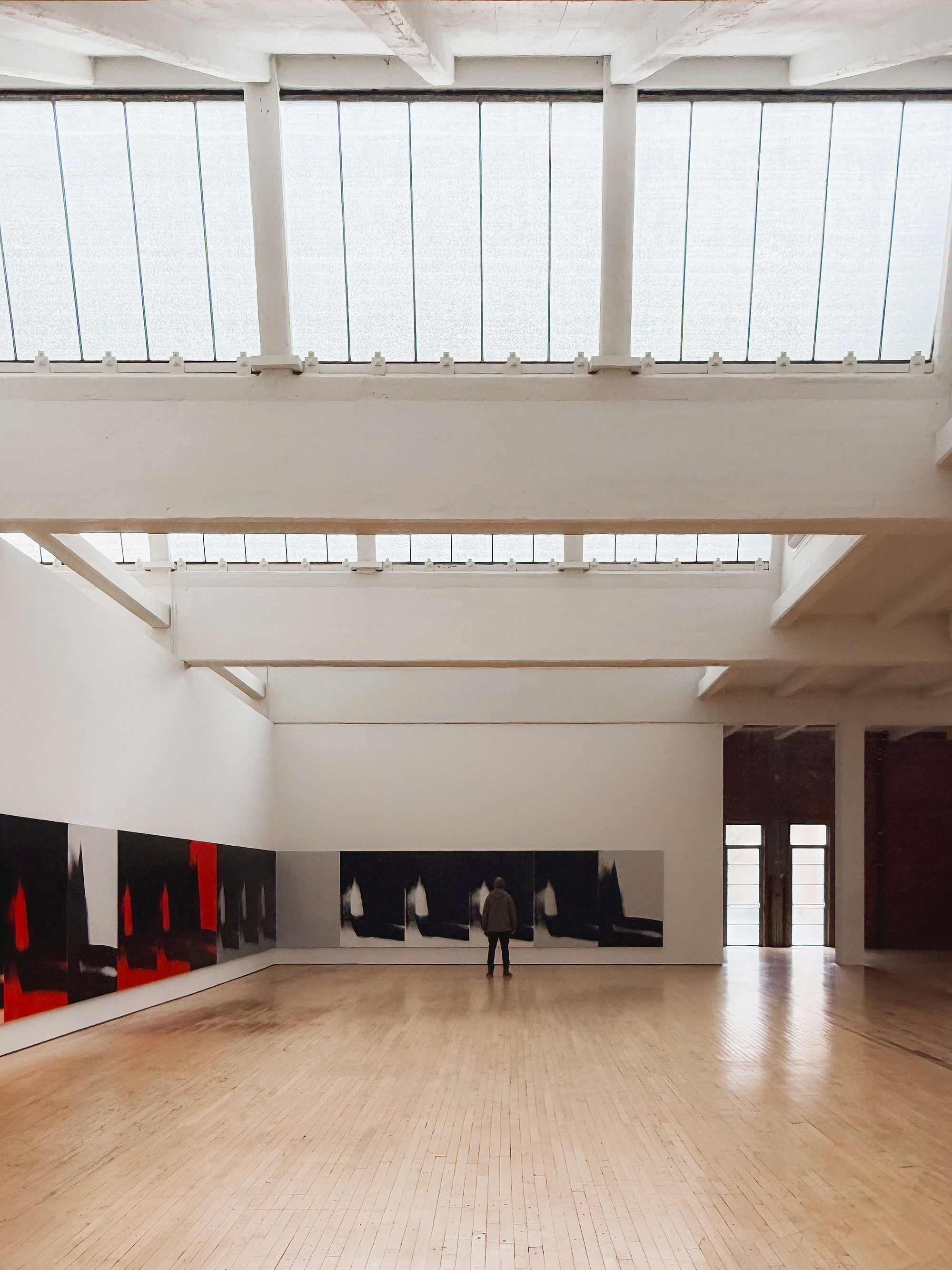
Warhol's Shadows slowed him differently. The room runs to 102 panels — Dia holds the installation complete and shows it whole — and he walked the entire length of it once, at an even pace, before coming back to the middle and staying. Then the phone went into his pocket.
He talked about the color first, as a distraction — the thing that keeps the eye occupied while the room does something else. Then about ownership. No one, he said, owns a room this long. The panel is the unit that can be bought; the work is the field it would be lifted from. A panel can leave the relation. The relation cannot follow it out the door.
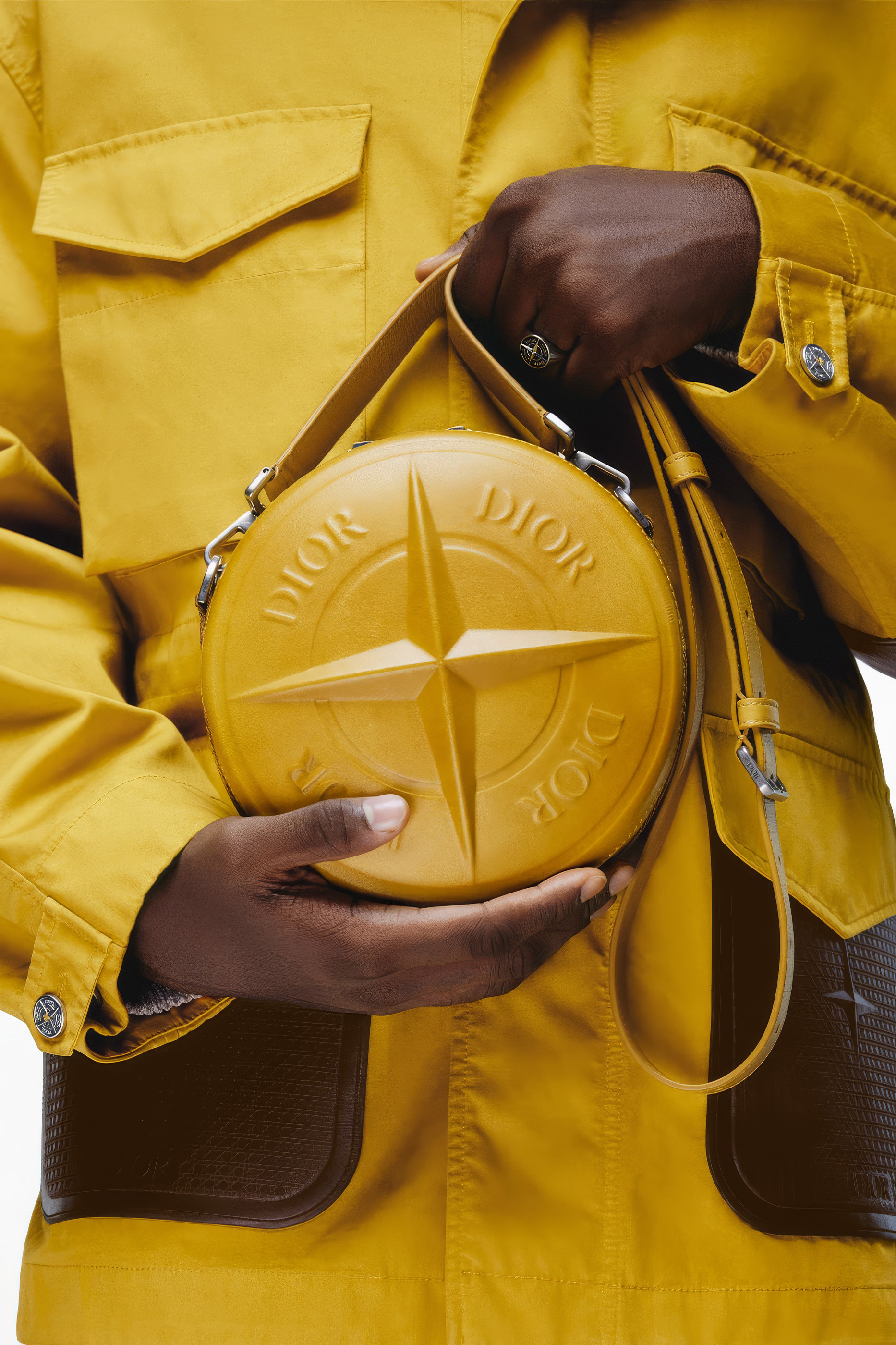
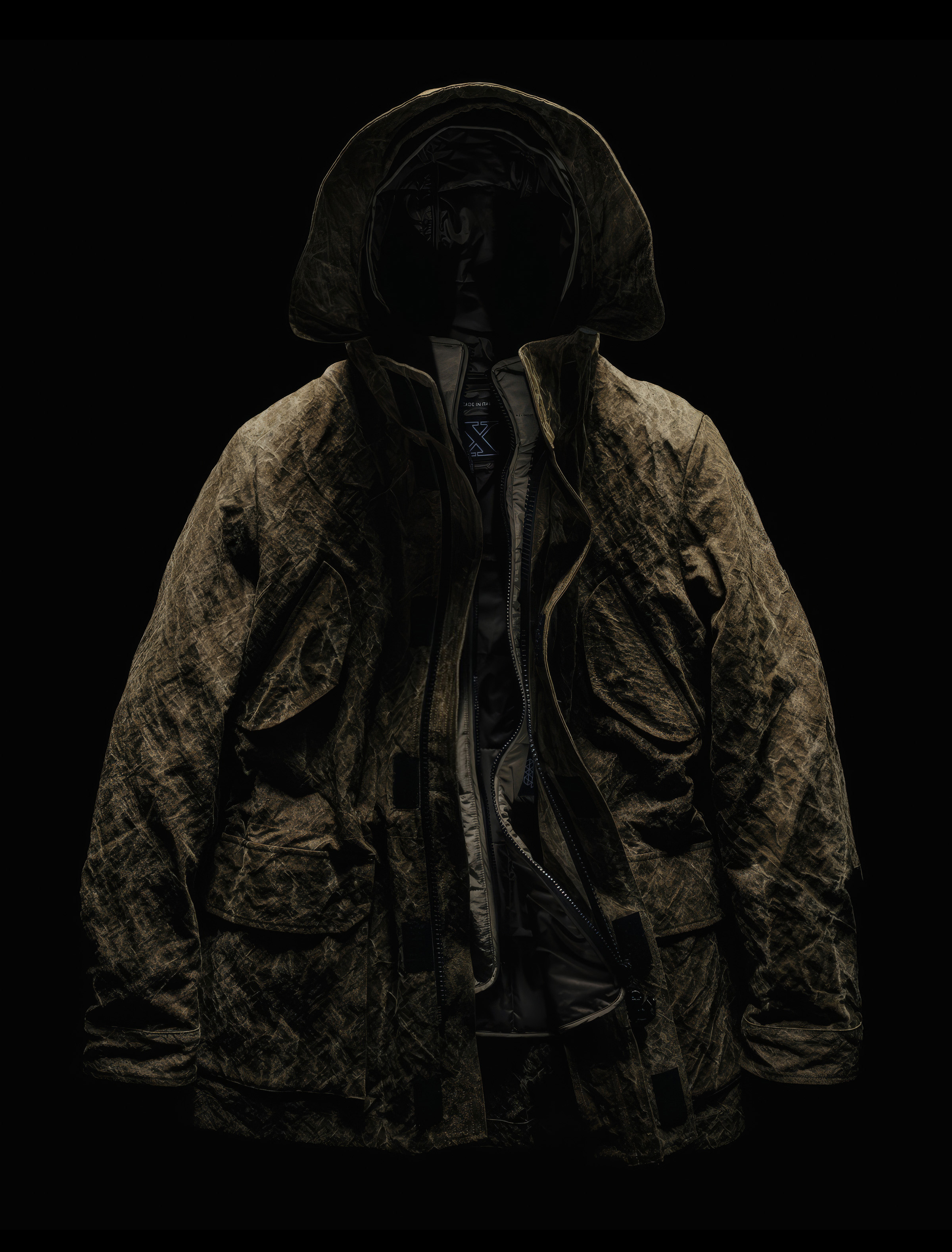
The sets are built the same way, he said — each piece conceived against the others, the central outerwear organizing everything around it. Then he said people come wanting only the jacket.
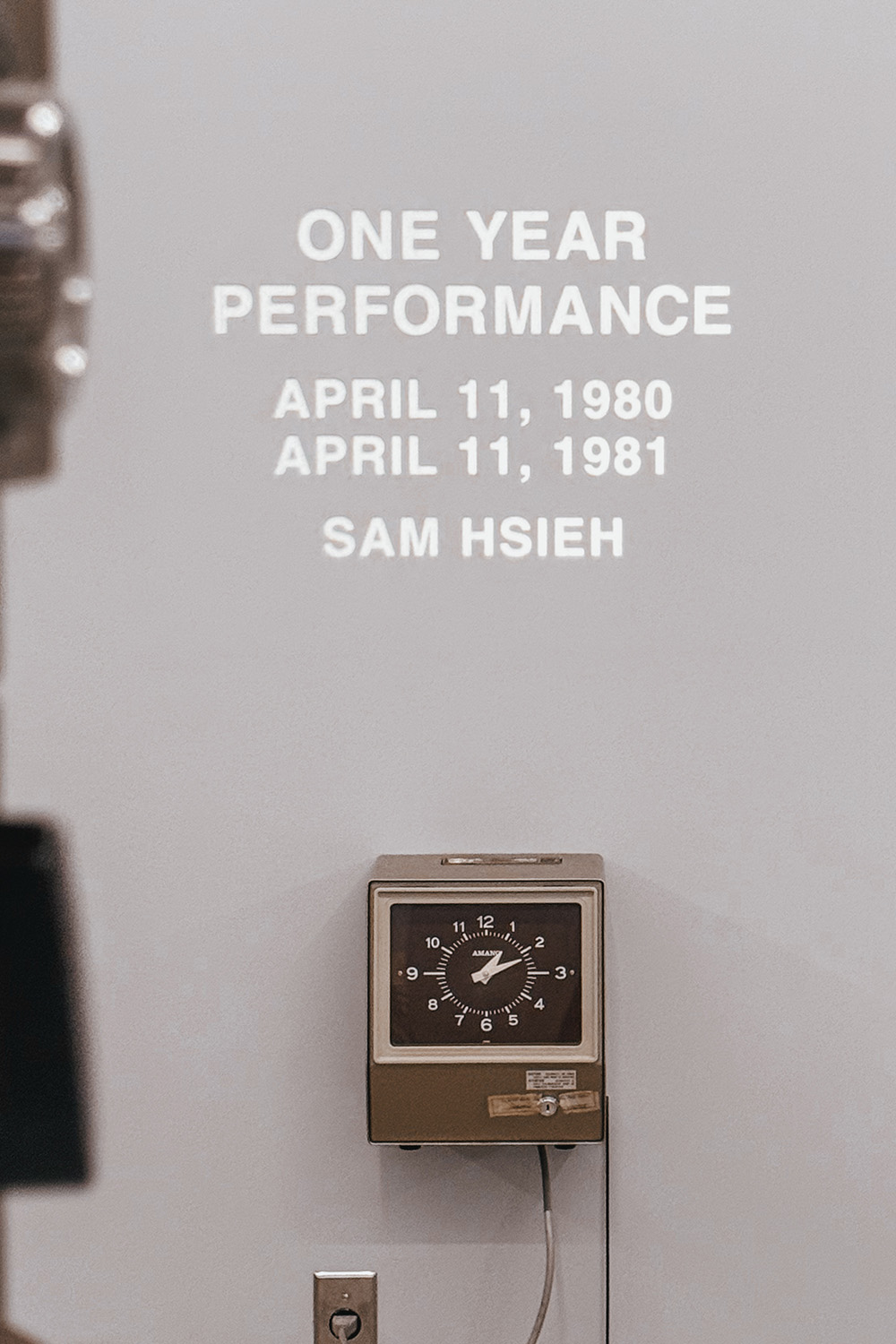
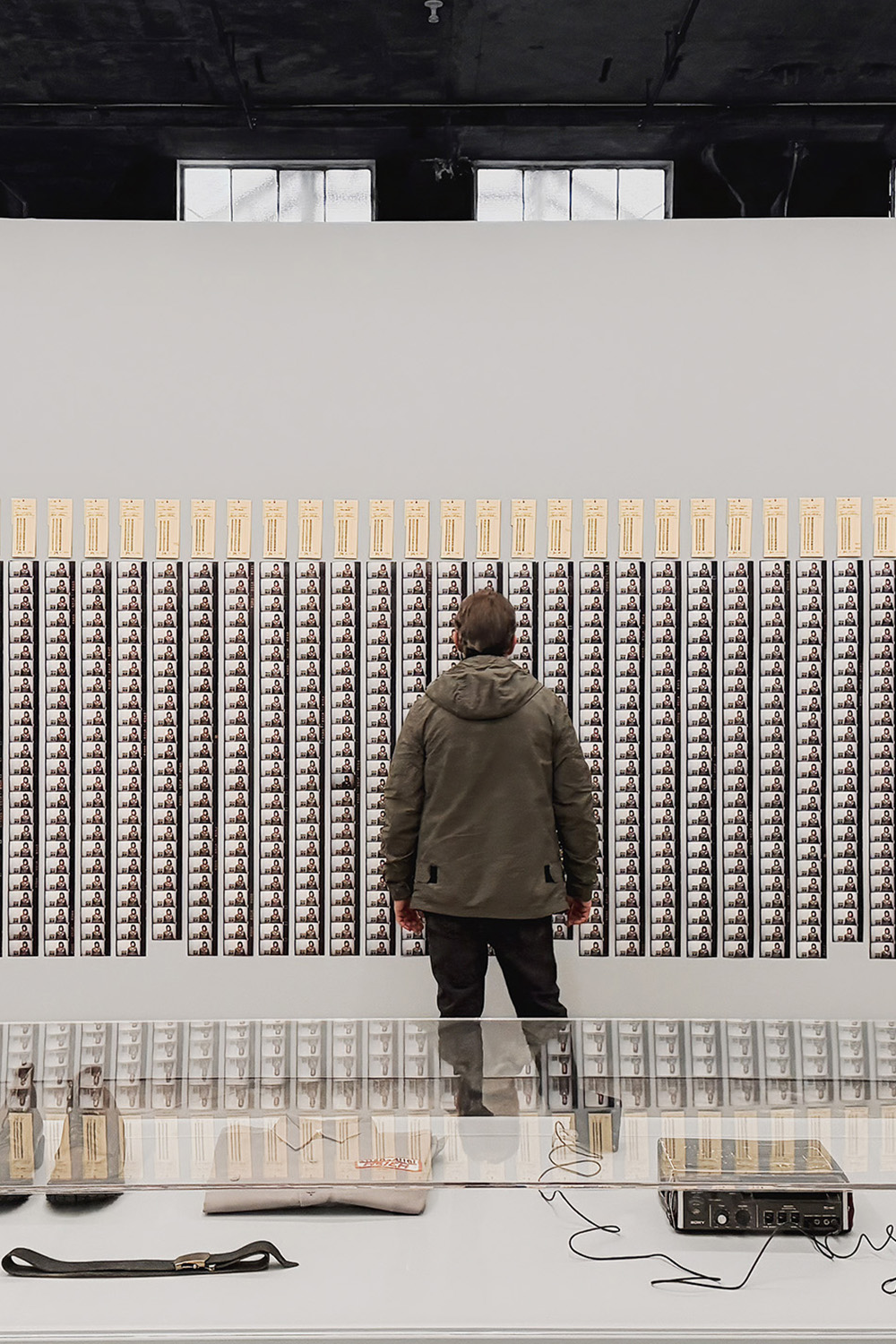
Tehching Hsieh he didn't know. I gave him the minimum: one rule, held for a year — punch a time clock every hour, on the hour — and the photographs record every instance.
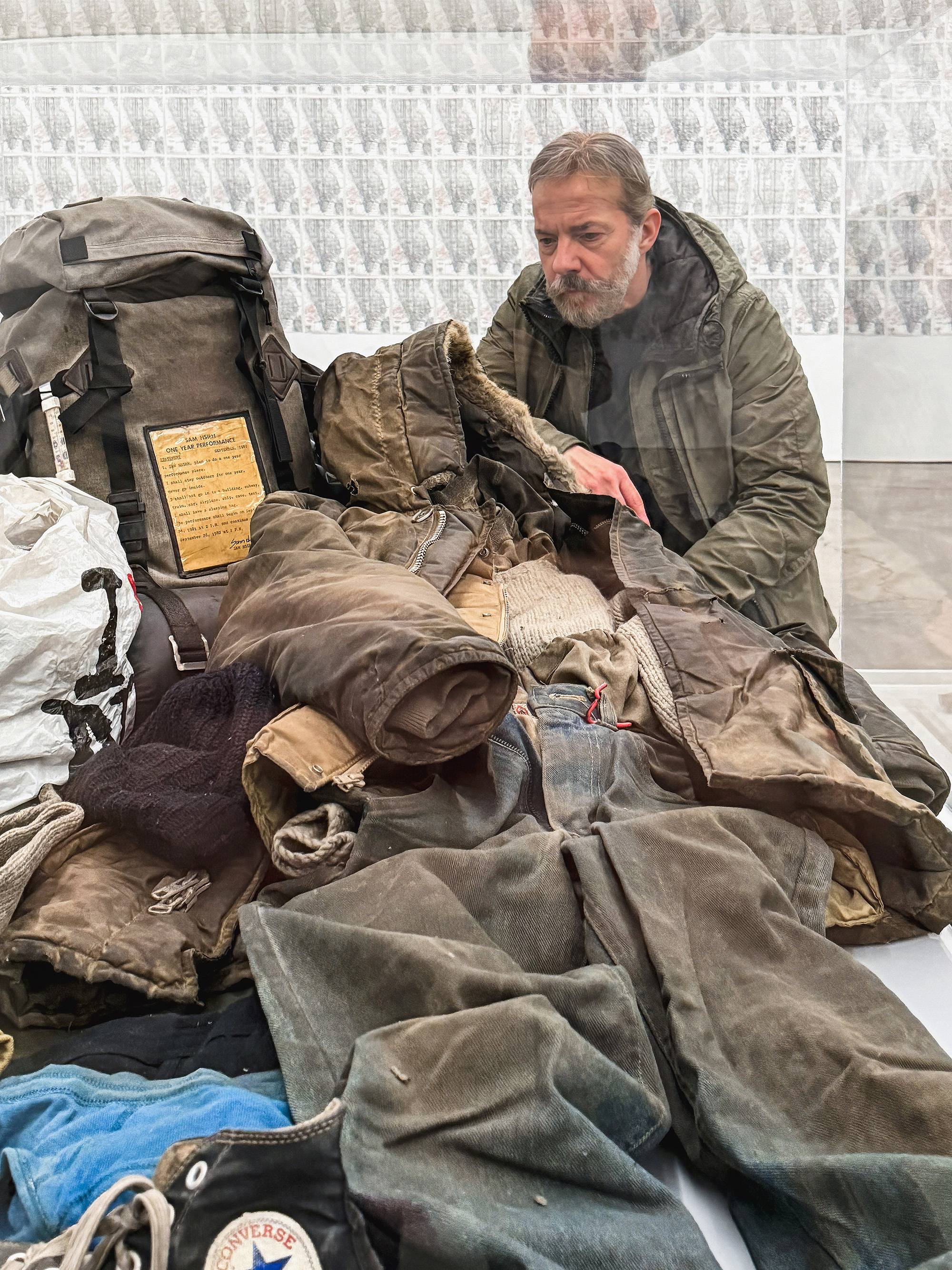
He didn't start with the photographs. He went to the glass case.
The case holds a different year, the one Hsieh spent entirely outdoors, never once entering a building. Jacket, backpack, gear — all of it worn past recognition, the cloth holding what twelve months of weather had done to it, exposure present in the fibers as consequence rather than record. Fabio leaned in until his face was nearly at the glass and stayed there while I moved along the wall above him: 8,627 photographs, one for every punch of the clock.
When he straightened up he said the piece frightened him. Not the endurance — the terms. Nothing could be corrected. Whatever happened inside the year was the work, and a year cannot be reassessed after it has already run.
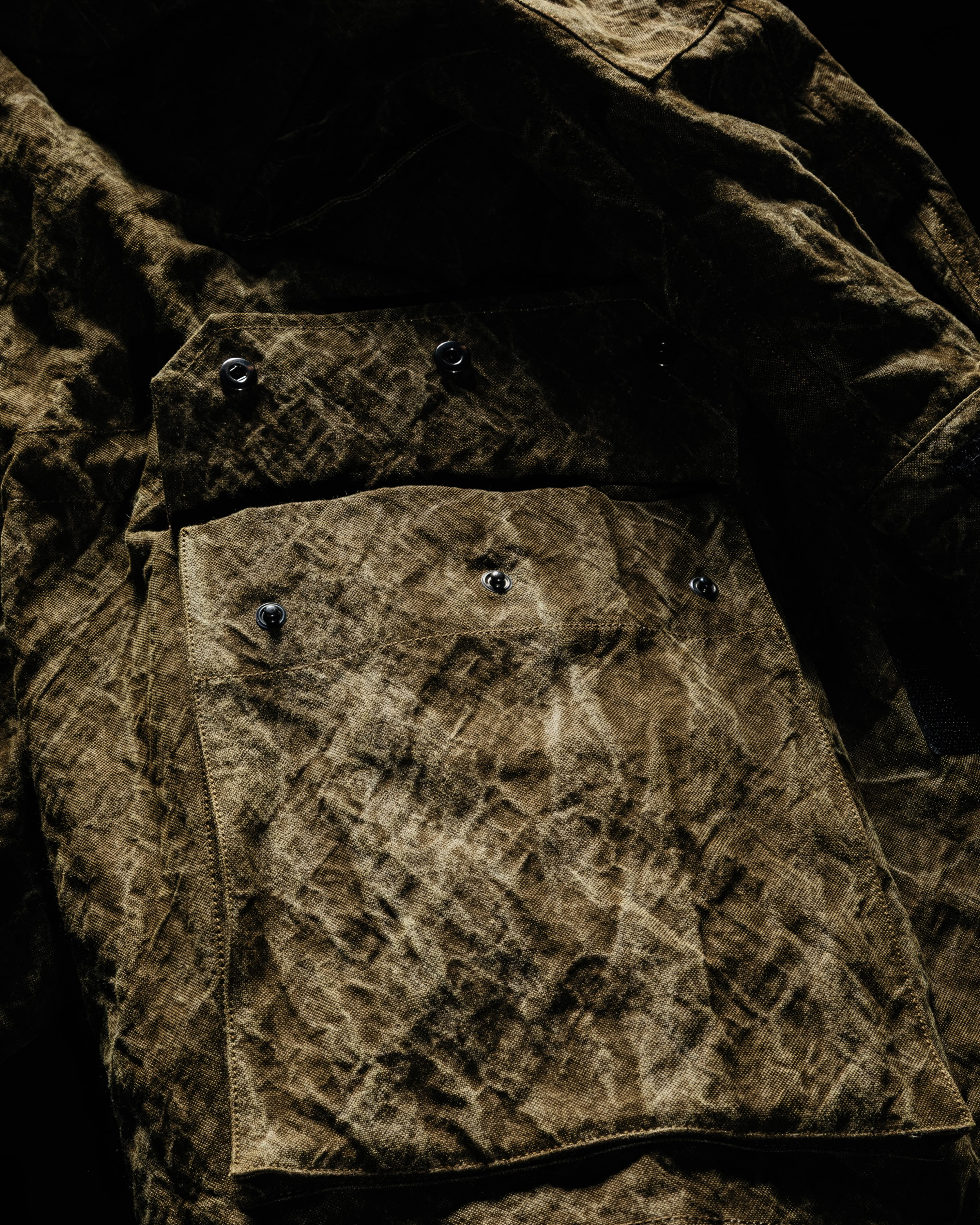
Then he brought it to the dyeing. Every Plurimus piece goes through a process he sets up and then surrenders; the material decides part of the result, and what comes out of the bath belongs to the cloth as much as to his decision. But he inspects every piece when it comes out. Every one.
He turned back to the case. "Maybe that's the honest answer. I'm not Hsieh. I still want to know if it's right."
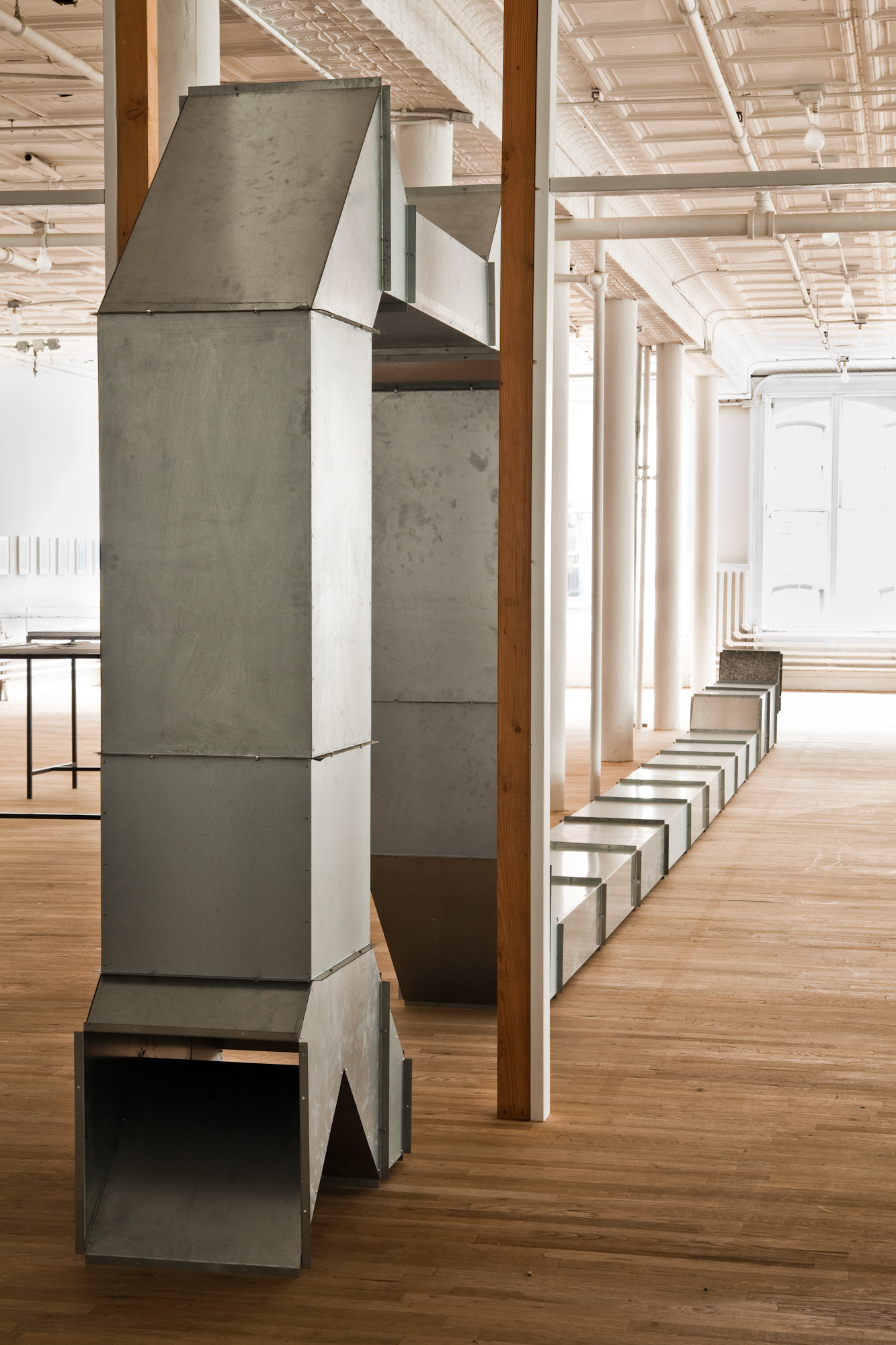
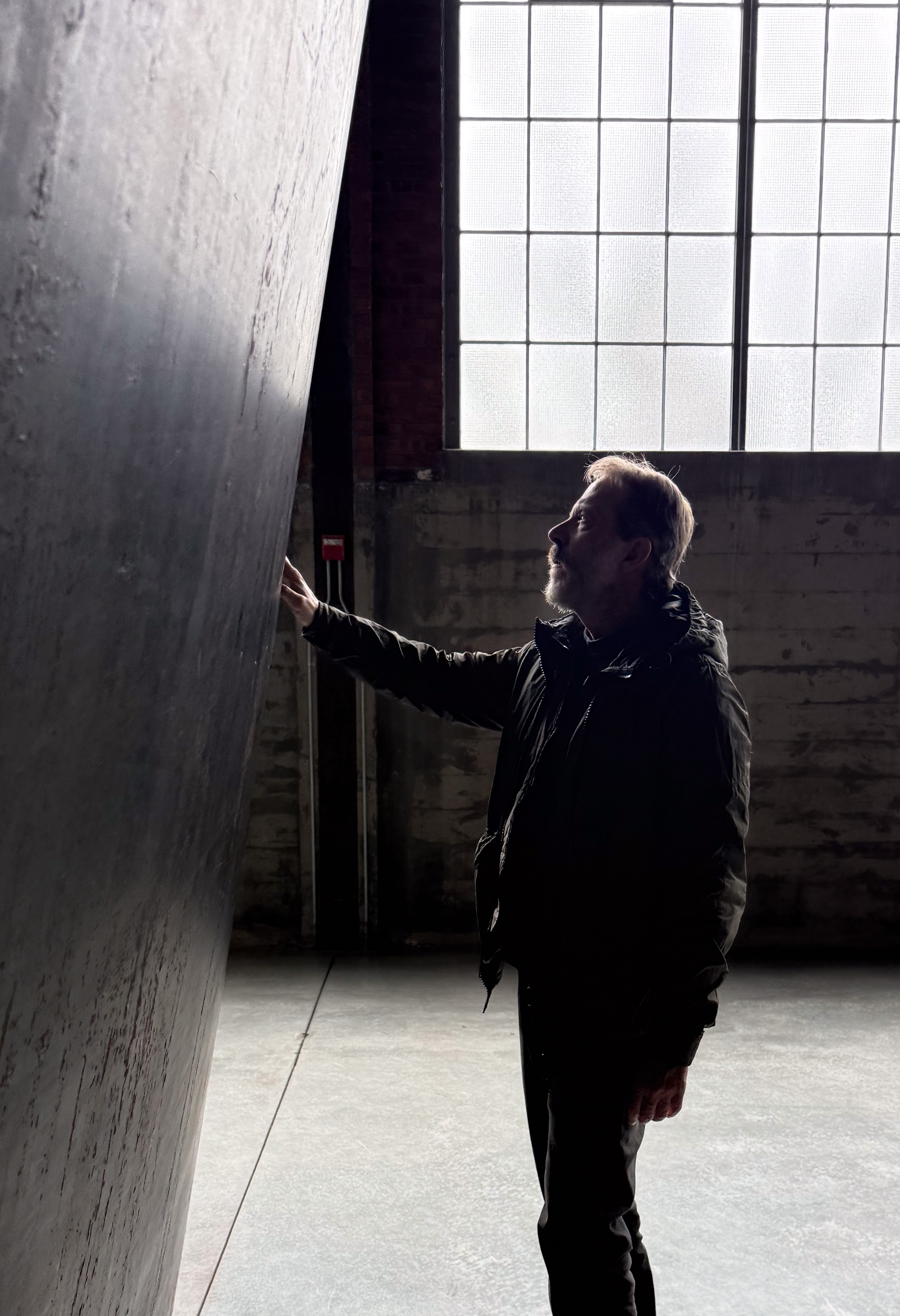
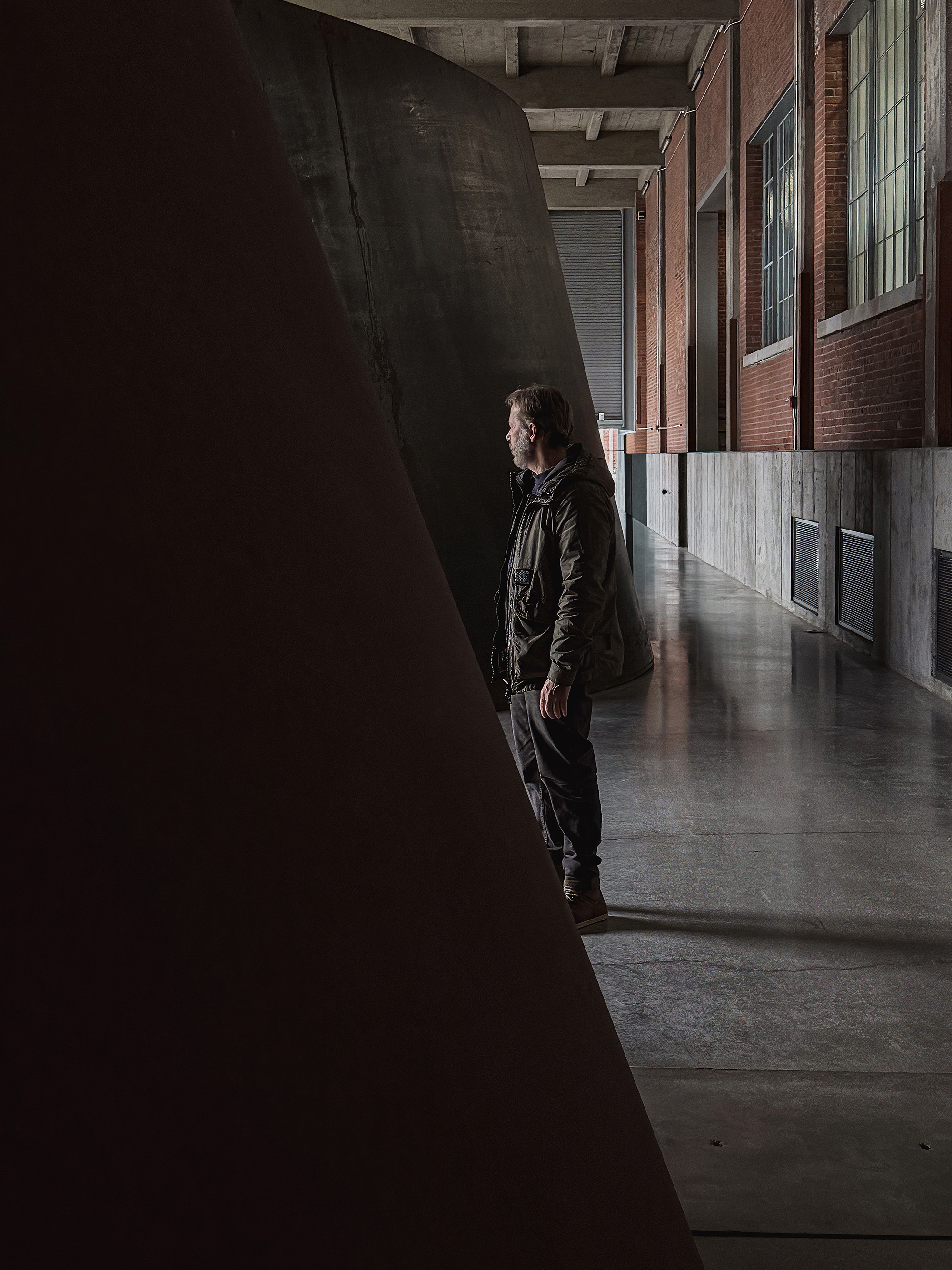
The Serra halls allow no distance. You enter and the steel is already above you, curving. Fabio slowed almost at once — slowed, not stopped — and then his palm went to the surface. He walked the interior curve that way, fingers trailing along the steel, watching the point of contact rather than where he was going. It was the attention he had given the glass case, arrived at a surface that allowed it.
I told him Serra had treated the public encounter as structural to the large works — that the walking through is part of them.
What the steel raised for him was production — the kind that runs through other people, over years. In Bologna he has worked with the same outerwear suppliers for a long time. Sometimes they call him when they come across something: a new lamination, a different finish. He doesn't always use what they bring. But the call happens at all, he said, only because of the years underneath it. You cannot start somewhere new and ask for it.
I asked the one question I asked him all day: what happens to Plurimus if those relationships disappear. The work continues, he said, but something real goes with them, and it is not knowledge. Knowledge can be written down. What cannot be written down is that when he asks for a thing that does not yet exist, someone on the other end will try to find it anyway. The garment can carry what the relationship produced. It cannot carry the relationship.
The light was nearly gone when we reached the car, and he was still in Bologna. A supplier he has worked with for years. A fabric that took three years to get right — three years of samples moving back and forth between people who make things together. He had stopped explaining. He was telling me about his life, and it kept arriving in the same units: years, people, and what collects between them.
Somewhere on the drive back the afternoon returned to me as a series of touches. The palm flat on the steel. The face all but against the vitrine. Every piece out of the dye bath, met by the same hands before it goes anywhere else. The glass was the only thing all day that stopped him.
Authorship does not begin with the object. It begins with the conditions that allow the object to appear. At Dia Beacon, Fabio Cavina moves through works built on rule, sequence, and indifference, clarifying a practice in which the garment is not the origin, but the result.
A note on method. This structural encounter took place through a longstanding relationship between Fabio Cavina and one member of Quiet Modernism Editorial. The interpretation remains Quiet Modernism’s.
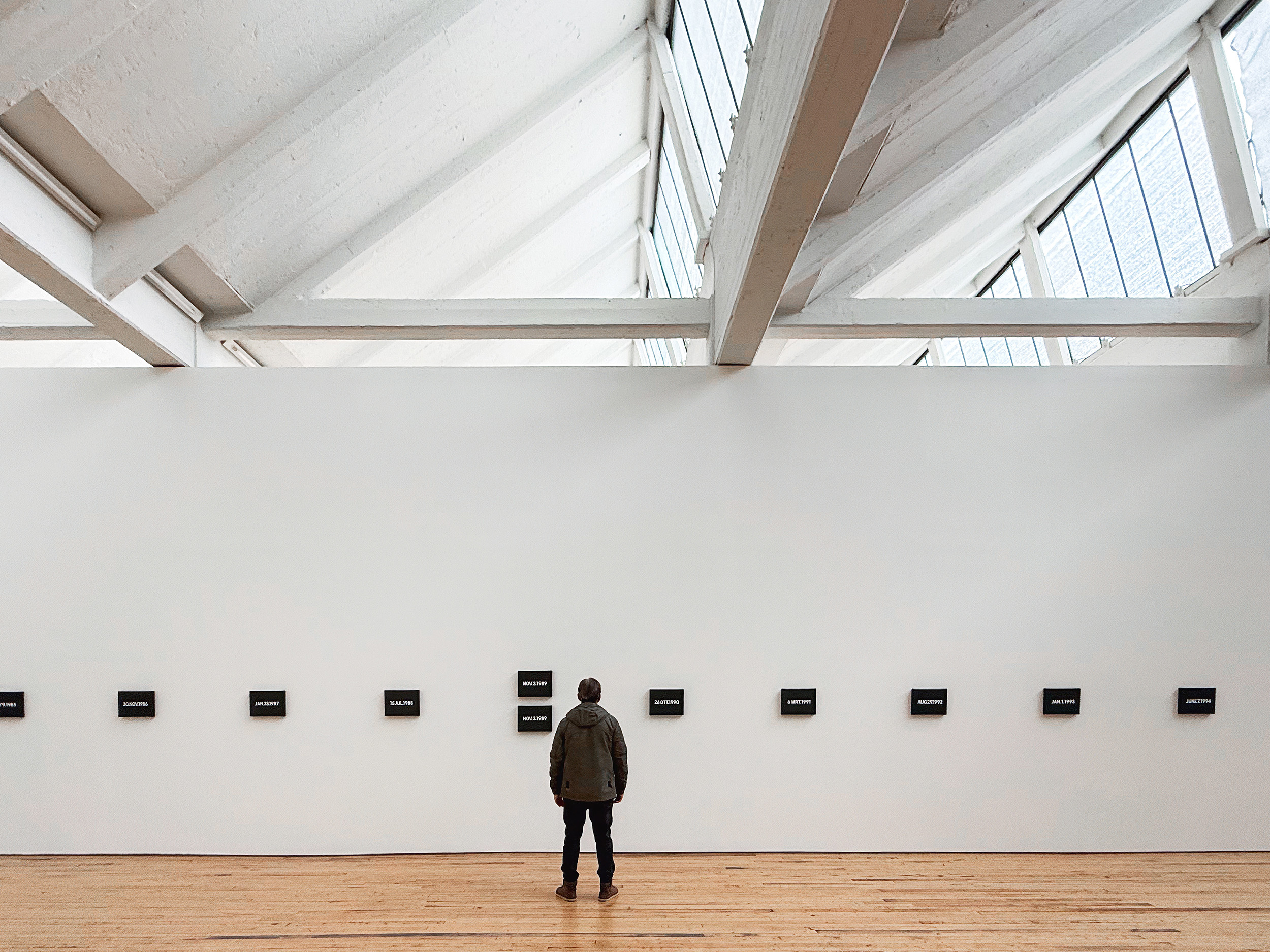
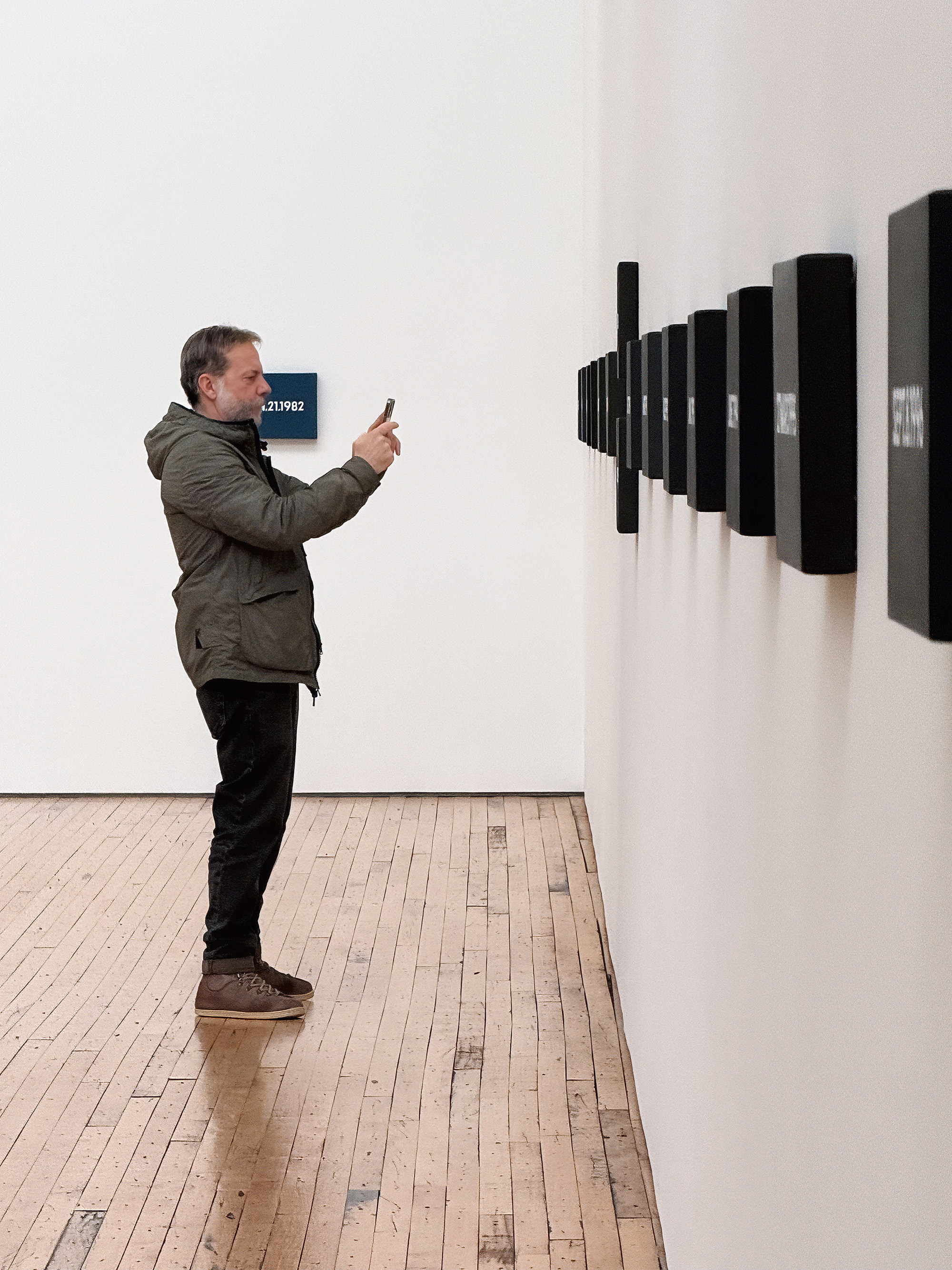
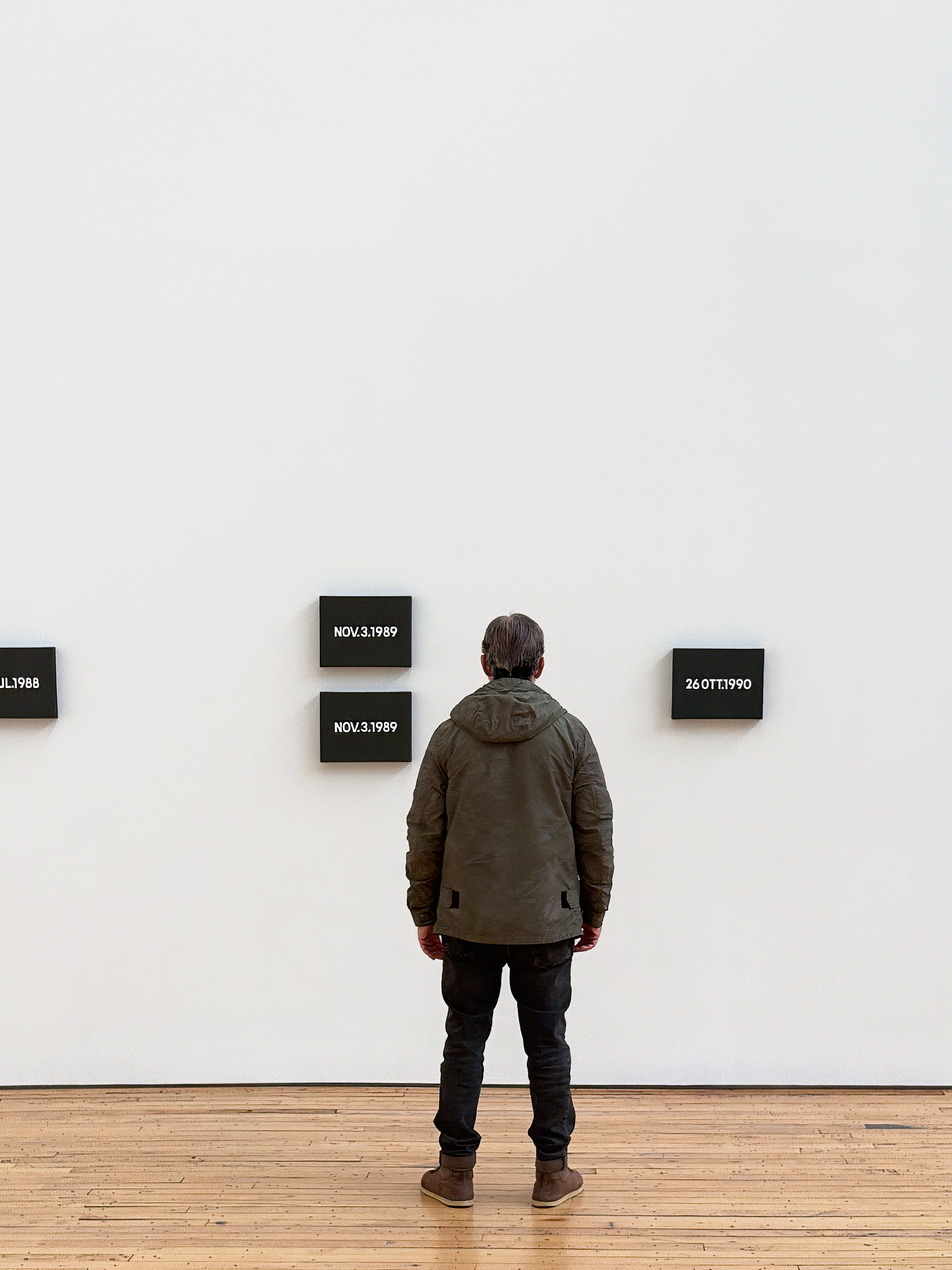

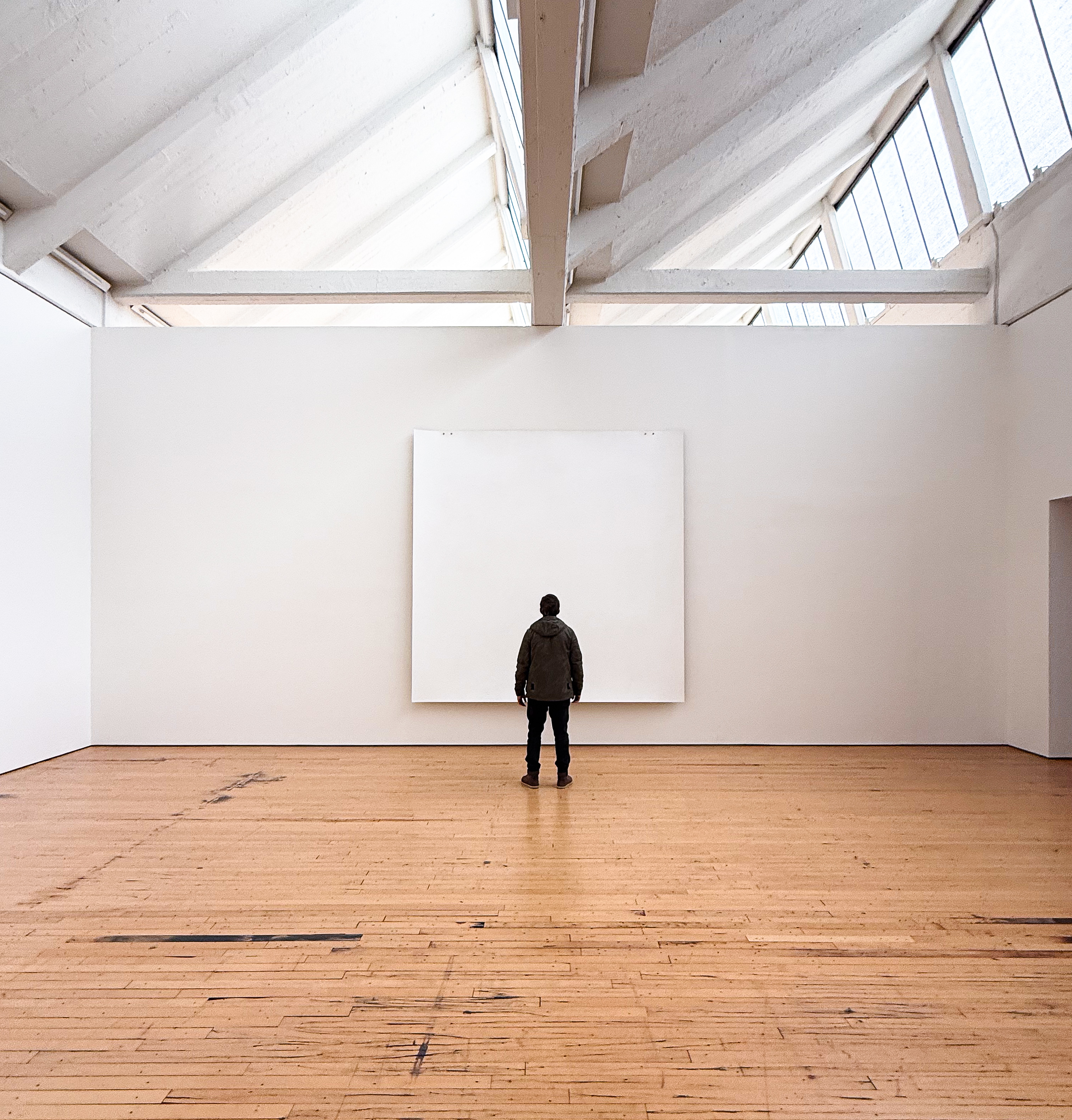
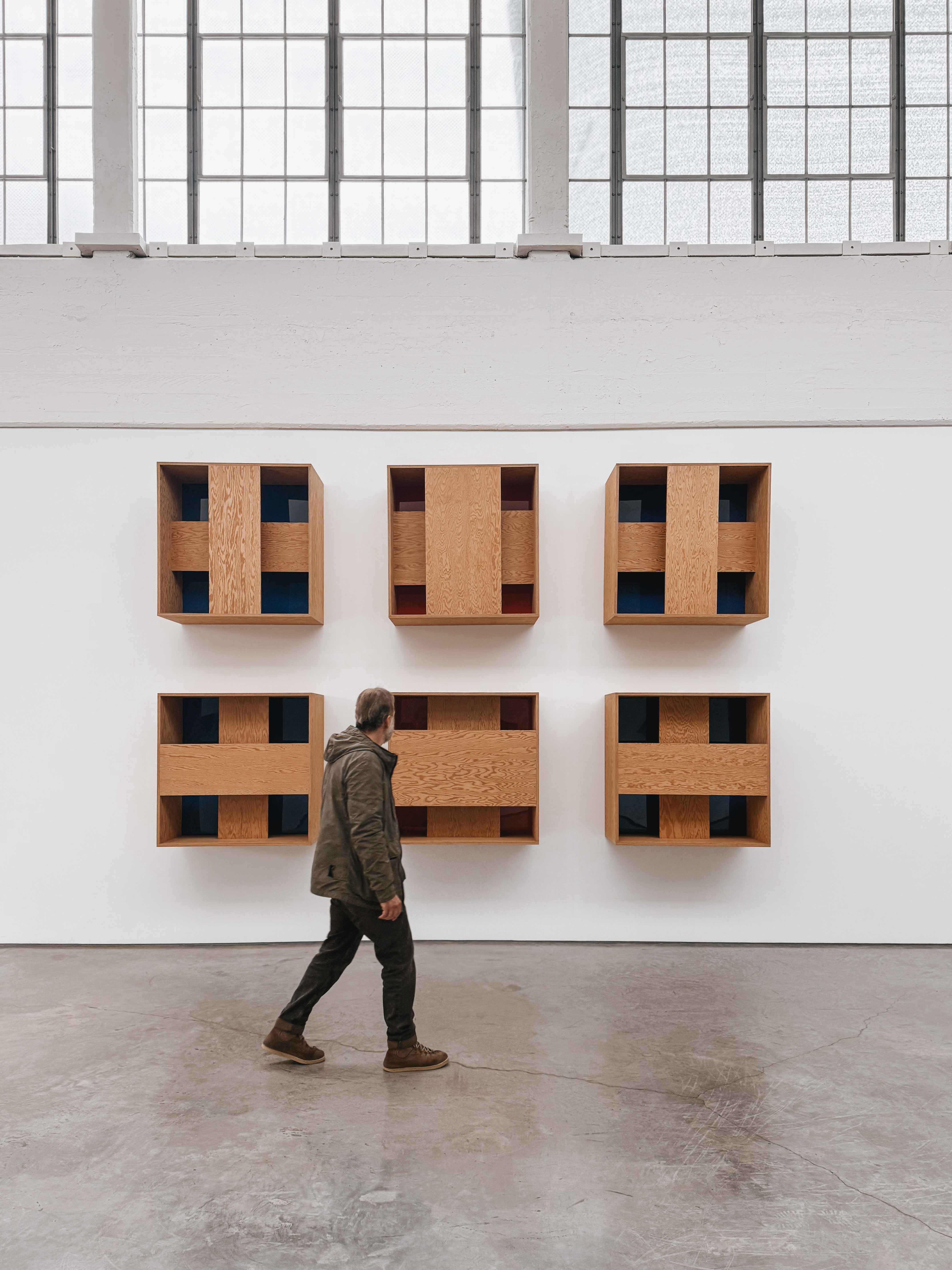
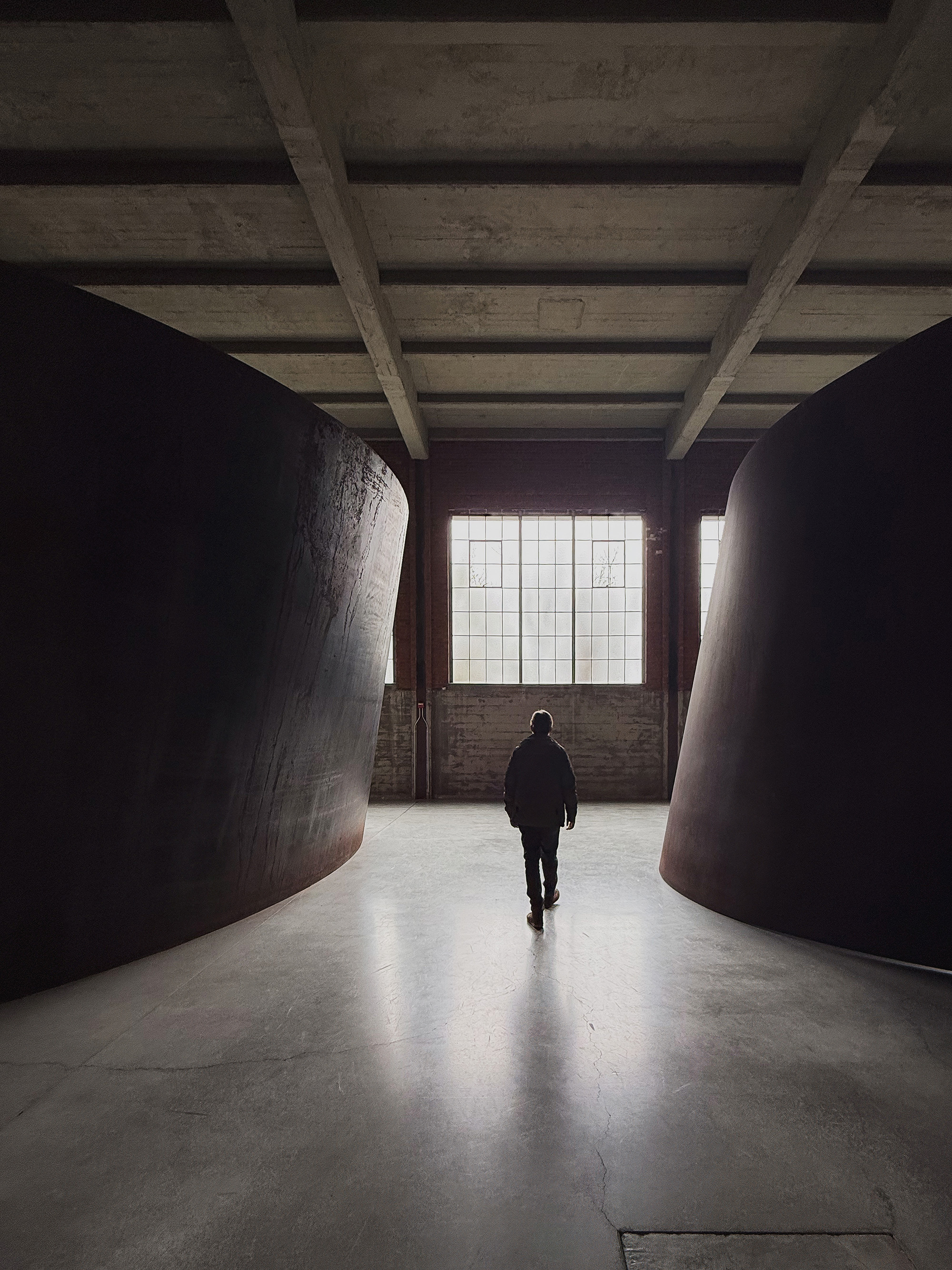
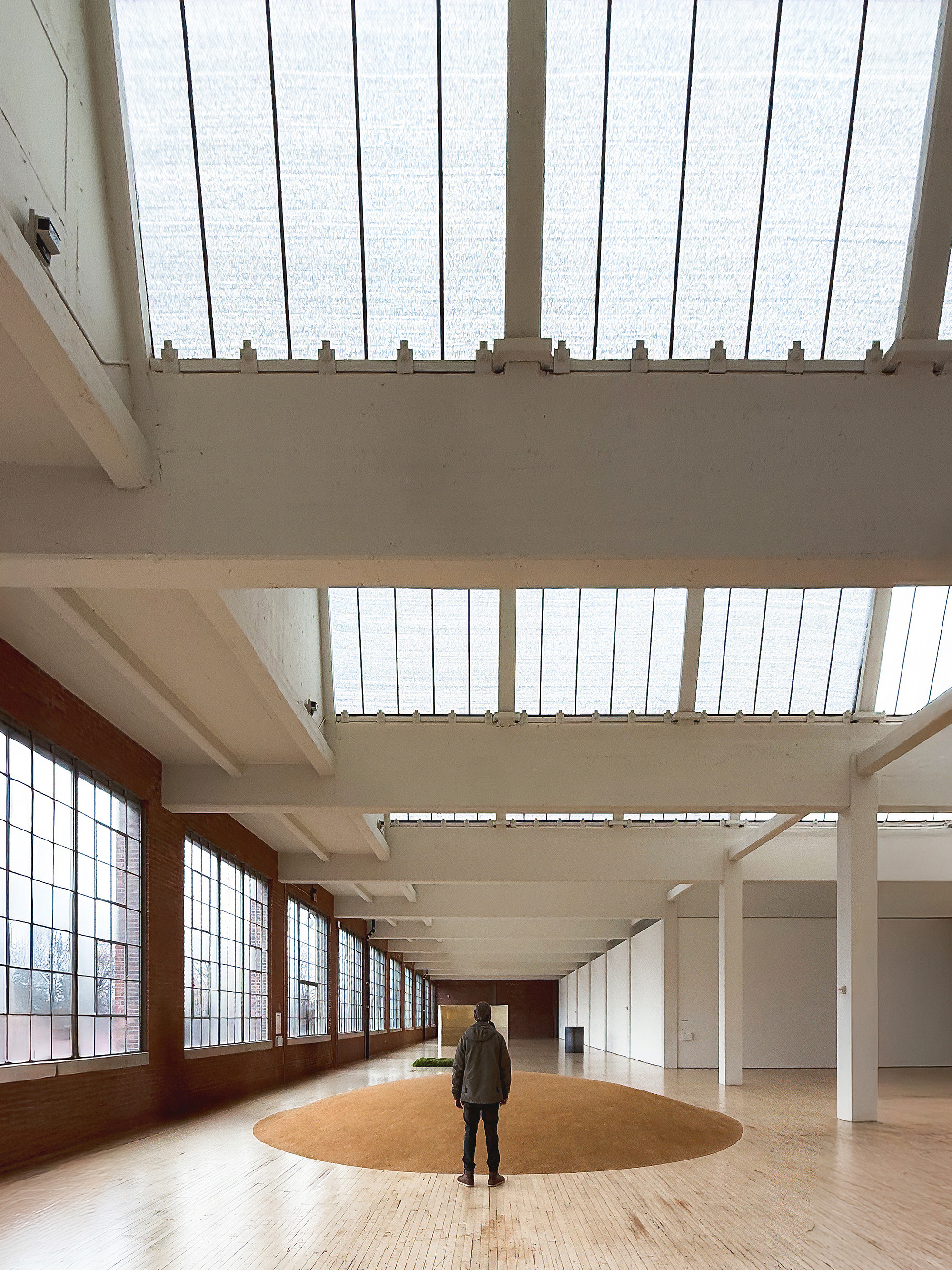
Cover Image: Structure before object. Image Credit: Dia Beacon, Beacon, New York. Photograph: Quiet Modernism.
All images © their respective rights holders.
Image rights & attribution →