

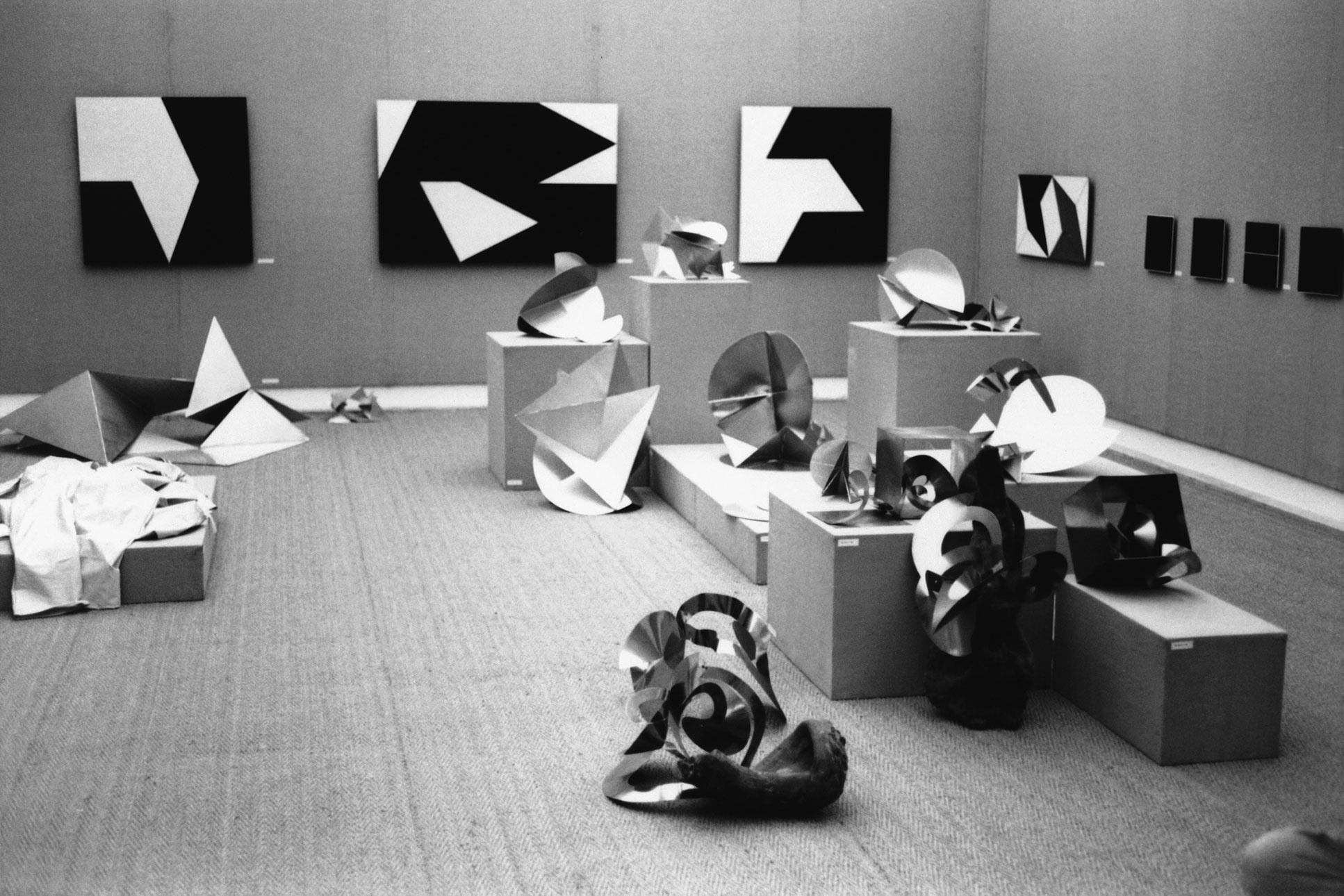
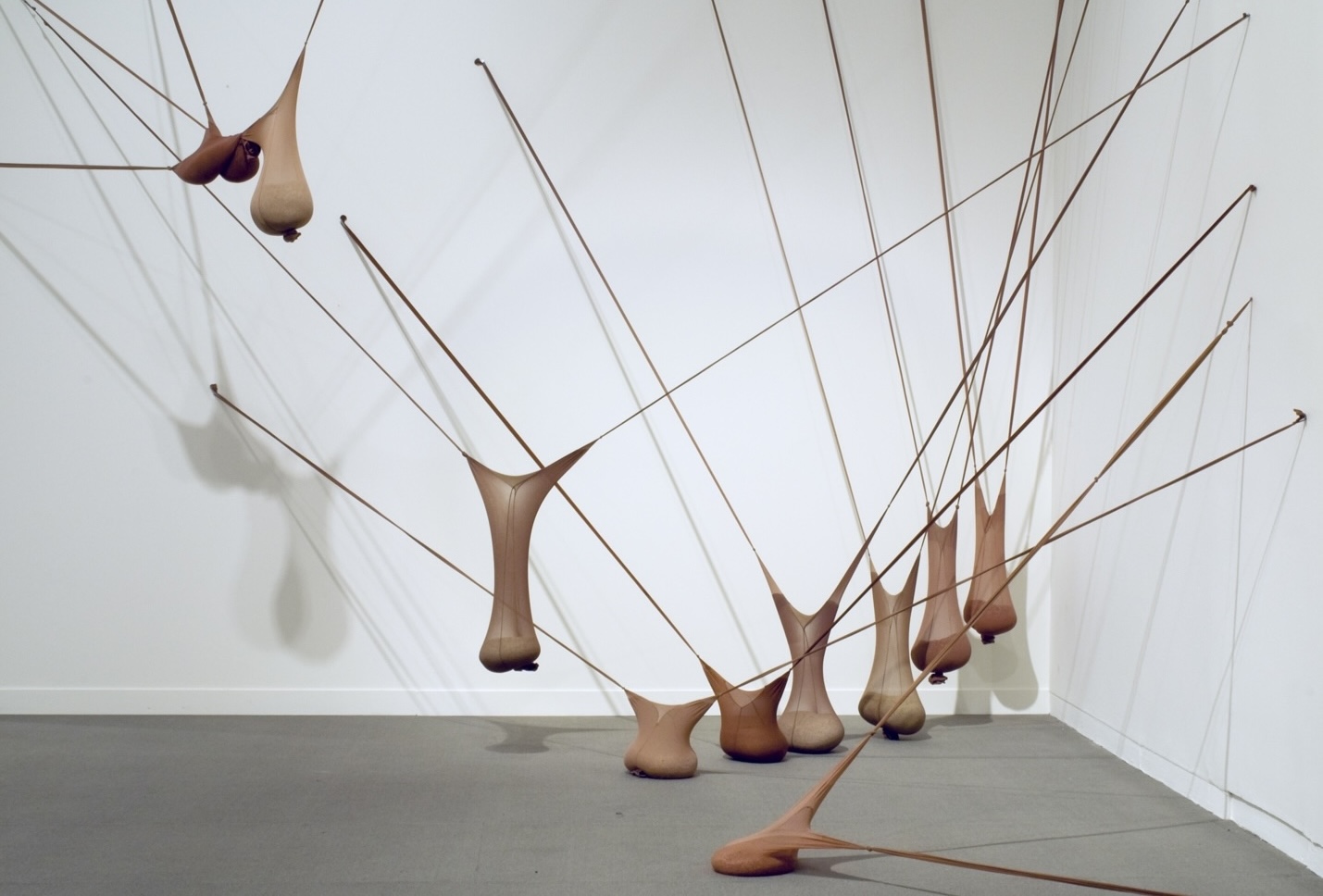


A studio photograph places Szapocznikow among the forms before the works begin to separate.
She is seated with objects and unfinished shapes around her. The image does not explain the sculptures, but it changes how they are first received. The artist is there before the fragments are read, close to the materials that would carry so much of her life: casts, resin, mouths, bellies, photographs.
Szapocznikow’s life cannot be treated as external context. She was a teenager during the war and survived ghettos and camps. After the war came training, public sculpture, Warsaw, Paris, casts, plastics, and the repeated pressure of the body as material and image. In 1969 she was diagnosed with breast cancer. She died in 1973, at forty-six. Seen from that life, the fragments do not arrive as neutral forms. The tumor appears to confirm what the biography has already prepared.
The exhibition is right to keep that pressure visible. Autobiography in Fragments is not a misleading frame. It is the first condition under which the works become legible. The life cannot be lifted out of these objects, and no serious reading should pretend otherwise. The question begins after that has been granted.
In a manifesto dated March 1972, Szapocznikow begins from sculpture itself. She had been educated as a classical sculptor. Her work had its roots in sculpture. For years she had studied “balance, volume, space, shadow, and light.” Then the statement turns. She writes that she had been “conquered by the hero-miracle of our age, the machine.” To it belong “beauty, revelations, testimonies, the recording of history.” To it belong, in the end, “truthful dreams and public demand.”
She does not give the machine only production or technique. She gives it the forms through which experience becomes public: testimony, record, visibility, demand. If testimonies and the recording of history belong to the machine, the fragments cannot be only testimony. Biography remains present, but it no longer has the authority to finish the work.
The manifesto is also not an untouched confession. Restany returned the text with what he called French “sauce,” a small note that matters because the language that now seems closest to the artist’s self-definition already carries mediation. Voice passes into text. Text passes through a critic. Experience moves toward a form that can circulate. But the signed statement still leaves its crucial turn intact: the machine receives beauty, testimony, history, and public demand; Szapocznikow turns back to what remains. “As for me, I produce awkward objects.”
Szapocznikow was not approaching this problem from outside the languages of public memory. She had made monuments. She had worked with casts, memorial sculpture, Social Realist public form, and political bodies raised into record. Testimony was available to her. Public form was available. The late fragments come after those languages had been entered.
Public memory asks the singular body to stand for more than itself. The monument, the memorial, the testimony carry a person into history by making that person representative. This is how record works. It preserves by enlarging, by generalizing, by turning a life into a form that can be held in common. Szapocznikow’s late objects move against that final step. The issue is not that form collapses or that the object becomes unclassifiable in advance. It is that form remains legible enough to do its work, then stops before the singular body disappears into what the form is meant to make general. They do not protect the body from history. They prevent history from finishing its claim on the body.
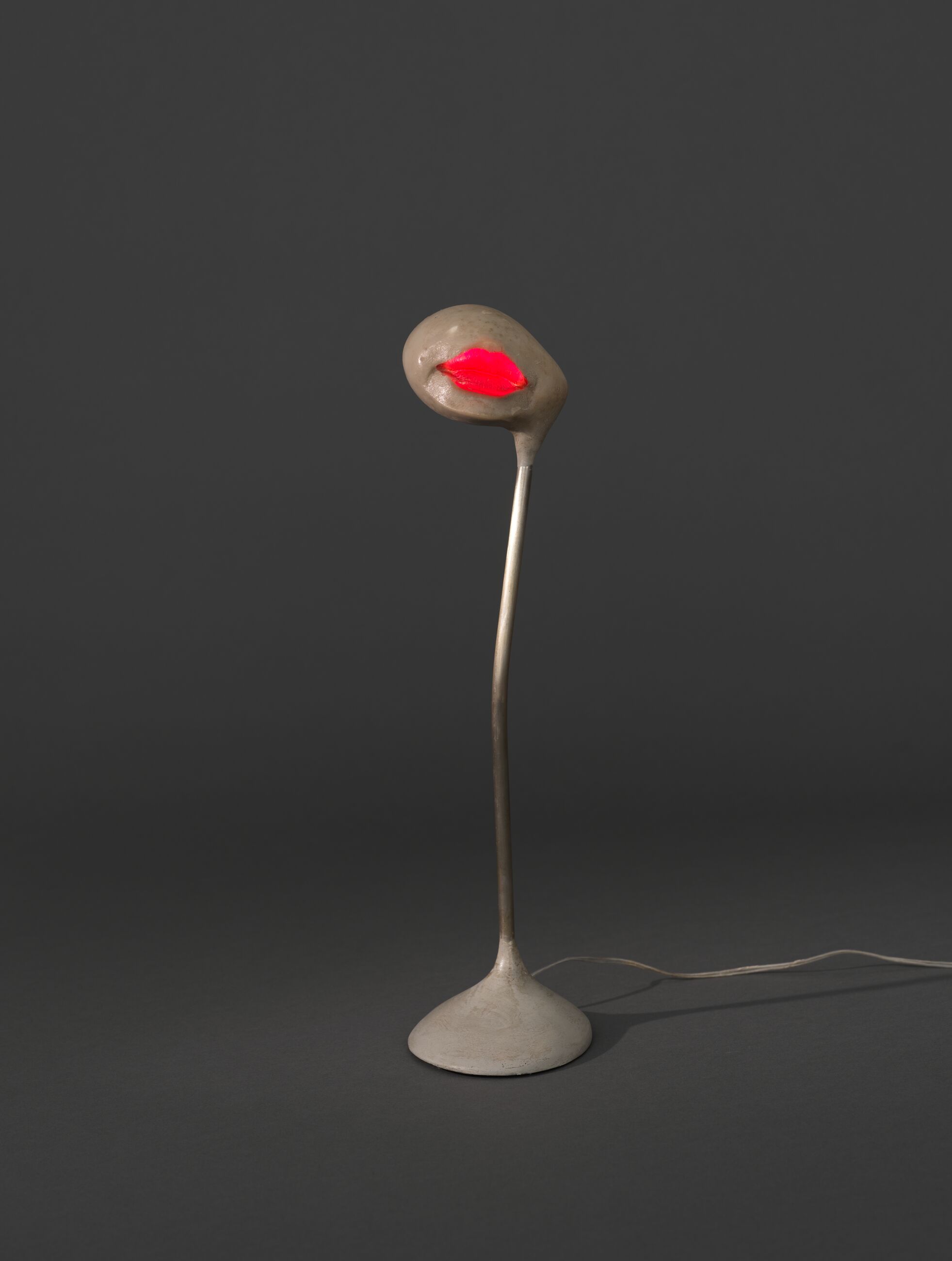
A mouth becomes a lamp.
In Lampe-bouche, colored polyester resin is fitted with wiring and bulb, mounted on a metal stem, and built to light. The mouth is not kept apart as relic or shrine. It enters the room as a domestic object, a thing with function, a thing that could be owned. Szapocznikow understood plastic as a material of the age: repetitive, light, colored, transparent, inexpensive. Polyester makes repetition part of the form’s promise. The lamp makes the fragment useful.
The usefulness is real. The object is not pretending to be a lamp. It is one. The body has entered use without irony, but use cannot make the mouth ordinary. The work’s force is not that the fragment resists the product from outside. It is that the product receives it and still cannot make it fully usable.
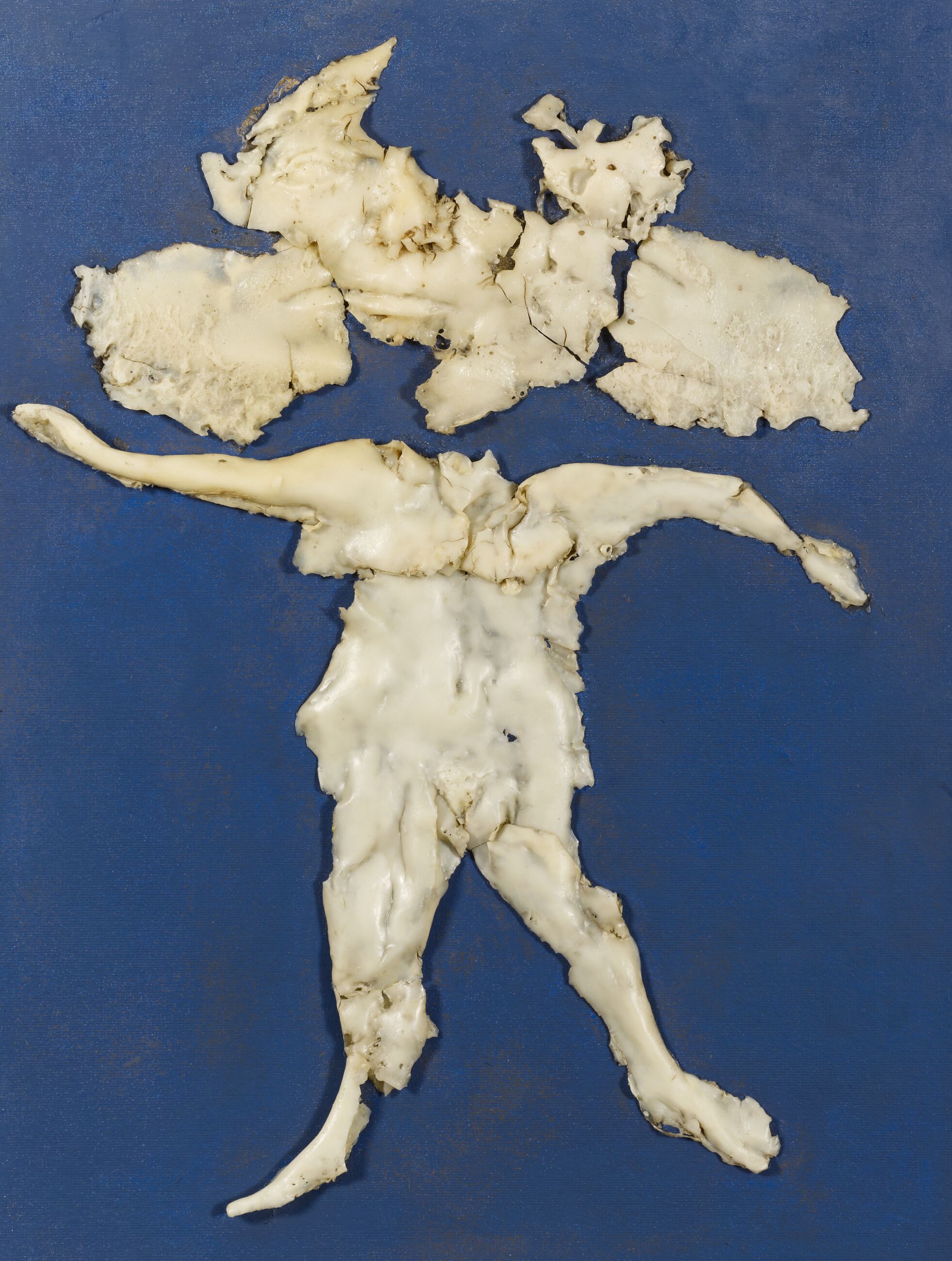
The works that seem closest to diagnosis and preservation tighten the same problem without needing to resolve it. The Tumeurs appear to give cancer the final word; Herbier bleu I presses the body toward specimen and record. Illness offers explanation. Classification offers care. Both forms know how to make a body legible.
Szapocznikow does not let legibility become possession. Illness enters a language already built from resin, gauze, photographs, and bodily fragments. Preservation flattens the body in order to keep it. A diagnosis needs cause. A herbarium needs the general. These works remain singular where the systems around them ask them to become readable.
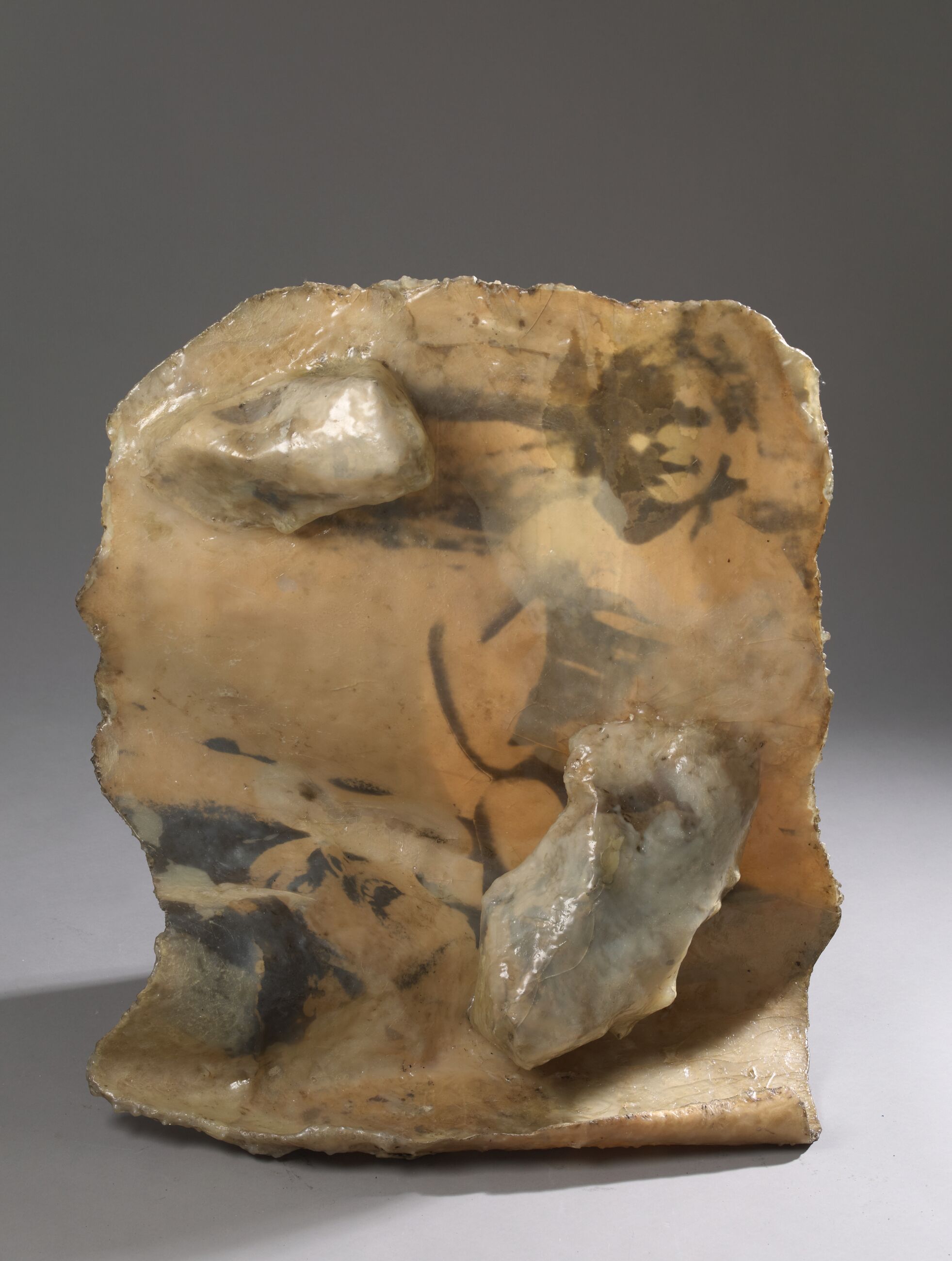
With Pamiątka I, the autobiographical reading becomes almost impossible to move past. The title names a keepsake, a souvenir, the kind of object that makes memory small enough to hold. Inside resin and fiberglass, Szapocznikow sets two photographs: an image of herself as a child, seated on her uncle’s shoulders at the seaside, and the face of a concentration camp victim. Private memory, historical atrocity, photography, preservation, and objecthood meet inside one form. No other work in the exhibition seems to offer testimony so directly. It has the image. It has the historical wound. It has the personal body and the public catastrophe sealed together.
For that reason, the work does not merely invite the biographical reading. It almost demands it. The child and the victim appear to give the viewer the evidence the exhibition title has prepared them to receive.
But the souvenir depends on reduction. It makes memory portable. Here, the form refuses that reduction. The two images remain sealed together, too close and not reconciled, neither releasing the other into a stable account. The object holds them, but it does not make them carryable. It does not hand biography over as proof. It makes the demand for proof unbearable.
After that, the face remains.
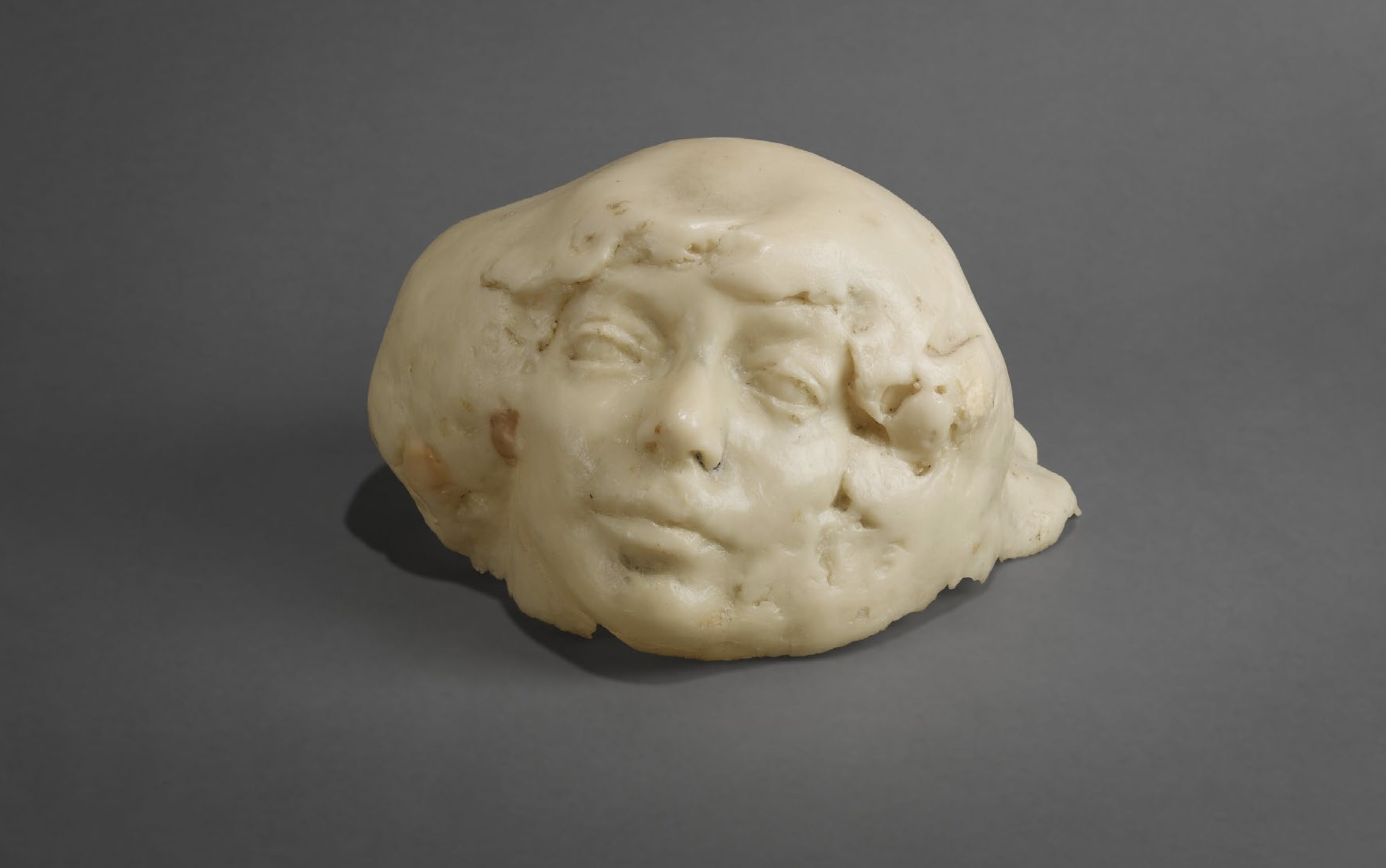
In Autoportrait, 1971, likeness no longer arrives through the authority of portraiture. The face is there, but it is low, pressed, and almost absorbed into the material that holds it. Resin and gauze do not give the self back as an image; they keep it as cast, trace, surface, contact. The work also carries the pressure of the death mask. Szapocznikow had made one in 1954 for her friend Tadeusz Trepkowski; by 1971, the form returns around her own face. Portraiture usually promises recognition, a stable answer to the question of who stands before us. This work allows likeness to survive without giving it that closure. The self appears, but not as a completed image.
Szapocznikow did not guard the body against the machine. She allowed it to pass through forms that still knew how to work: lamp, diagnosis, specimen, souvenir, portrait. Each could receive something of the body. None could make the singular body disappear completely into use, record, memory, or proof.
That is why the awkward object matters. The phrase is not a later critical frame. It belongs to the signed 1972 manifesto, even as the manifesto itself carries Restany’s mediation. It comes after beauty, testimony, history, and public demand have been assigned to the machine.
What remained was awkward.
A body still present after the forms built to carry it had reached their limit.
The exhibition and Hauser & Wirth’s 2019 publication To Exalt the Ephemeral: Alina Szapocznikow, 1962–1972 frame Szapocznikow through autobiography, fragmentation, and the body’s vulnerability. This review begins there, then asks what the works do after biography has already been granted. The fragment is not treated as what remains after the body breaks apart, but as the primary unit through which Szapocznikow tests use, record, testimony, memory, and likeness.
This review forms part of a two-exhibition reading of Szapocznikow; read the companion review of Alina Szapocznikow — Autobiography in Fragments: A Centenary Retrospective.

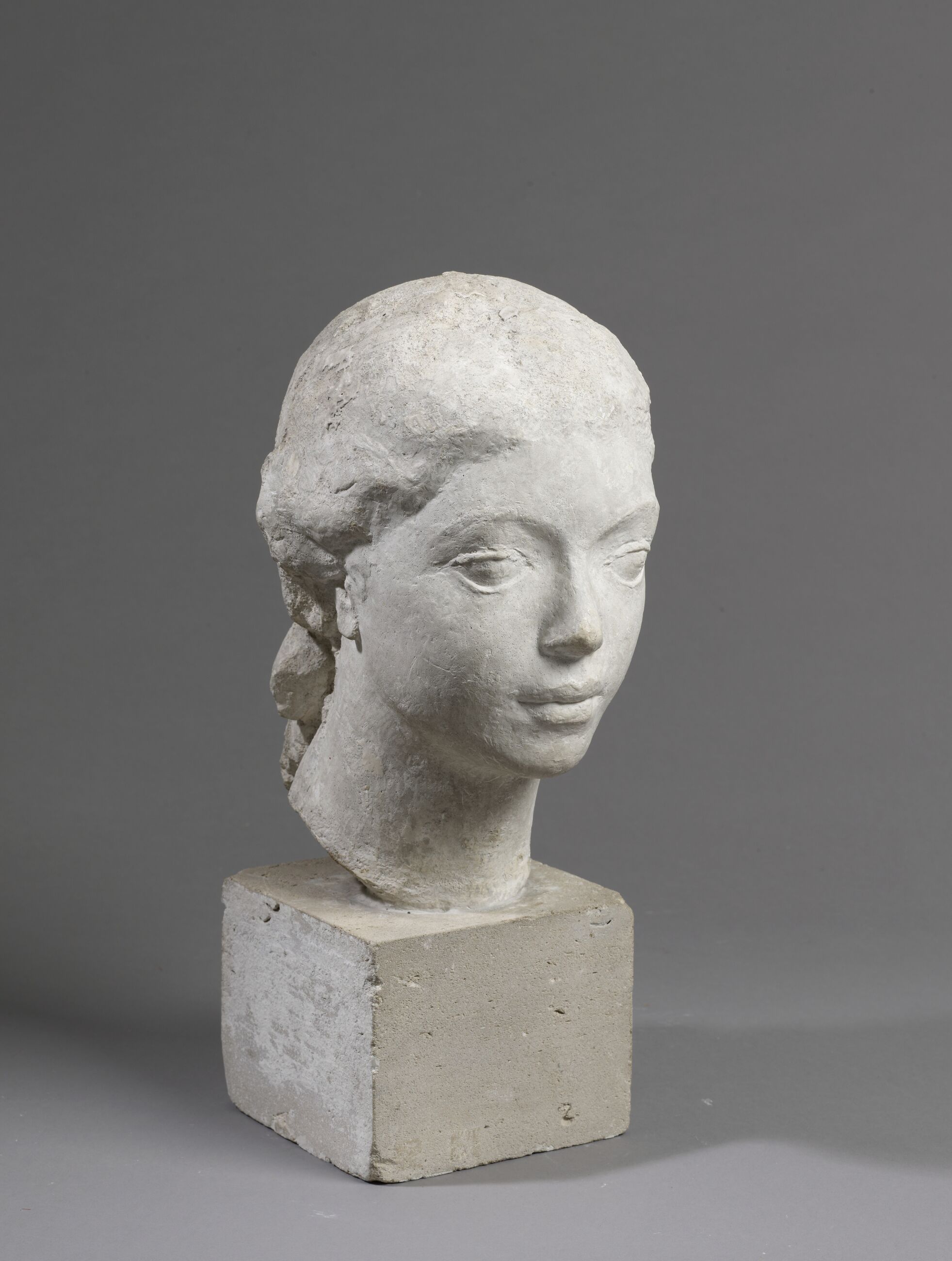
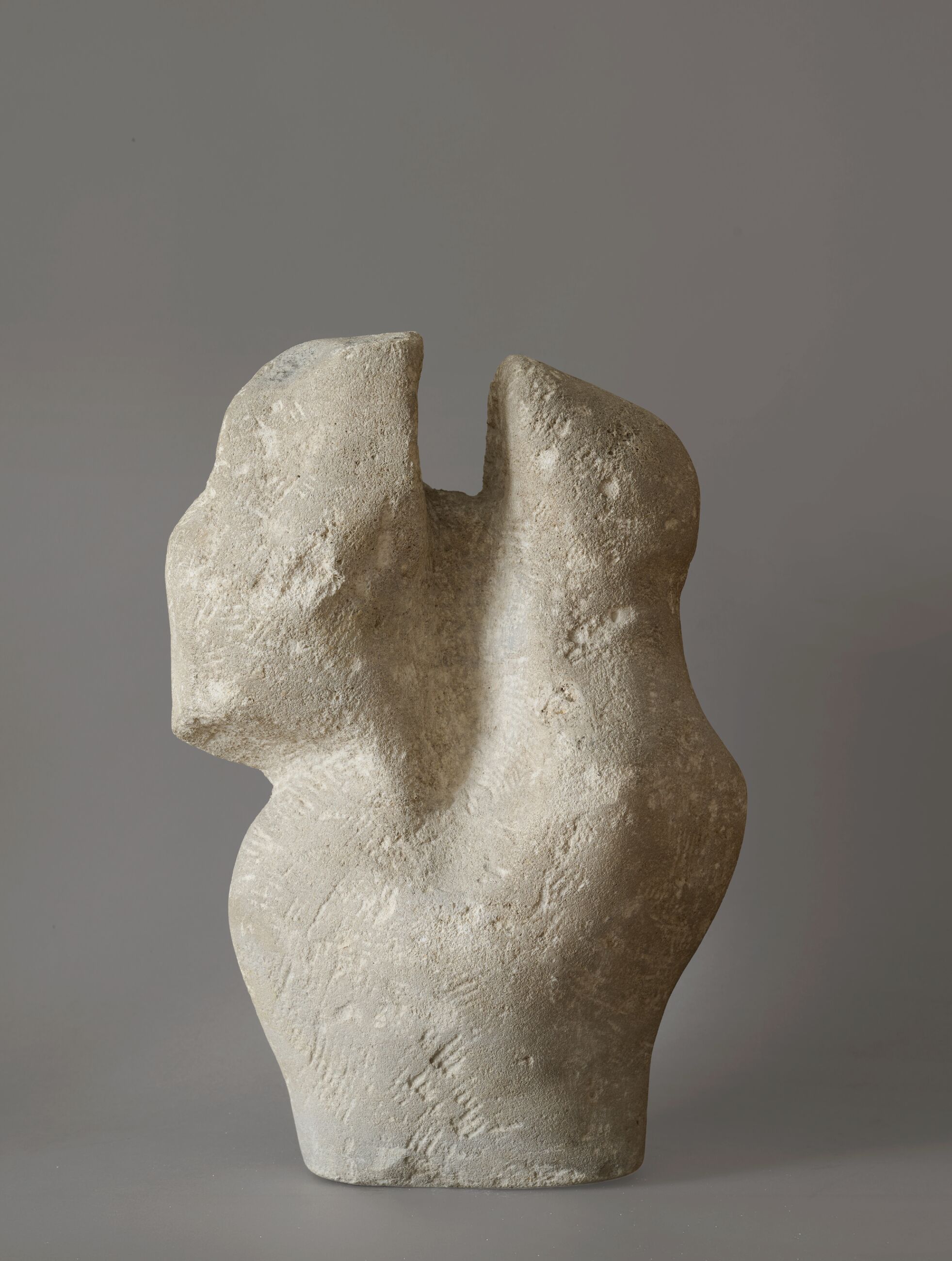

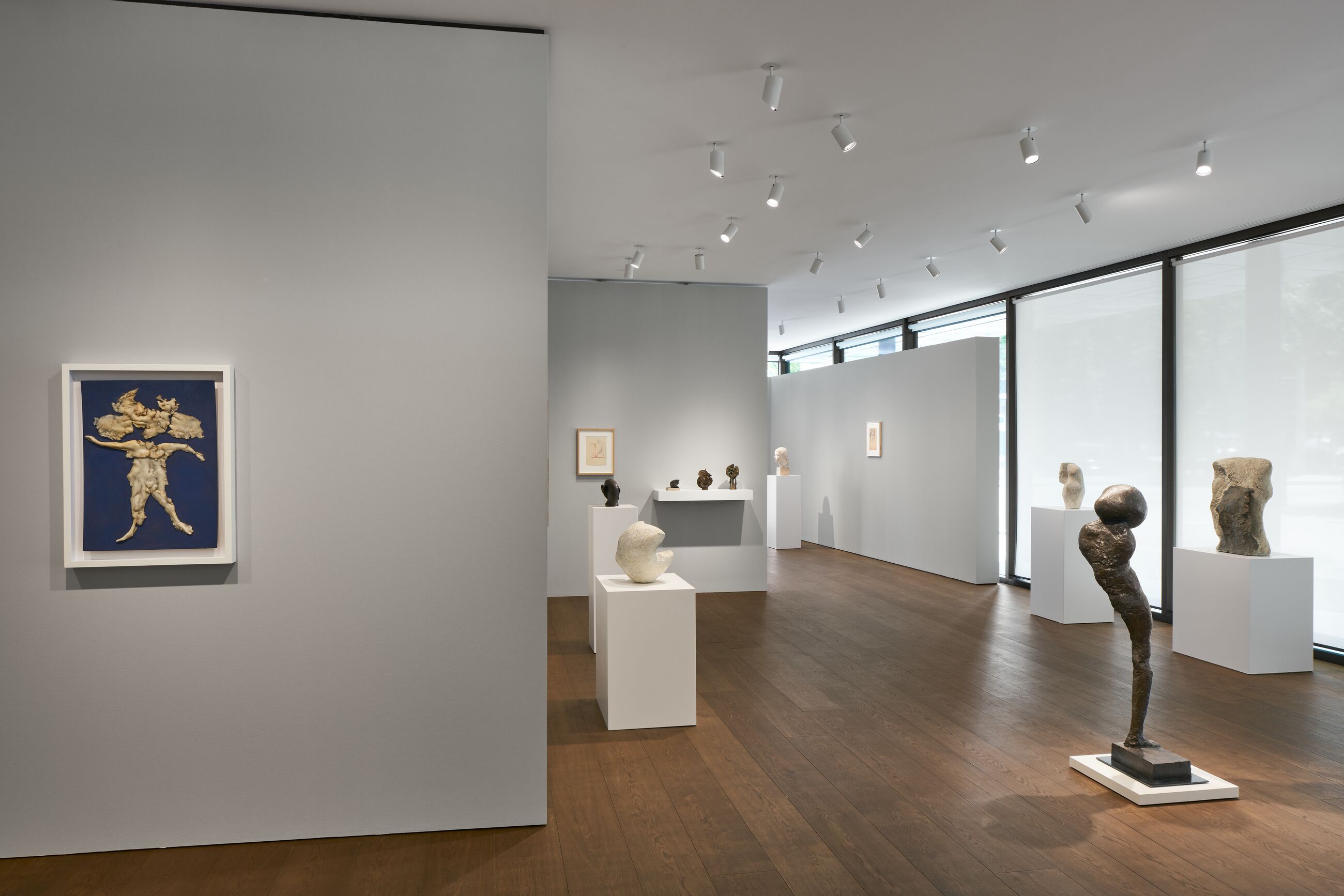
Cover Photo: Installation view, 'Alina Szapocznikow. Autobiography in Fragments,' Hauser & Wirth Zürich, Bahnhofstrasse, 2026. © The Estate of Alina Szapocznikow / 2026, ProLitteris, Zurich. Photo: Jon Etter
All images © their respective rights holders.
Image rights & attribution →