




By the early 1970s, painting had entered a period of self-doubt. Abstraction had exhausted its rhetoric; Minimalism had stripped the object to its industrial fact; Conceptual art questioned the necessity of the painted surface altogether. To continue painting without examination risked repetition. To abandon it meant relinquishing a medium not yet fully understood.
Marcia Hafif chose neither retreat nor nostalgia. She chose to begin again.
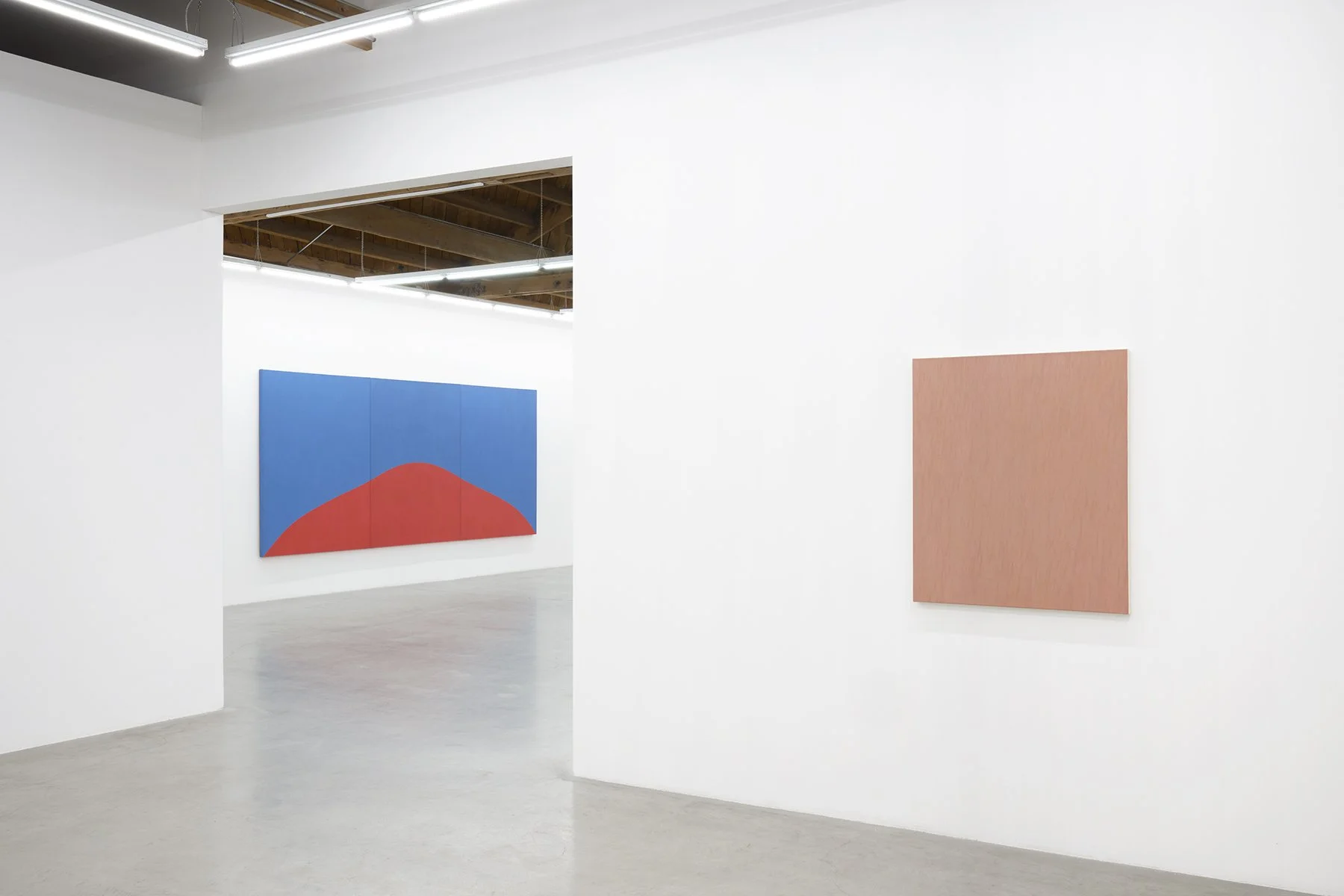
That decision, often associated with her monochromes after 1972, did not arise abruptly. The works of the 1960s already reveal a sustained engagement with equilibrium and containment. The recurring “hill” form—most fully realized in Italian Painting: 178 December 1967 (1967)—is not a landscape motif but a structural proposition. A single curved mass rises against an opposing field. The red shape presses upward; the blue field contains it. Neither establishes dominance. There is no atmospheric depth, no horizon line stabilizing the relation. What appears to be figure and ground is instead a negotiation of pressure across a flat plane.
The curve spans the width of three joined panels, meeting the vertical seams without dissolving into narrative continuity. The division of the support suppresses illusion; the painting does not function as a window but as an extended object. The form is symmetrical yet restrained, rising without climax. Tension is achieved without gesture. The red mass does not escape its containment; the blue does not overwhelm. The equilibrium is exacting. The painting stages a condition: containment without collapse.
A smaller Italian Painting, rendered in green and red, compresses this same logic into a more intimate scale. The pressure feels denser, the boundary more tactile, yet the principle remains unchanged. In both works, energy derives not from expression but from calibration. Color becomes force; surface becomes field.
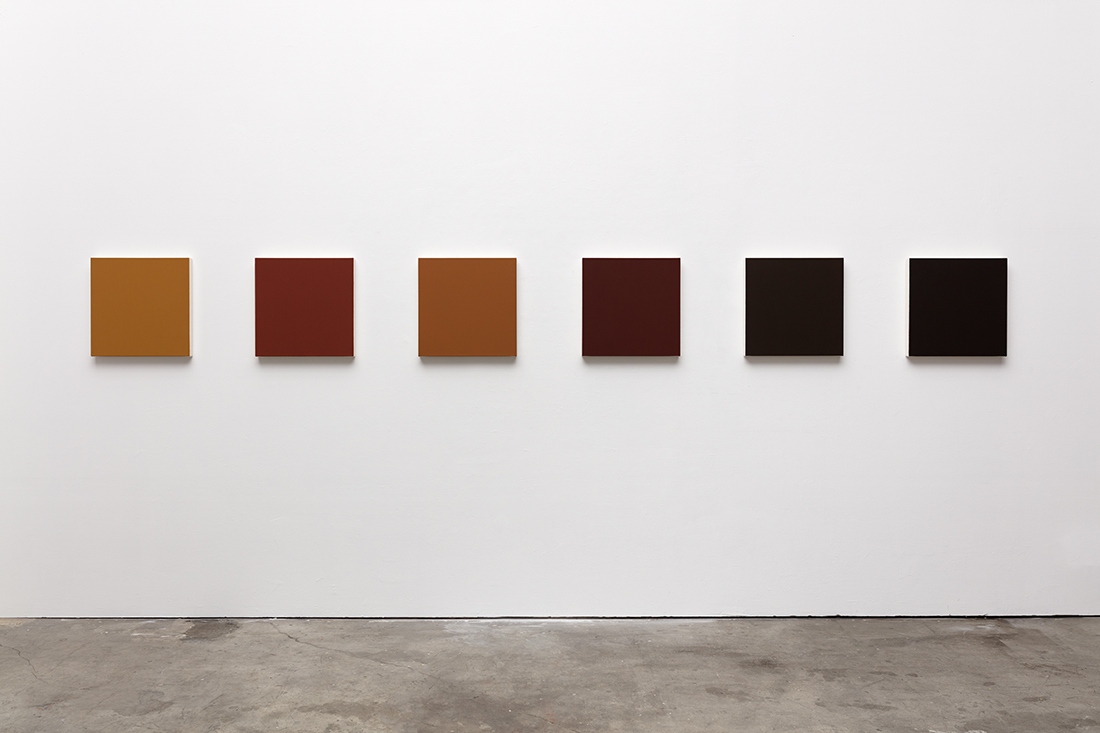
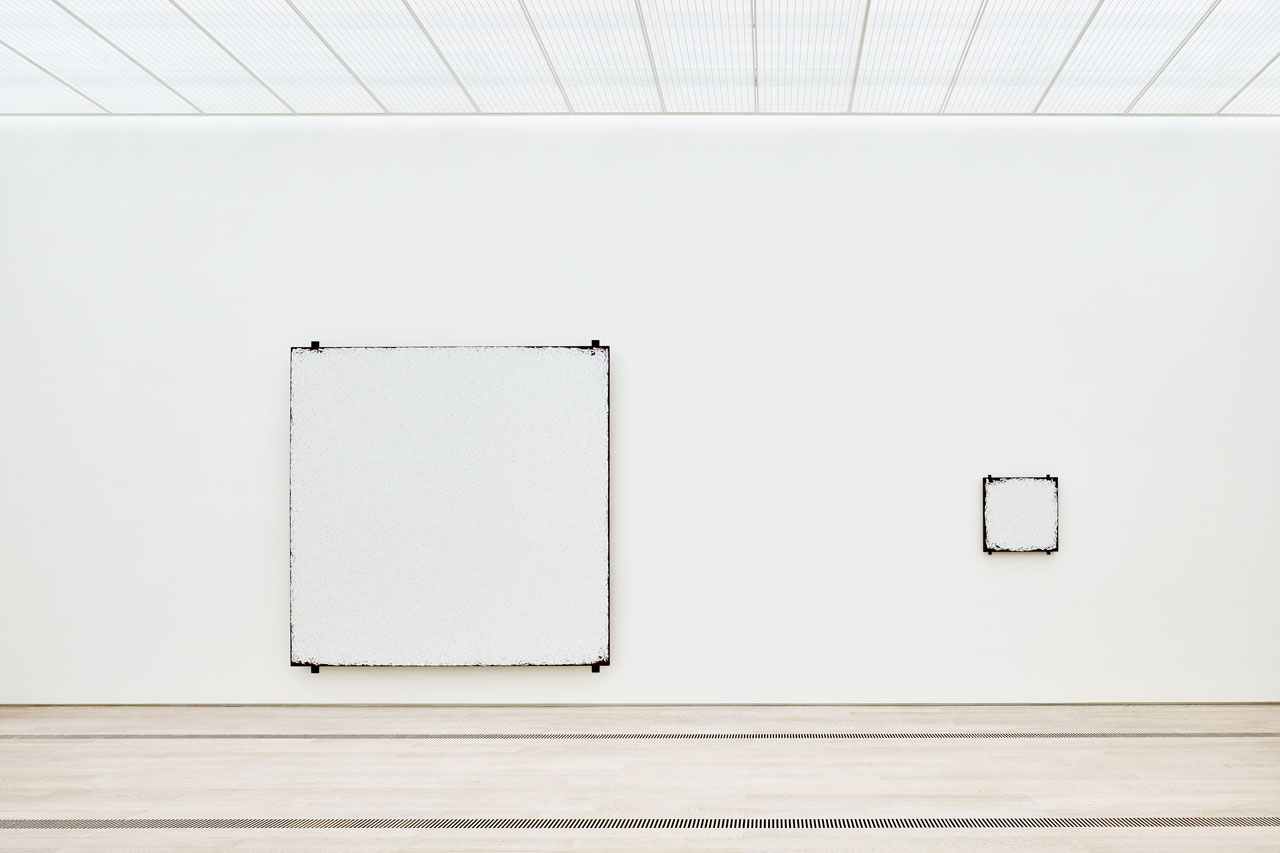
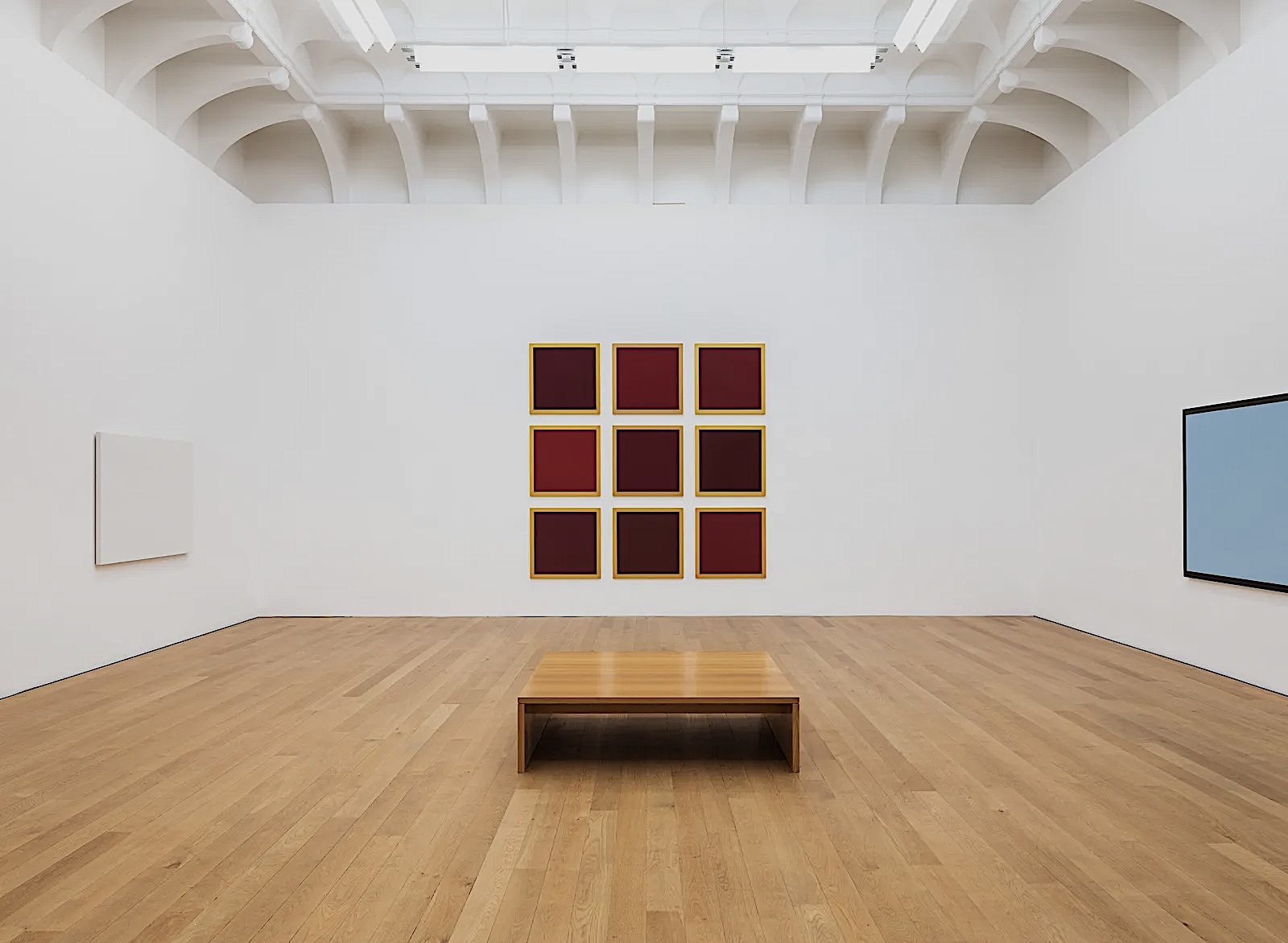
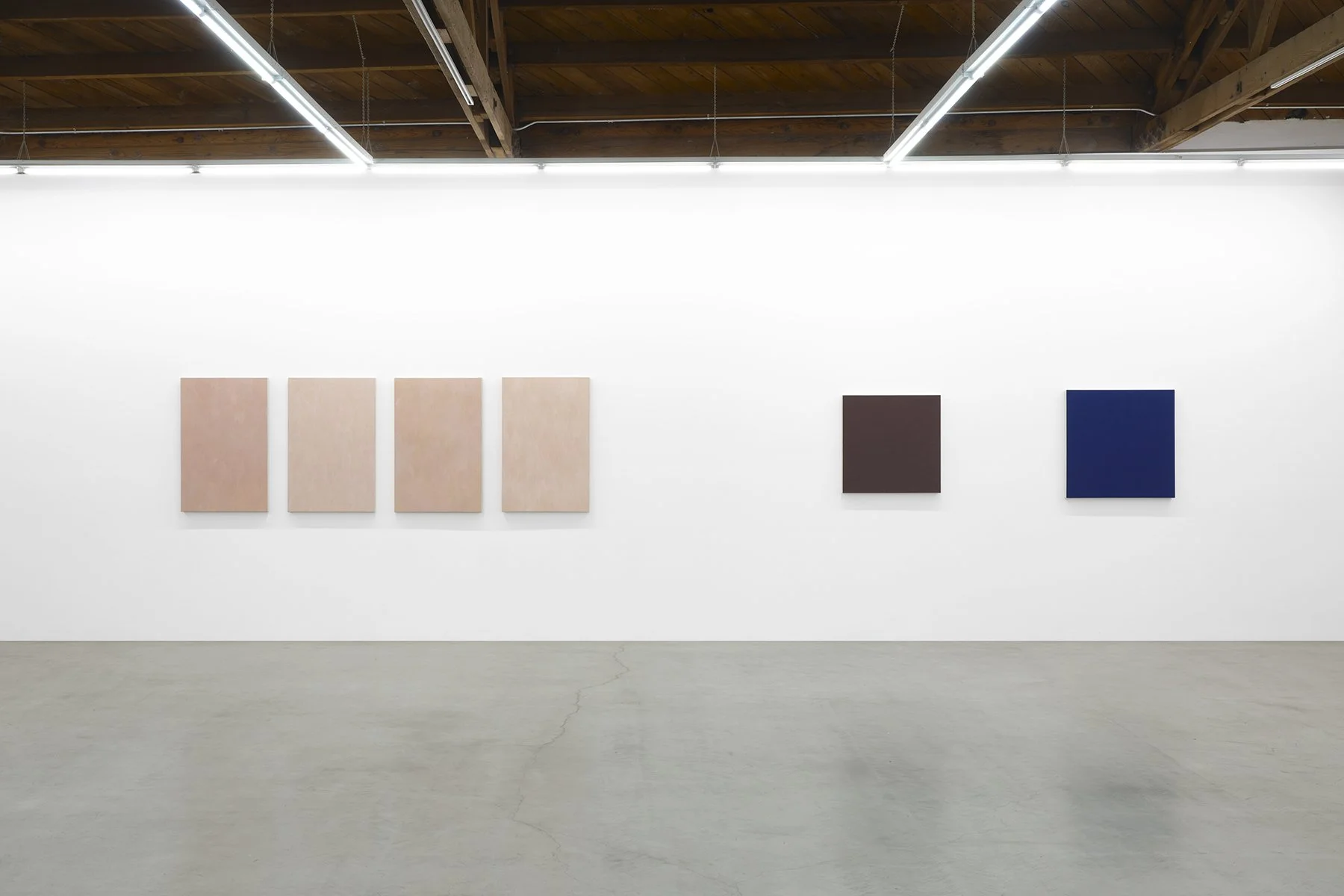
When Hafif turns fully to monochrome in 1972, the structural inquiry tested in these earlier paintings reaches its conclusion. Opposition is eliminated. The negotiation between two colors collapses into a unified plane. In works such as Mass Tone, Prussian Blue (1974), pigment is applied consistently across the surface, allowing material density, drying time, and light to determine variation. What remains is not a gesture but a duration. The painting registers the fact of its making without dramatizing it.
Hafif described the artist as being “involved in being as a way of doing and in letting be.” In her work, this condition is neither mystical nor passive. “Letting be” is achieved through constraint. By reducing the field, limiting the means, and sustaining procedure to completion, she derives wholeness from within the boundaries she sets. The experience of being arises from structural clarity.
Installed together, the works in Experience of Being reveal continuity rather than rupture. The Roman paintings establish equilibrium through calibrated opposition; the monochromes extend that equilibrium into total surface. Across decades, Hafif returns painting to its conditions: pigment, edge, time, and light. The result is not withdrawal but authority—a sustained demonstration that painting, examined rigorously, remains sufficient to itself.
Hafif’s decision to “begin again” in 1972 was not a retreat into purity but a reduction to essentials. By removing illusion, suppressing compositional hierarchy, and limiting the painting to a single sustained procedure, she tested what could still hold. The Roman works establish equilibrium through calibrated opposition; the monochromes eliminate opposition altogether. In both cases, the painting persists as a self-contained field governed by edge, pigment, and duration.
What endures is not expression but relation. Color functions as force. Surface becomes the site of time. The painting does not dramatize its making; it sustains it. In that sustained condition—held without narrative or illusion—painting reasserts itself as sufficient to its own terms.
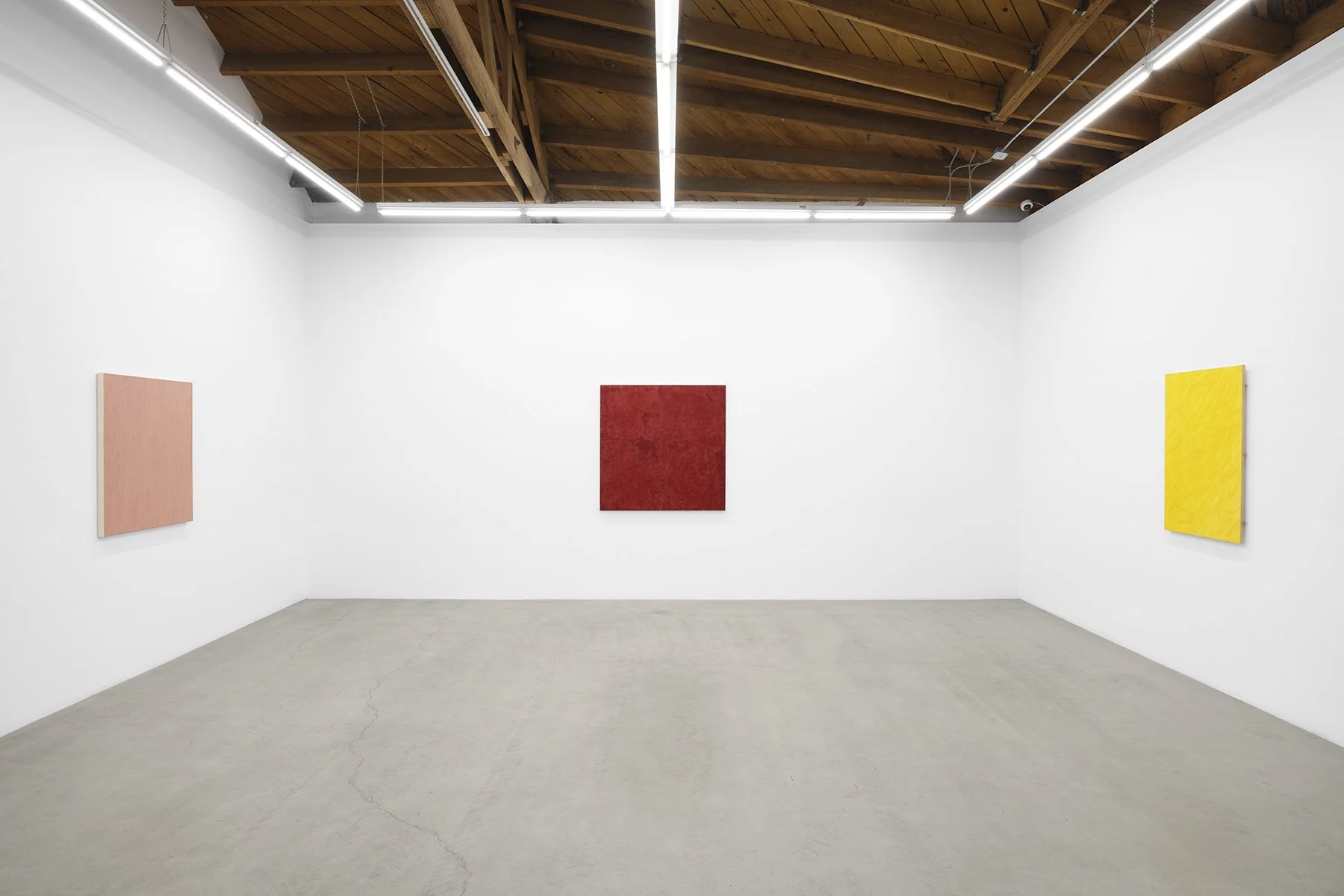

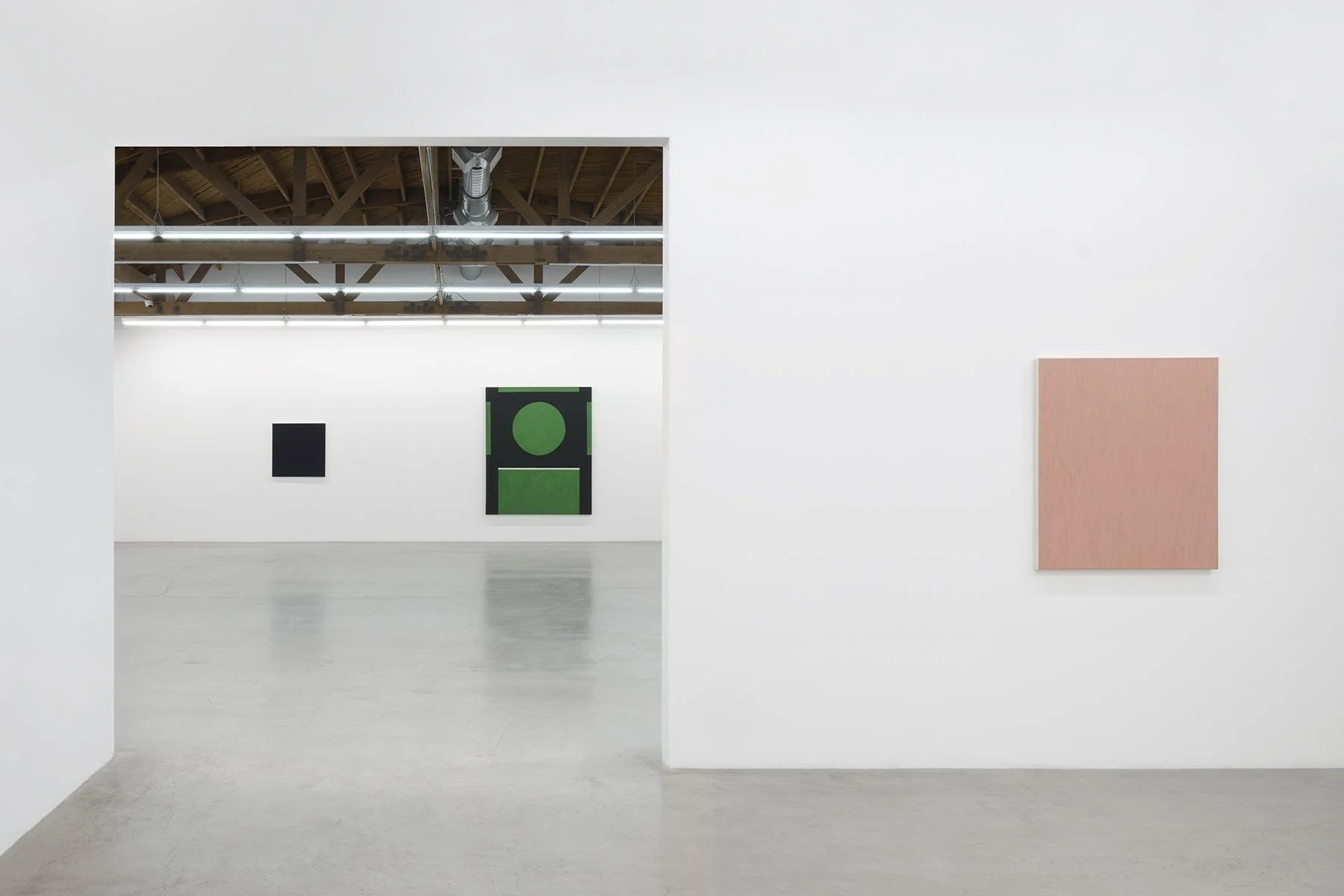

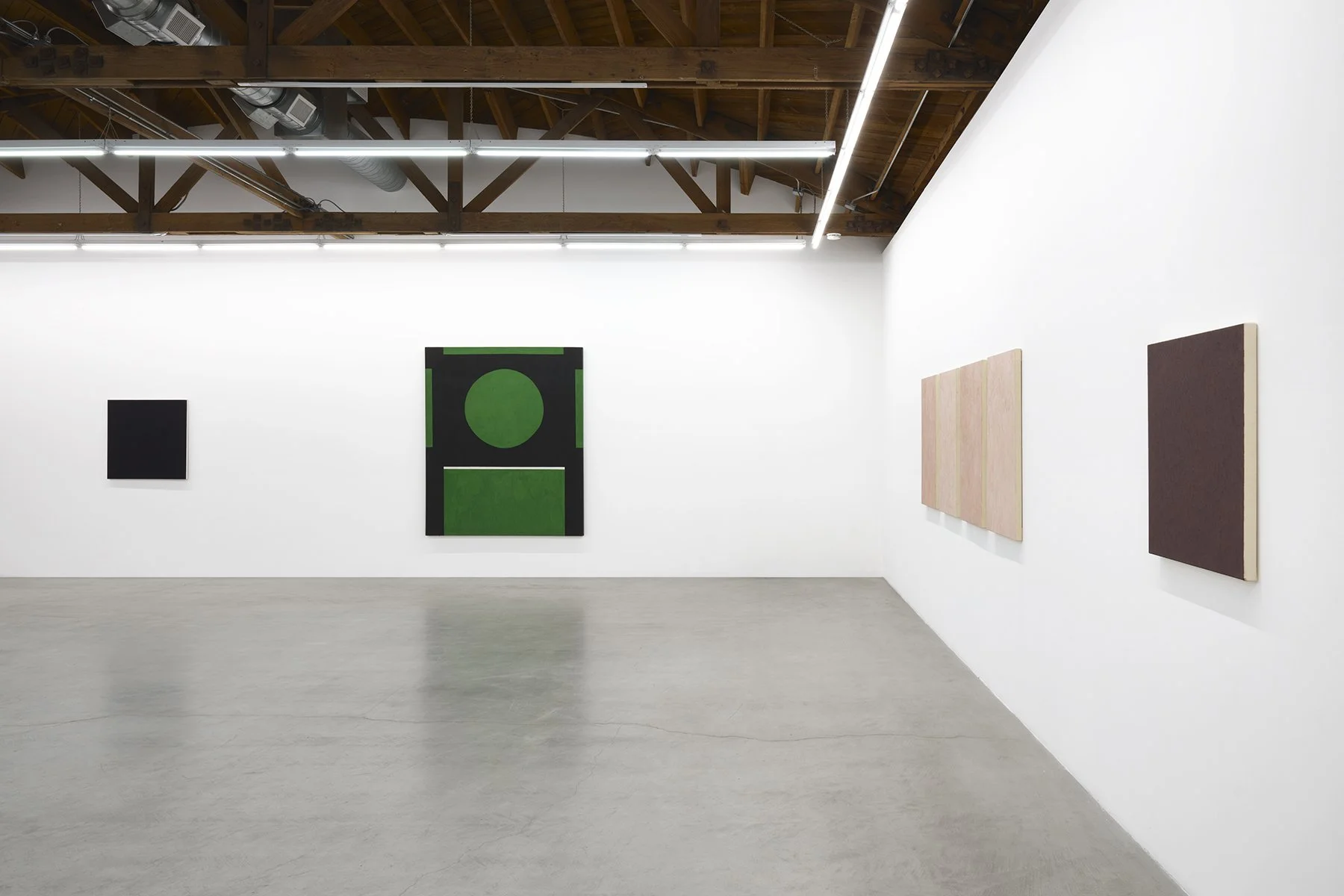



1. Installation view: Marcia Hafif, The Experience of Being, February 21–April 4, 2026, parrasch heijnen, Los Angeles. Artwork © The Estate of Marcia Hafif. Photo © Ed Mumford.
2. Installation view: Marcia Hafif, The Experience of Being, February 21–April 4, 2026, parrasch heijnen, Los Angeles. Artwork © The Estate of Marcia Hafif. Photo © Ed Mumford.
3. Installation view: Marcia Hafif, The Experience of Being, February 21–April 4, 2026, parrasch heijnen, Los Angeles. Artwork © The Estate of Marcia Hafif. Photo © Ed Mumford.
4. Installation view: Marcia Hafif, The Experience of Being, February 21–April 4, 2026, parrasch heijnen, Los Angeles. Artwork © The Estate of Marcia Hafif. Photo © Ed Mumford. Marcia Hafif, 1., juin 1962, oil on canvas, 204 × 170 cm. Artwork © The Estate of Marcia Hafif.
5. Installation view: Marcia Hafif, The Experience of Being, February 21–April 4, 2026, parrasch heijnen, Los Angeles. Artwork © The Estate of Marcia Hafif. Photo © Ed Mumford.
6. Installation view: Marcia Hafif, The Experience of Being, February 21–April 4, 2026, parrasch heijnen, Los Angeles. Artwork © The Estate of Marcia Hafif. Photo © Ed Mumford.
7. Installation view: Marcia Hafif, The Experience of Being, February 21–April 4, 2026, parrasch heijnen, Los Angeles. Artwork © The Estate of Marcia Hafif. Photo © Ed Mumford.
8. Installation view: Marcia Hafif, The Experience of Being, February 21–April 4, 2026, parrasch heijnen, Los Angeles. Artwork © The Estate of Marcia Hafif. Photo © Ed Mumford.
9. Installation view: Marcia Hafif, The Experience of Being, February 21–April 4, 2026, parrasch heijnen, Los Angeles. Artwork © The Estate of Marcia Hafif. Photo © Ed Mumford. Marcia Hafif (USA, b. 1929–d. 2018), Italian Painting: 178 December 1967, 1967, acrylic on canvas, triptych, overall 78 3/4 × 189 in. Artwork © The Estate of Marcia Hafif.
10. Installation view: Marcia Hafif, The Experience of Being, February 21–April 4, 2026, parrasch heijnen, Los Angeles. Artwork © The Estate of Marcia Hafif. Photo © Ed Mumford.
11. Installation view: Marcia Hafif, The Experience of Being, February 21–April 4, 2026, parrasch heijnen, Los Angeles. Artwork © The Estate of Marcia Hafif. Photo © Ed Mumford.
Cover: Installation view: Marcia Hafif, The Experience of Being, February 21–April 4, 2026, parrasch heijnen, Los Angeles. Artwork © The Estate of Marcia Hafif. Photo © Ed Mumford.
All images © their respective rights holders.
Image rights & attribution →