



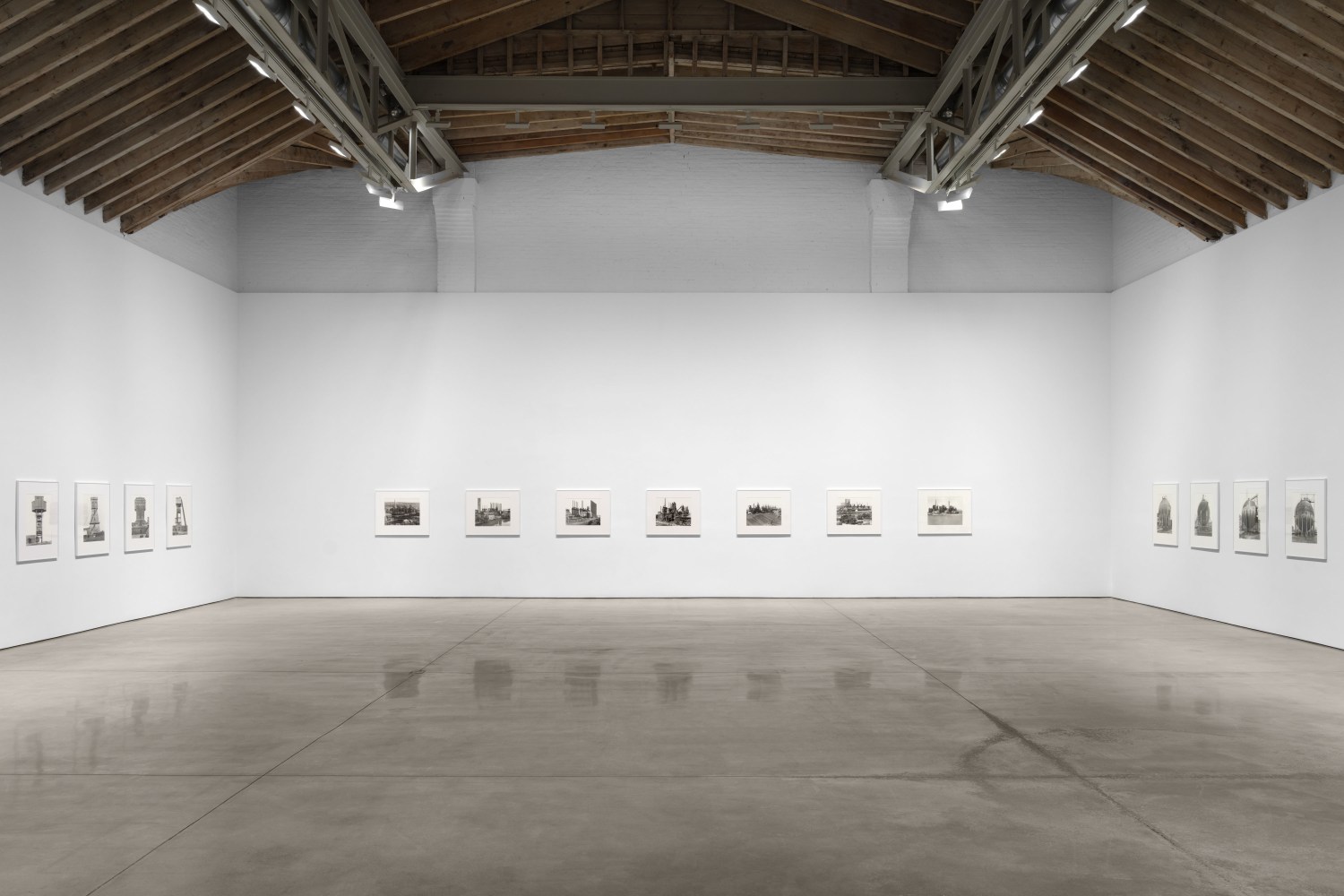


Landscape has not disappeared. Seas, clouds, parks, chapels, apple trees, mountains — the subjects are still there. At David Zwirner, they appear with the authority landscape has always borrowed from visibility: water meeting sky, trees receding into blur, architecture softened by distance, a world still capable of looking like subject matter. The exhibition can be entered that way, as a return to one of painting’s oldest genres. But Richter’s landscapes begin after that return has become impossible. What has disappeared is not the world, but the older claim that painting can begin from the world directly and let the result settle as landscape.
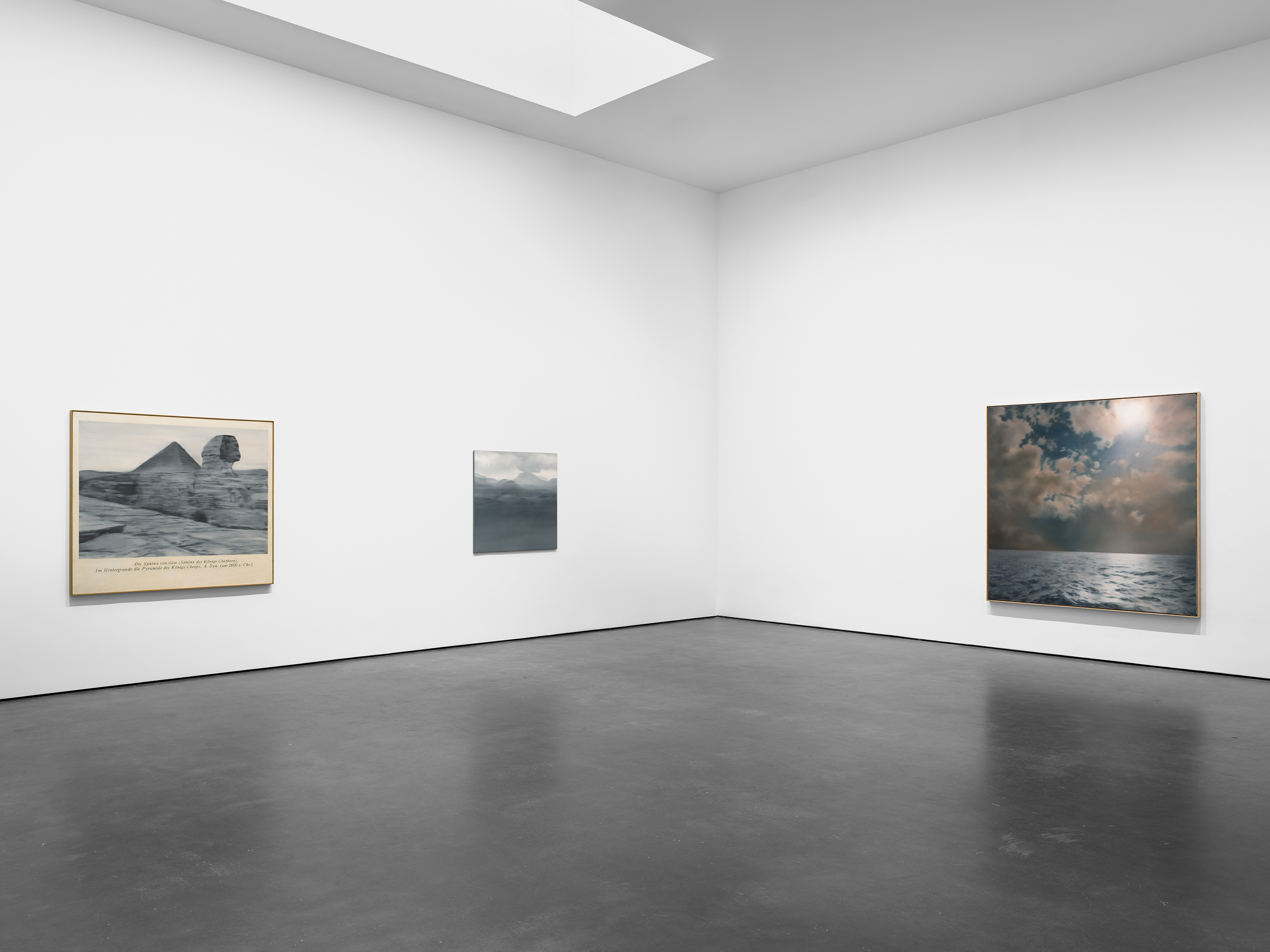
The first pressure in Landschaften arrives through designation. Grosse Sphinx von Gise, 1965, appears as an image already received through print: not the Sphinx as encountered monument, but the Sphinx as reproduced image, complete with a German caption painted into the lower edge of the canvas. Before the viewer reaches sea, trees, chapel, or mountain, the show has already placed the world under a system of naming. Landscape once gave painting one of its most stable agreements: the horizon organized distance, the window separated viewer from scene, and field, shore, mountain, tree line could hold what the painter saw and what the viewer expected. Richter begins after that agreement has been broken by photography, reproduction, and history. The world is still visible. It is not available in the same way.
The source is not hidden behind the paintings. For decades, Richter has kept the Atlas beside the studio and exhibited it as a work in its own right: family snapshots, magazine pages, aerial views, clouds, water, mountains, rooms. The world reaches painting after it has already been collected, filed, and made available as image. In Landschaften, that condition is extended into the installation itself: photo-landscapes are shown with selected Abstrakte Bilder, and the available reading is dialogue — landscape and abstraction, nature and mediation, image and procedure. That reading is not wrong. The show makes that relation more precise. It asks a more specific question: when the image no longer secures the genre, what makes something landscape?
Mediation is the condition the show inherits, and naming is the act it keeps repeating. The claim is not that context gives images meaning in general, but that this exhibition returns to the same linguistic device at three scales: caption inside the image, title attached to the painting, title applied to the rooms.
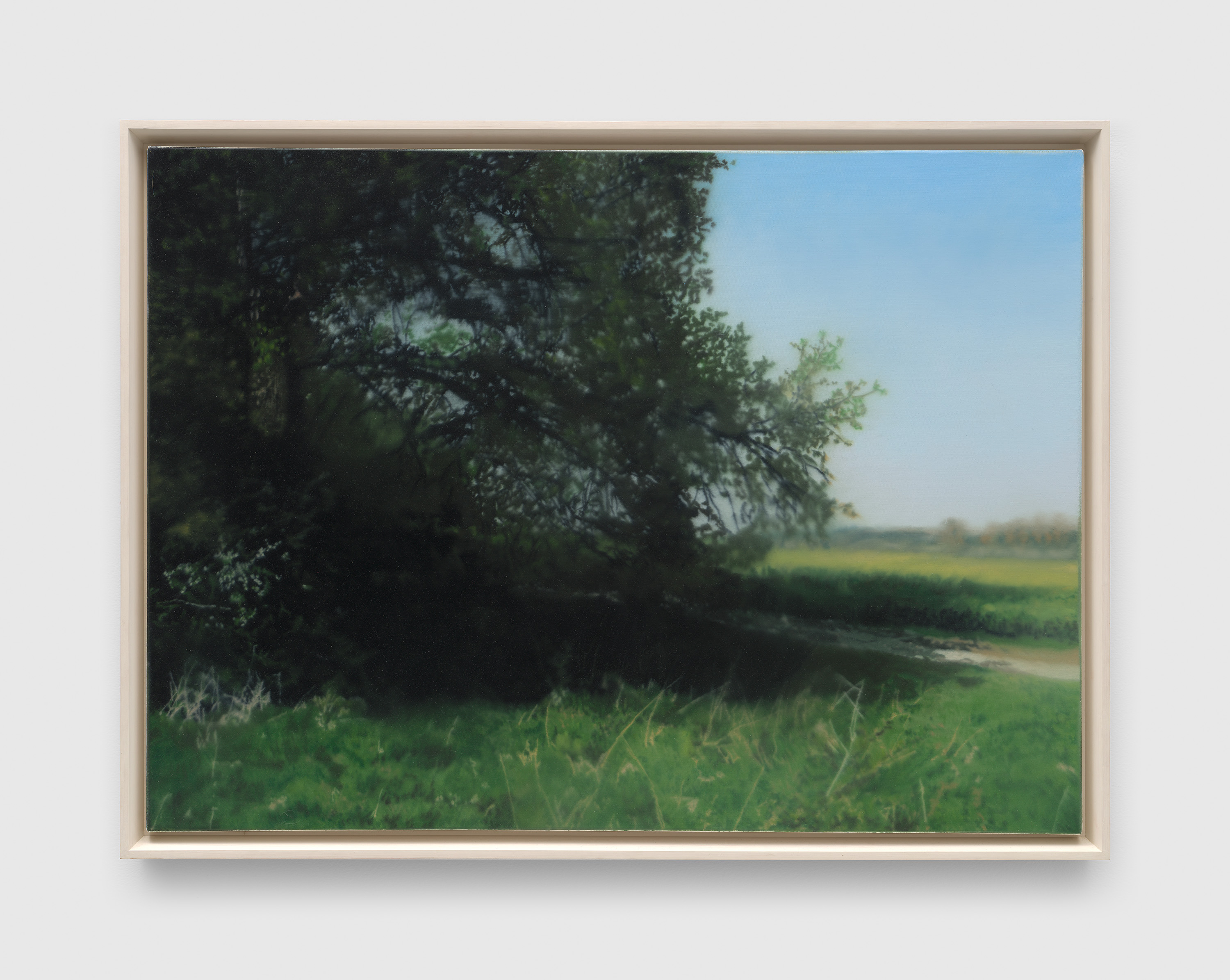
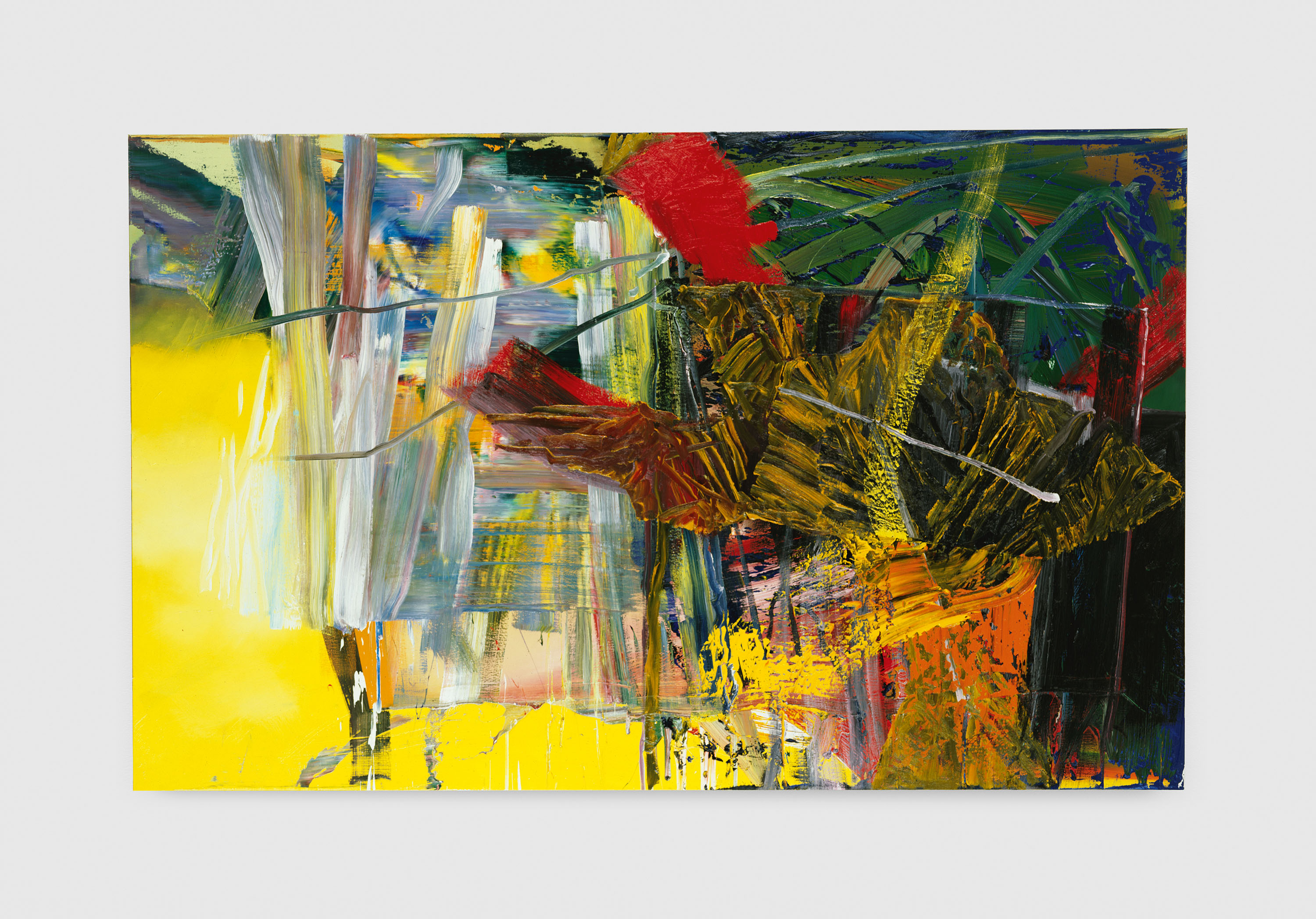
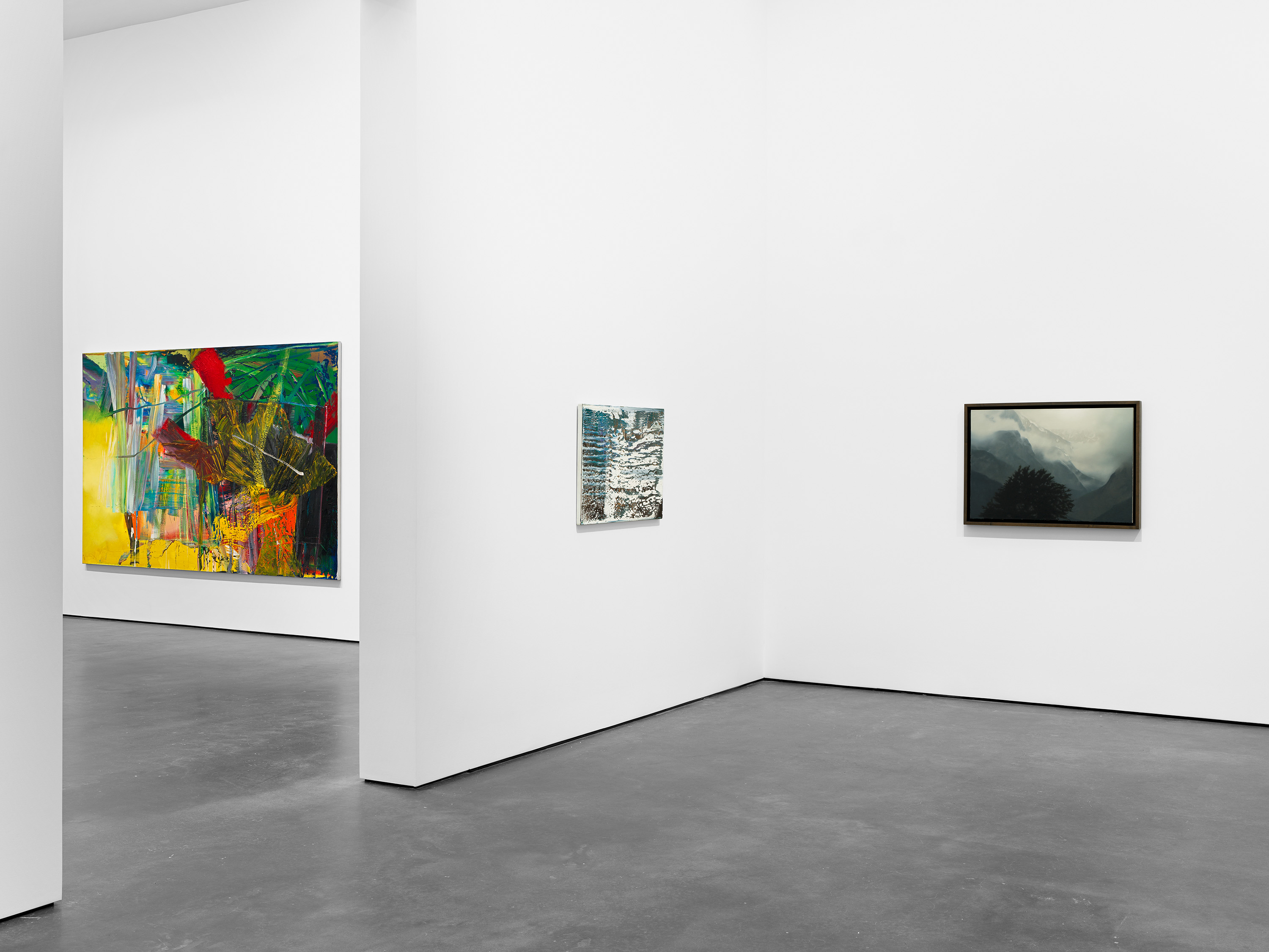
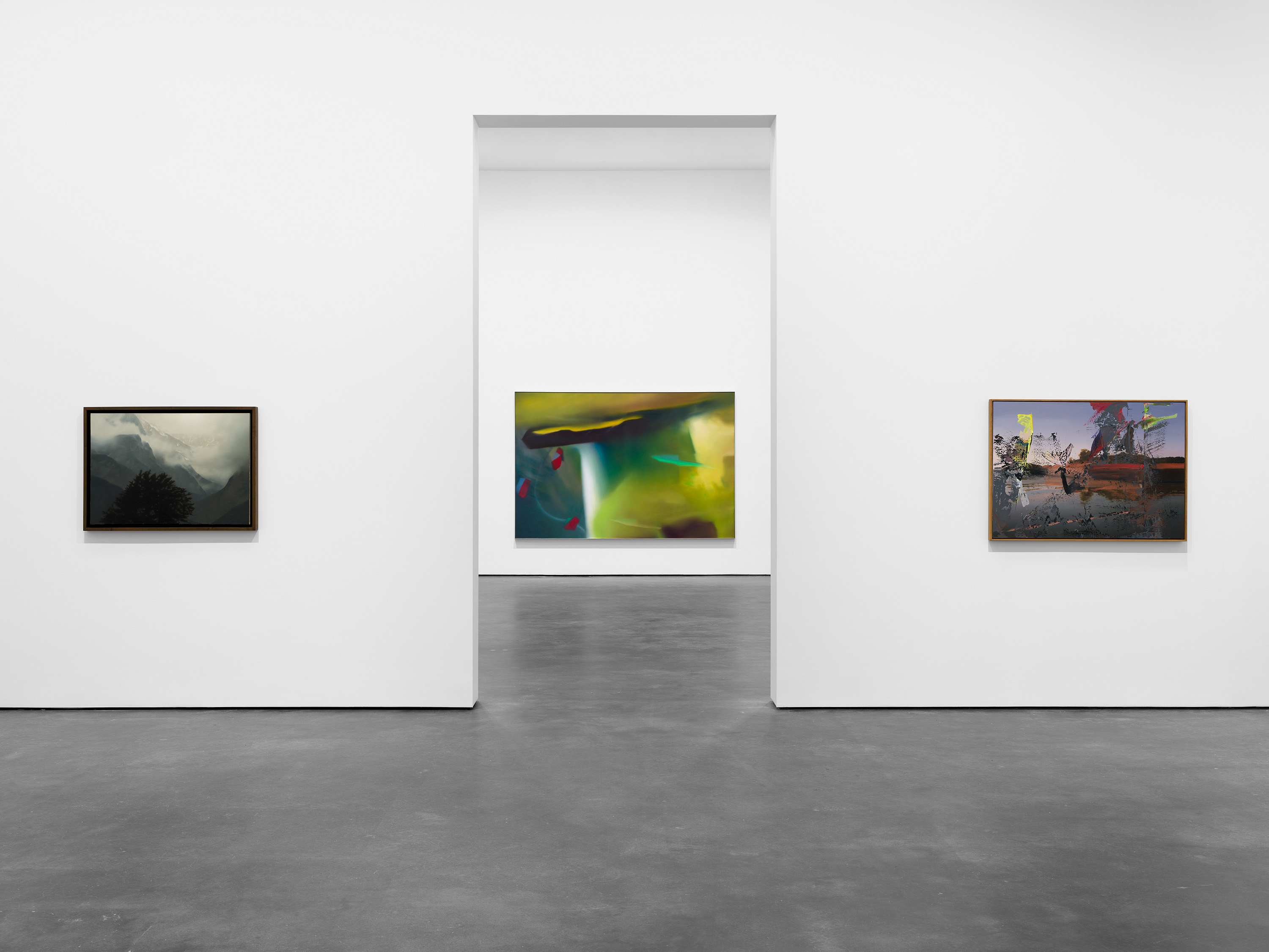
Seestück (Gegenlicht), 1969, gives the genre enough image to believe in: water, sky, horizon, distance — nearly everything a seascape needs in order to be received as landscape. The painting seems to honor the genre before disturbing it. Only after the image has been accepted does its construction begin to matter: water and sky come from two separate photographs, joined into the picture the painting renders. The horizon first secures distance, then reveals itself as the seam where two images meet. The show’s most outwardly Romantic painting begins as assembly. In Ohne Titel (grün), 1971, the image loosens. The source is again photographic — a park near Düsseldorf — but the title gives neither park nor place. It gives color. Green is pulled through visible brushwork until the scene remains present without fully holding as view. The Abstrakte Bilder enter from the other side of the same condition: paint dragged through paint already there, color appearing where the surface has been scraped open, crossed, or blocked. Nothing in the surface declares cloud, window, net, or landscape by resemblance alone, which is why these works can sit inside Landschaften without functioning as exceptions. They show how much of the genre can be produced after depiction has stopped carrying it.
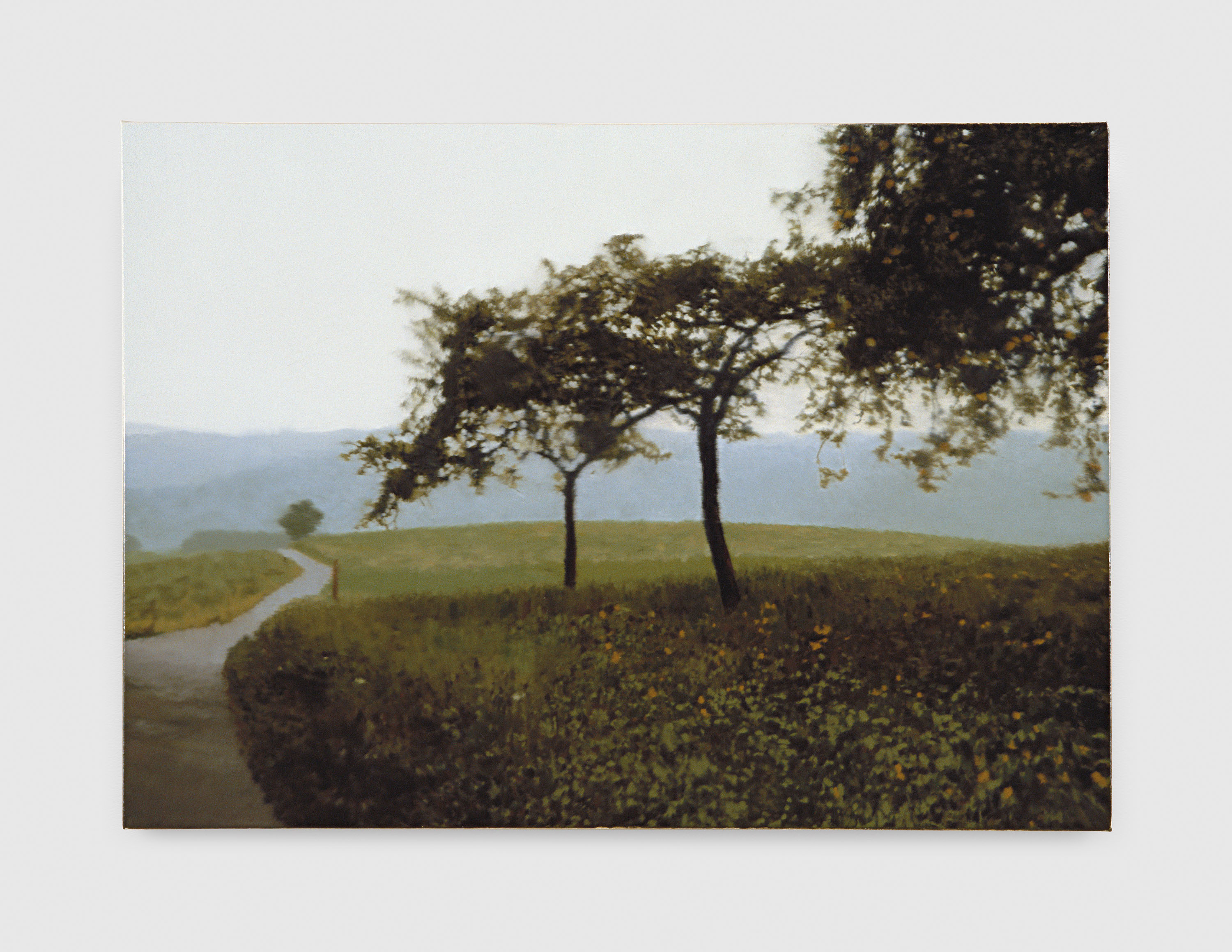
In Venedig, 1986, and Kapelle, 1995, the photographic source remains visible but less secure. Venedig leaves architecture under interference: gray, yellow, red, and black pass over the city while the city continues to return. Kapelle pushes further, breaking the photographic ground into intervals where the image can only be recovered in fragments. Landscape and abstraction no longer stand as opposites. They become thresholds: how much image can remain before another system has to carry the designation? Apfelbäume, 1987, makes that threshold clearest because it removes grandeur. No sea, no chapel, no Venice, no historical drama. Only apple trees, ordinary enough that the subject can no longer protect the operation. Across the paintings, blur changes the degree of access. The image remains the same kind of thing, but its legibility shifts. Blur works like a dial: less atmosphere than measurement, a way of testing how little image can remain before the name has to do more work.
There is a further stage where the image gives almost nothing back. In Wolken, 1982, there is no horizon to recover, no buried photograph to detect. The surface does not supply the world. The title does: clouds. Netz, 1985, extends the logic differently: a large chromatic field of bands, scrapes, and crossings becomes a net only after the word gives the eye a structure to find. These titles are not illustrations attached to abstract paintings. They repeat, outside the image, what the Sphinx caption performed inside it: a word gives the eye a category the surface does not produce by depiction.
By the time the viewer reads the exhibition title again, the word has changed. The seascape is a composite. The park becomes color and field. Venice is interrupted. The chapel is buried. The apple trees blur. The abstractions require names. What Wolken and Netz do at the scale of a single work, Landschaften does at the scale of the show. The viewer reads backward through the rooms, applying the word only after the works have shown why it cannot arrive first.
Landschaften names what the exhibition demonstrates: a genre produced not by image alone, but by caption, source, blur, overpaint, abstraction, and title. In Grosse Sphinx von Gise, the caption remains inside the painted field. In Wolken and Netz, the word has moved outside the image as title. At the scale of the exhibition, Landschaften performs the same act on the rooms: a word supplies the genre where the image alone no longer does.
Landschaften is not the subject of the show. It is the show’s final act of naming. Richter’s landscapes are not landscapes because they recover the world. They are landscapes because the works show how the word becomes usable when image alone no longer secures the genre.
Landscape has not disappeared. The stable beginning has.
In Landschaften, Richter’s photo-landscapes and Abstrakte Bilder do not simply meet as opposites. The exhibition stages a repeated act of naming: caption inside the image, title attached to the painting, title applied to the rooms. From Grosse Sphinx von Gise to Wolken, Netz, and the exhibition title itself, landscape becomes a word the works make usable after depiction has become unstable.
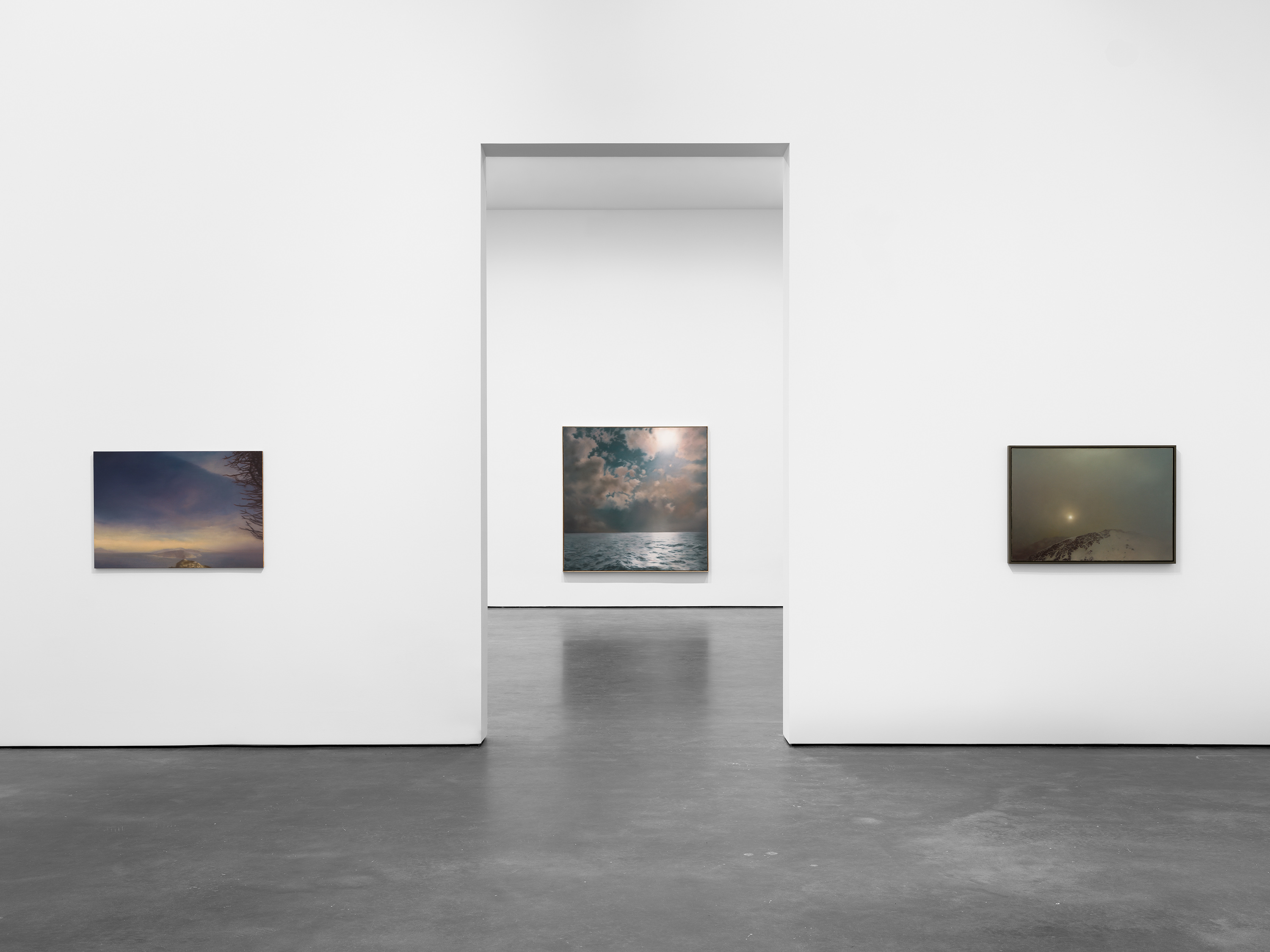
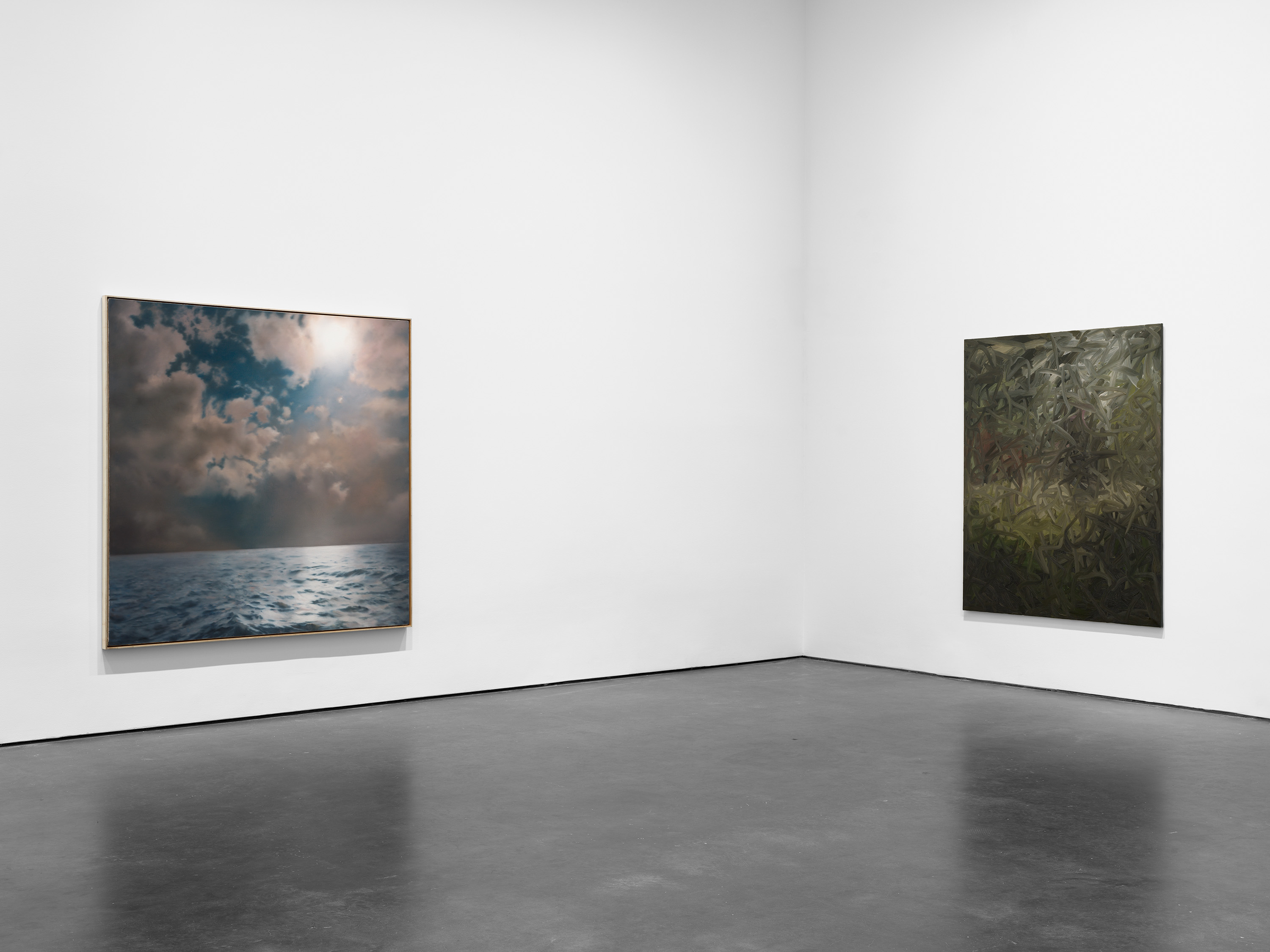
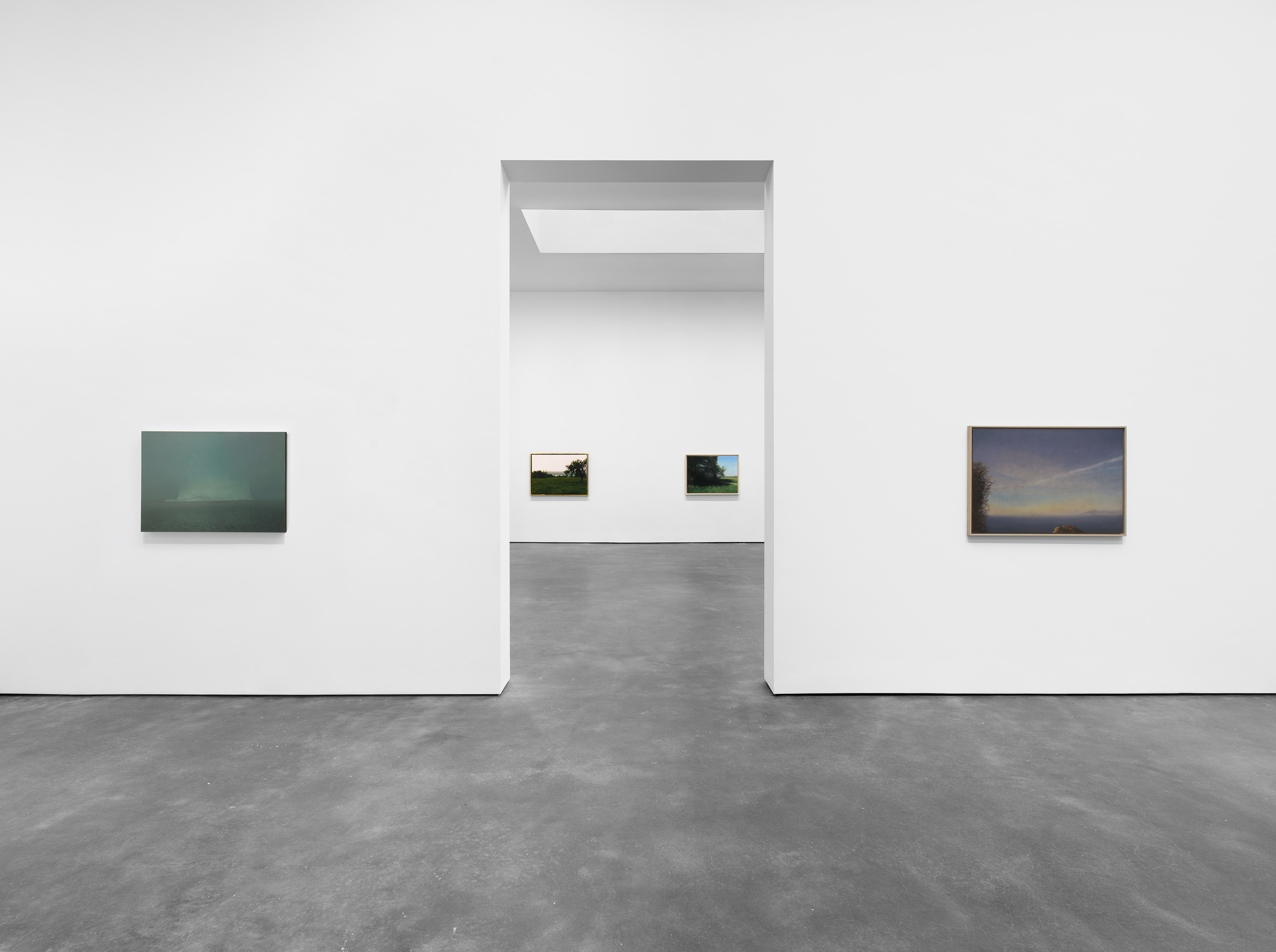
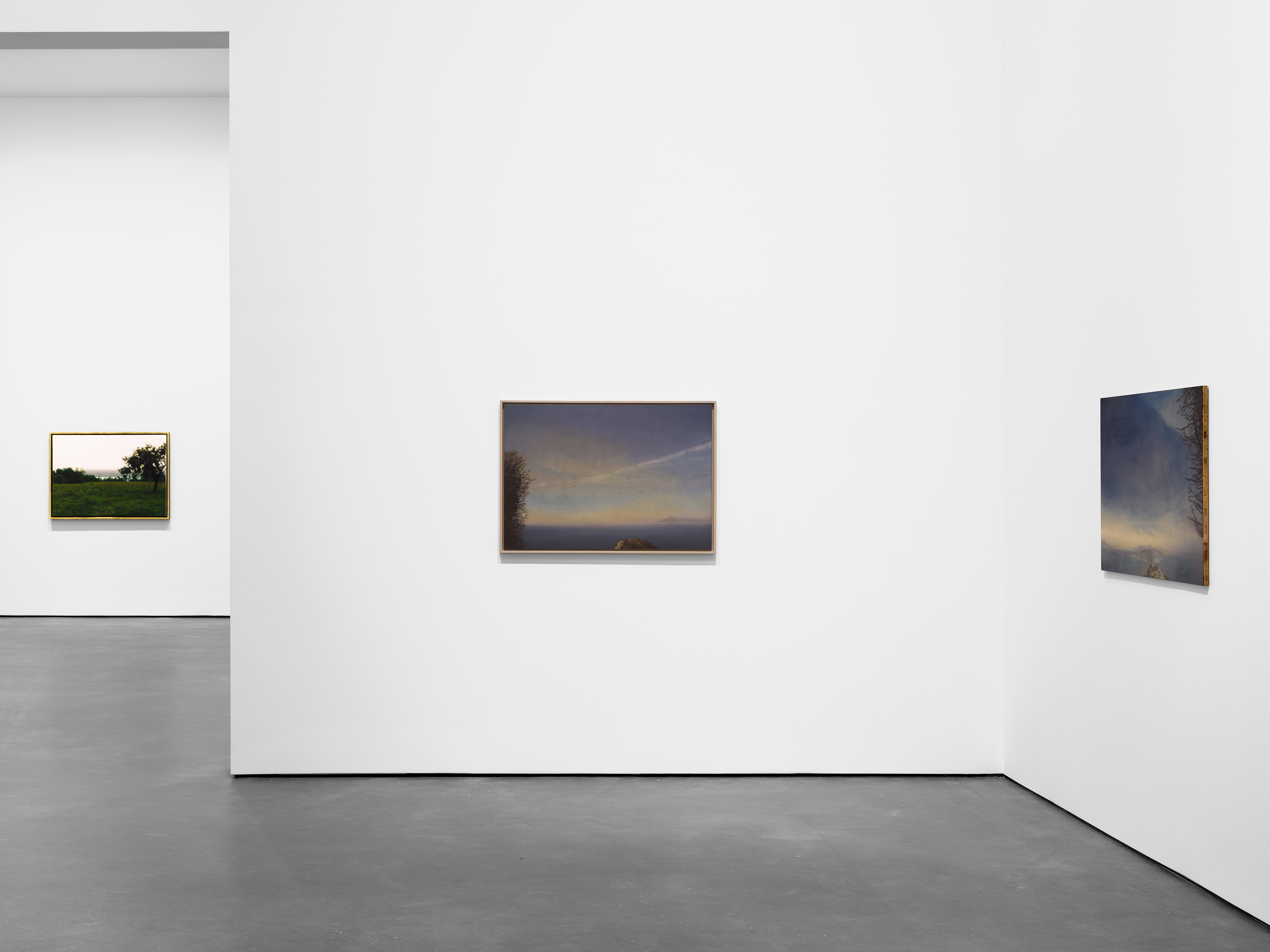
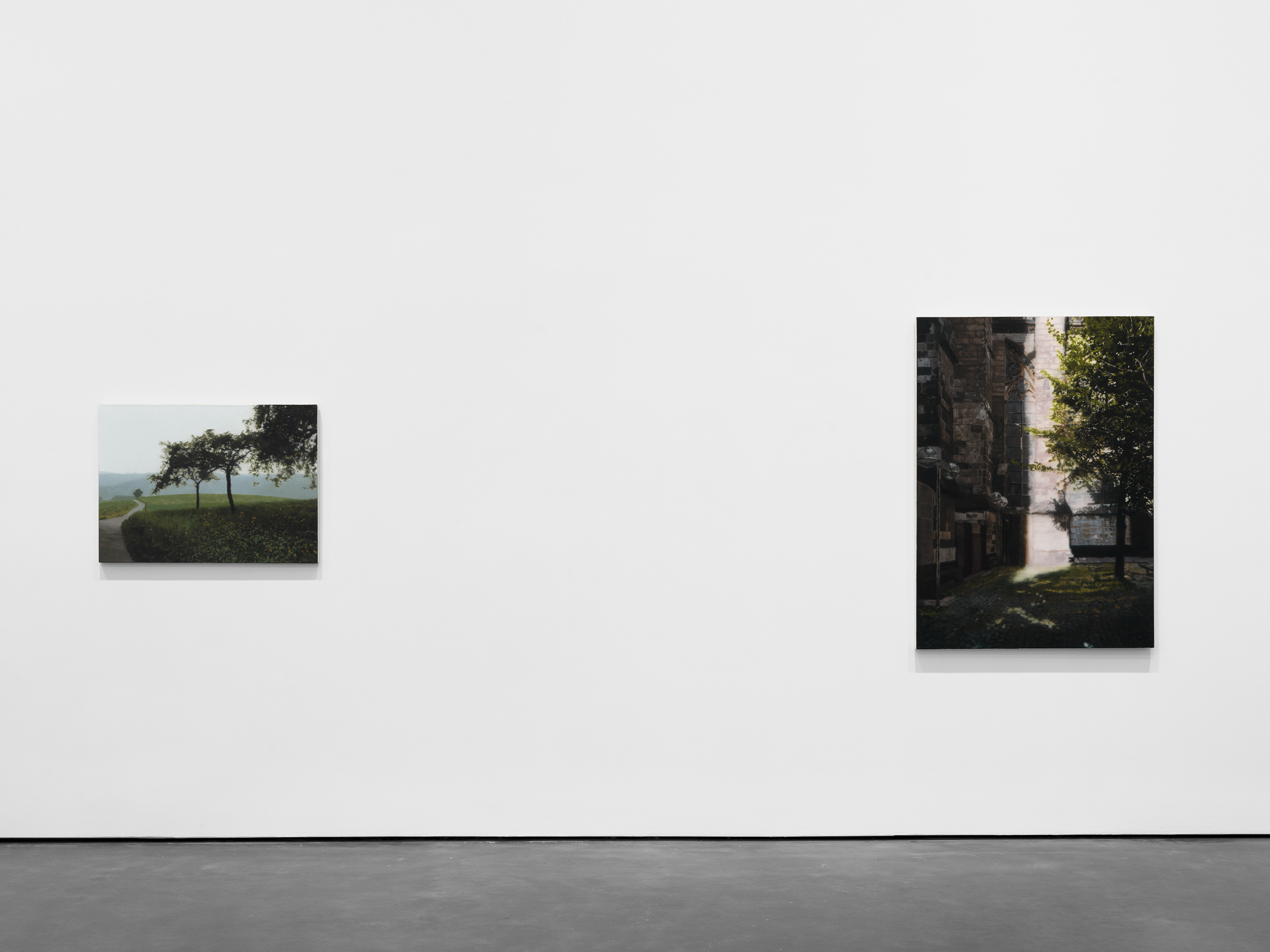
Cover: Installation view, Gerhard Richter: Landschaften, David Zwirner, New York, May 7—July 10, 2026. Courtesy David Zwirner. © Gerhard Richter 2026
All images © their respective rights holders.
Image rights & attribution →