




John Zurier’s paintings seem willing, at first, to accept the language used for them. A pale field, a thinned surface, linen showing through color. The eye reaches for atmosphere because the paintings let the word come close. Then the support interrupts. The field does not quite lift away from the weave. The surface does not quite become image. The familiar words arrive — weather, quiet, memory — but they arrive after the decisive thing has already happened. Atmosphere is what gathers later.
The first encounter is more exacting than the language around the work allows. Color appears, but not quite apart from its ground. The weave shows, but not as texture alone. Edges and small interruptions return the eye to the painting before the eye can turn the surface into weather. What seems soft is not passive. The surface is held at a low threshold, where visibility has begun but has not yet settled.
Small scale, restrained color, minimal incident, a surface framed through poetry, weather, memory, and contemplative attention — this has become a recognizable reception system for contemporary abstraction. In that system, atmosphere can arrive as a finished value. A painting can be received as serious, withheld, intimate, already refined. Zurier’s work occupies that field without resolving into its ease. The old language makes a category error: it names the residue as if it were the operation.
Across along – between, delay is not produced by one kind of surface. It appears through different material routes. Oil can remain above the weave as a thin skin, allowing color to gather on the surface without fully detaching from it. Glue-size tempera behaves differently. Pigment is bound closer to the linen, entering the support rather than resting over it. Elsewhere, paint thickens, catches, and interrupts its own field. These are not just technical differences. They are different regimes of painting: color absorbed into support, color suspended over support, color obstructing itself on support. Visibility cannot separate cleanly from ground. The delay is material before it is atmospheric.
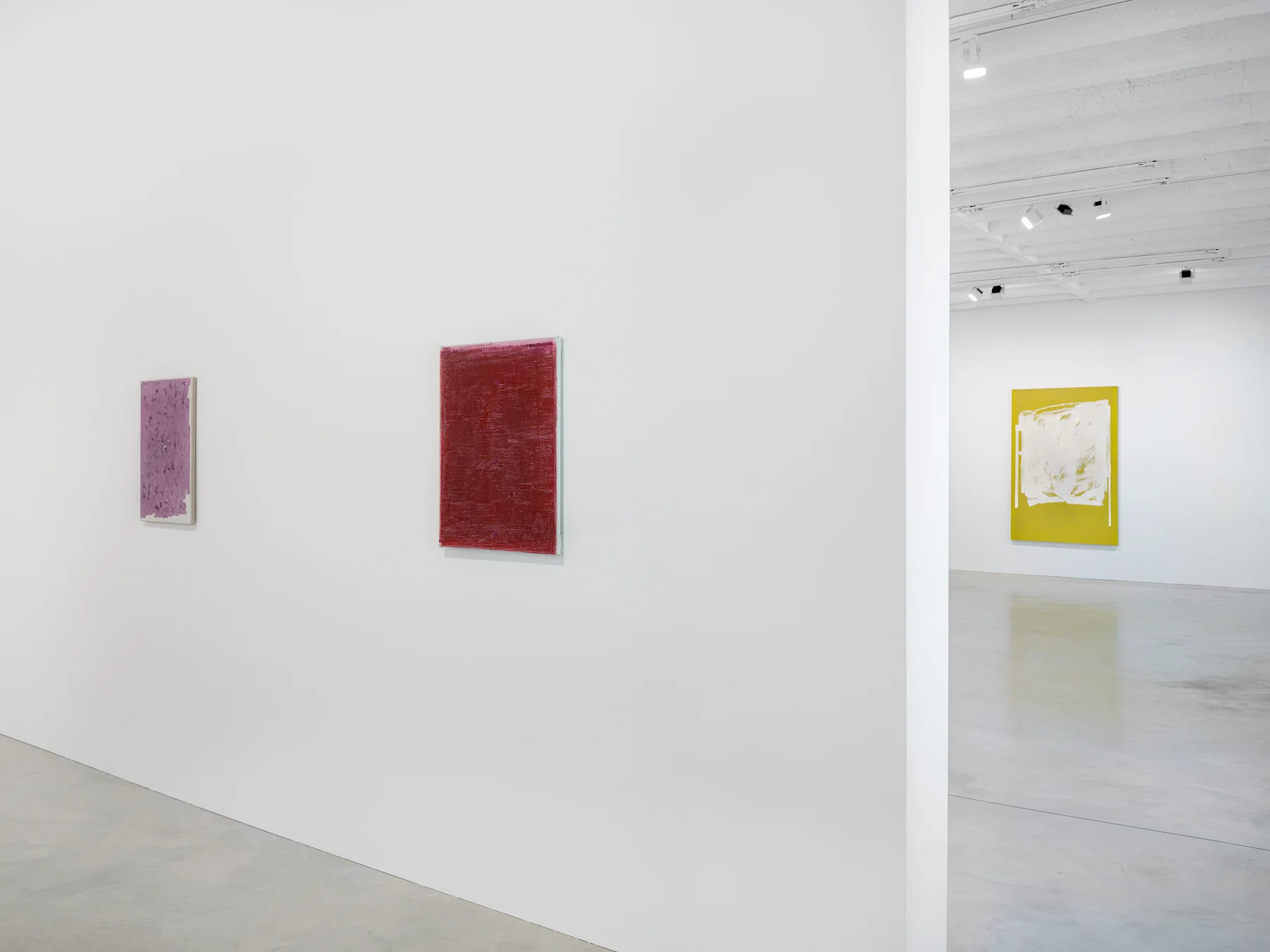
Stavanger (Coast), 2025, carries the first route most clearly. Made in glue-size tempera on linen, the painting feels less applied than absorbed. The field does not read as a veil placed over linen; the linen keeps returning through it, making color feel embedded rather than suspended. The title offers a coast, but the work does not need to become landscape. A coast is already a relation: water against land, one condition meeting another without fully separating. In the painting, color arrives from within the support rather than across it. The eye stays close to the binding, close to the point where color has not yet become an independent image. The coast is not depicted. It is structurally repeated as an edge-condition.
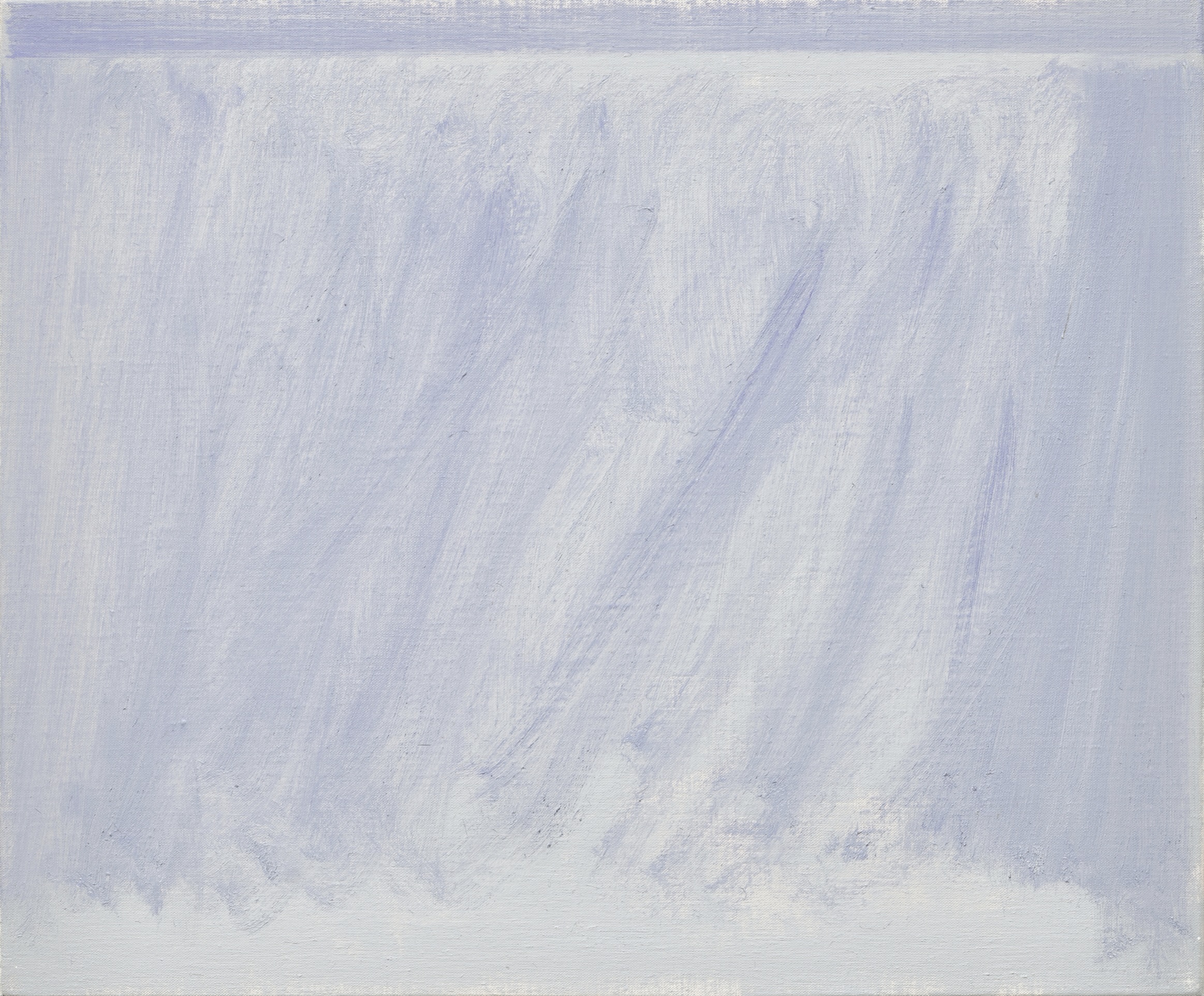
Passage (Delacroix-Courbet), 2026, names the problem from another direction. The title could become art-historical decoration, but the painting gives it a more precise function. Delacroix and Courbet mark two pressures inside painting: color as optical dissolution, and paint as material fact. That is the modern split after it has become legible. Zurier’s surface does not simply take a position between them. It slows the conditions by which either position could stabilize.
Color appears, then returns to the weave. Surface asserts itself, then loosens toward image. The painting does not let optical effect detach cleanly from material support, and it does not let material fact harden into objecthood. This is where the title begins to matter. The passage is not a route from Delacroix to Courbet, or from atmosphere to matter. It is the narrow interval before that opposition can settle into terms.
Glue-size tempera sharpens that move because it belongs to a pre-oil order of painting — an older relation between image, binder, ground, and support, before the modern drama of optical effect against material fact had hardened into a problem. Zurier is not simply balancing atmosphere and matter. Nor is Zurier choosing one side of the passage. Zurier works from a position the inherited vocabulary cannot quite describe: before the image has separated from support, before atmosphere and material fact have become rival claims.
The title names the passage. The surface keeps the passage from closing.
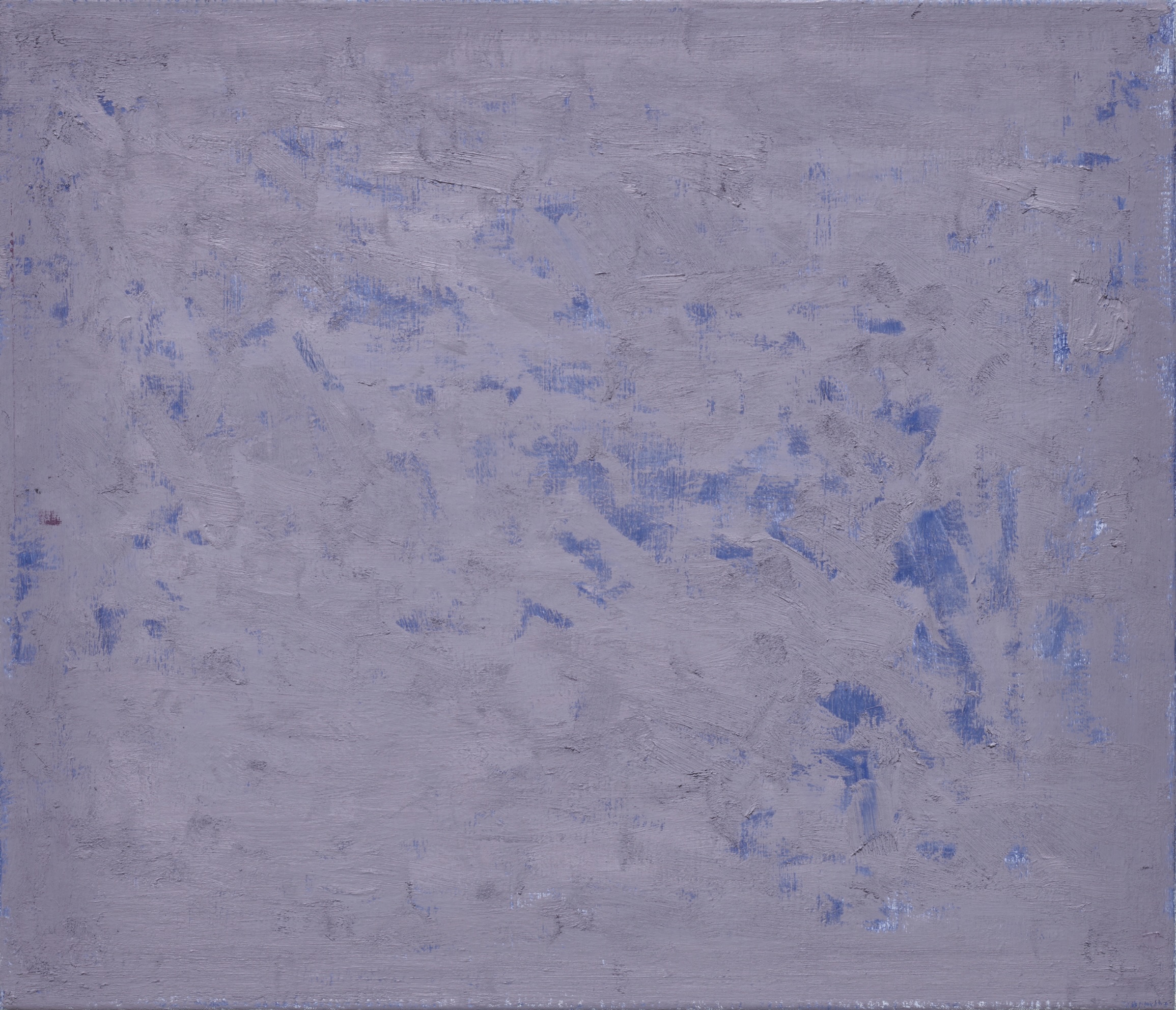
Poem for a Horse, 2025, makes the same problem harder to soften. The painting is not thinned toward disappearance. A lavender field is dragged unevenly across the linen, dense enough to catch in ridges, broken enough to leave dark interruptions and exposed ground. The surface does not hover. It presses forward, then fails to cover itself completely. That failure matters. Visibility is delayed here not by delicacy, but by obstruction. The eye cannot turn the painting into mood because the paint keeps returning as paint: dragged, caught, skipped, held against the support.
Zurier’s delay is not a style of thinness. The show has already produced it through three routes: absorption in Stavanger (Coast), suspension in Passage (Delacroix-Courbet), density in Poem for a Horse. Absorption delays visibility through non-separation. Suspension delays it through interval. Density delays it through obstruction. The route changes. The pressure remains.
The show works predominantly at small scale, and that scale is part of the control. Smallness here is not intimacy as style. It fixes the distance at which the painting can operate: close enough for weave, edge, density, and surface to matter, far enough for color to remain in play. The body is kept at a narrow distance from certainty. The painting does not withhold itself dramatically. It simply refuses to arrive all at once.
The old language wants the works to be received as states: weather, season, light, memory. along – between makes them available as procedures. Binder, support, title, scale, density, and interruption determine how slowly visibility arrives and how little certainty it is allowed to keep. “Quiet” describes the surface after its pressure has been domesticated. Zurier’s paintings are not quiet in that sense. They are precise. Their force acts before emphasis, before declaration, before the painting becomes available as a stable thing to admire.
This is the category error returned from the other side. Atmosphere is real, but it is not where the work begins. It is what remains when absorption, suspension, density, and delay have been softened into experience.
Zurier does not reduce painting toward emptiness. Zurier reduces painting toward the threshold where visibility begins. The work is the delay itself — material, exact, and still active before seeing is allowed to settle. The painting is not an object that arrives. It is the duration of its own becoming visible.
John Zurier’s paintings are often described through quiet, weather, and memory. along – between asks for a more exact reading. Zurier does not make atmosphere as subject. Zurier slows visibility through absorption, suspension, and density, holding the painting at the threshold before image, surface, and atmosphere fully separate.





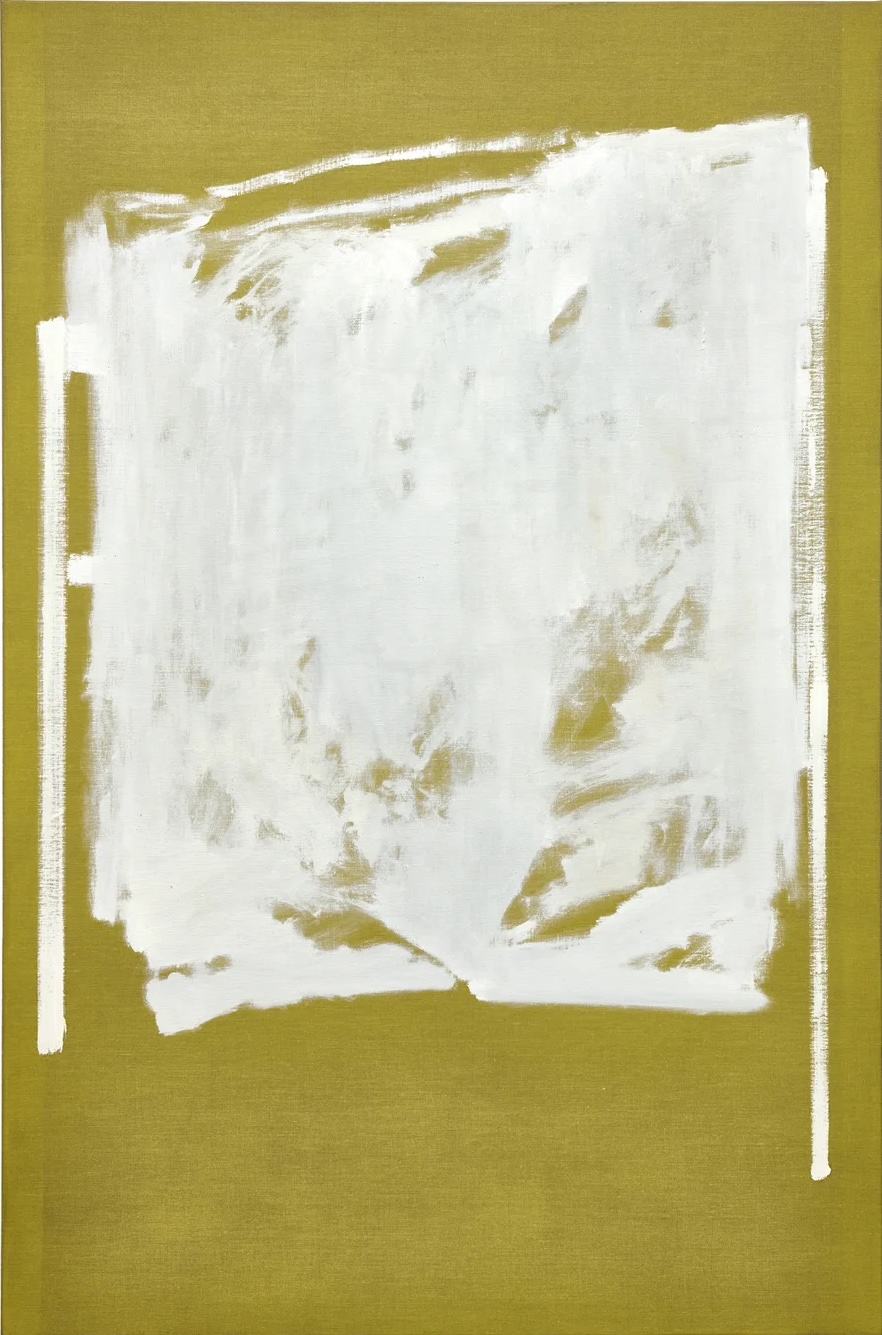


Cover: Detail, John Zurier, Path to the White Moon, 2026. Oil on linen, 61 × 40.6 cm (24 × 16 in). © John Zurier. Photo © Shaun Roberts. Courtesy the artist and Galerie Nordenhake.
All images © their respective rights holders.
Image rights & attribution →