

A Jil Sander garment does not sharpen you. It does not lend you a persona, complete a gesture, or finish what you bring unfinished. A white shirt, a black trouser, a coat cleared of excess until only the necessary relation remains: this was the work later named minimal. The reading is not wrong. It is incomplete.
Minimalism describes what the garments look like once the work has already been resolved into appearance. It does not explain how the house survives authorship, why it can absorb charge, warmth, or craft without losing itself, or why the same proposition can extend from garment to campaign to store. Jil Sander’s own word was harder: pure. Minimalism is a style and can be copied. Purity is a discipline and cannot.
The work later called minimal was answering a fashion world built on transaction: the garment as signal, armor, seduction, status, completion. Clothing was asked to give the wearer something visible — power, glamour, sexuality, persona, finish. Jil Sander refused that exchange. The garment would not complete the body. It would resolve itself.
The center is simple to state and difficult to hold: every element must justify its presence in the relation it forms.
The Prada takeover proved the difference brutally. The luxury industry was consolidating around houses whose authority could be carried as code: a logo, a signature, a recognizable vocabulary, a name strong enough to survive its author. Jil Sander was not that kind of house. The center was not a code. It was a discipline.
Bertelli’s confidence that a house as strong as Jil Sander did not need to rely on the name of its designer was not disproved by taste or nostalgia. It was disproved structurally. The house nearly collapsed the moment the founder and the intelligence holding that center were severed from it. Losses followed. Staff left with her. What failed was not brand recognition. What failed was the assumption that purity had ever been a transferable style.
The name alone was never enough.
Rodolfo Paglialunga’s tenure makes the negative case clearer. The work could look “Jil Sander” from the outside and still feel structurally thin, as if the house’s minimal austerity had become weight rather than exactness. The surface remembered the code. The center did not hold.
Raf Simons proved the opposite: the center could survive alteration without surviving imitation. From his first collections, the line sharpened and geometry entered decisively. His own language became visible inside the house, but it did not displace the discipline.
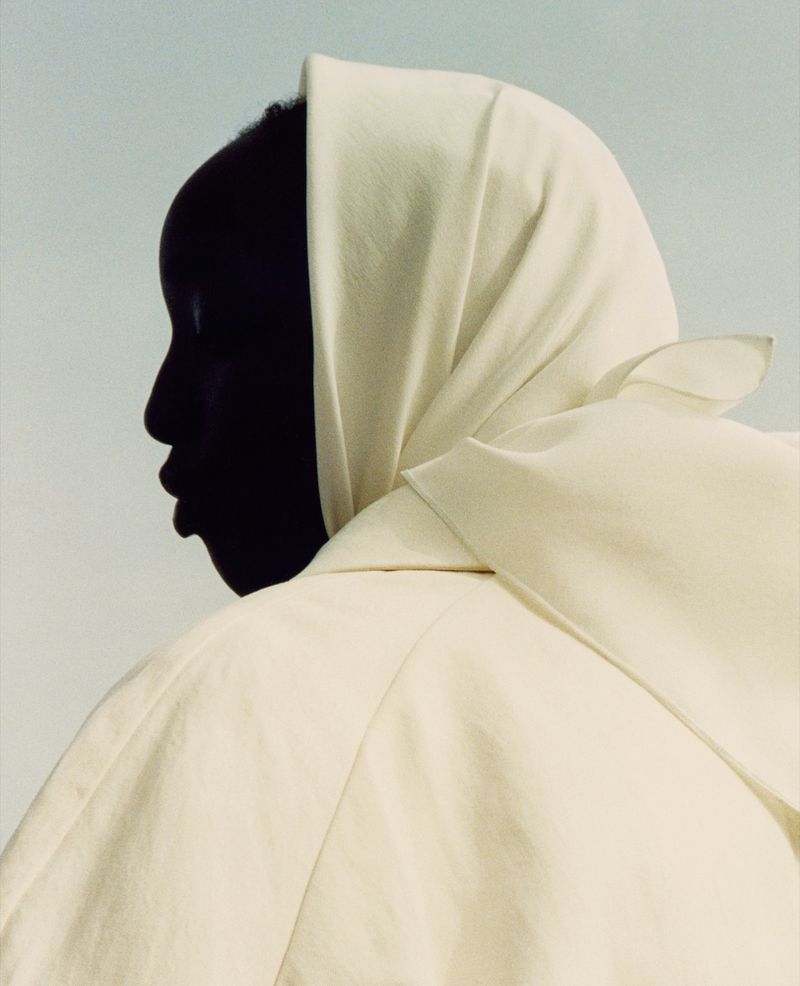
The blush coats matter because they should have broken the old reading. Blush is too soft for the usual image of Jil Sander. It brings warmth, even vulnerability, into a house so often mistaken for coolness. But the coats do not soften the proposition. They hold close to the body with exactness. The color changes the temperature, not the discipline. The relation still resolves: body, fabric, volume, surface, all cleared until nothing feels decorative.
Raf did not preserve Jil Sander by repeating its look. He preserved it by working from the same discipline under different pressure.
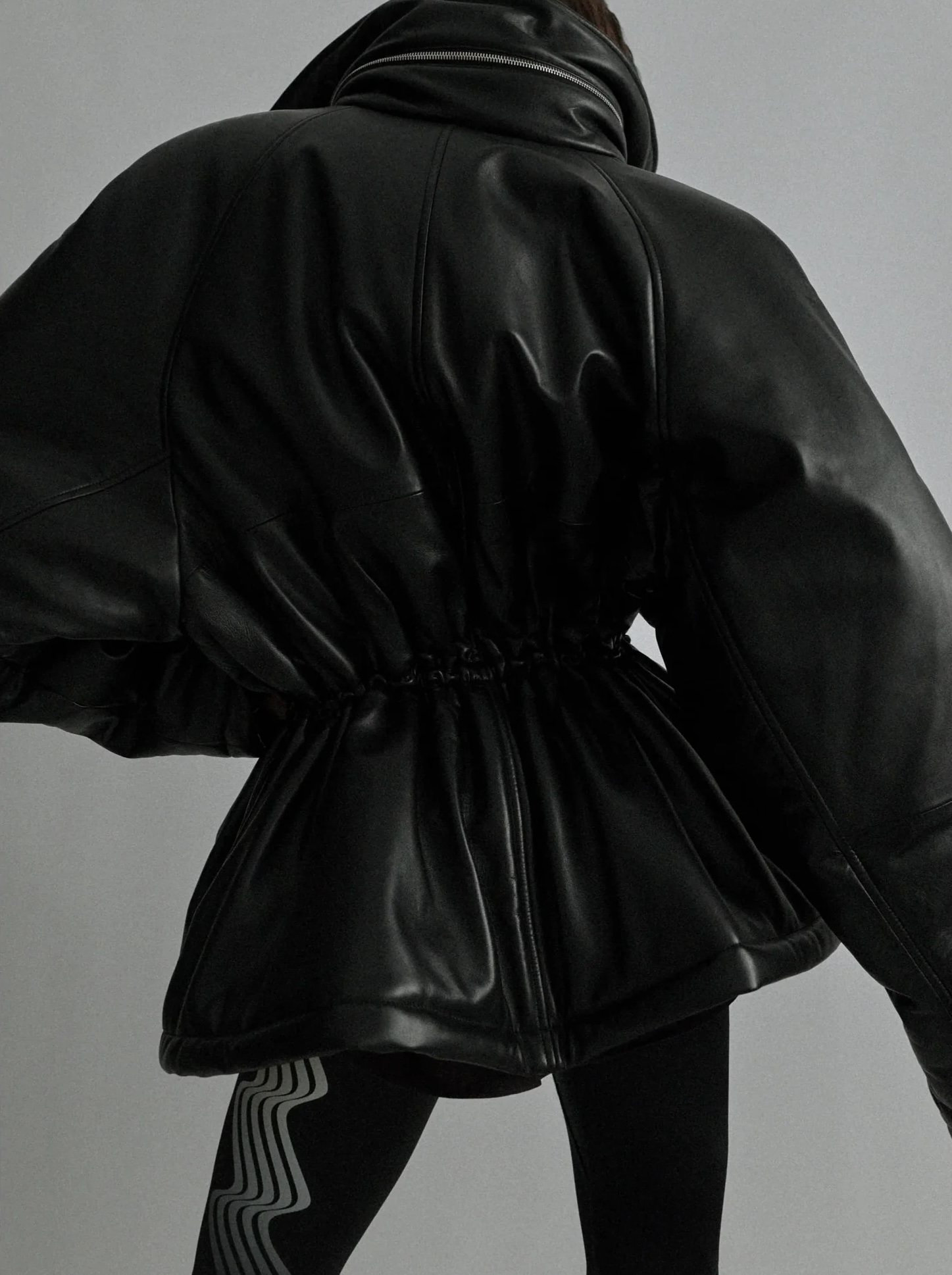
Lucie and Luke Meier tested the center from the other side. Warmth entered. Handwork entered. Texture thickened. In their first collections, white poplin could stand beside macramé without breaking the line. Later, black leather could open into lime green mohair and still hold. These should have seemed like departures if the house had ever been about coldness. They did not. The garments still refused excess. They still cleared away whatever did not serve the whole.
Their work proved that the house had never been about coldness to begin with.
That same discipline extends beyond the garment.
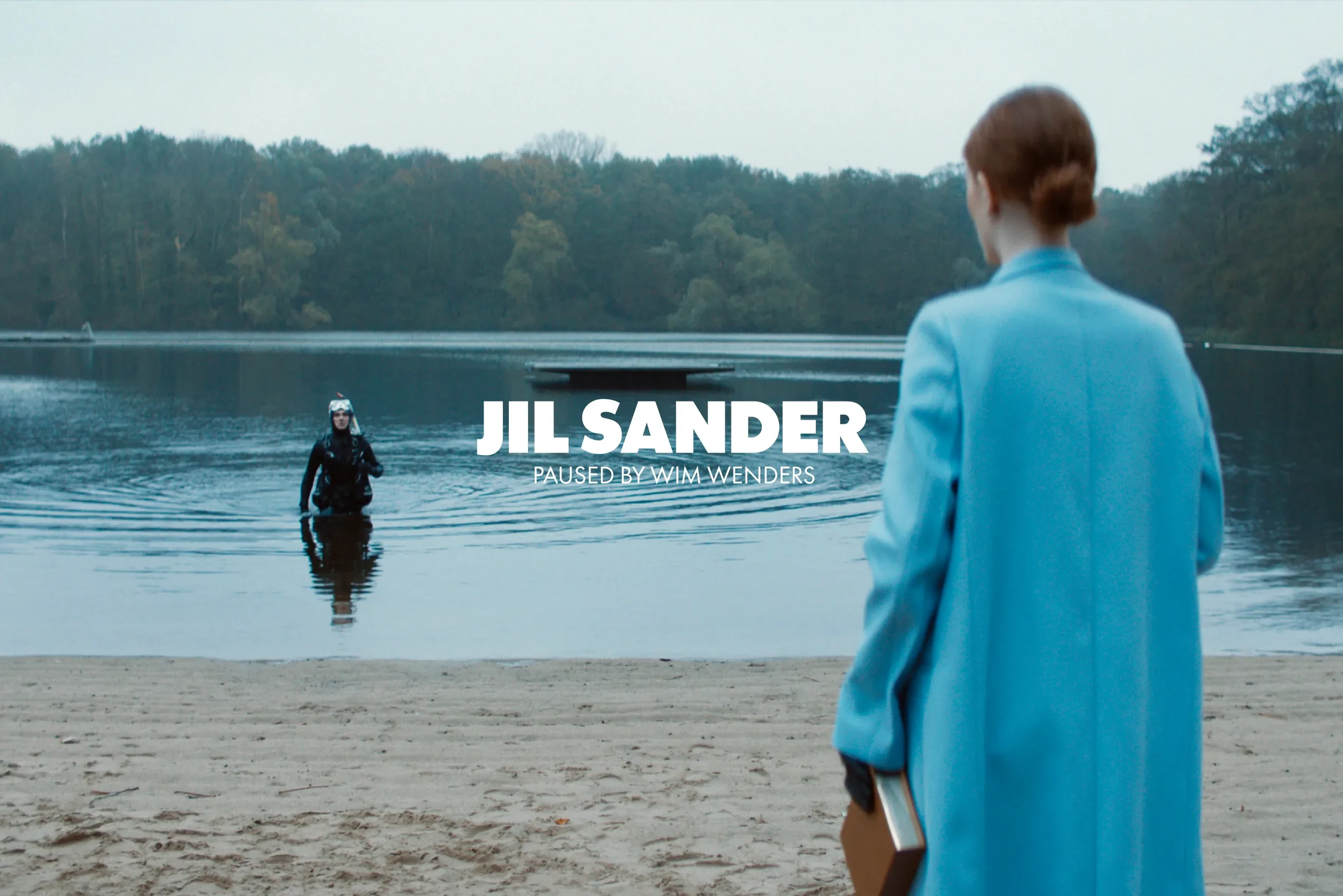
In the campaigns, the body is not posed into aspiration or performance. It stands in ordinary light, unforced, present without projection. From Lindbergh’s portraits of Amber Valletta to Wenders’ Paused By, the image never turns the clothes into fantasy in the same way the clothes never turn the body into image. Different photographers, different decades, different tonalities — the discipline holds because the relation holds.
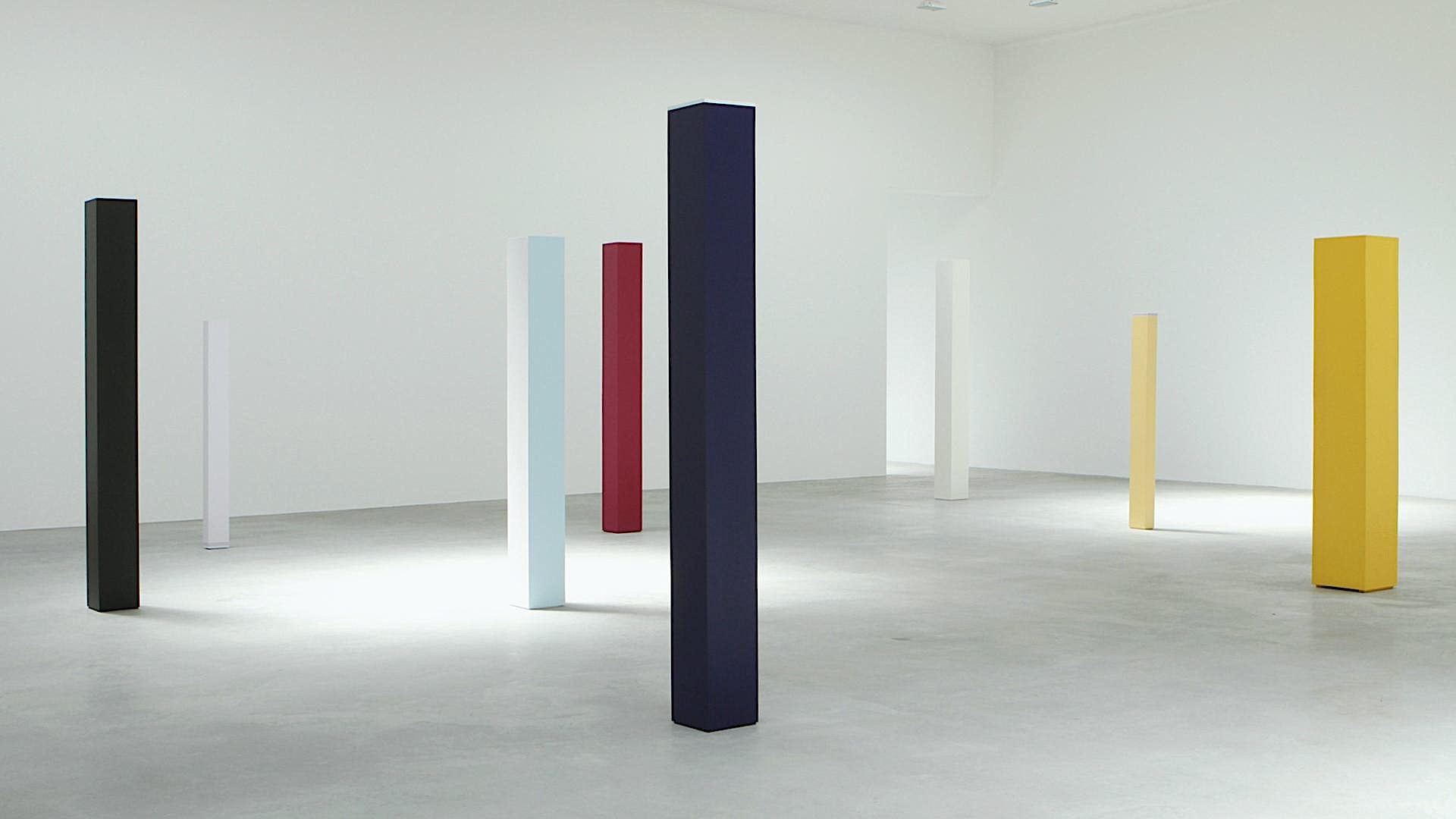
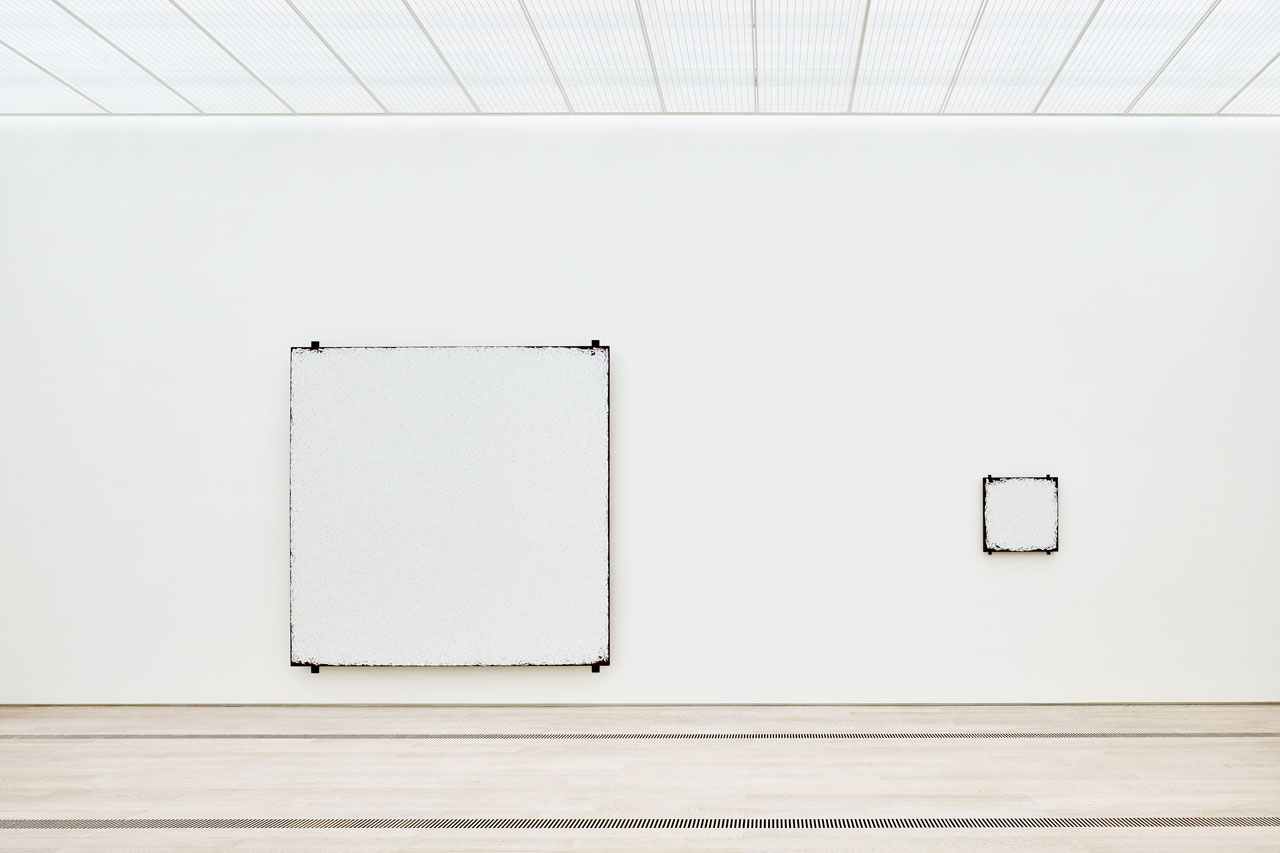
In the stores, the proposition becomes architectural. Linear geometries, translucent planes, limestone, nickel silver: each adapted to site without losing the house logic. The store does not decorate the garment any more than the garment decorates the body. Both clear a relation until it can hold.
At mass scale, the test becomes sharper. +J only works if the center is structural rather than luxurious. Price point changes. Distribution changes. Rarity disappears. Stripped shirts and exact outerwear still have to carry the discipline without the protection of house atmosphere. What is being carried is not luxury. It is relation.
The house does not read as consistent in the usual way. The surfaces change too much for that. Color enters, then recedes. Warmth thickens, then sharpens again. Different authors bring different pressures to bear. What returns is not a look but a discipline proven across garment, image, space, and scale.
When that discipline is held, the house is immediately legible without needing to repeat itself. When it is relaxed, the work drifts toward minimalism as style and loses its force.
What holds the house together is not reduction as appearance, but purity as discipline — a method of clearing until the relation between body, material, and space is exact.
That is why the house has so often been misread as minimal, cold, or austere. A work built on resolution without excess can appear empty if the discipline behind it is not seen. Clarity is mistaken for absence.
But nothing is missing.
The house refuses three things fashion usually offers: transformation, projection, completion. It does not ask the garment to change you, lend you a persona, or finish what you bring unfinished. It asks something harder. The wearer has to arrive without expecting a transaction to complete them.
A Jil Sander garment has already resolved itself.
It does not need to resolve you.
Reduction is commonly treated as a means to simplify or neutralize composition. In Jil Sander’s work, reduction functions structurally to allow proportion, material, and palette to define form rather than embellishment.
Detail is restrained, surfaces remain quiet, and construction guides spatial and relational coherence.

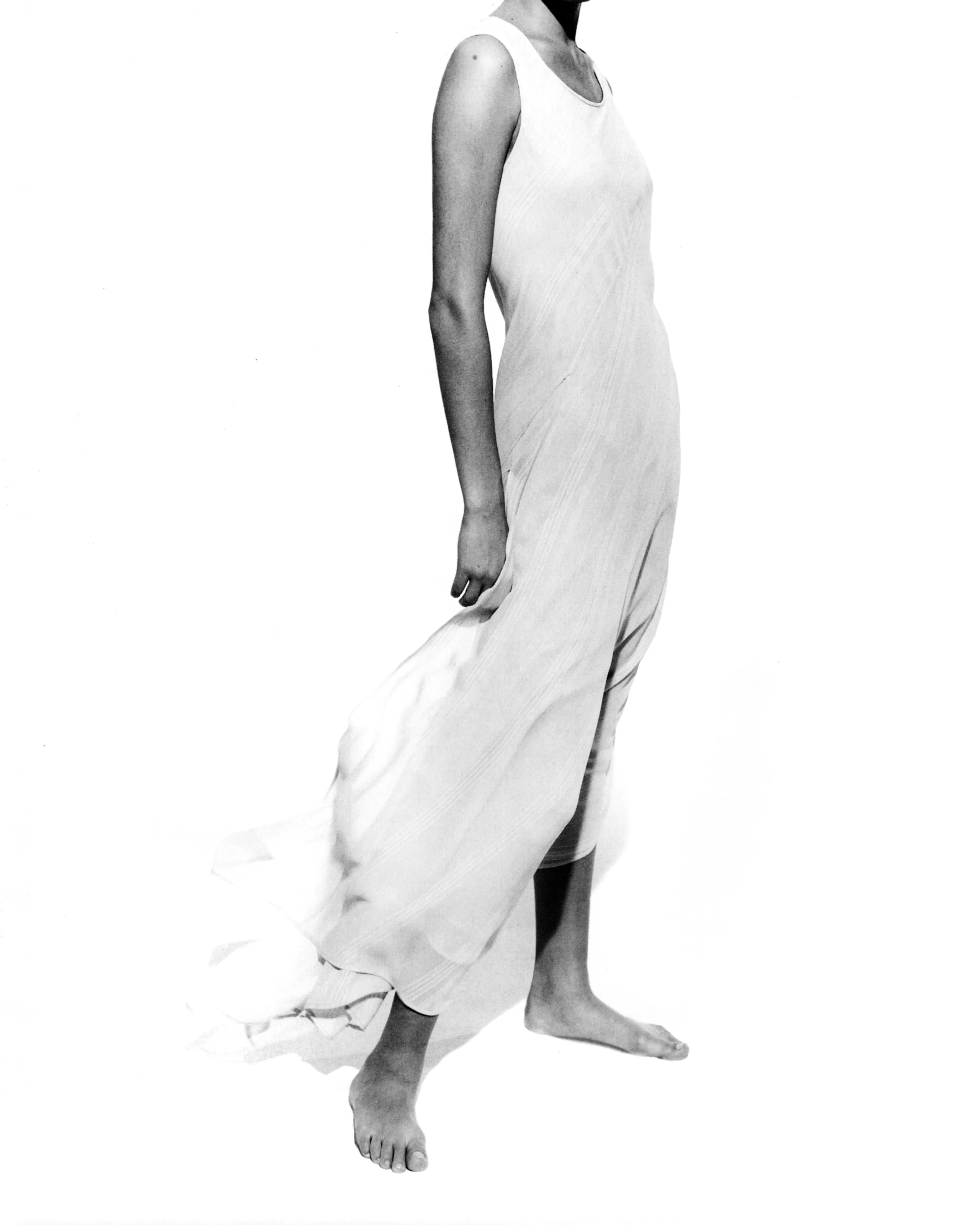


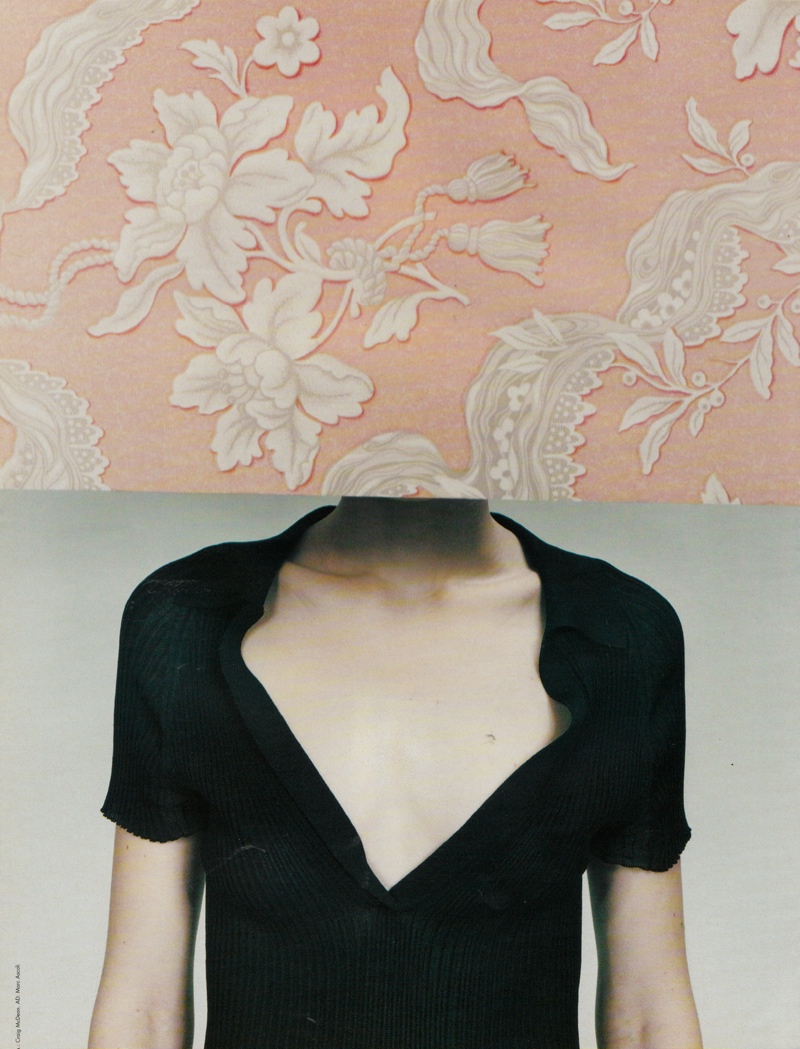

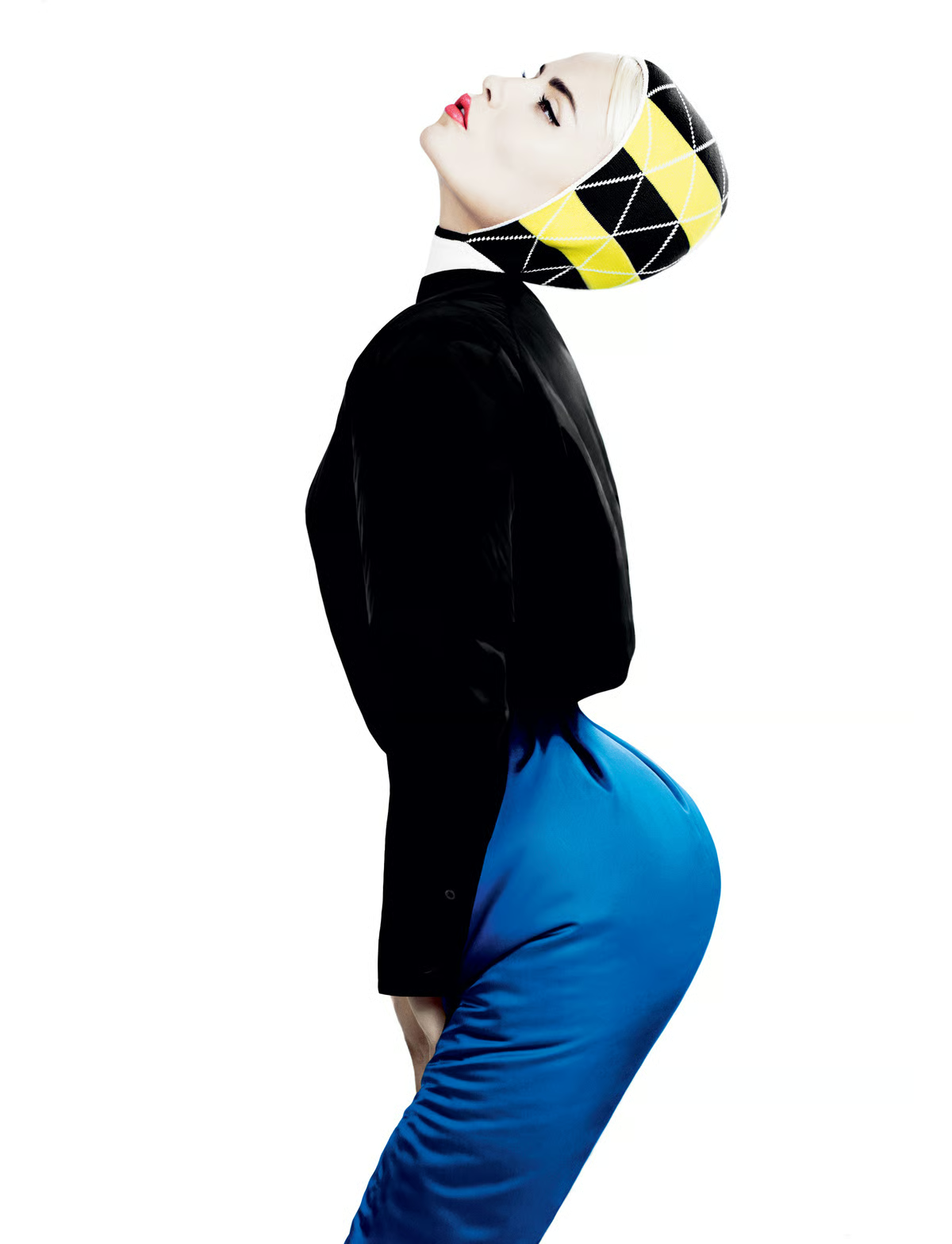





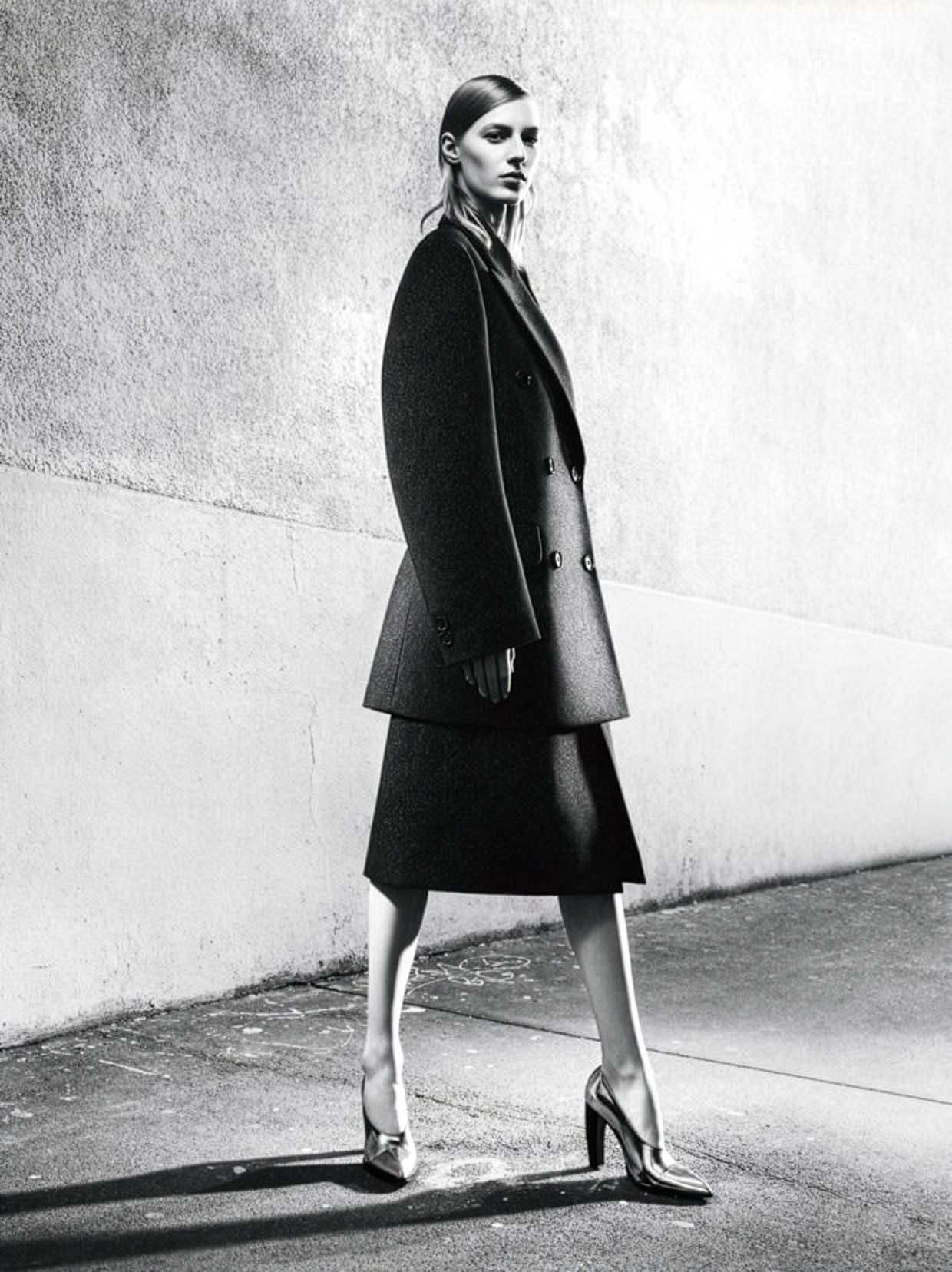



Cover: Jil Sander, Spring/Summer 1996 campaign. Designer Jil Sander. Photo © Craig McDean.
All images © their respective rights holders.
Image rights & attribution →