

What appears on the runway is not a motorcycle jacket. It is the image of one.
In the SS15 trompe l’oeil motorcycle-jacket ensemble, red, black, and white panels lie across the body like illustration, flattened into a surface that refuses depth. Pockets, lapels, closures, seams: all present, all displaced into graphic form. The figure carries the garment as if it had been drawn onto it. Clothing appears to have been abandoned for composition. The body reads as a plane. Worn, it produces a lag: the body moves first, the image follows a fraction behind, as if the figure were trying to catch up to itself.
Avant-garde arrives easily here.
Look again and the surface begins to organize. The panels are not placed freely. They follow a fixed logic: flat sections of synthetic leather and PVC layered in sequence, seam allowances turned outward so the construction does not disappear. Nothing here is improvised. The same operation repeats across the garment. What reads as illustration is built through controlled assembly. And the jacket has not gone anywhere. The pockets sit where they should sit. The closure aligns where closures align. The panel logic remains intact even as it is flattened into image. The most extreme object on the runway is also the most strictly constructed. The form has not been broken. It has been rendered.
The same thing happens when the form seems even less garment-like. In the AW15 honeycomb dress, the body is surrounded by a mesh of repeating voids. From a distance it looks like eruption — volume released from the body until silhouette no longer matters. Up close, the structure opens and closes with movement. Air moves through it. Light passes across the skin in fragments. The body is neither covered nor exposed in any stable way; it is interrupted by a grid that was not designed to reveal it but cannot help doing so.
The operation remains severe in its continuity: horizontal strips attached at offset intervals, each seam determining where the next opening will appear. Gravity pulls the grid apart, and the voids arrive. Nothing has been shattered. The rule has simply been allowed to extend.
In the pyramid dresses, the pressure sharpens. The body appears armored, covered in triangular units that turn surface into defense. The shock comes from the result, not from a break in the method. The units do not yield. They press outward and back against the body at the same time, a hard geometry meeting something that does not return the force. A single form is repeated, scaled, repositioned. The dress becomes strange because the unit keeps multiplying.
With the origami pieces, the structure comes from even further back. Fold sequences already exist before the garment does. Watanabe does not invent the logic; he applies it to neoprene and polyurethane, materials stiff enough to retain the fold after the body enters. The result can look like sculpture — planes lifting away from the torso, volumes extending beyond any ordinary dress silhouette — but the extremity is disciplined by an inherited system. The garment is not breaking form. It is obeying one.
By the time Watanabe’s work appears inside the Comme des Garçons field, rupture has already become legible. The break has a history. The displaced body, the damaged garment, the refusal of conventional form — these are no longer innocent gestures. They are a language the eye has learned to recognize as avant-garde. Watanabe’s work can be mistaken for that language because the surface gives permission. But the difficulty comes from somewhere else. It comes from a logic allowed to continue past the point where recognition remains easy.
That is what the earlier garments have been showing. The motorcycle image has a graphic construction underneath it. The honeycomb dress has a grid. The pyramid dress has a repeated unit. The origami pieces have an inherited fold sequence. None begins from absence. Each begins from a logic already present before the final form appears.
The host is not always a garment. Sometimes it is a rule. Sometimes a unit. Sometimes a fold sequence. Sometimes an image construction strict enough to be repeated across the body.
In menswear, the host becomes easier to name because it arrives already resolved as clothing. A Levi’s trucker jacket. A Carhartt chore coat. Structures whose logic has been fixed by use before Watanabe touches them. The question changes slightly. It is no longer how a rule generates form from within. It is how a finished garment can remain itself while another logic begins to operate against it.
The wool and cashmere Levi’s trucker makes the shift exact. The construction remains: yoke, pockets, closure, seam routes, the entire logic of the jacket preserved. The material does not. Denim becomes wool and cashmere. The eye reads workwear. The body does not. The weight sits differently on the shoulder. The drape falls like a coat. The expected stiffness never arrives. The jacket organizes the torso with the familiarity of a trucker while the fabric moves with a different gravity. The two systems do not resolve. They remain present together. The host changes. The method does not.
The limit appears where the host can no longer be located with certainty. In the spherical fur volumes, repetition and expansion are still active. Controlled scaling still governs the object. But no underlying garment anchors the form in the same way. The body is surrounded rather than structured. What had been tension between host and addition becomes a single condition. These works do not undo the argument. They show its edge. Continuity can go so far that the host stops being readable as clothing and remains only as rule.
Seen from the outside, the work still looks like rupture. The volumes remain excessive. The surfaces flatten or expand beyond the body. Recognition fails, and avant-garde names that failure accurately. It fails only because it stops there. What it cannot register is the continuity that produces the extremity: the rule that repeats, the unit that multiplies, the fold that is obeyed, the host that remains, the system that keeps going until the form becomes difficult to recognize.
The word arrived early. It named the surface. It did not describe the operation.
Nothing here is made by breaking the garment. Nothing here begins from absence. Each piece starts with something already formed — a rule, a structure, a repeatable unit, or a garment that can still be read — and presses it until another condition appears alongside it. The extremity is not a departure from that logic. It is what that logic produces when it is allowed to continue.
The garments do not break from what precedes them.
They continue it until it becomes strange.
The work does not begin from nothing. A prior structure is always present—sometimes as a garment, sometimes as a rule, sometimes as an image. What changes is how that structure is extended. Remove it, and the work collapses. Leave it intact, and the intervention can register.
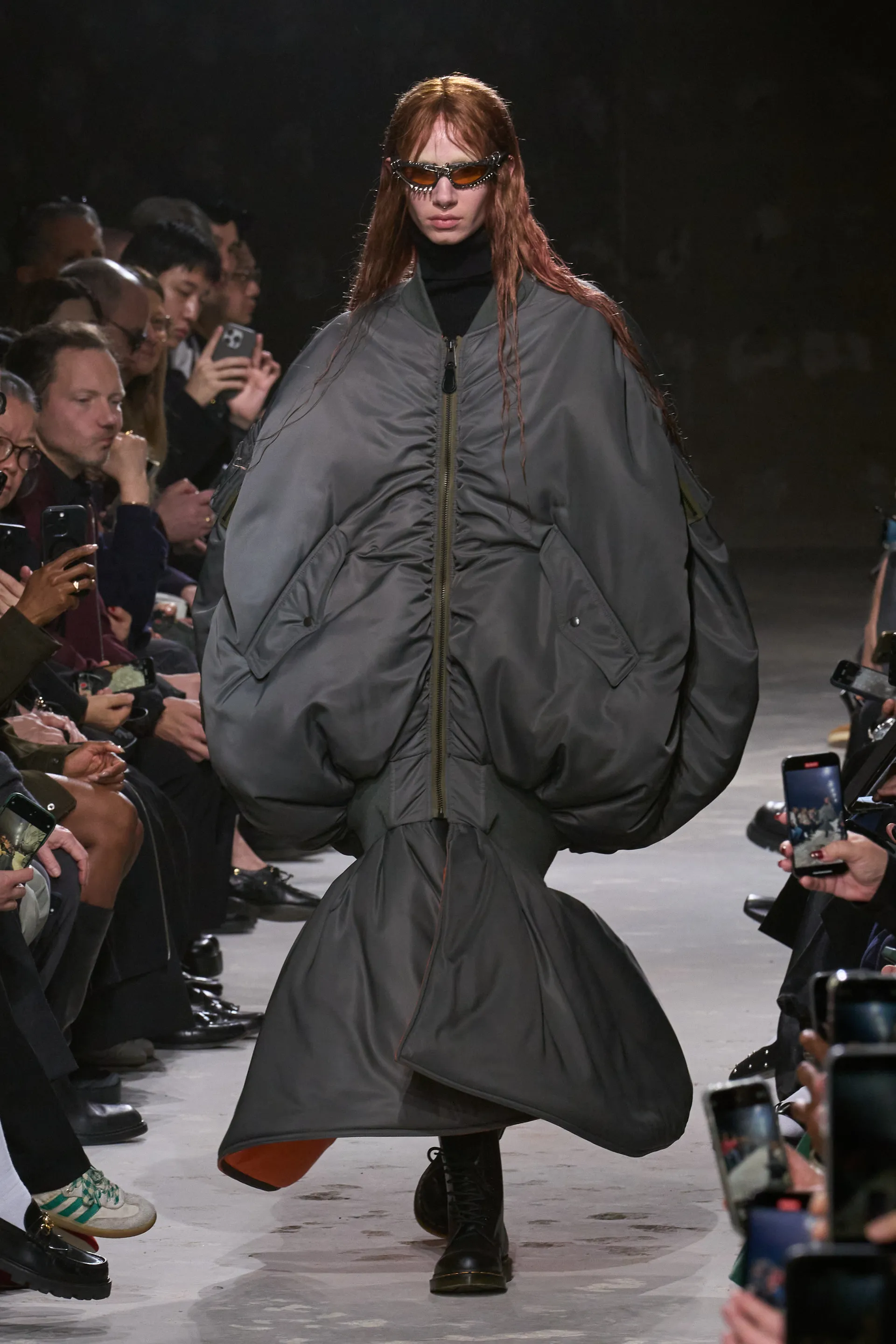
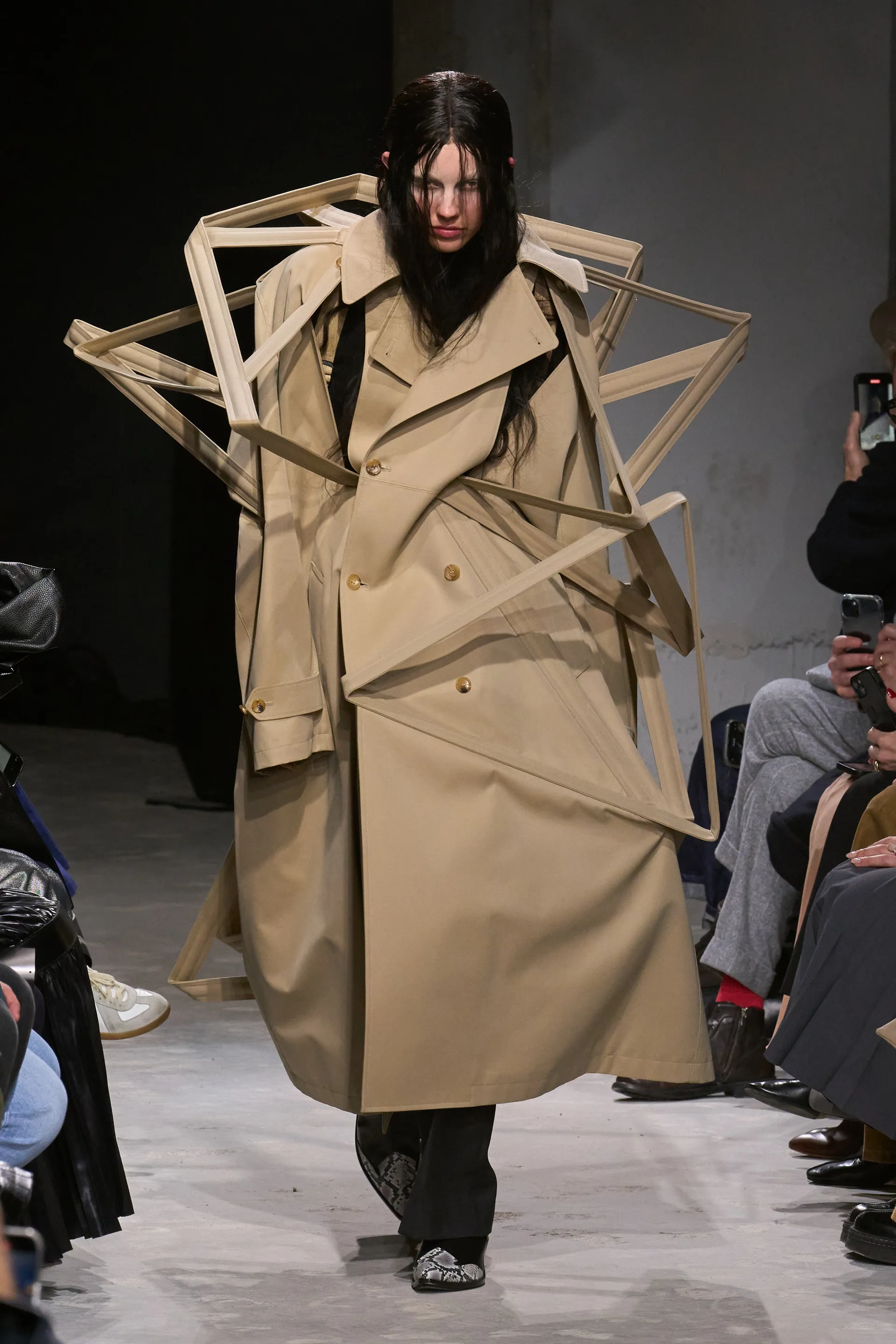
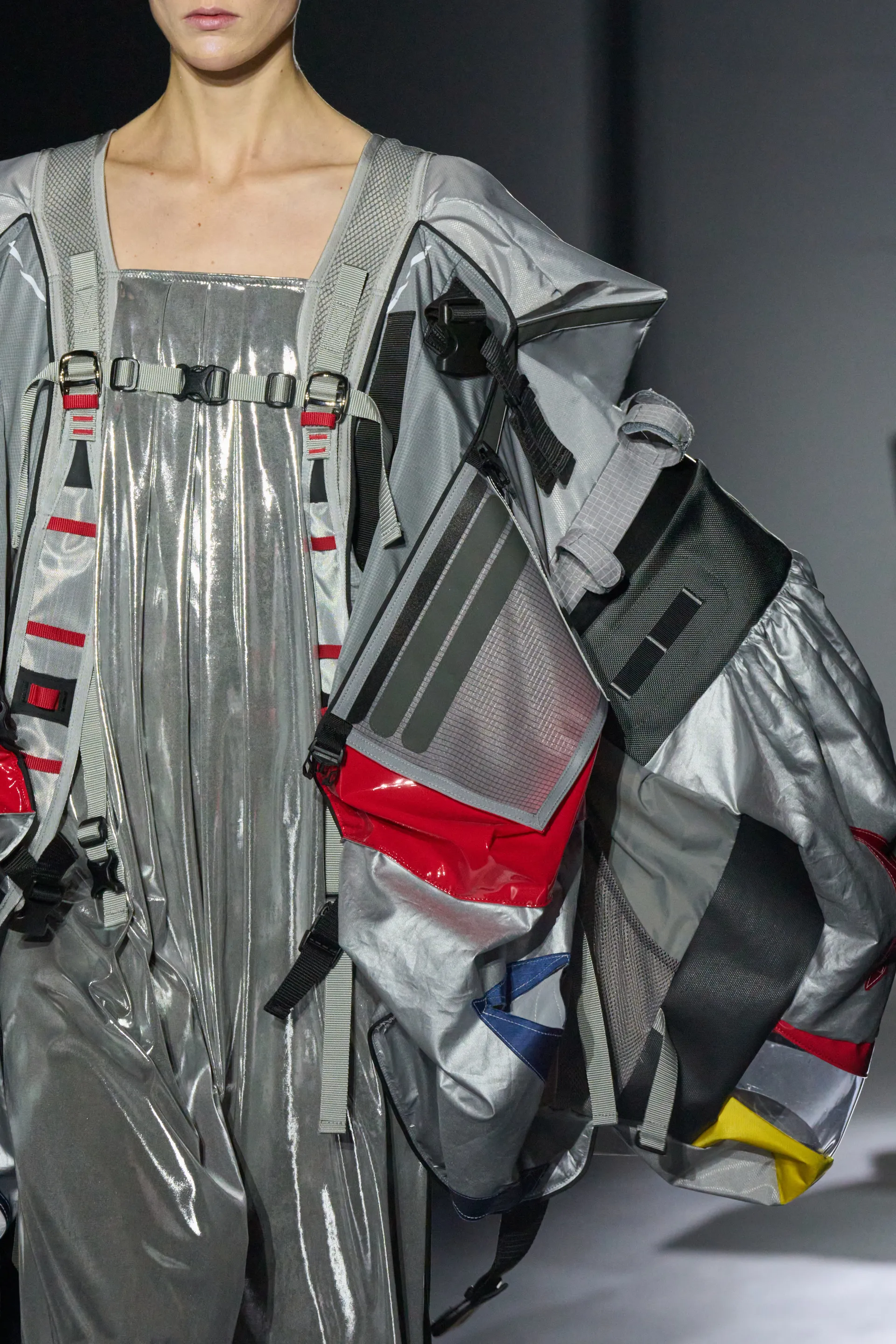
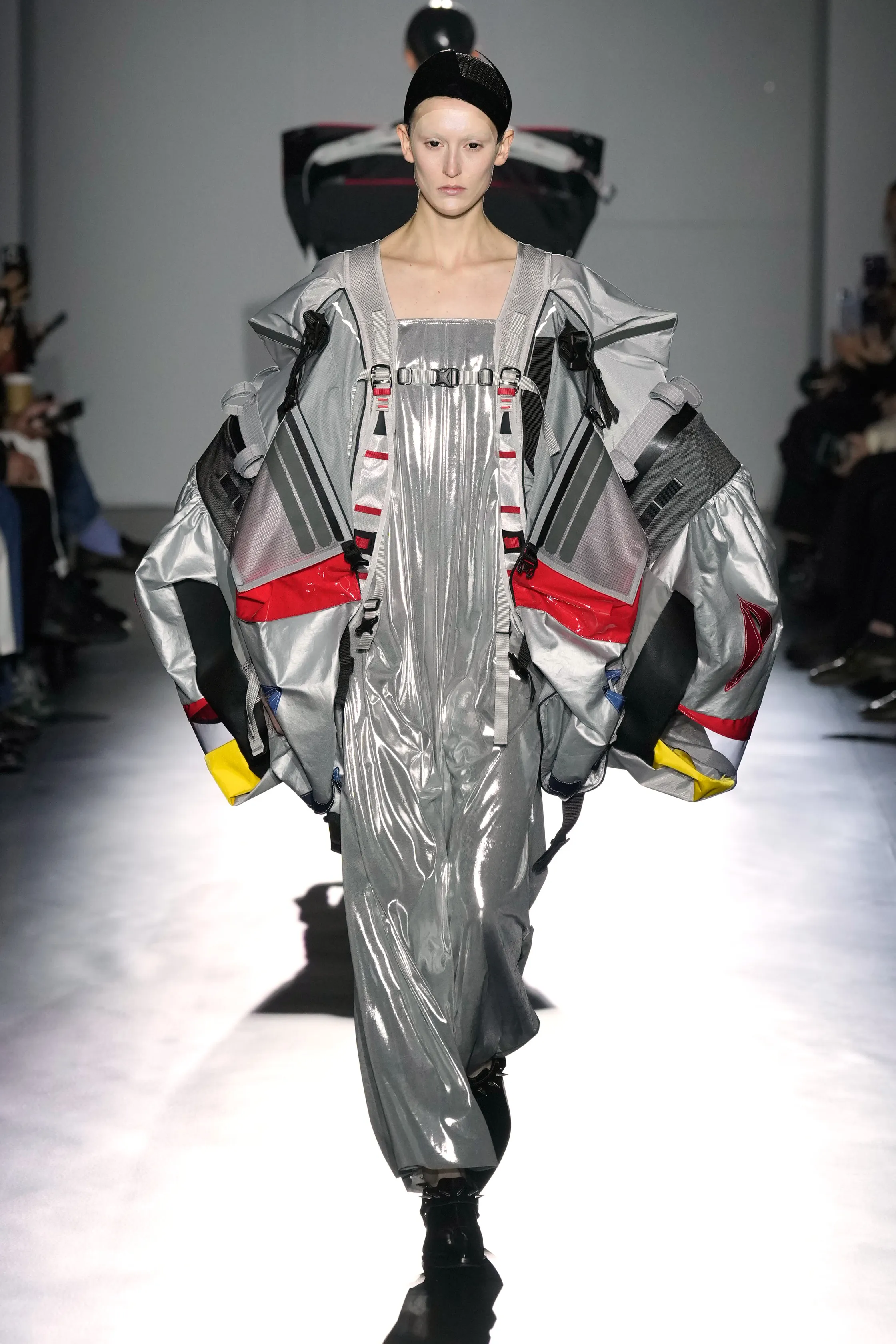
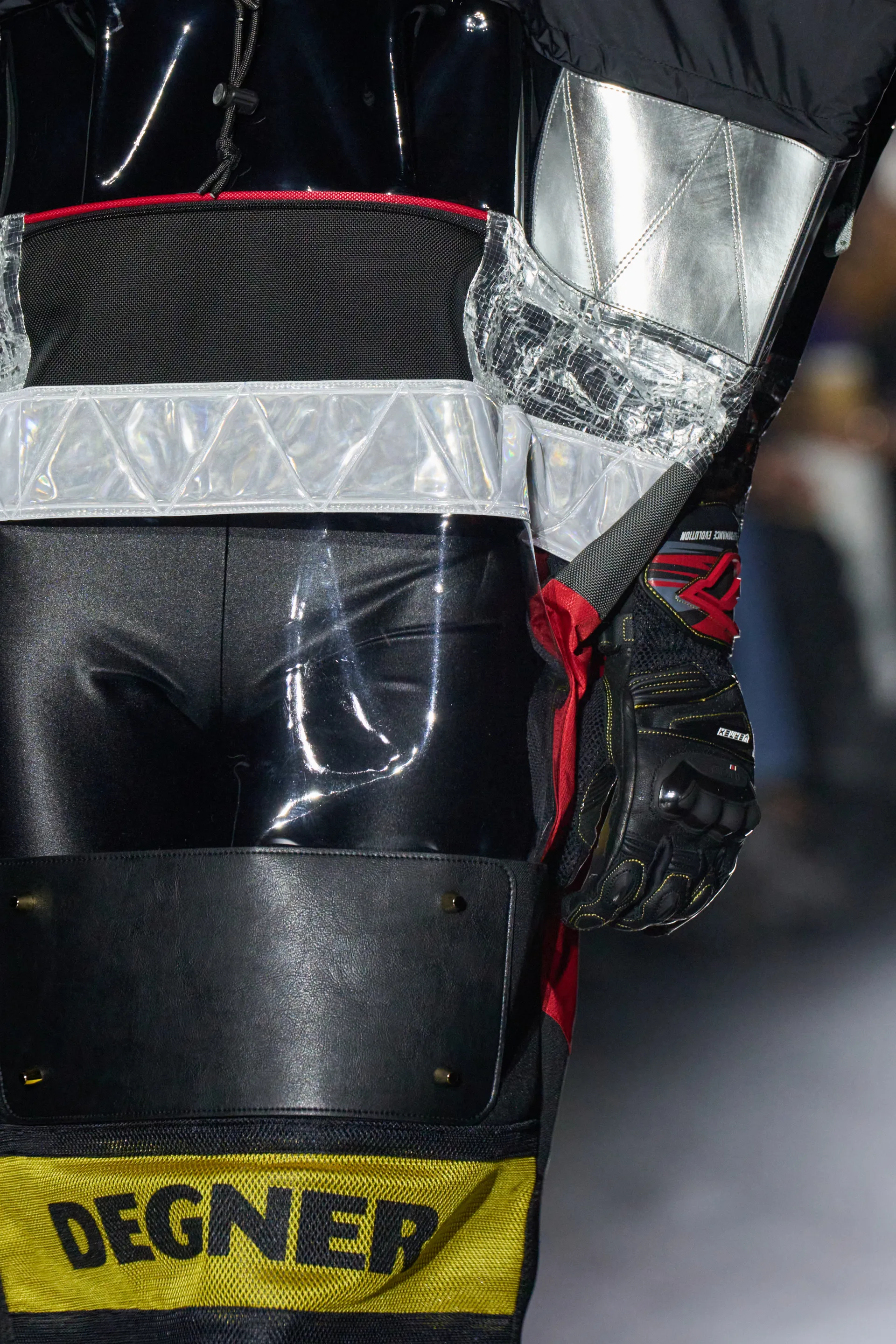
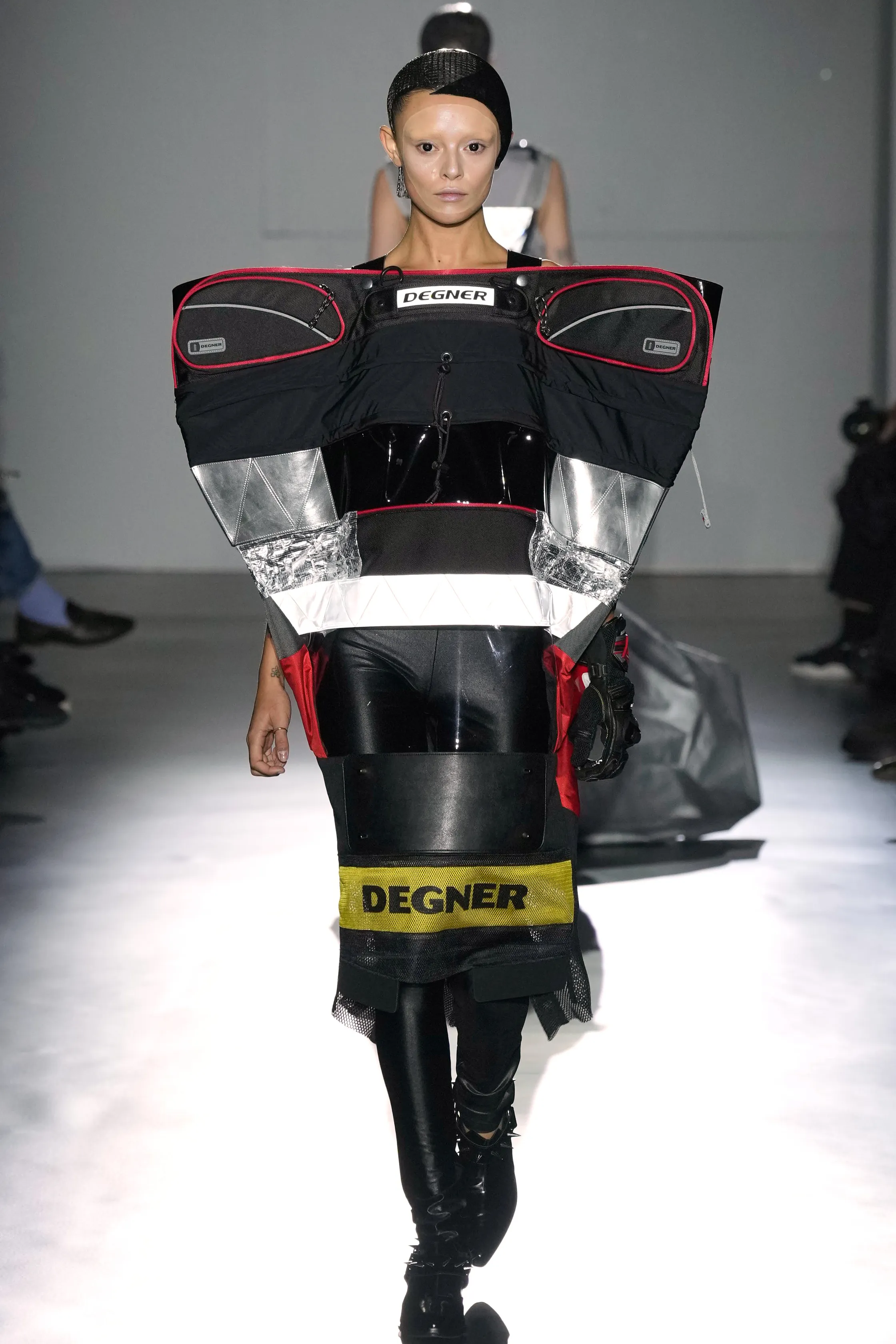
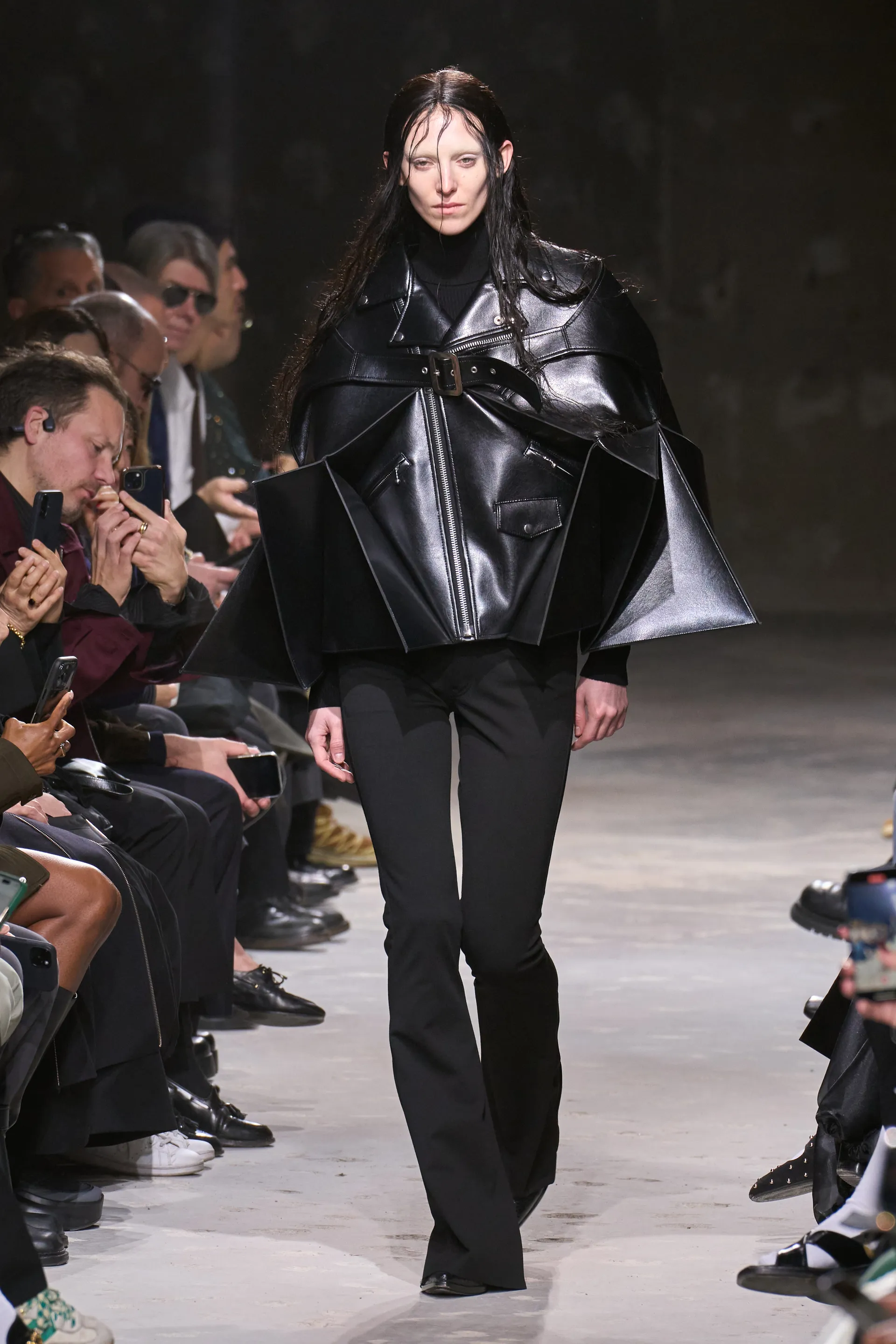
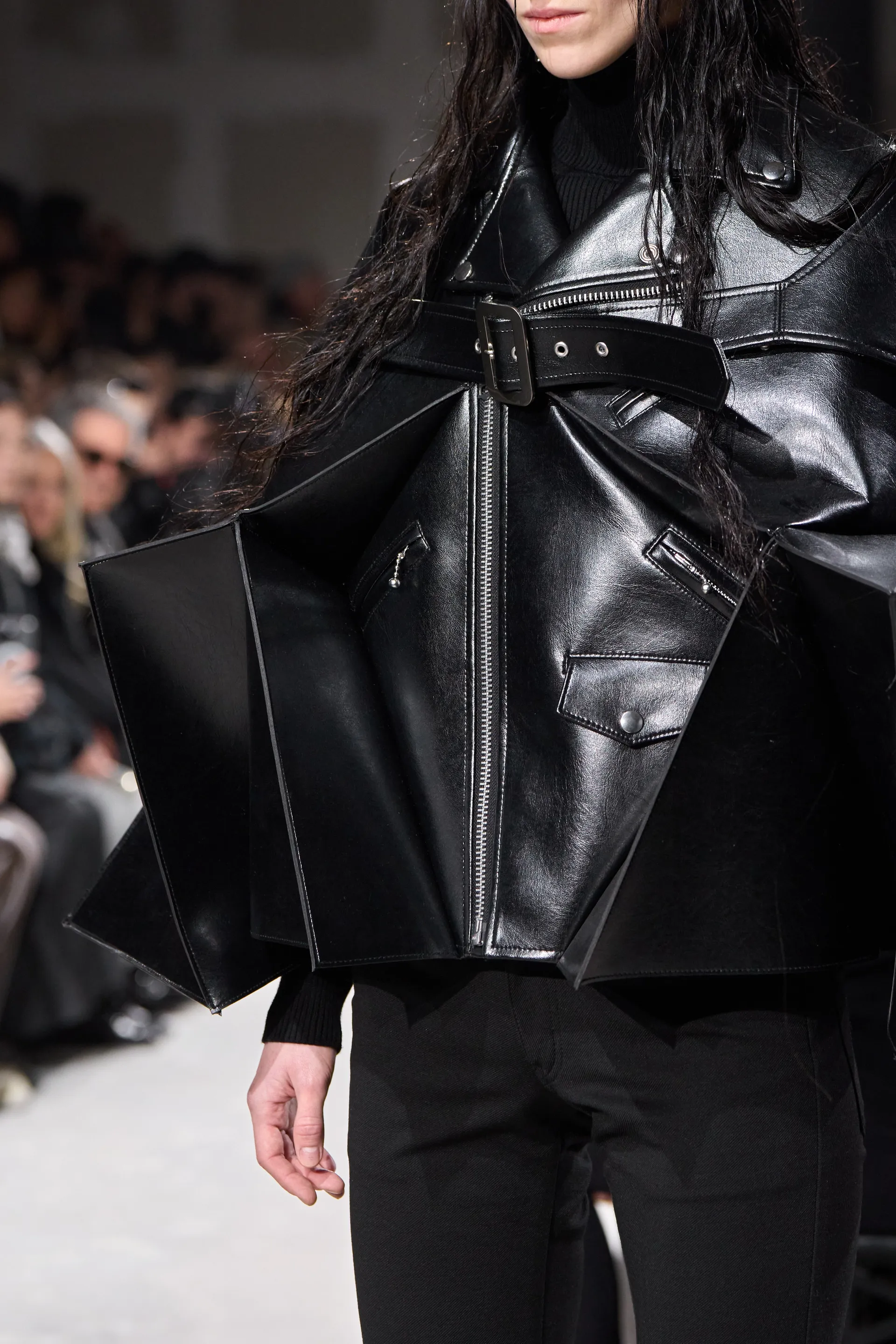
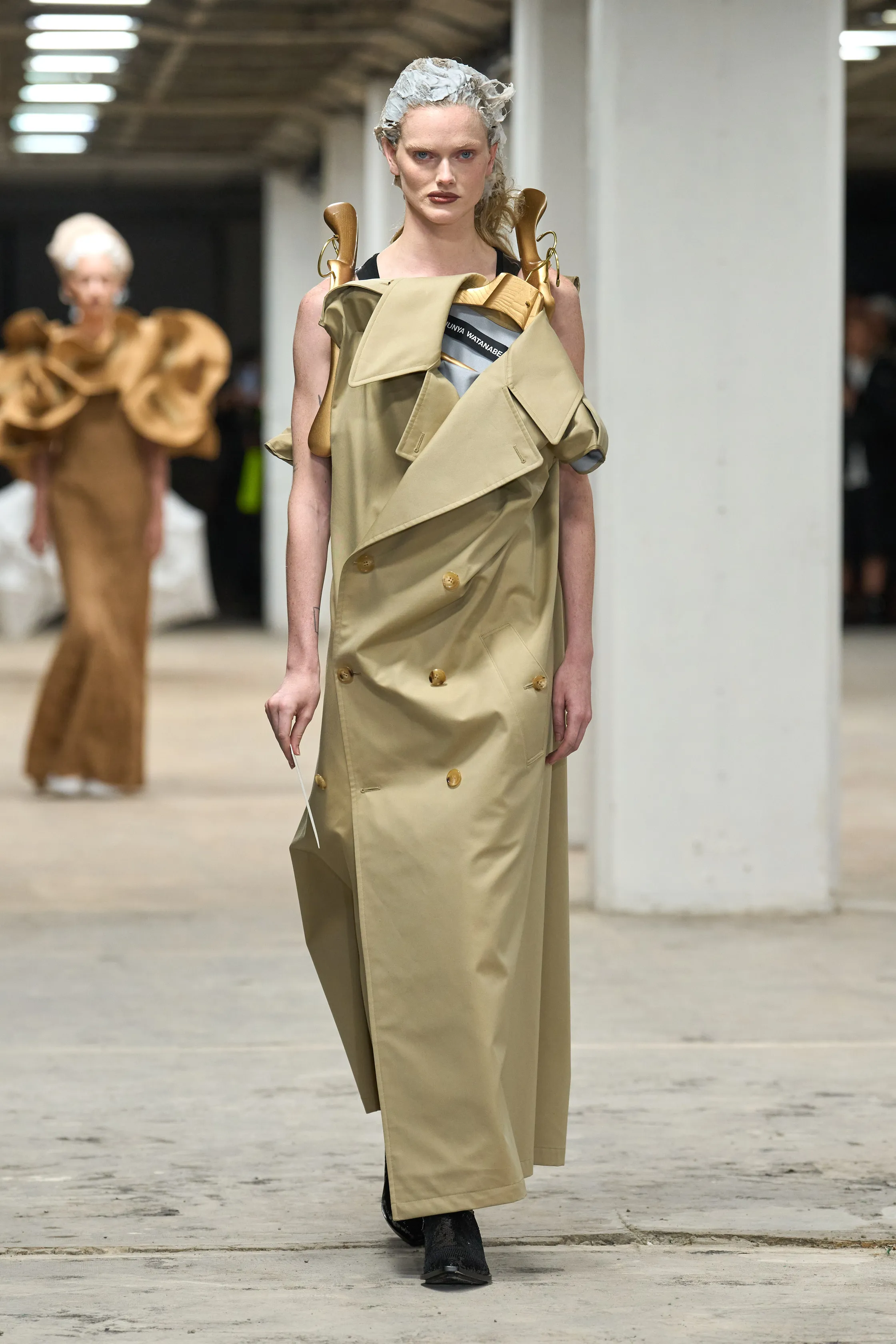
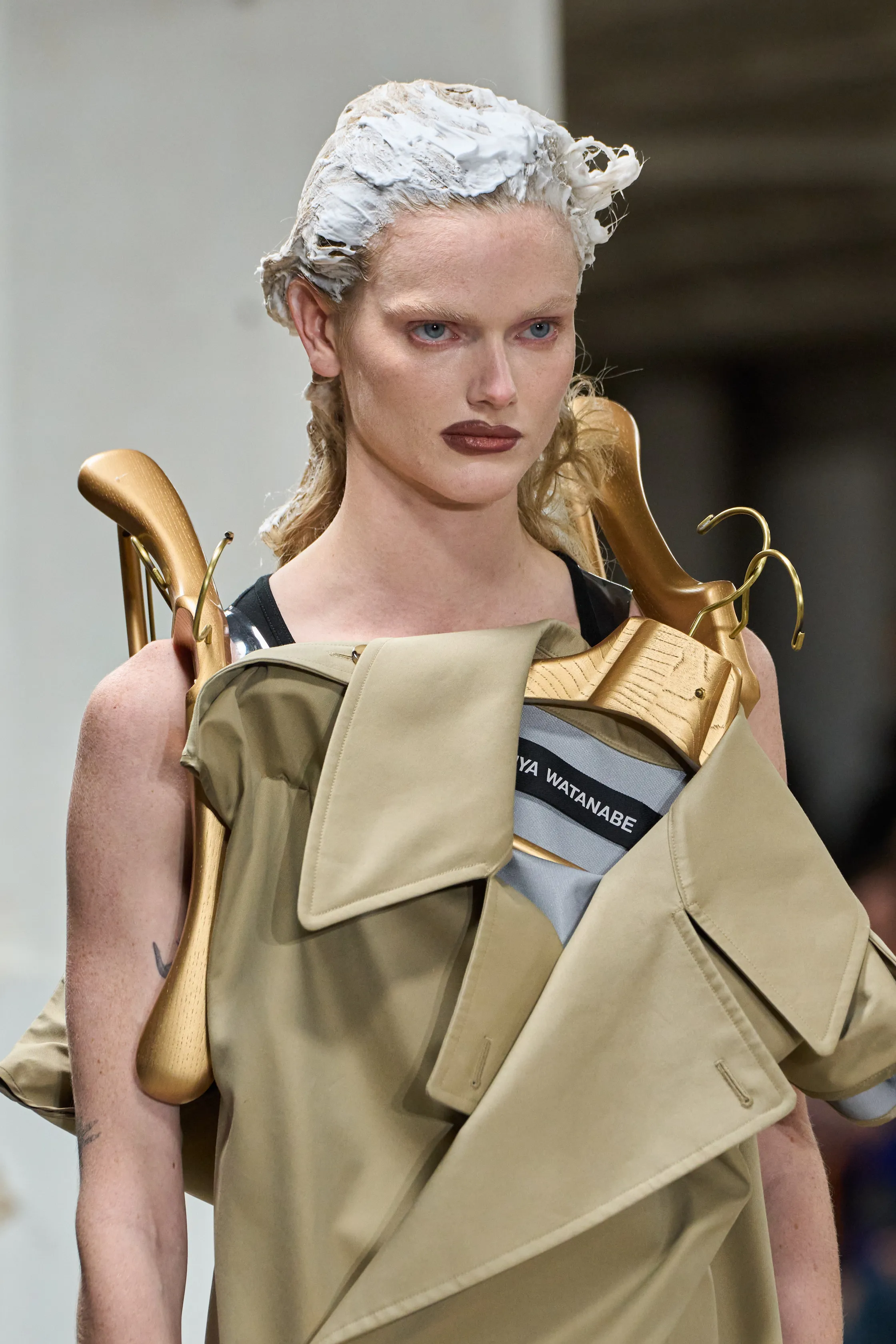
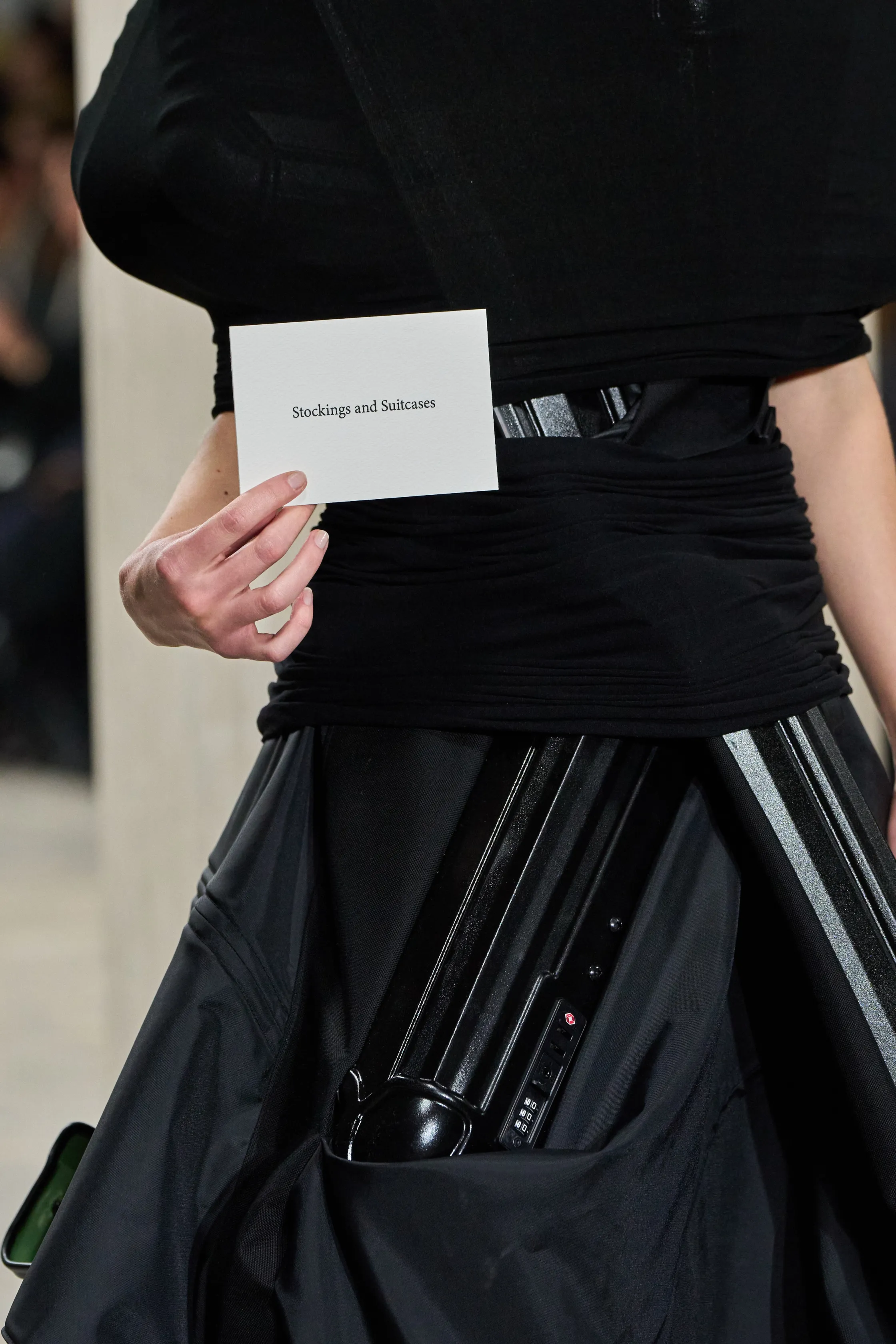
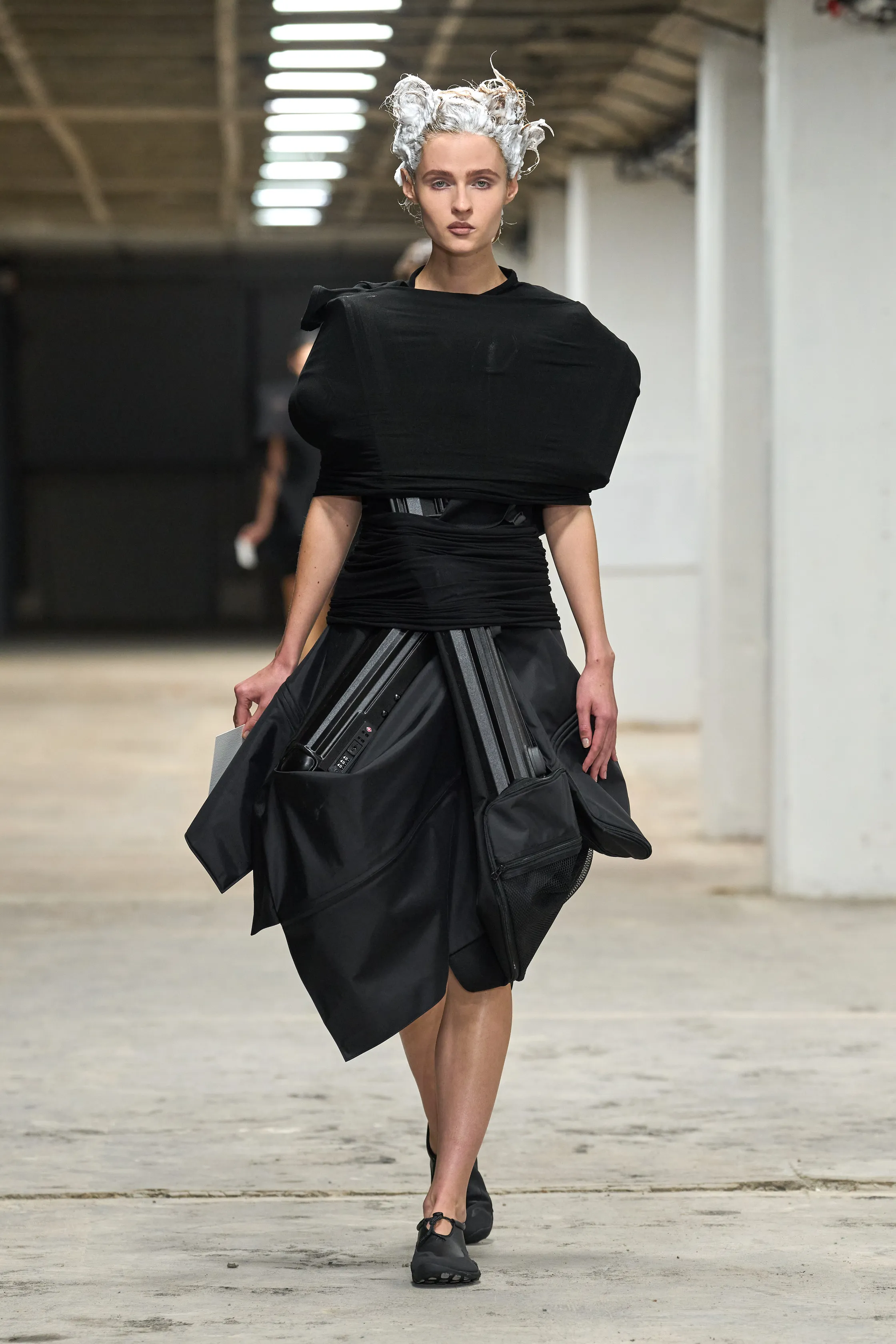
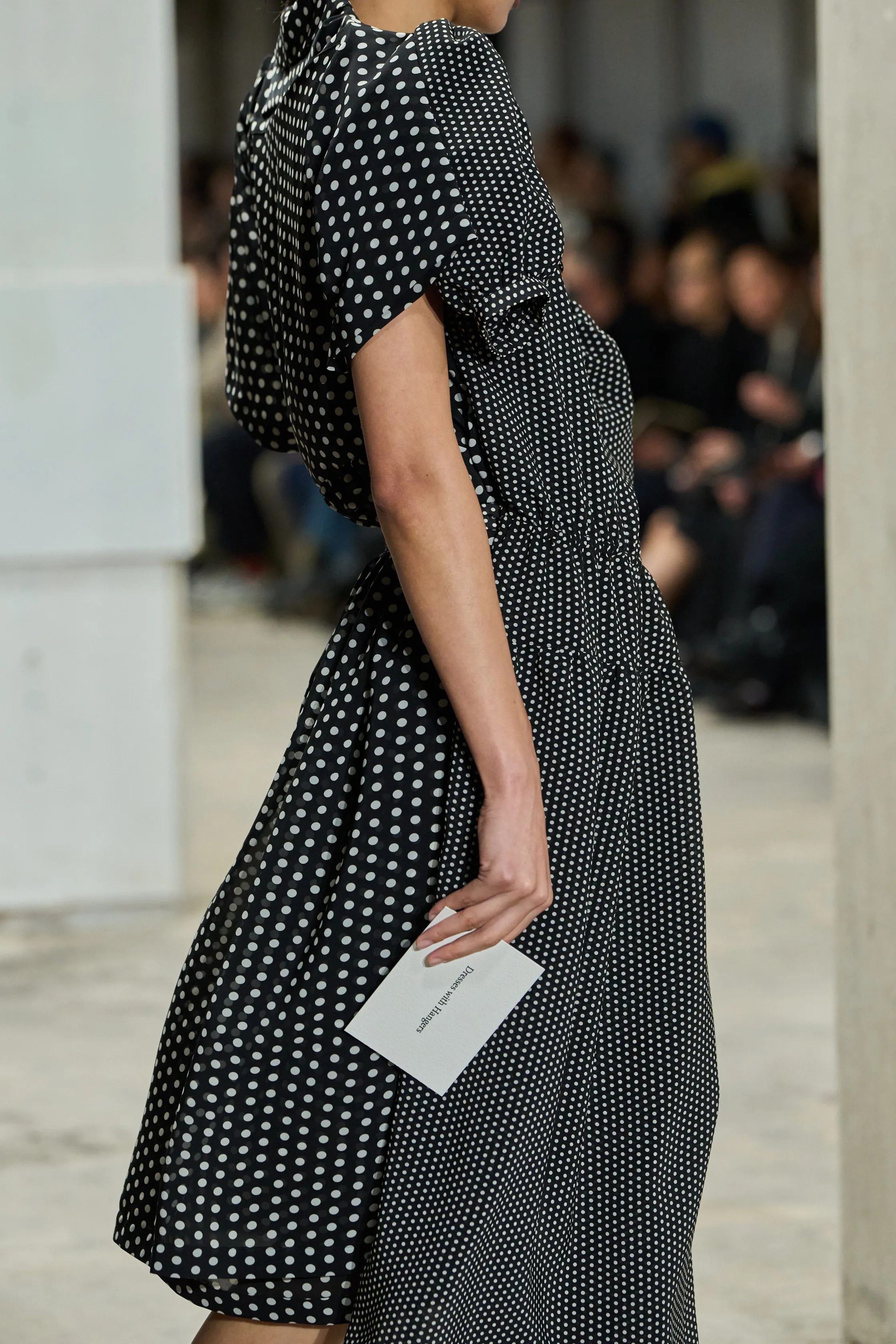
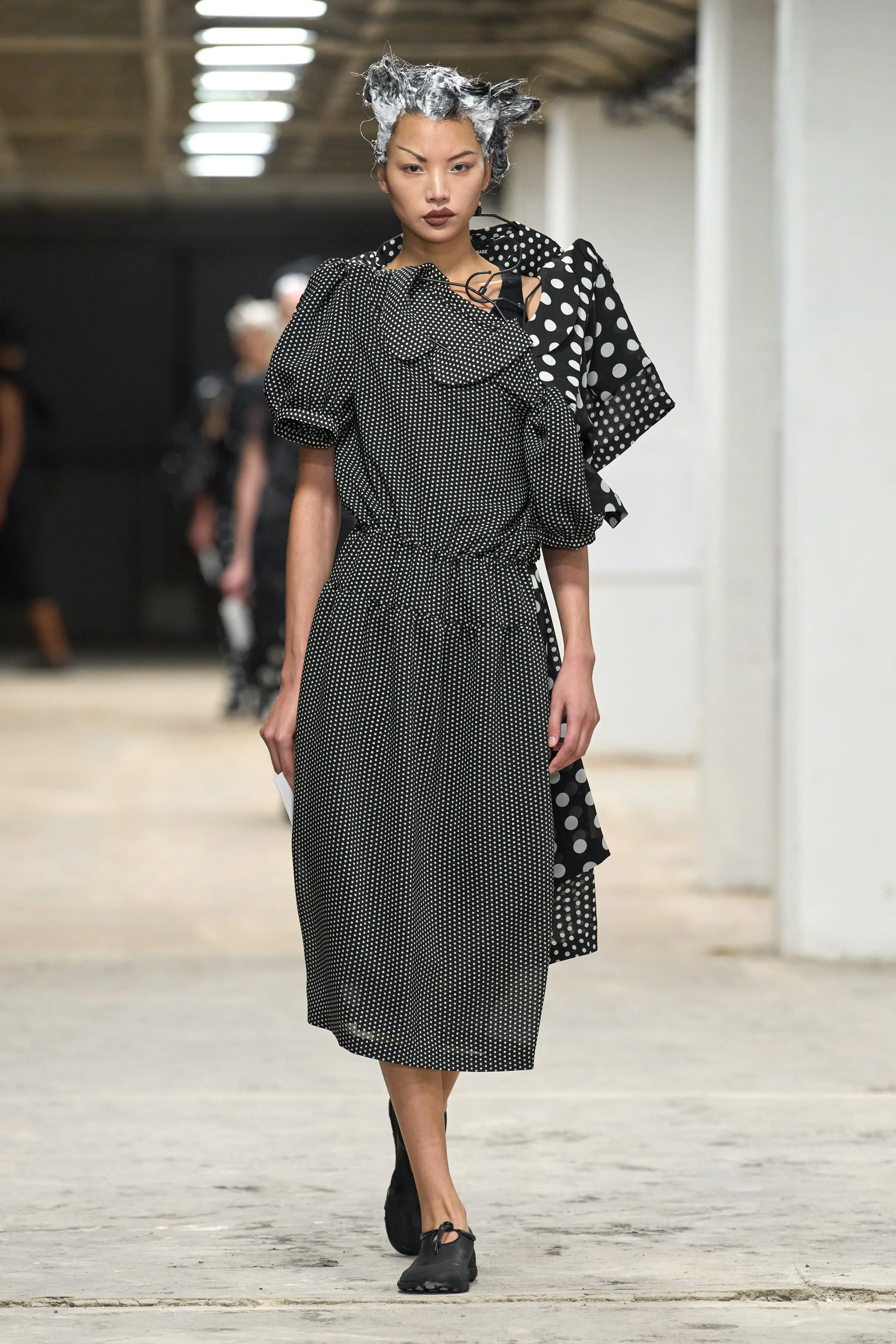
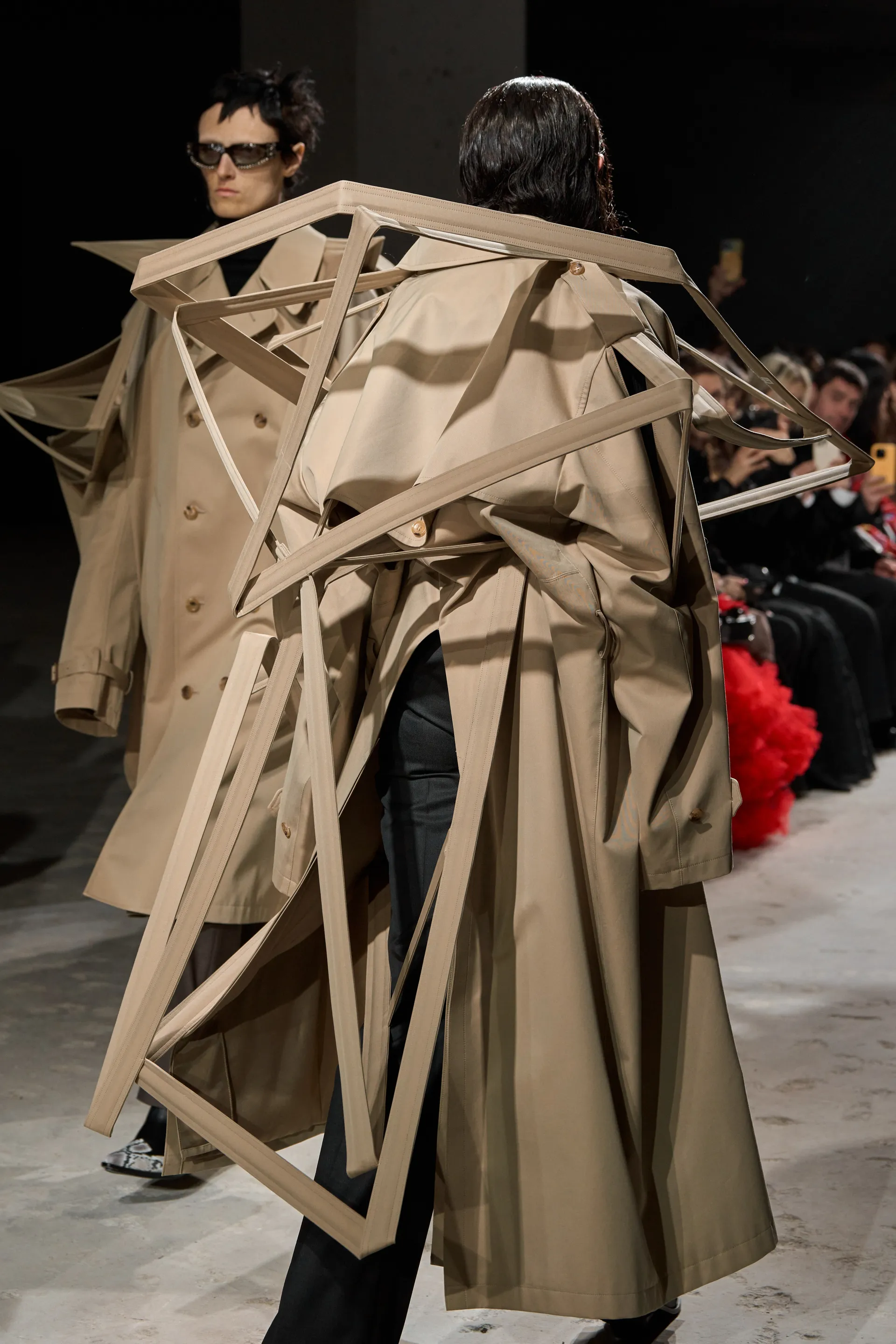
1–2. Junya Watanabe, Spring/Summer 2026. Photo © Dominique Maitre / WWD. © Junya Watanabe.
3–6. Junya Watanabe, Spring/Summer 2025, Look 1 (Silver) and Look 37 (Black). Photo © Dominique Maitre / WWD. © Junya Watanabe.
7. Junya Watanabe, Fall/Winter 2024, Look 2. Photo © Dominique Maitre / WWD. © Junya Watanabe.
8. Detail: Junya Watanabe, Fall/Winter 2024, Look 2. Photo © Dominique Maitre / WWD. © Junya Watanabe.
9–14. Junya Watanabe, Spring/Summer 2026, Look 1 (Trench), Look 26 (Boxing), Look 4 (Dotted). Photo © Dominique Maitre / WWD. © Junya Watanabe.
15. Junya Watanabe, Fall/Winter 2024, Look 27. Photo © Dominique Maitre / WWD. © Junya Watanabe.
16. Cover: Junya Watanabe, Fall/Winter 2024, Look 27. Photo © Dominique Maitre / WWD. © Junya Watanabe.
All images © their respective rights holders.