

The cuff is cold for a second.
Then it is only weight.
Before the eye has decided what the object is, the wrist has already answered it. Silver crosses the body’s surface and the body adjusts — not dramatically, not visibly, but enough. The hand changes its angle. The arm becomes aware of its own edge. What will later be called jewelry has already done something.
Only afterward does the familiar language arrive.
The piece is understated. Quiet. Minimal. It completes the look without overwhelming it. The words feel correct because the object does not announce itself. It sits at the wrist, the throat, the ear, the sternum, with the calm of something already resolved. In a photograph, the reading comes even faster: cuff on table, collar against skin, hoop beside jaw. A small sign of taste. A controlled object. Presence without interruption.
That is the world jewelry often enters now. Still life before body. Close-up before weight. Editorial detail before use. The object becomes legible before it is worn, and understated is one of the easier ways for that legibility to happen. Nothing excessive. Nothing loud. Refinement arrives as image.
But Buhai’s objects begin before that image settles.
Understated describes what remains after the operation is over. The calm is real, but it is late. Accessory is late too. It assumes the body has already become image and that jewelry arrives afterward — a signal, a refinement, a final addition to style. Buhai’s work reverses the order. The object does not complete appearance. It acts before appearance has organized the body.
The wrist is where this becomes clearest.
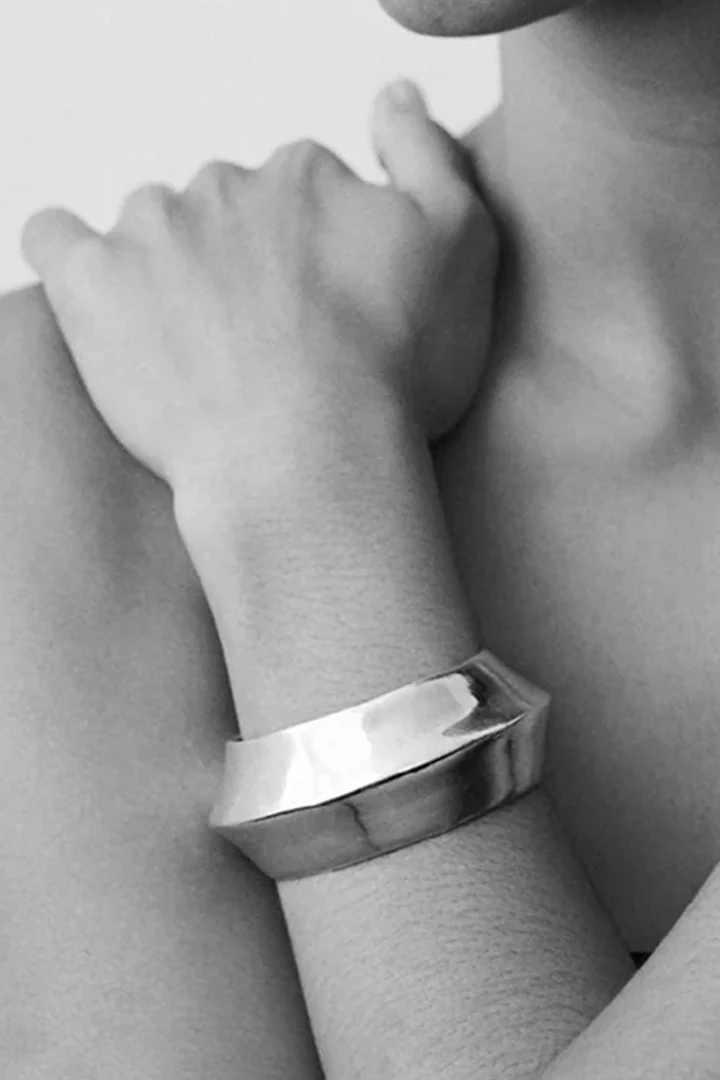
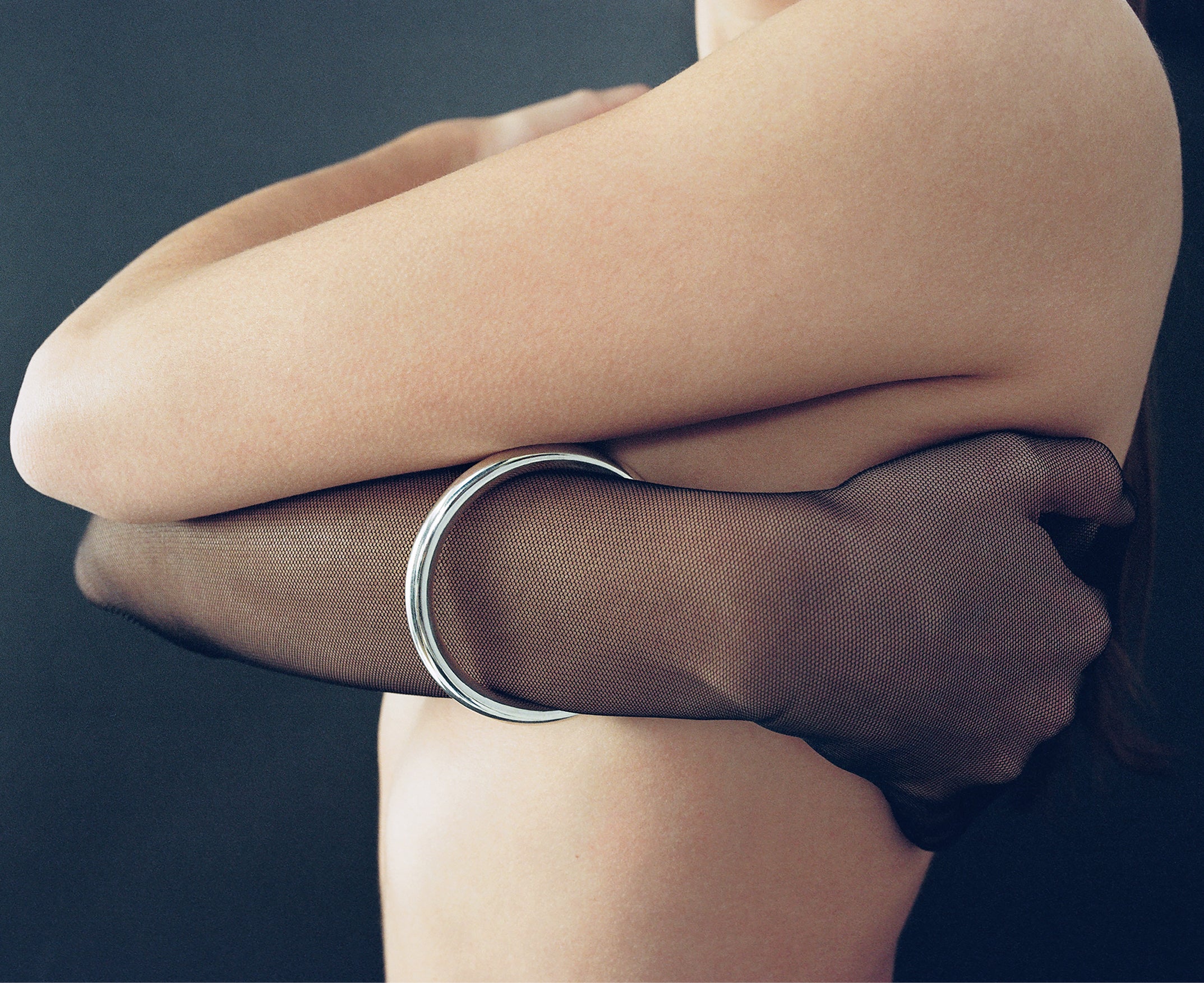
A cuff does not sit on the body as a sign. It organizes mass around a passage. The inner diameter — measured as precisely as the outer — is not a leftover dimension. It is the decision. Remove the opening and the form becomes something else entirely. The wrist passes through a form whose void is as active as its mass.
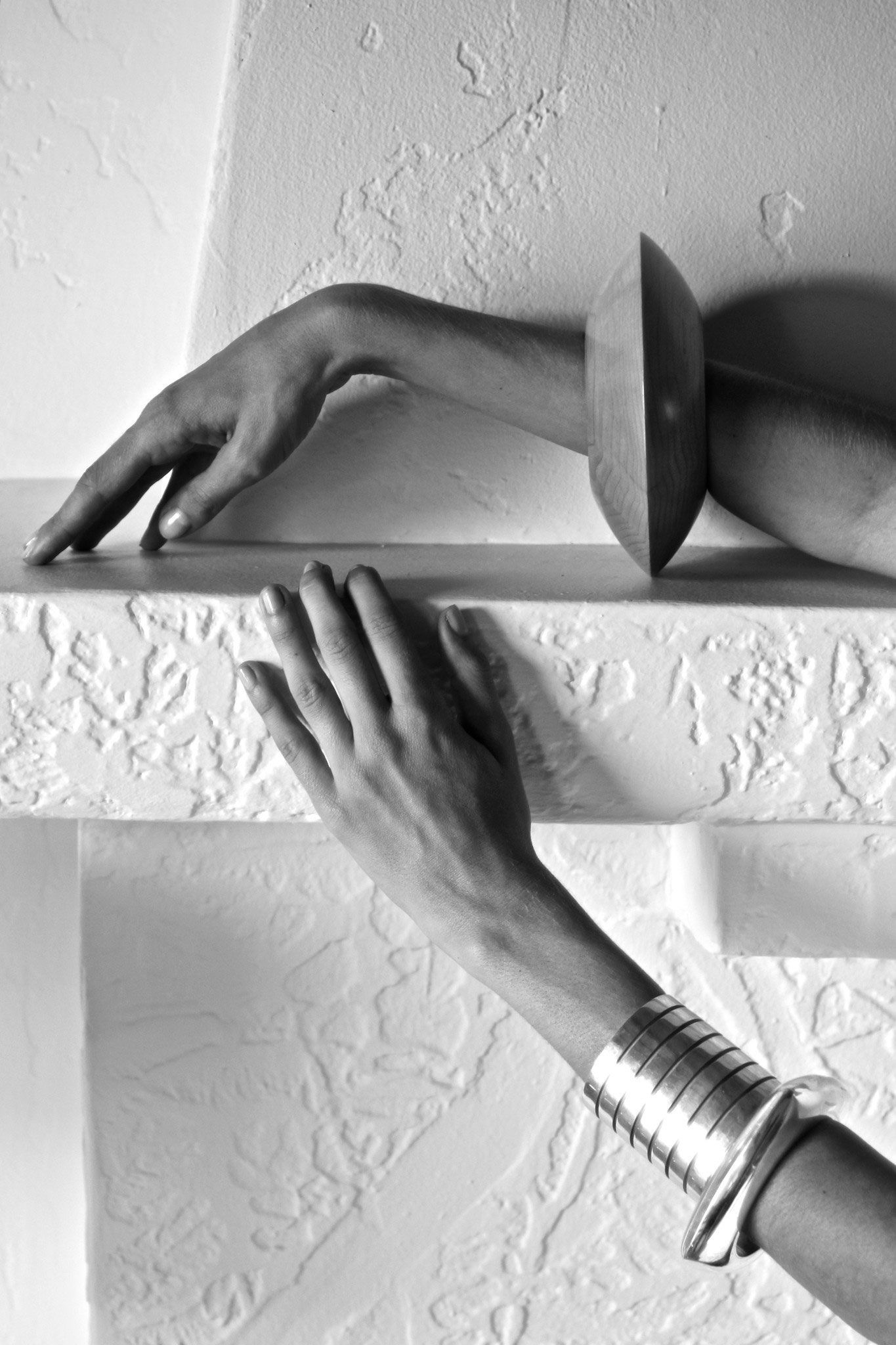
The Hepworth bangle does not simply circle the wrist. It holds an oval relation around it, maintaining distance rather than collapsing into grip. The space inside the object is not empty. It is the condition that lets the object work. The wrist is not embellished. It is given an axis.
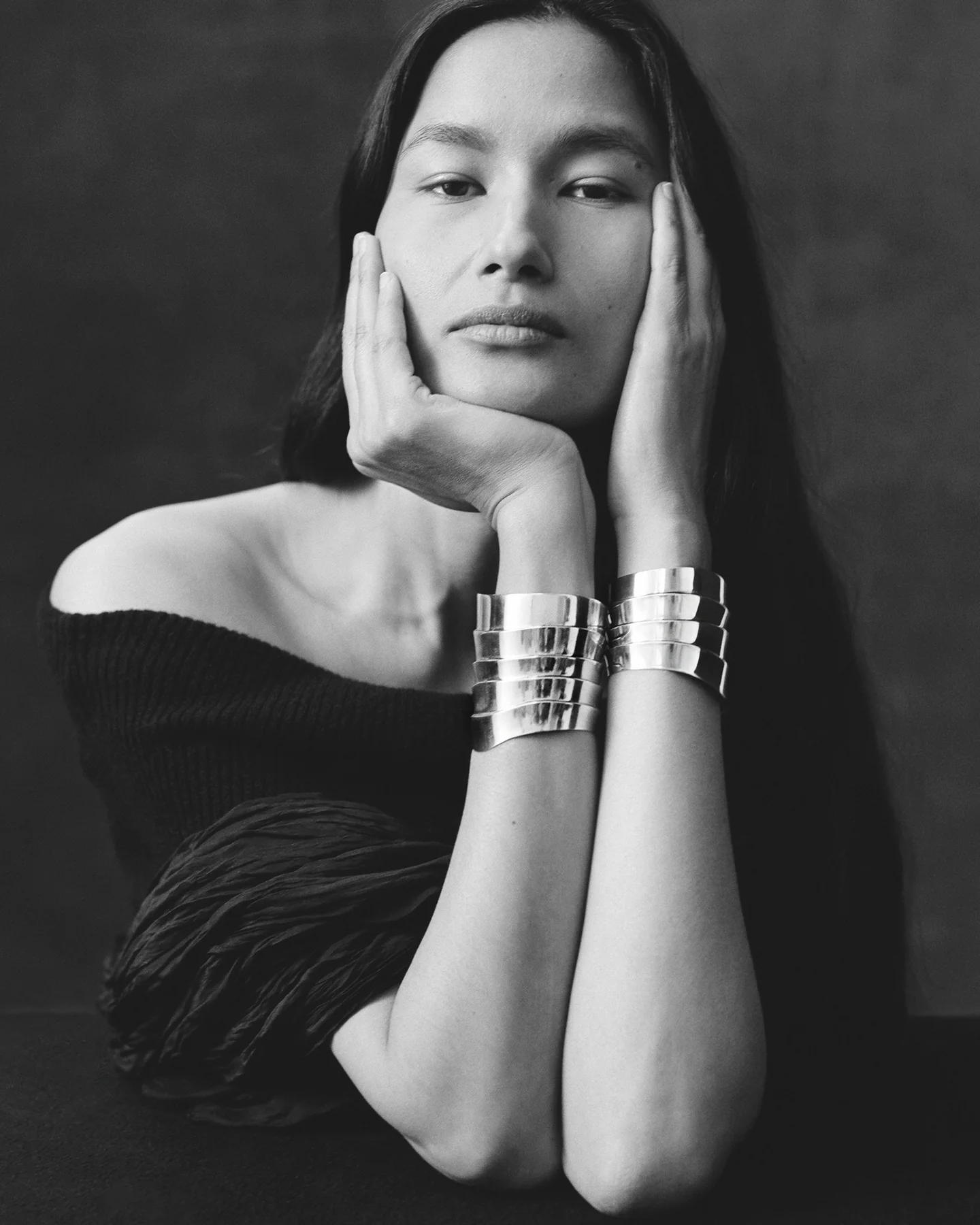
A photograph can show the outside of the cuff: polish, scale, curve, restraint. It cannot show the wrist passing through the void, or the slight correction that follows when weight arrives. The dimension that matters most is the one most easily lost when jewelry is treated as image first.
Vivianna Torun Bülow-Hübe’s phrase returns here with force: pour être, pas pour paraître — for being, not appearing to be. Not a slogan, but an instruction. Jewelry can operate at the body, or it can operate as image. The two are not the same task. Buhai inherits that problem at a moment when appearance has nearly consumed it.
At the ear, the oblong hoop refuses the circular order that keeps the ear at the center of its own ornament. The ear becomes the attachment point, not the terminus. The object extends past the body’s edge. Something in the face changes at the jaw. The face has not been decorated. Its boundary has been redrawn.
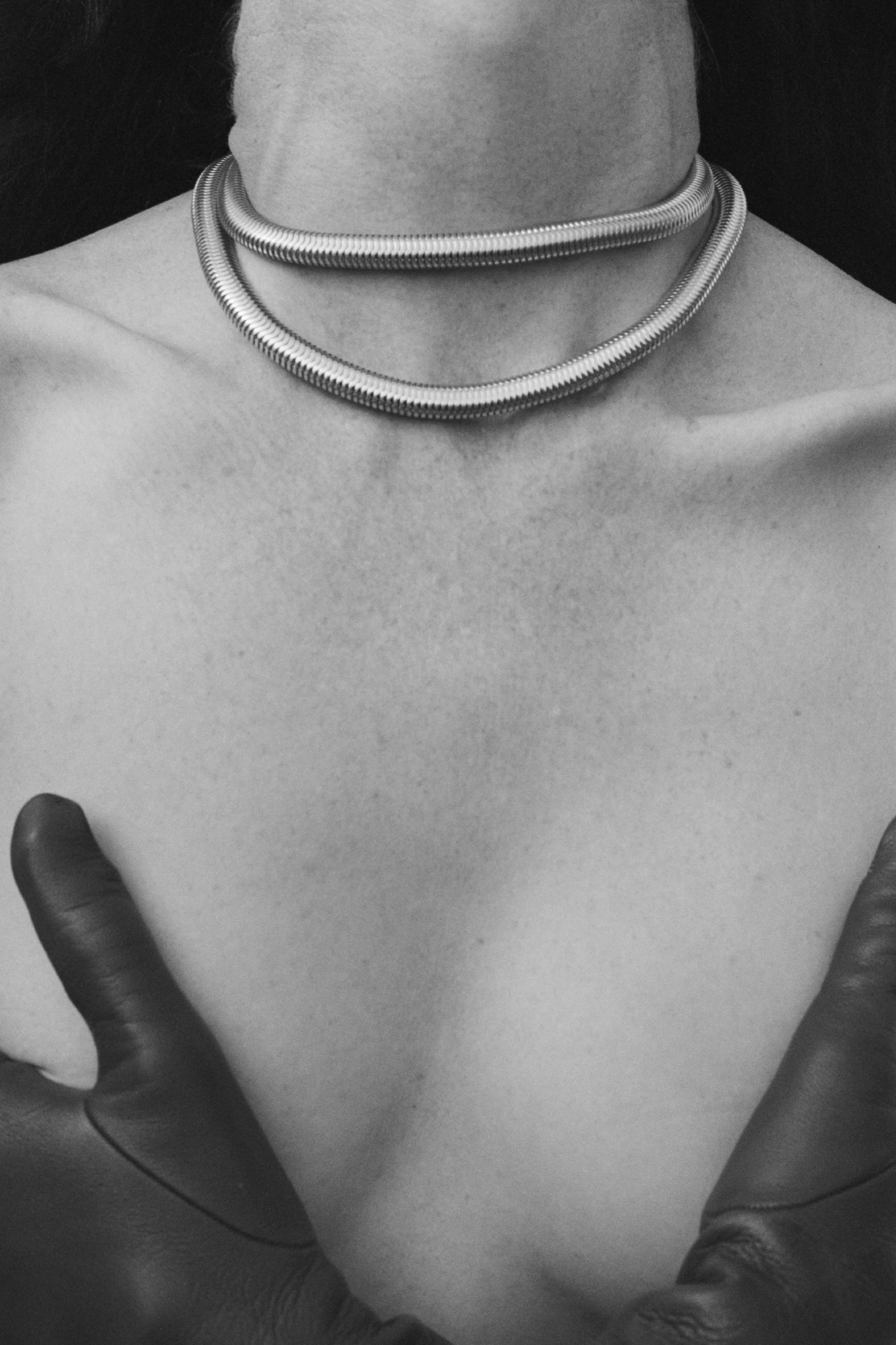
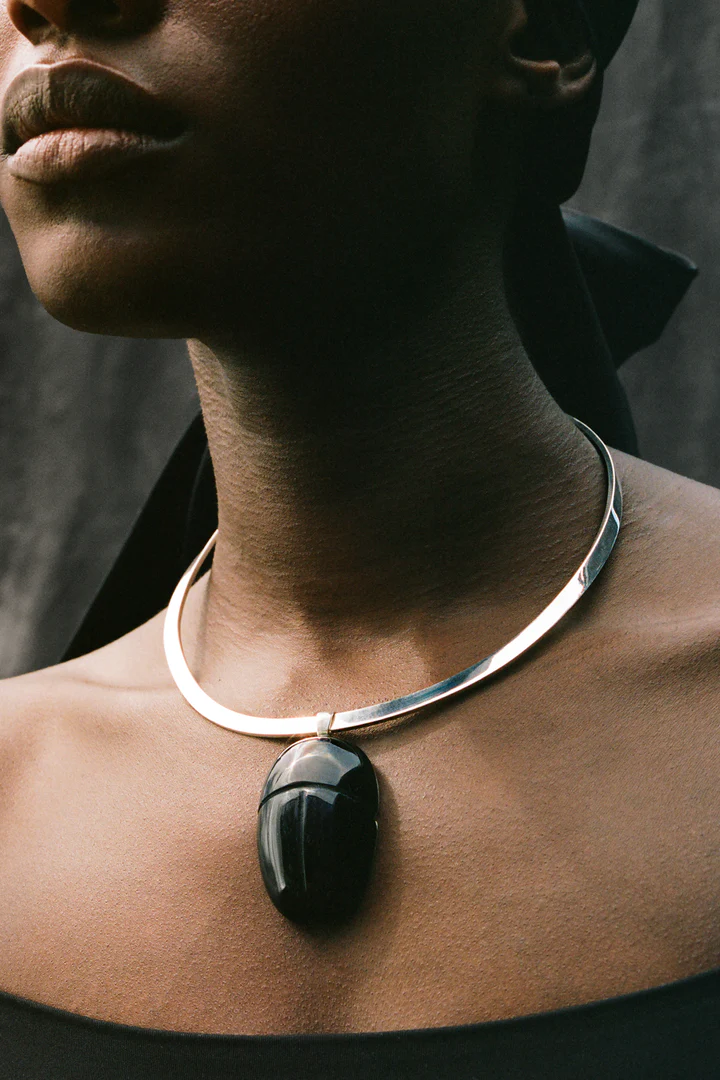
At the throat, the object stops behaving like a line and becomes a limit. The collar does not drape or suggest. It holds. A ring of volume sits at the throat-to-chest transition and defines a boundary the body did not previously have. In the Ebony Stone collar, that boundary is made without brightness. The material refuses the usual flash of silver, so the effect cannot depend on light catching the surface. The neck, shoulder, and space above the body are reorganized without visual drama.
At the sternum, the object becomes weight before it becomes symbol. The egg pendant appears almost neutral, even overfamiliar, but once worn it stops behaving like image and becomes gravity. It anchors the body at its center. The wearer feels it before she sees it. What matters is not what the egg might mean, but what a suspended form does when it steadies the body around its own weight.
The wrist has been given a passage. The ear has become an edge. The throat has become a boundary. The sternum has found a center. The body has not been decorated. It has been made more exact.
Symbol is too heavy a word for this, and decoration too late. Buhai’s pieces do not narrate the body. They recalibrate it. The object does not speak on behalf of the wearer. It changes the terms by which the wearer occupies space.
The history behind this does not move toward more display. It preserves a question that contemporary styling language has almost forgotten.
Georg Jensen made silver sufficient without precious stones, moving value away from brilliance and into surface, proportion, and hand. Torun pressed that sufficiency closer to the body, where jewelry had to move with the wearer rather than stand apart as status. Calder opened the body as a site where form could happen, though the event remained visible. Pineda gave silver architectural weight, allowing mass and negative space to resolve at the body through exact relation.
Buhai comes after these possibilities and removes what still announces itself. Jensen without ornament. Torun without declaration. Calder without performance. Pineda without boldness. What remains is the minimum form necessary for presence: weight, curve, void, boundary, proportion.
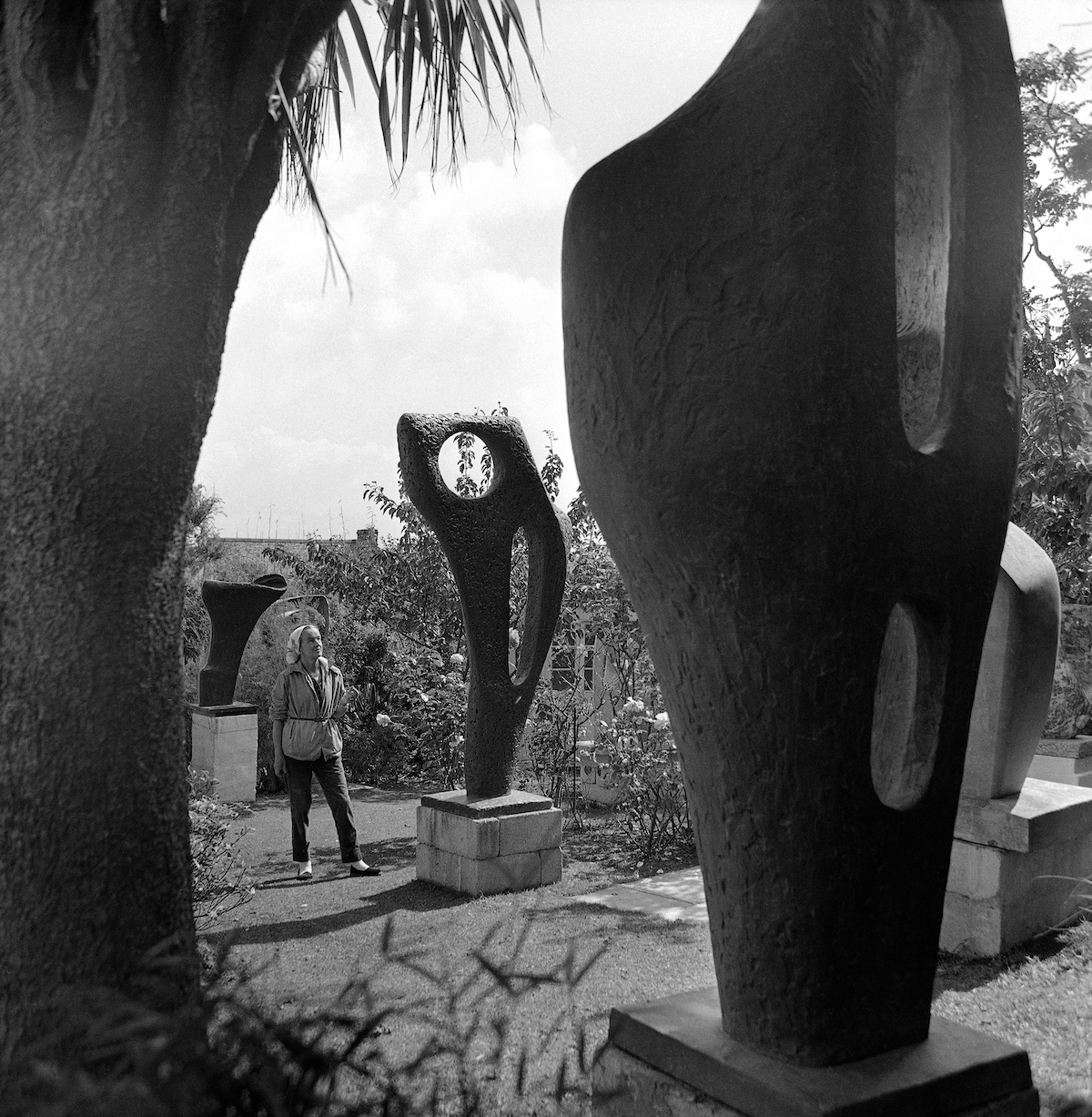
Sculpture is close but not exact. Buhai’s jewelry shares sculpture’s concern with mass, void, and spatial relation, but sculpture is usually understood from the outside, as an object placed before a viewer. Buhai’s objects begin closer than that. They operate at the body site. They are not first looked at. They are first worn, felt, adjusted to.
The collaboration with Lemaire makes sense for this reason. Lemaire’s clothes are built around the body’s self-sense — movement, weight, fabric, adjustment — rather than image alone. Buhai’s jewelry can live inside that system because it operates by the same law. It does not complete the outfit as accent. It calibrates the body within it.
Understated belongs to the object after it has entered appearance — once it has settled into a wardrobe, once its quietness can be taken for refinement. What it misses is the earlier operation: the weight that reaches the wrist before the eye has resolved the cuff as form, the line of the jaw redrawn by the hoop, the throat given a boundary before the collar is understood as style, the sternum steadied before the pendant becomes image.
Calibration is the word because the change is exact. Not decoration. Not symbolism. Not modulation for effect. A body site is met, measured, and slightly reset.
The weight is felt. The silhouette shifts. The throat finds a boundary it did not previously have. Something in the body becomes more gathered, harder to articulate because it happened without drama and without announcement. The object does not press outward. It does not perform restraint. It acts, at a specific site, with a specific weight and proportion, and the body — without being asked — responds.
Only later does the eye organize these changes as jewelry, style, restraint, taste.
The object was never simply added.
It arrived first.
The body answered.
Appearance followed.
In Buhai’s work, calibration is not a metaphor for restraint. It is the way an object adjusts a body site before it becomes style. A cuff changes the wrist’s passage through space. A hoop extends the edge of the face. A collar gives the throat a boundary. A pendant anchors the sternum.
The jewelry does not decorate an already finished image. It sets weight, distance, and proportion so the body reads differently afterward.
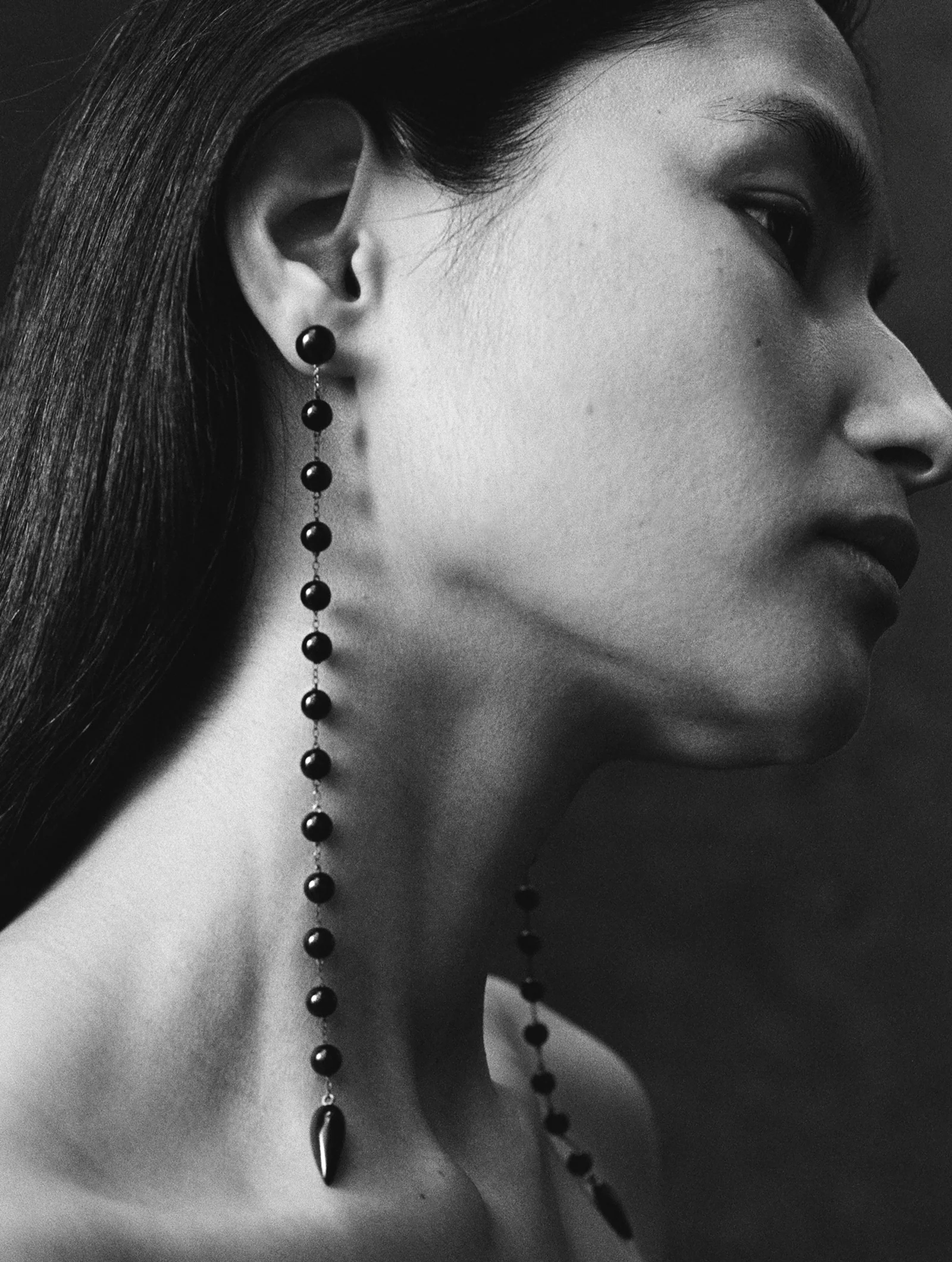
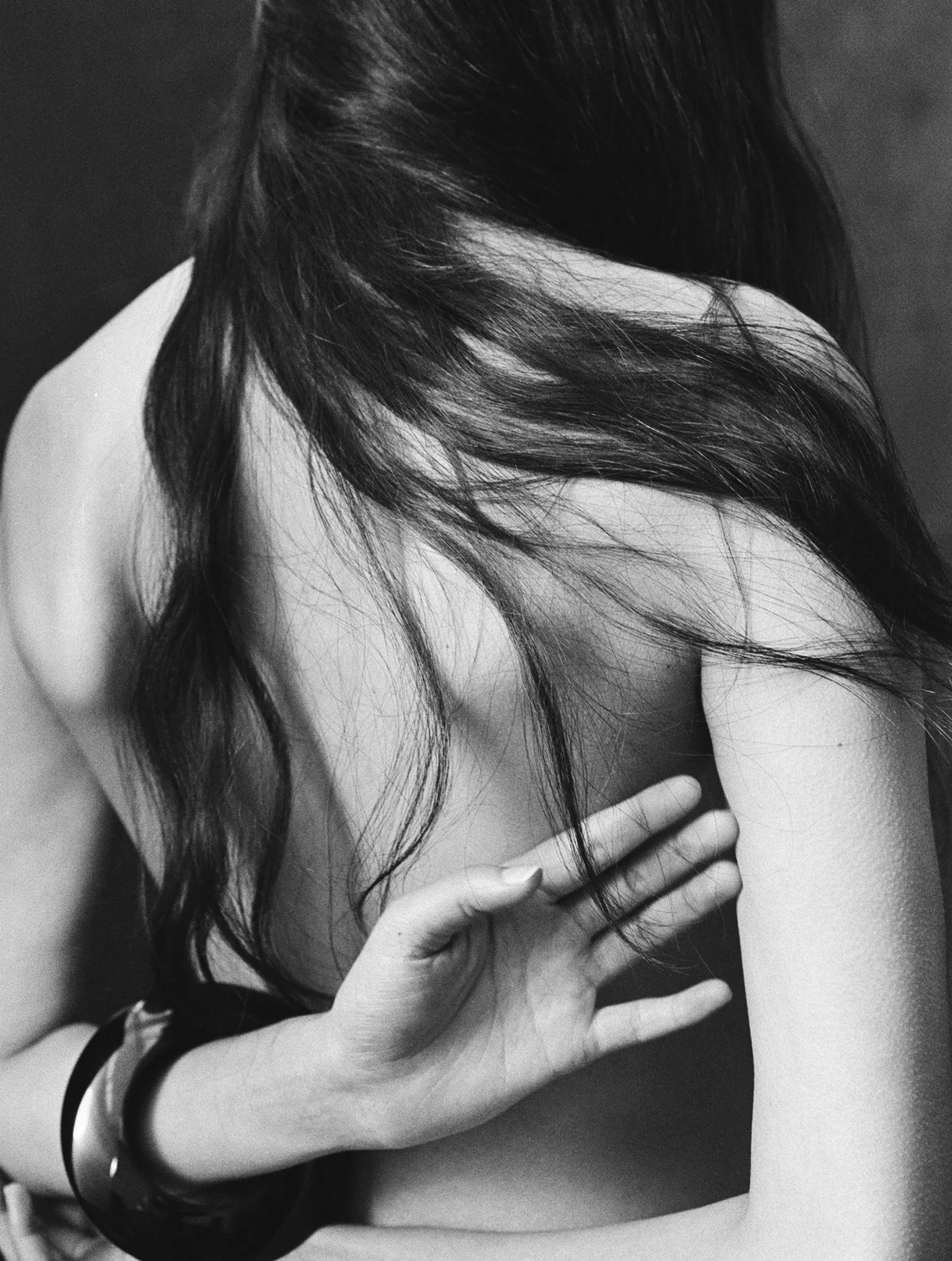
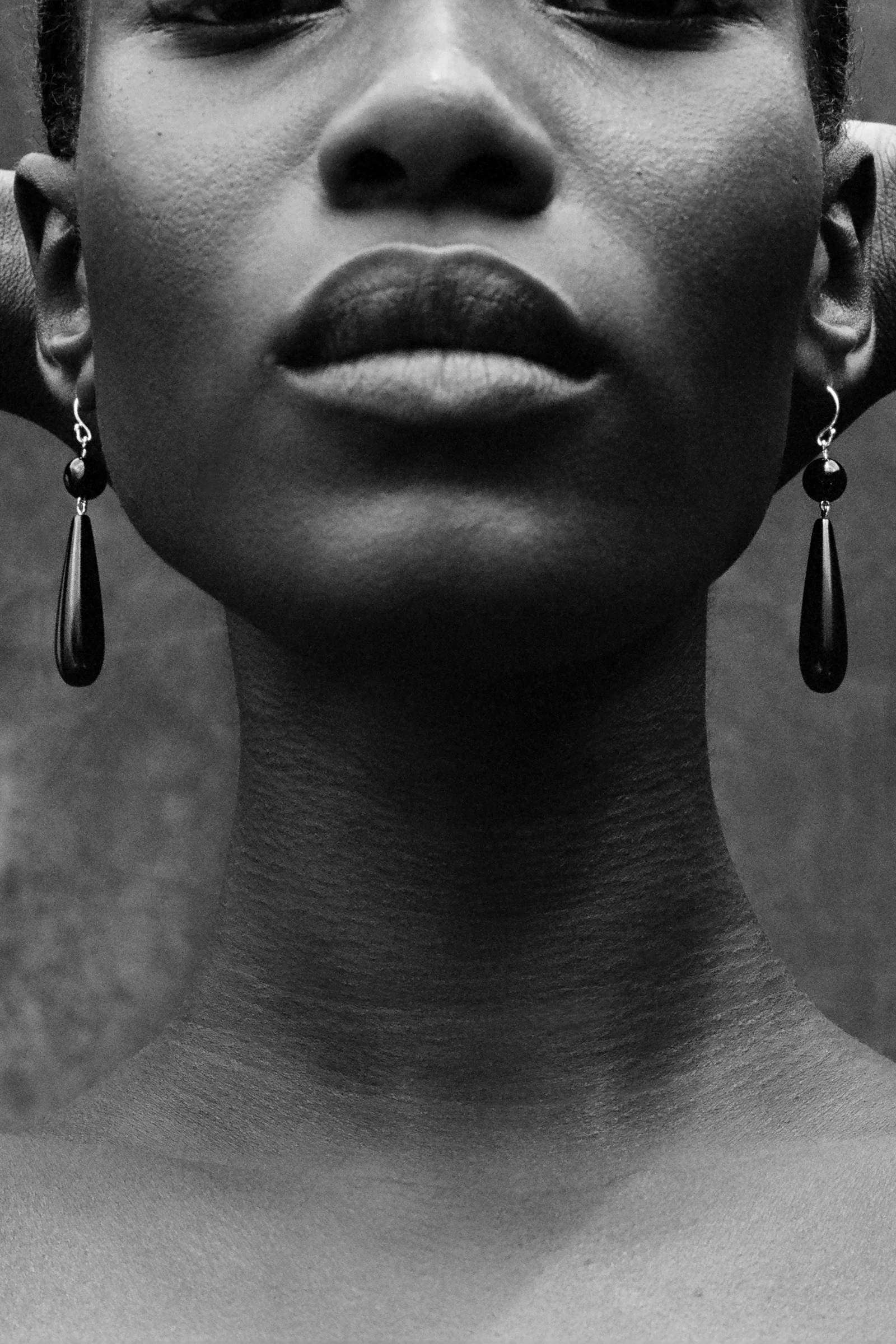
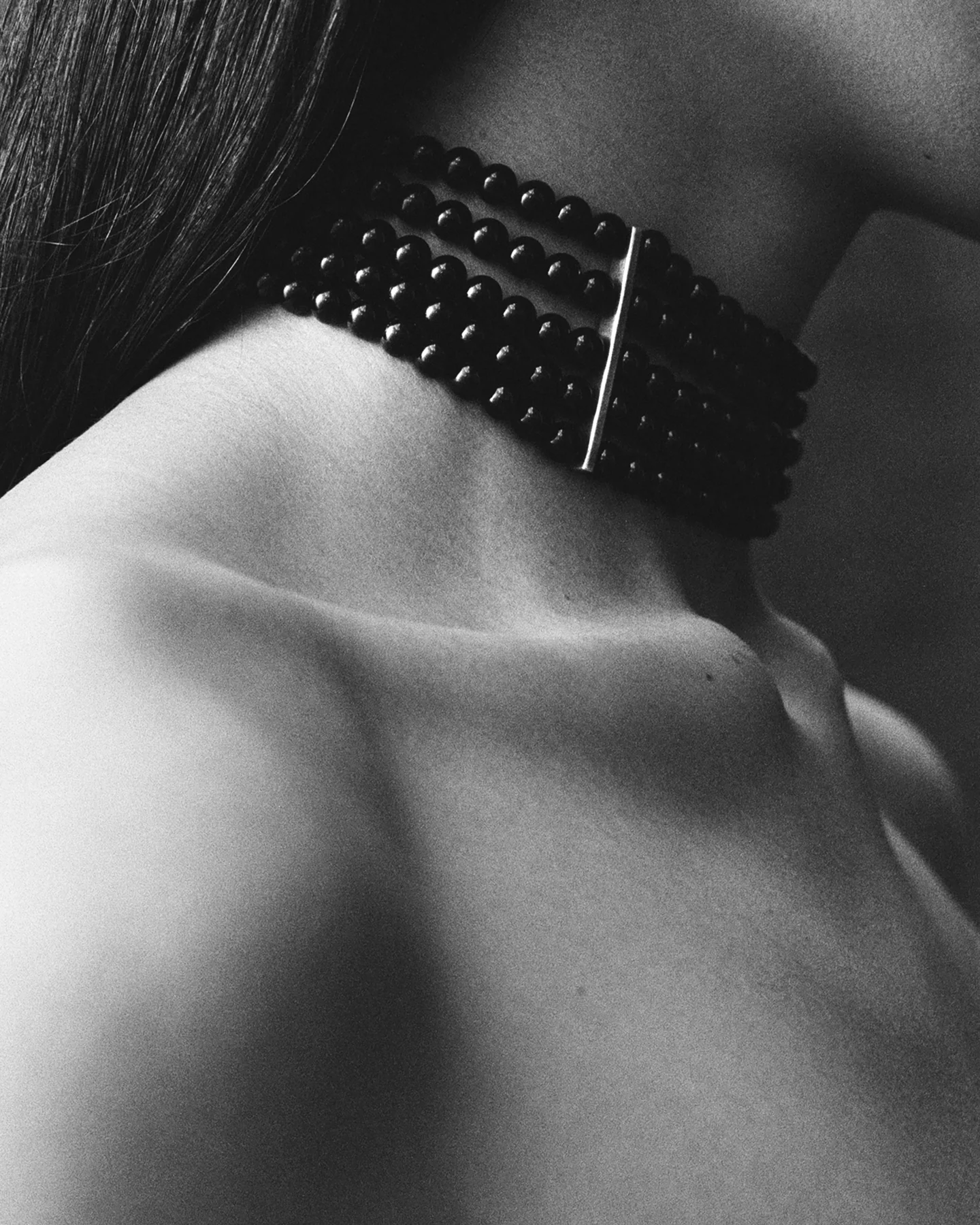
Sophie Buhai, Long Phoenician Earrings in Onyx, FW25Photo: Gillian Garcia© Sophie Buhai
Sophie Buhai, Onyx Pyramid Bangle, FW25Photo: Gillian Garcia© Sophie Buhai
Sophie Buhai, Lilian Choker, FW25Photo: Gillian Garcia© Sophie Buhai
Sophie Buhai, Deren Cuff, SS23Photo: Agnes Lloyd-Platt© Sophie Buhai
Sophie Buhai, Scarab Pendant in Onyx, Resort 2026Photo: Agnes Lloyd-Platt© Sophie Buhai
Sophie Buhai, Classic Circle Bangle, Permanent CollectionPhoto: Agnes Lloyd-Platt© Sophie Buhai
Sophie Buhai, Medium Wave Cuff, FW25Photo: Gillian Garcia© Sophie Buhai
Sophie Buhai, Hepworth Bangle / Katia Cuff, SS15Photo: Agnes Lloyd-Platt© Sophie Buhai
All images © their respective rights holders.
Image rights & attribution →