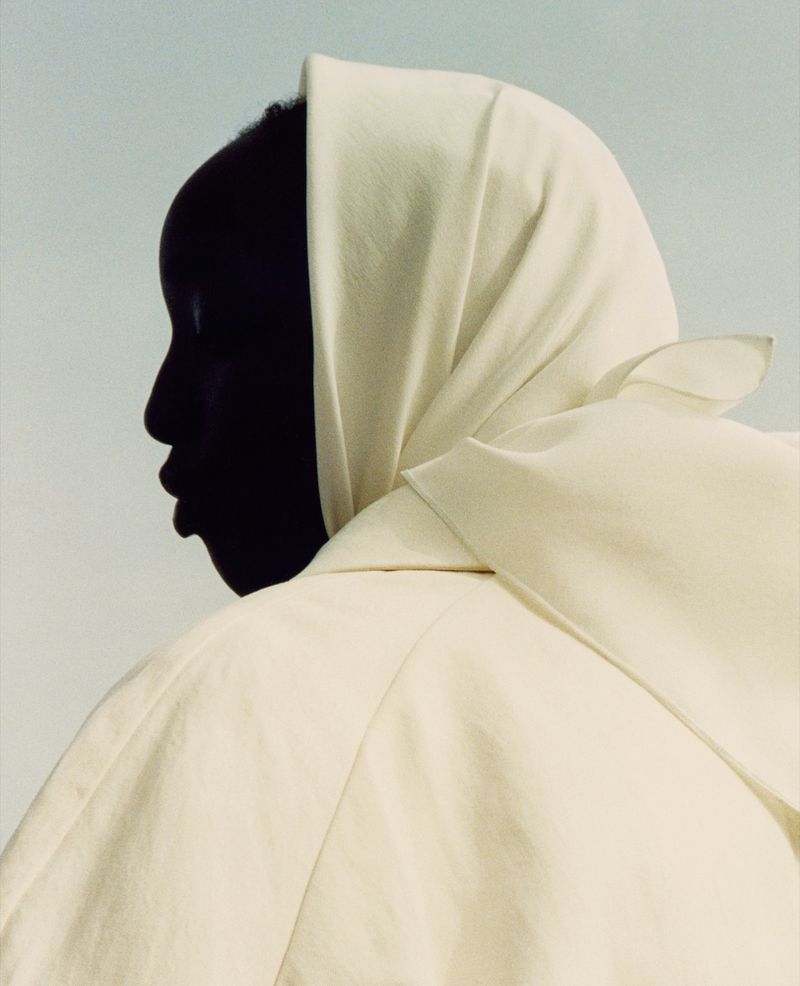


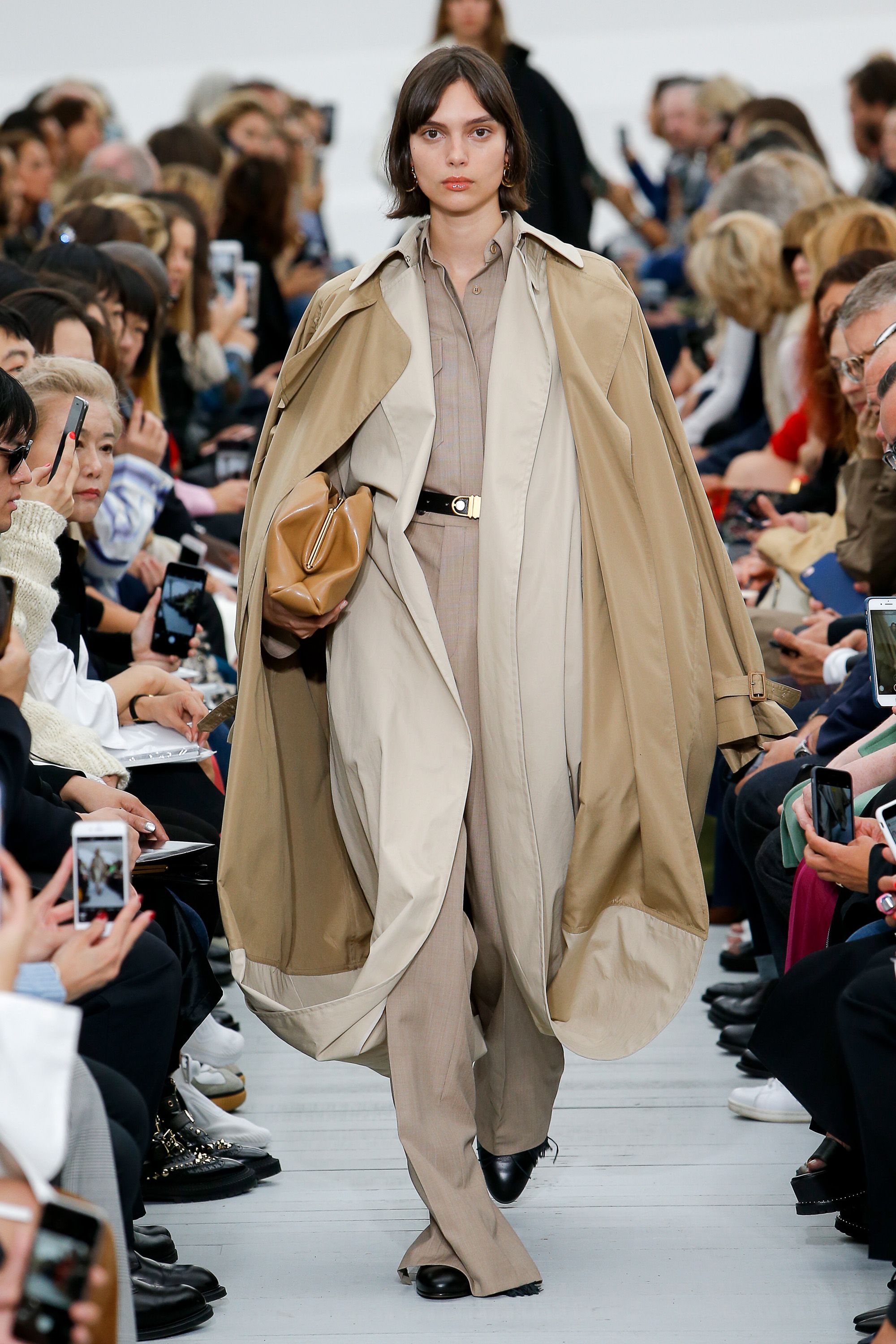
There is a particular pleasure in recognizing intelligence immediately. The palette arrives already edited — camel, black, stone, the white of a starched collar — and nothing within it competes for attention. The line is exact without being severe. The garment is held in such considered control that looking at it can feel like looking at a decision already made.
This is clothing that rewards the eye that knows what it is seeing. Others might pass it by. You do not. You recognize the thought behind it: pared-back precision, certainty where ornament used to be. This is what became known as intelligent minimalism, and the name felt deserved.
And yet it does not always settle at once. You look again — not to confirm the first reading, but because something remains slightly out of place. A shoulder sits further out than expected. A hem falls longer at the back than the front. The line is still precise, the palette still controlled, but the form does not close entirely around the body.
It holds its position, and the body adjusts within it.
The clarity remains, but it is no longer immediate. It asks to be seen again. Something has been seen correctly, and still not fully seen.
Then another word arrives. Minimalism. The term brings with it a longer history, a more serious discipline, the promise that the work can be placed beyond fashion entirely. Reduction becomes formal. Restraint becomes principled. The work appears to resolve again, this time not as style but as position.
The term flatters the reader and protects the work from being seen. It names the pleasure of recognizing intelligence and leaves the structure beneath it undisturbed. To call the work intelligent credits the eye behind it. To call it minimalist gives it a lineage. Neither names the decision the garment has already made before the body arrives.
Women’s clothing has often been asked to do one of two familiar things: display the body, or disappear into the body’s best line. Philo’s garments do neither. They do not display the body as image, and they do not vanish into fit. They precede the body and wait for it.
Minimalism cannot survive the work itself. A fur sandal stays close to the ground, the surface turning strange while the stance remains exactly the same. Prints, pleats, and overt material contrasts push the surface far beyond anything the term can comfortably hold. If minimalism were the structure, these would be deviations.
They are not.
The body relation remains unchanged. Trousers still extend beyond the body’s line. Jackets still sit away from the shoulder. The garment still establishes its form before the body enters it. What changes is what can be seen. What remains is how the body is made to occupy it.
This condition is there from the beginning, even when it was read as taste. Garments appear straightforward — a shirt, a skirt, a coat — but they do not settle into the body they clothe. A jacket sits slightly away from the shoulder it rests on. Trousers extend beyond the foot, pooling without resolving the line. The form is simple, but it does not complete itself in a single view.
Later the proportions push further. Shoulders slope outward. Trousers widen and lengthen. The line is not exaggeration for its own sake. It is a way of establishing a form the body must enter and hold. What appears reduced is already doing something more exacting: setting the terms before the body arrives.
Eventually the structure no longer needs to be read into the work. It is shown.
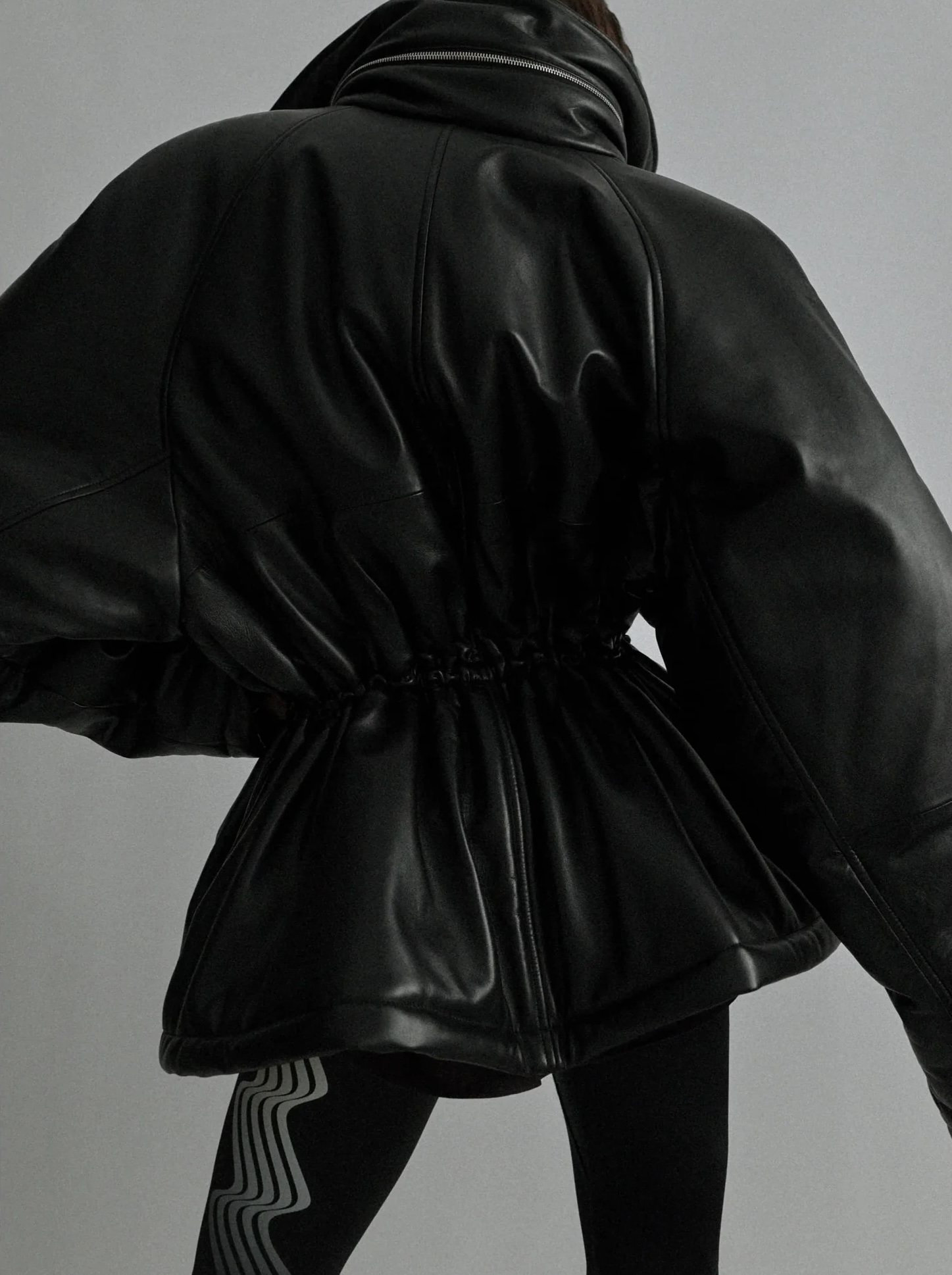
A coat is held at the shoulder and released outward, its volume carried rather than worn, so the body sits within it without determining its shape. Elsewhere, two coats are joined together, one enclosing the body, the other extending beside it, a second form attached but not occupied. Closures are turned outward. Seams are brought forward. The organizing logic of the garment appears on its surface.
The body no longer completes the garment. It stabilizes it.
What had been embedded across the work becomes explicit here: the structure is established first, and everything else follows from it.
You do not usually look for the governing structure of a practice in a bag. You look for it in a silhouette, a collection large enough to announce itself. But here the object makes the system easier to see because it has nowhere to hide.
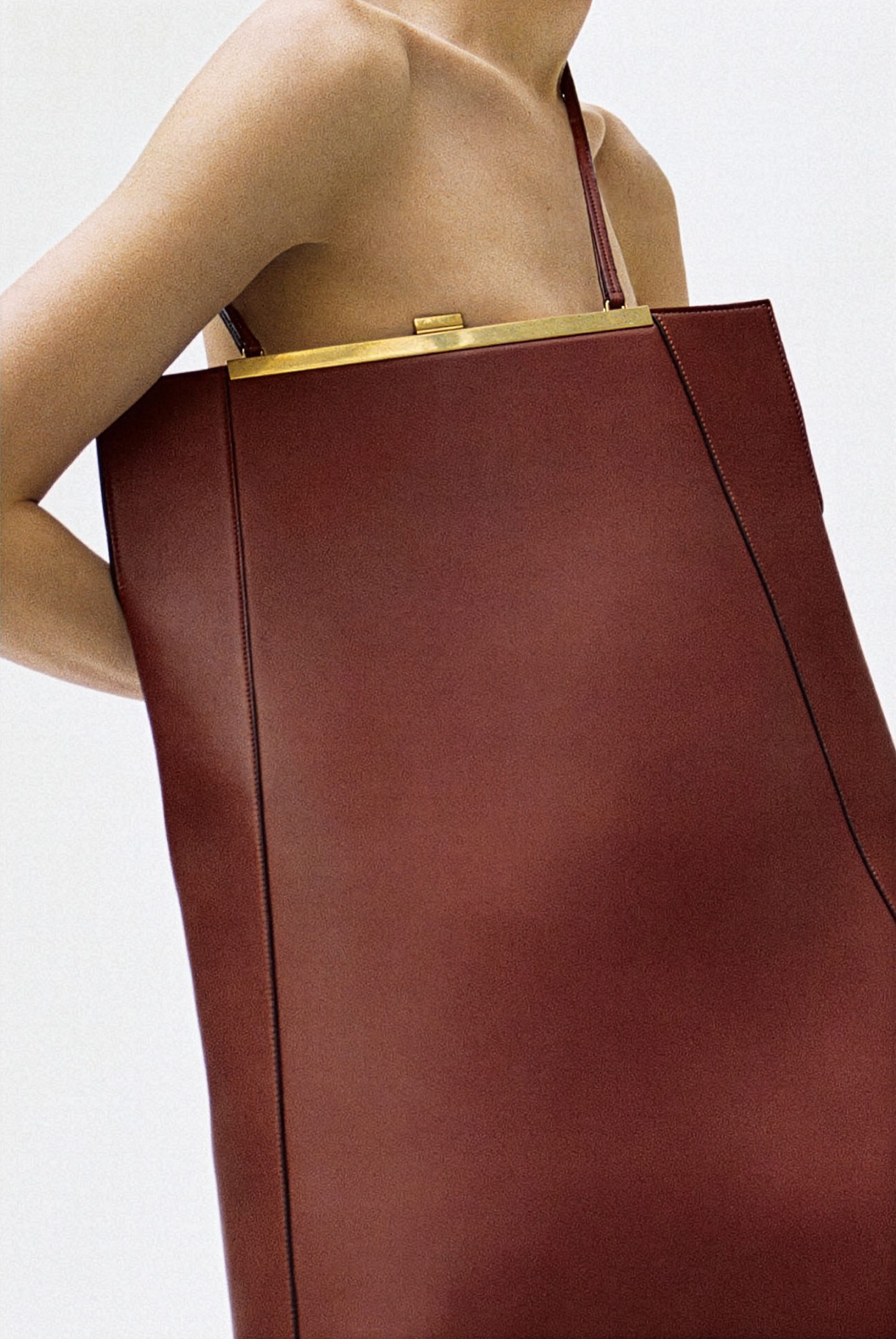
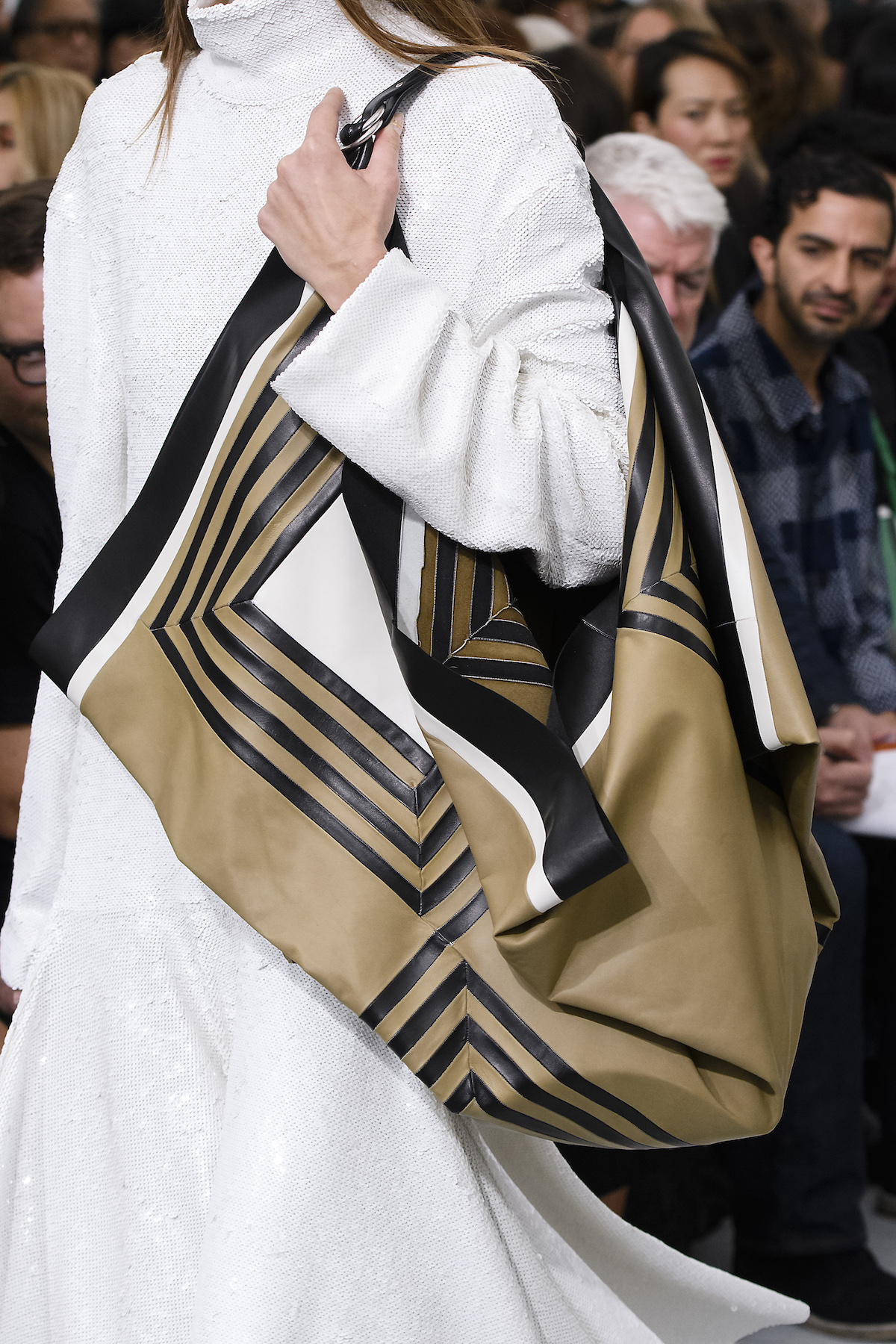
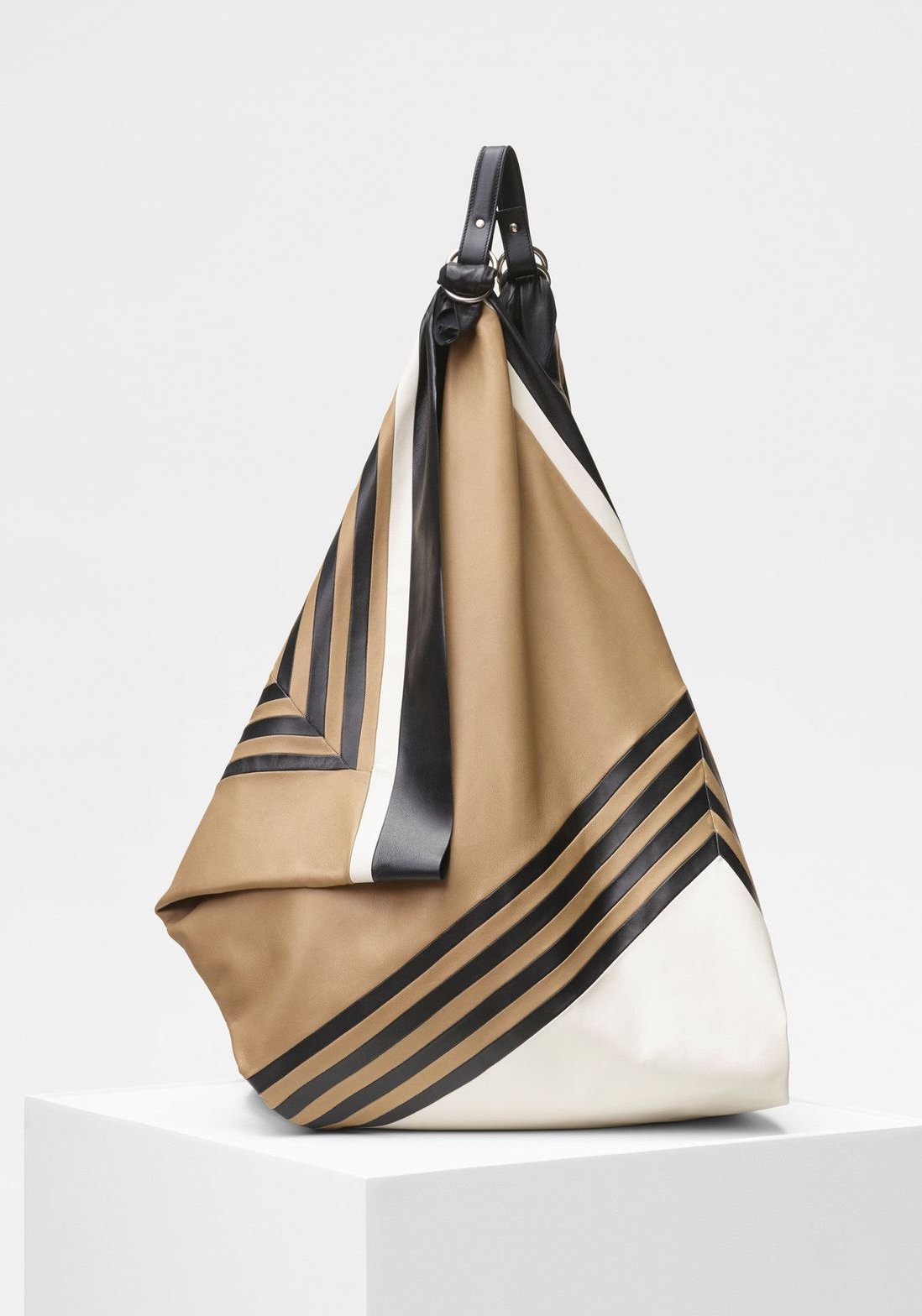
Bags do not collapse into the body that holds them. They maintain their own volume, their own orientation, their own position in space. A tote sits beside the body as a plane rather than against it. A clasp fixes a point from which the form hangs, independent of the hand that carries it. A strap cuts across the shoulder with enough force to reorganize the soft body of the bag beneath it.
What matters is not decoration, nor even utility, but the structural decision from which the whole object follows.
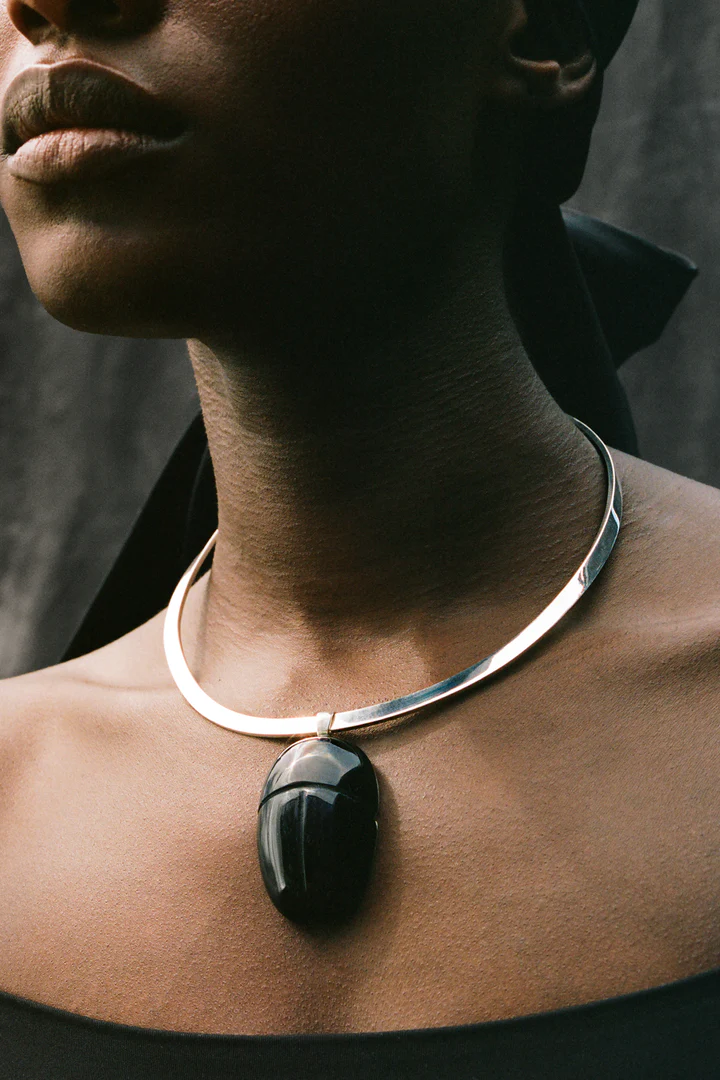
The same condition appears at the body’s smaller points of pressure. A medallion sits at the throat as a hard disc against a dark surface. A choker behaves less like ornament than like hardware at the neck. Earrings arrive not as detail but as geometry, changing how the face and jaw are read from a distance.
The object does not disappear into adornment. It concentrates form at a point and makes that point carry weight. What the coat does across the body and the bag does beside it, the jewelry does at the body’s nodes.
Under her own name, the structure no longer arrives under the cover of Céline’s refinement. At Céline, refinement allowed the work to be received as taste, control, intelligence — it buffered the force of what the garments were actually doing. The language praised the sensibility and softened the authorship. Women designers are too often granted authority as taste before they are granted authority as structure. Intelligent minimalism kept that arrangement intact.
Under her own name, the buffer is gone. The structure is declared.
Shoulders extend past the body and terminate in reinforced points. Belts sit as visible armatures from which the rest of the garment is released. A coat extends into a train the body must negotiate as it walks. Elsewhere, a plastic shopping bag is held alongside a leather one, both occupying the same spatial position, both carrying the same weight as objects. The distinction between luxury and non-luxury remains, but it no longer determines authority.
What had once been mistaken for restraint becomes difficult to misread. The system is reduced to its clearest terms: a single structural decision from which everything else is released, and a body that must adjust to what has already been established.
The garment is not arranged around the body as flattery. It is not reduced into taste. It is not intelligent because it has edited itself down to the correct signs. Its authority comes earlier: in the point it fixes, the volume it holds, the shoulder it extends, the closure it exposes, the object it makes the body carry or negotiate.
The body does not complete the form by being seen inside it.
The body learns its position inside it.
You notice it after you’ve already put it on. The shoulder sits slightly beyond where yours ends. The weight holds in a place you didn’t choose. You adjust without thinking — pulling it forward, letting it fall back, checking it once in reflection and then again as you move. It doesn’t resolve into a single shape you can hold. It stays just outside of it. Over time, you stop trying to correct it. You begin to move with it instead.




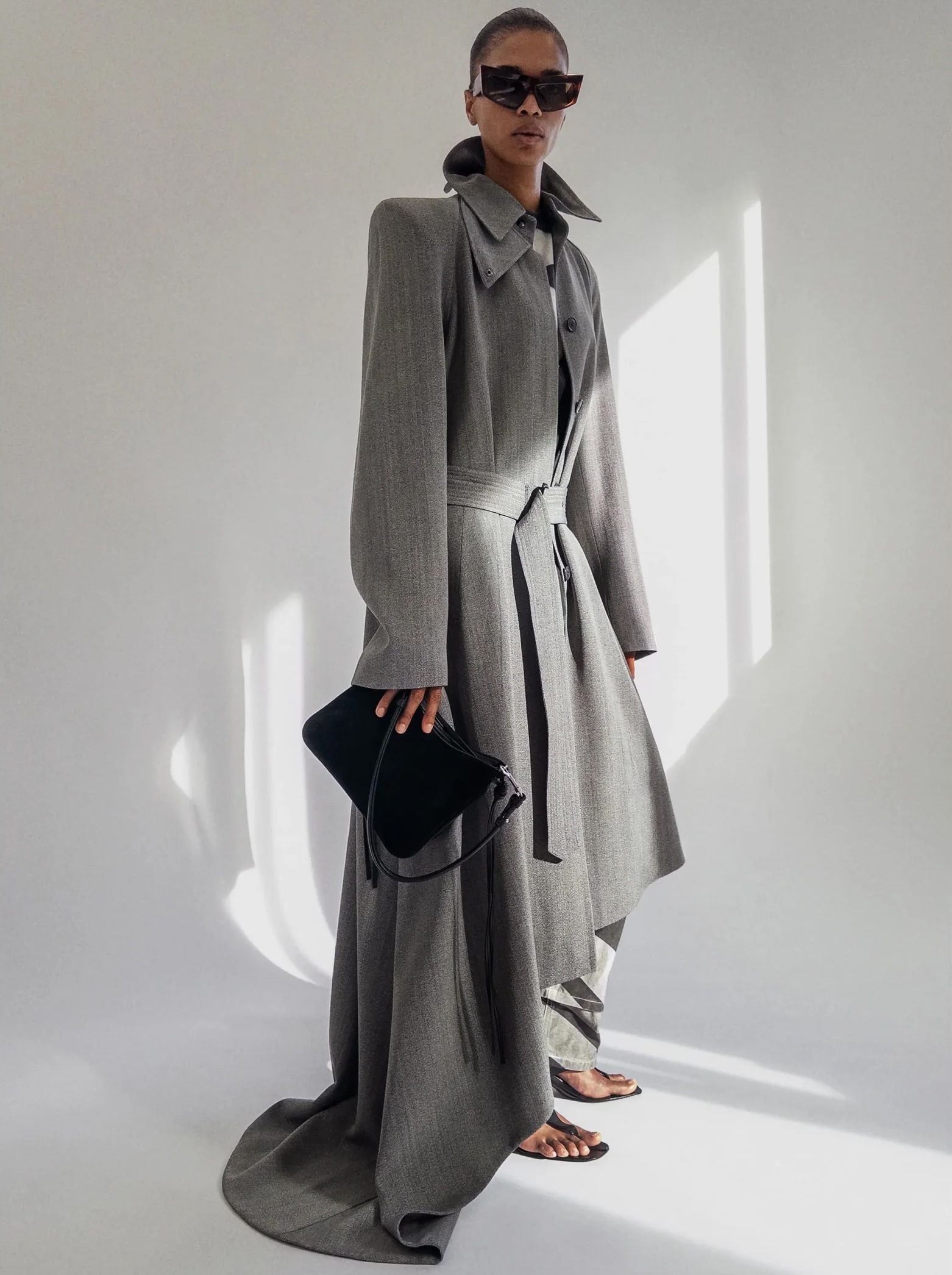


Cover: Phoebe Philo, Collection D. Courtesy of Phoebe Philo.
All images © their respective rights holders.
Image rights & attribution →