

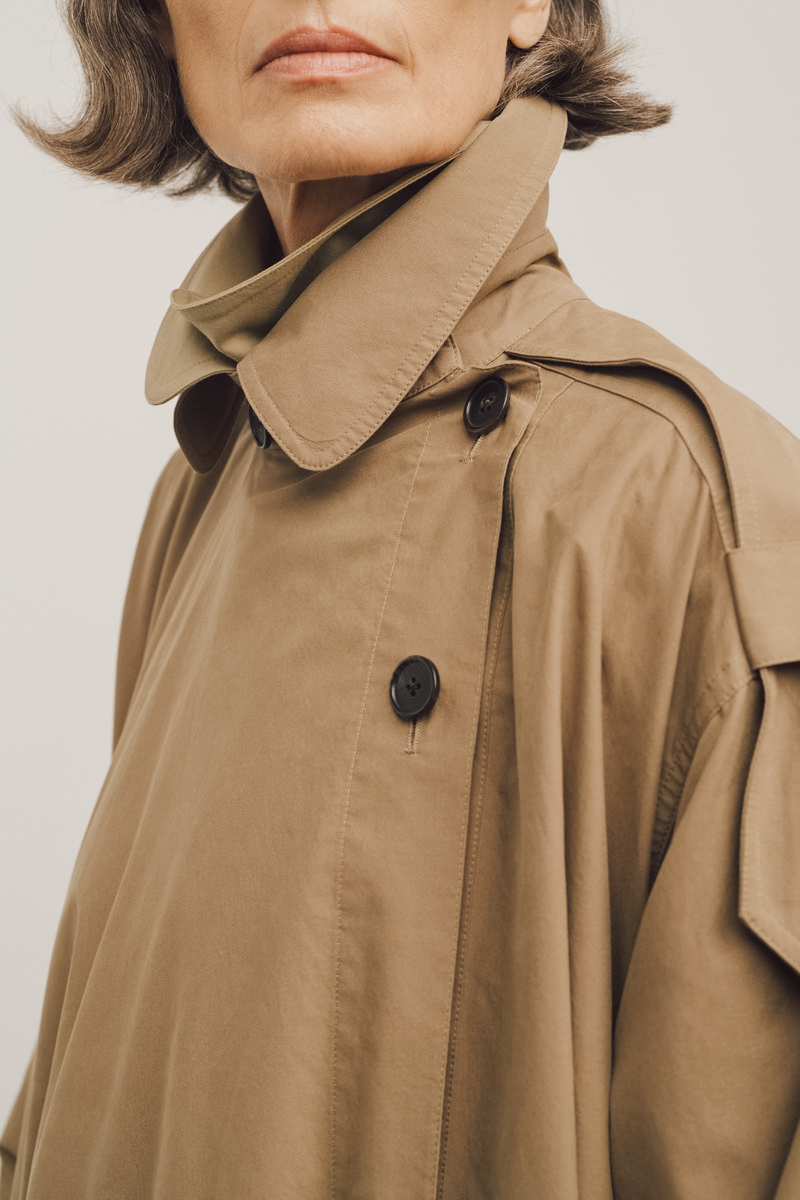
The first thing the coat gives you is a front.
A trench, cotton, A-line volume, the restraint already recognizable. The buttoning sits to one side, but from the first view it still behaves like a coat. Then the body turns. One sleeve does not answer the other. You feel the shift before you can see it. The closure side holds flat while the opposite side falls away. What looked like a garment arranged around a center begins to move off one.
From a photograph, the language is ready before the garment has finished acting: quiet luxury, restraint, expensive minimalism, an off-center trench made with unusual control. None of that is false. It describes the first encounter, the visible calm, the surface after it has already been made legible.
But the coat cannot be held there.
The front gives way to a side that behaves differently. The closure does not simply fasten the garment; it redirects it. The button is where the fabric is told to move. One side becomes plane, the other becomes field, and the body passes between them.
You are inside the garment, and still cannot find the whole of it.
The image keeps the first view. It cannot keep the turn, the pull, the interval between one position and another. Quiet luxury gives the calm surface a name after the garment has already acted.
The easy comparison is minimalism. Donald Judd, John Pawson, purified interiors, clean furniture, the quiet authority of things stripped of excess — the references feel close because they share a surface condition. Reduction, proportion, material control, refusal of ornament. But a Judd object holds itself. A Pawson room holds at rest. The Row's strongest garments require position, turn, contact. They do not resolve in one view.
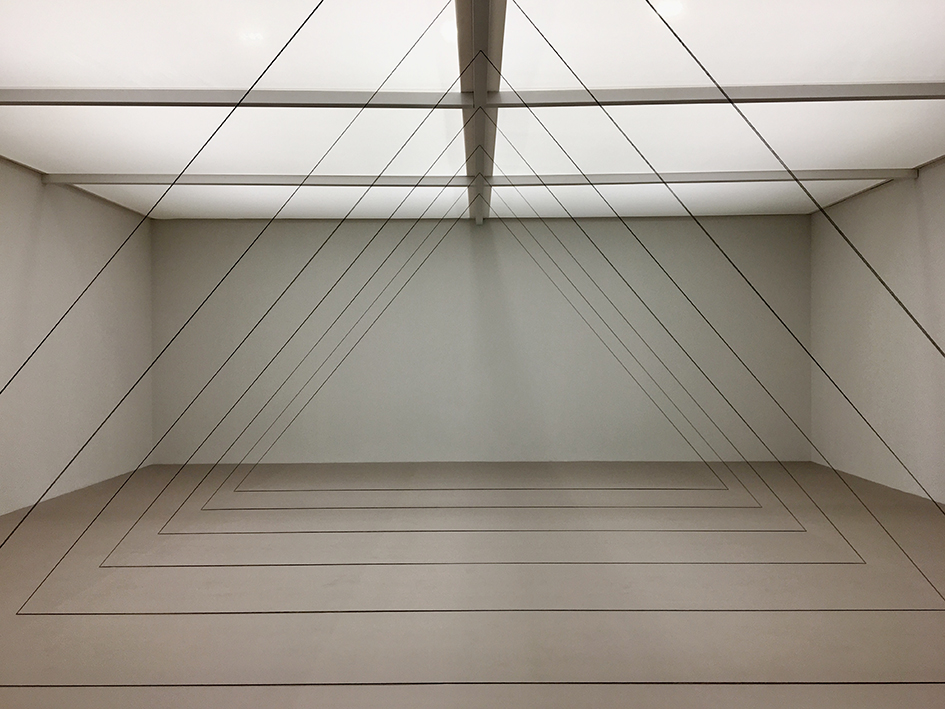
The closer comparison comes from elsewhere. A practice where soft material is pulled into tension until space forms around it — where the line does not describe a form from outside but holds a relation in place. Kazuko Miyamoto's 1970s string constructions worked this way: cotton thread, nail, wall, floor, body scale, almost nothing added, the room changing.
Miyamoto's construction is visible operation. The Row's is concealed inside garment. It is held inside the familiar instruments of clothing: belt, button, fold, weight, hem, sleeve.
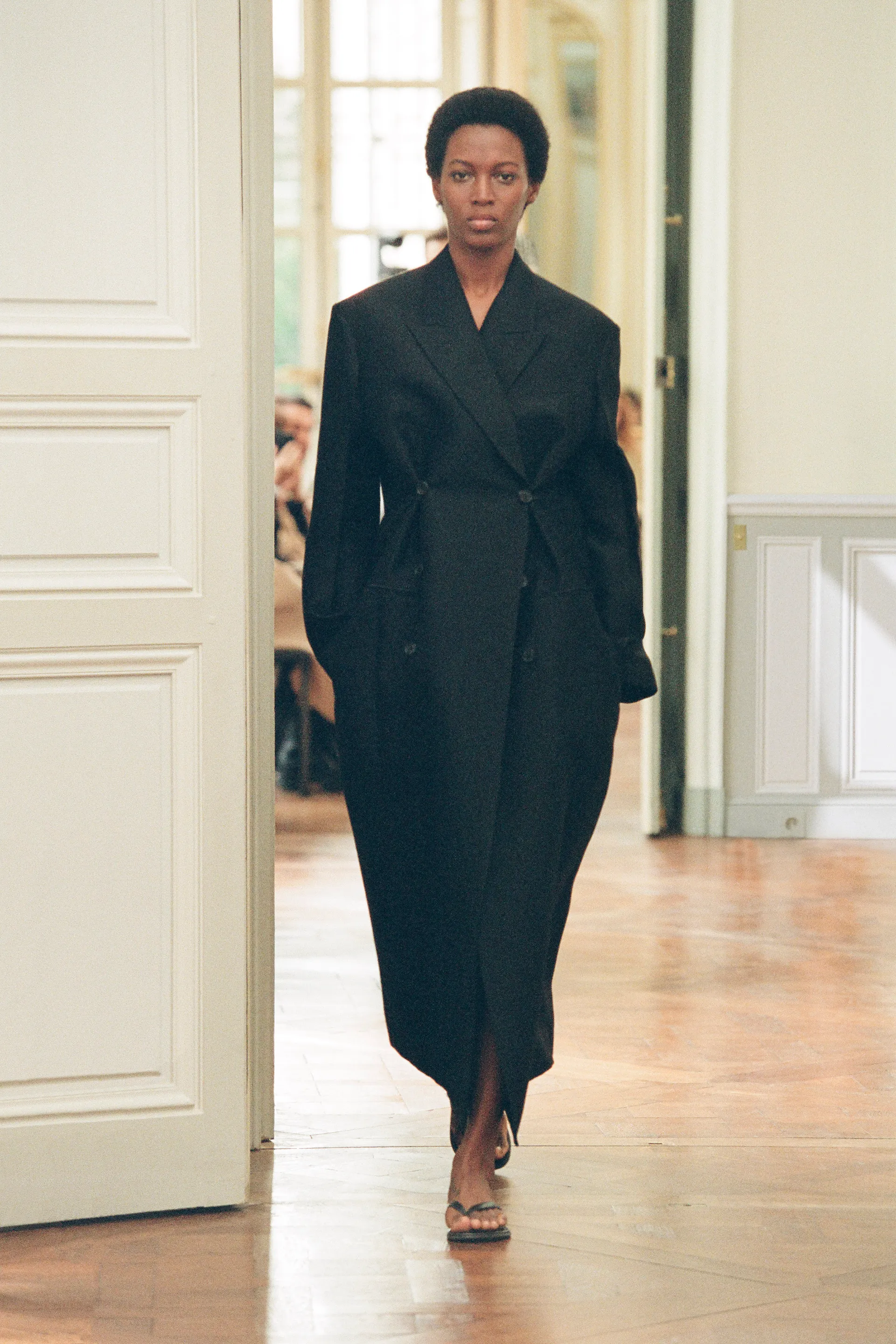
Toba begins with the belt. Without it, the coat is a field of cashmere and wool: open front, kimono sleeve, asymmetric hem, cloth falling from the shoulder without the usual tailored interruption. The set-in shoulder is gone. The back hangs as a continuous plane. It sits there, not yet spatial.
Then the belt is tied.
Cloth gathers toward the waist. Volume is pulled inward. What was an open field becomes enclosure. The belt is not styling; it is the mechanism that turns the coat from cloth around the body into space held around the body. The wearer ties the line, but what gathers behind them is not visible to them.
By the time this is received as quiet luxury, the garment has already acted. Restraint has become taste.
Taste is late.
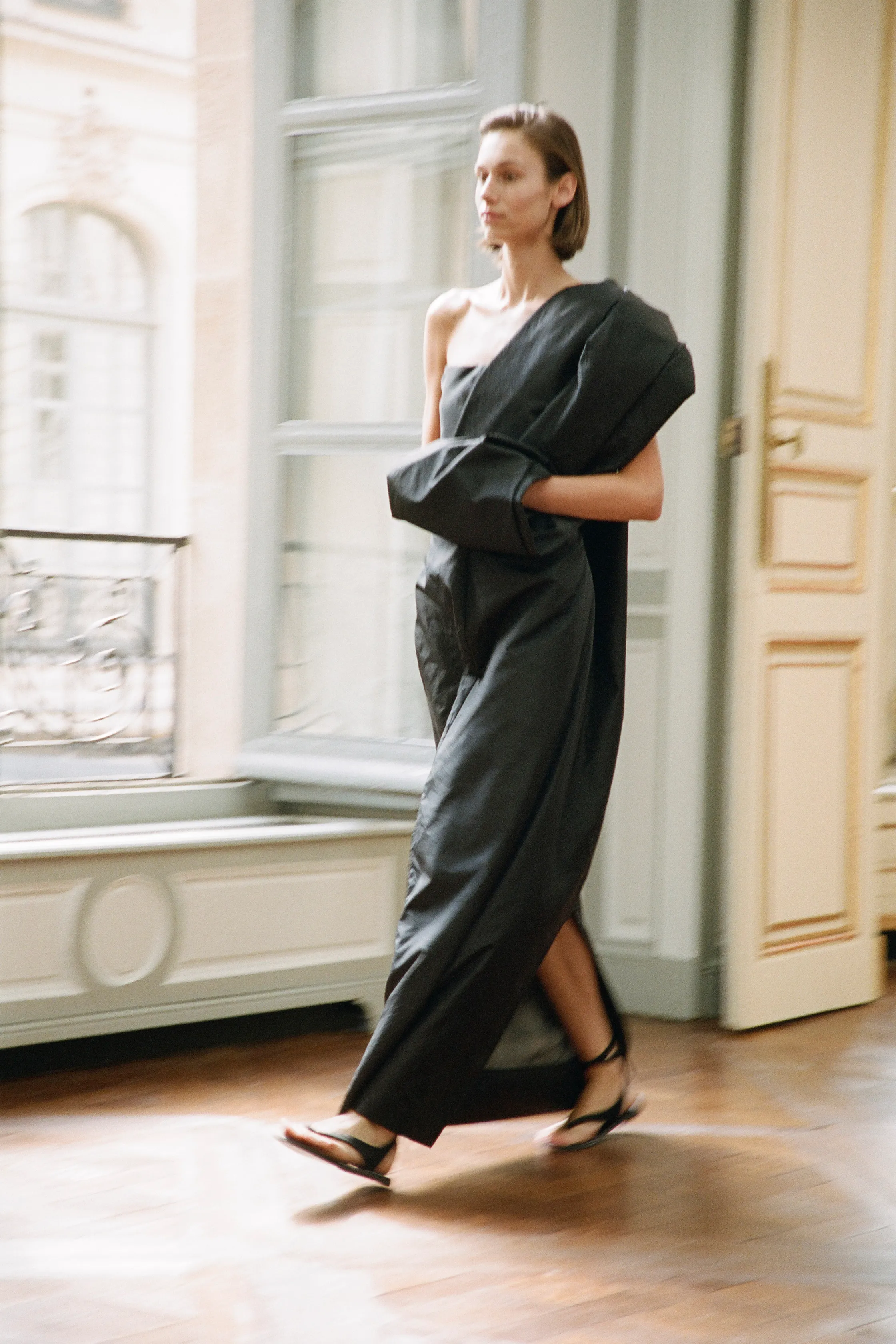
The Spring 2023 evening pieces make the same delay visible. A wrapped dress, a column, a train. From one view, they hold as eveningwear. Then the model lifts the train in her gloved hand. The cloth gathers upward. The train leaves the floor. The silhouette changes because one of its supports has changed.
The hand holds what the seam refused. The body is part of the construction. Here the floor is not backdrop. The dress resolves between body, cloth, hand, and ground.
The inverted button-down removes the last stable orientation.
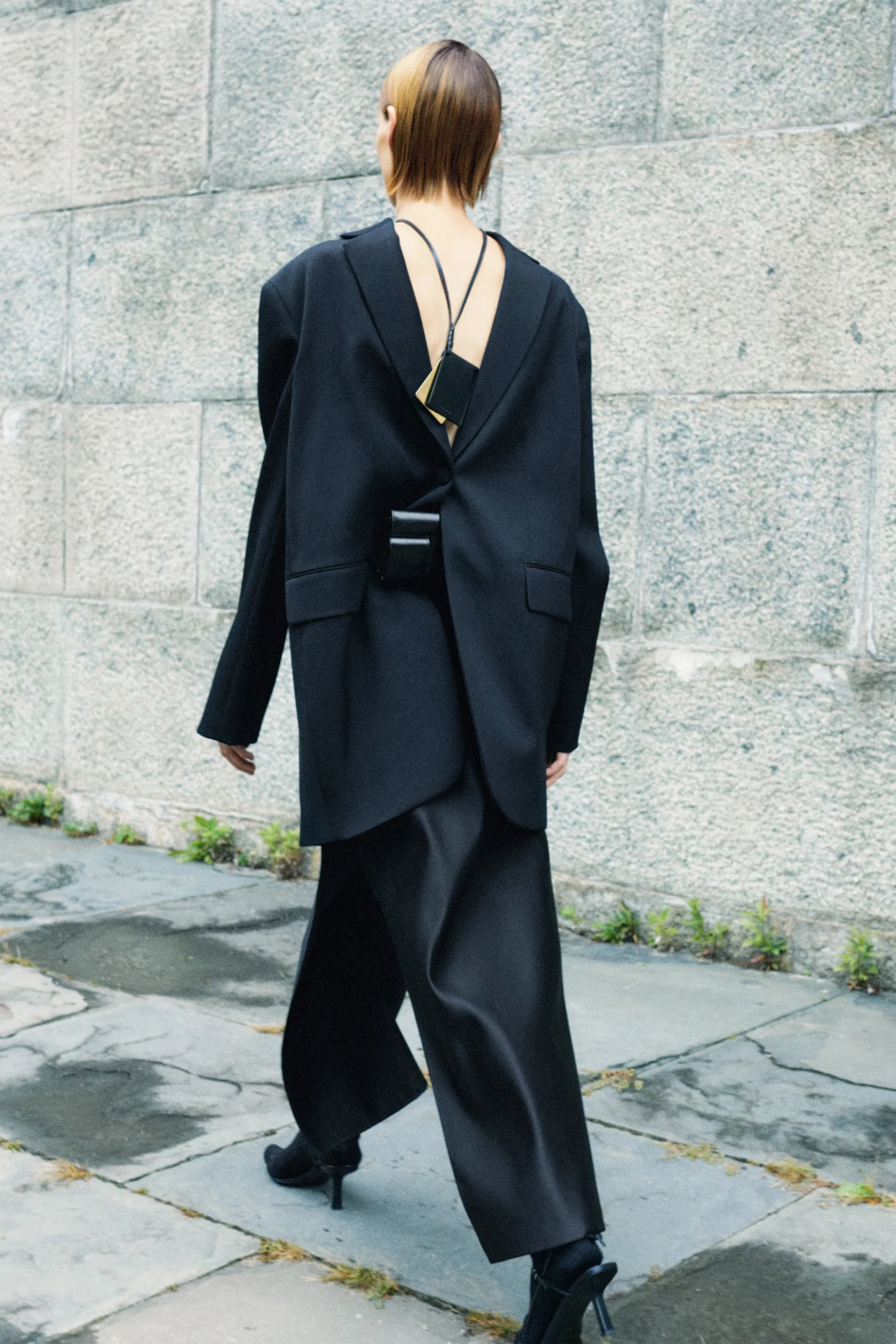
The shirt is familiar: placket, collar, cuffs, cotton. But the orientation has shifted. The closure moves to the back. The keyhole opens at the nape. From the front, the body becomes a plane. From behind, the wearer becomes readable as closure. The garment has not become more elaborate. It has been turned in relation to the body.
Not every garment sustains this condition. When the relation does not activate the form, the reading collapses back into object: tailoring, silhouette, resolved surface. Catena marks the boundary: its thread loops make tension visible, but the coat still resolves. The operation appears, then closes back into object.
Some garments are objects.
Others are passages.
Each withholds completion differently. There is no single angle. What you see depends on where you are standing, and when. The form does not meet you all at once; it holds its position, requiring you to move, return, see again.
Privacy here is not withdrawal. It is the distance a garment builds from immediate legibility.
You feel it in the moment the shape slips again, just as you think you have it.
The word that arrived first has nowhere left to go.
It was never quiet.
You notice it after the first certainty has already passed. The coat falls where it should, then shifts. The front holds for a moment, then the back refuses to confirm it. You adjust without thinking — pulling it forward, letting it fall back, checking it once in reflection and then again as you move. It never settles into one shape you can keep. Even inside it, some part of the form remains elsewhere. Over time, you stop trying to resolve it. You begin to live inside the fact that it won’t fully arrive.
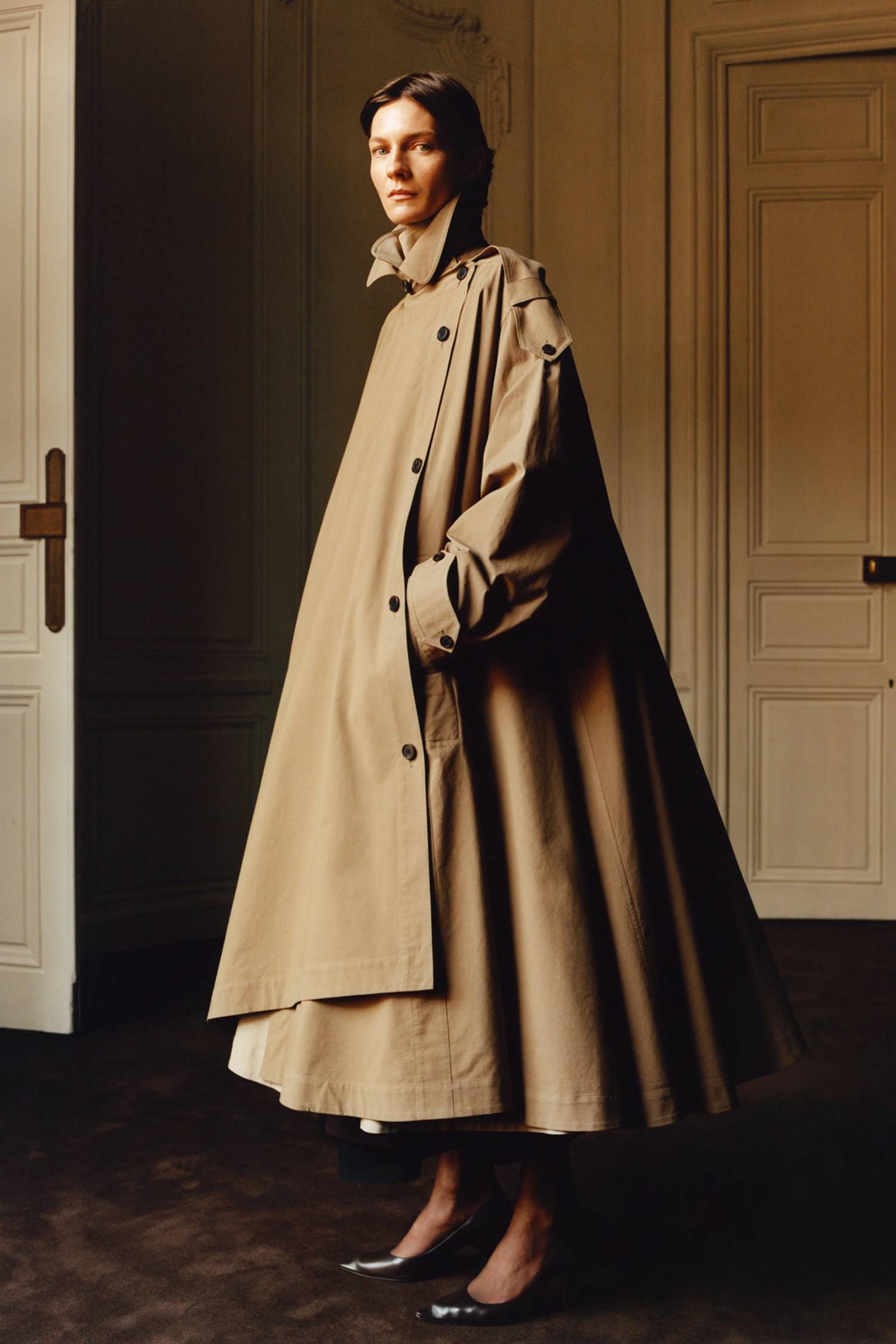

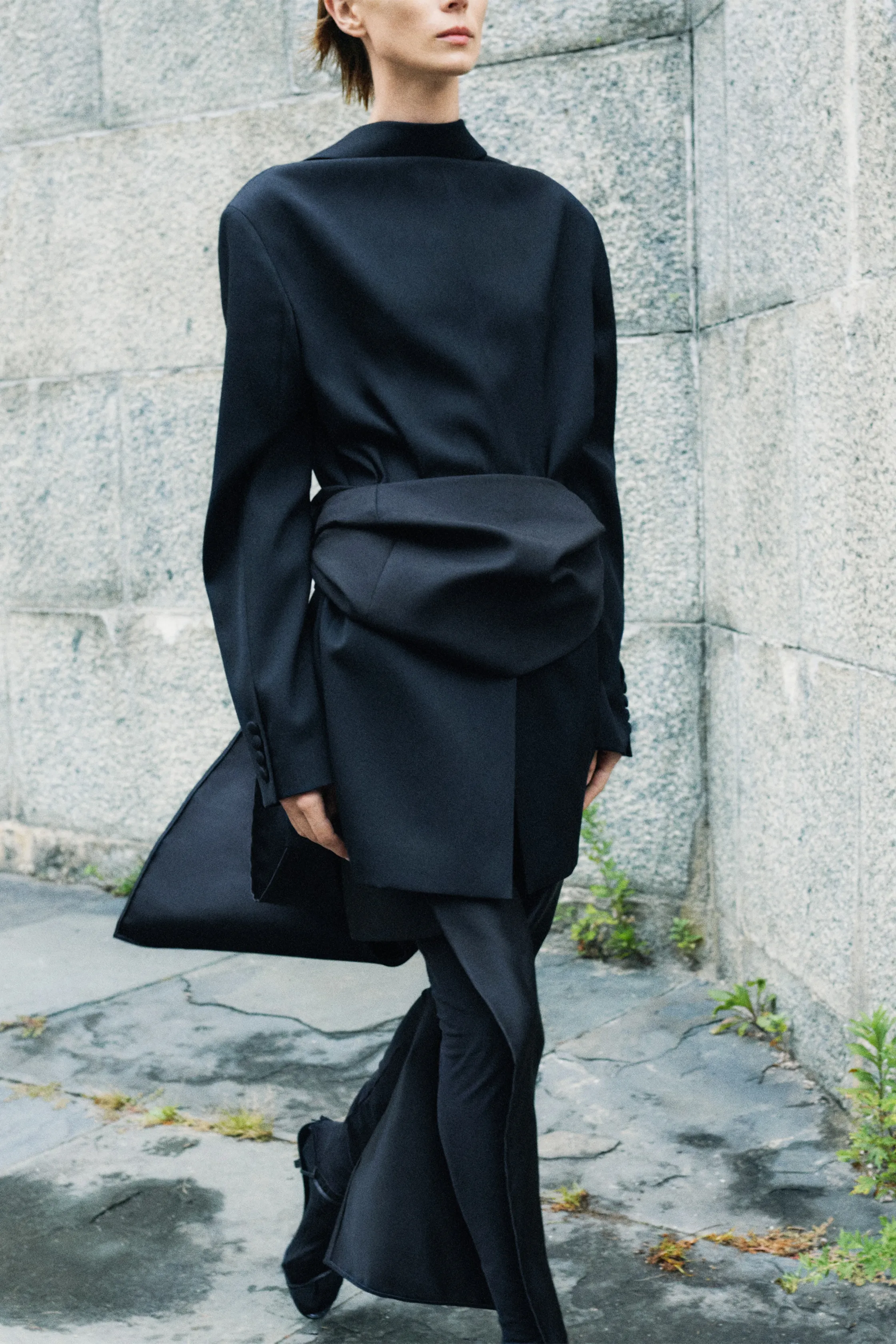


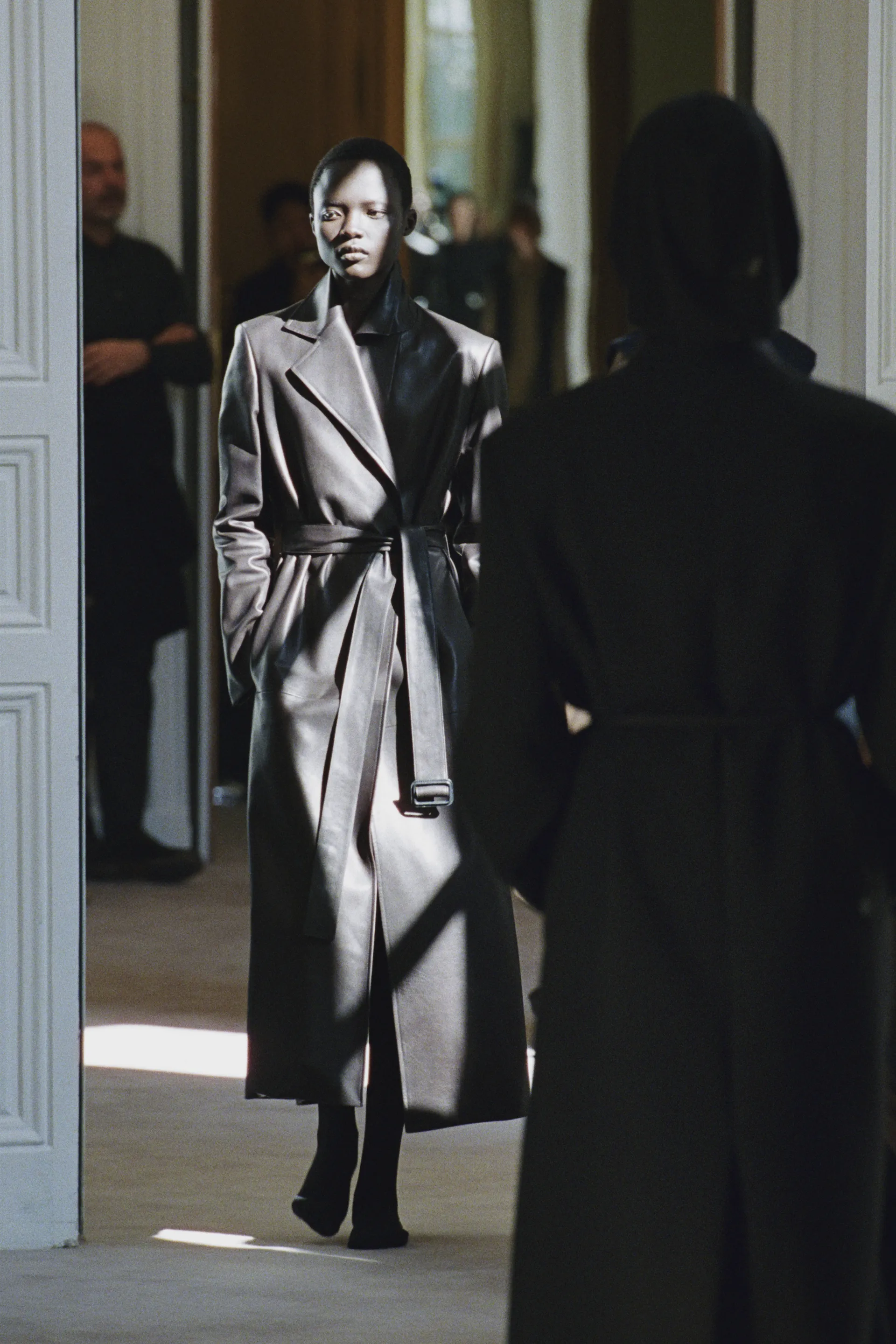
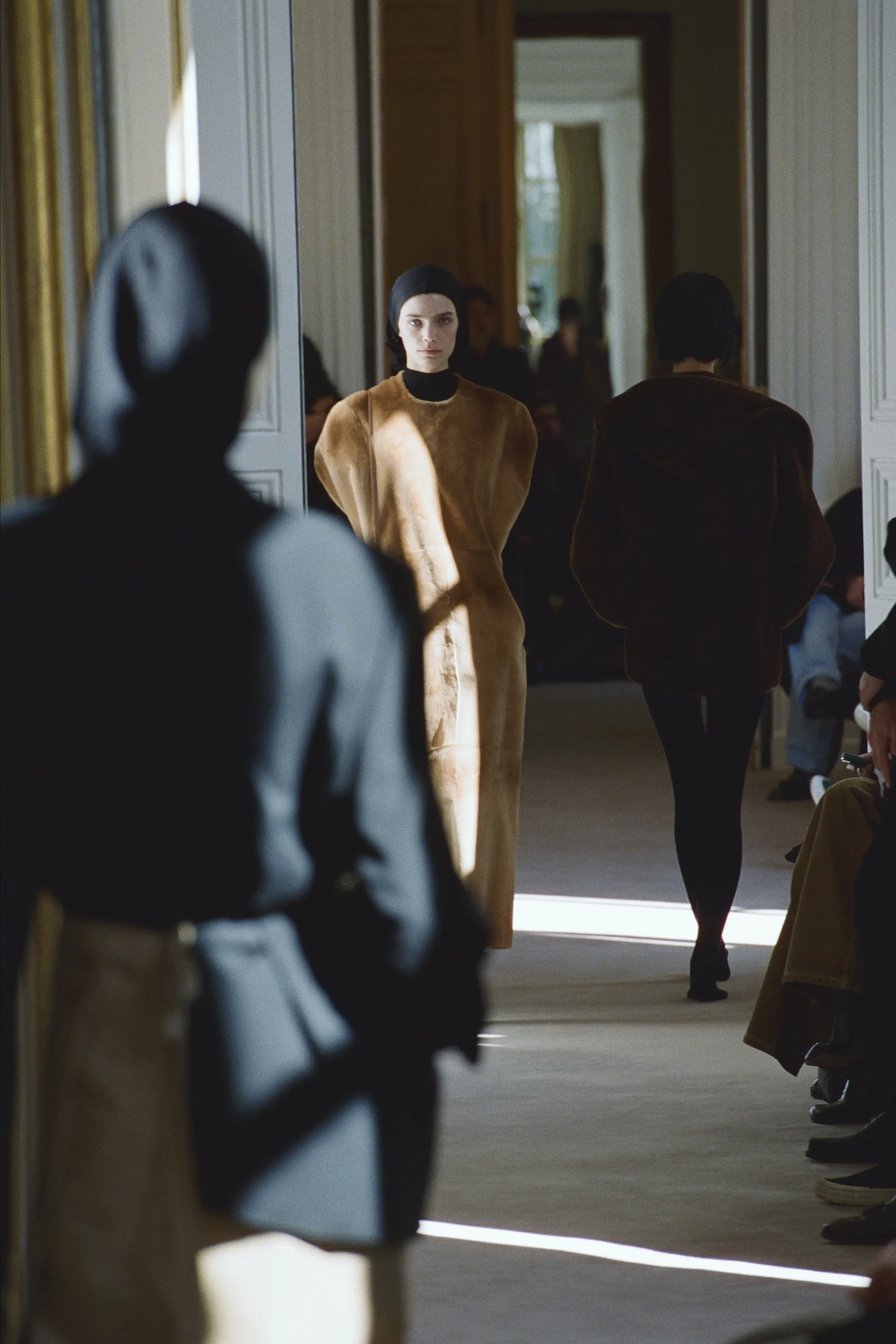
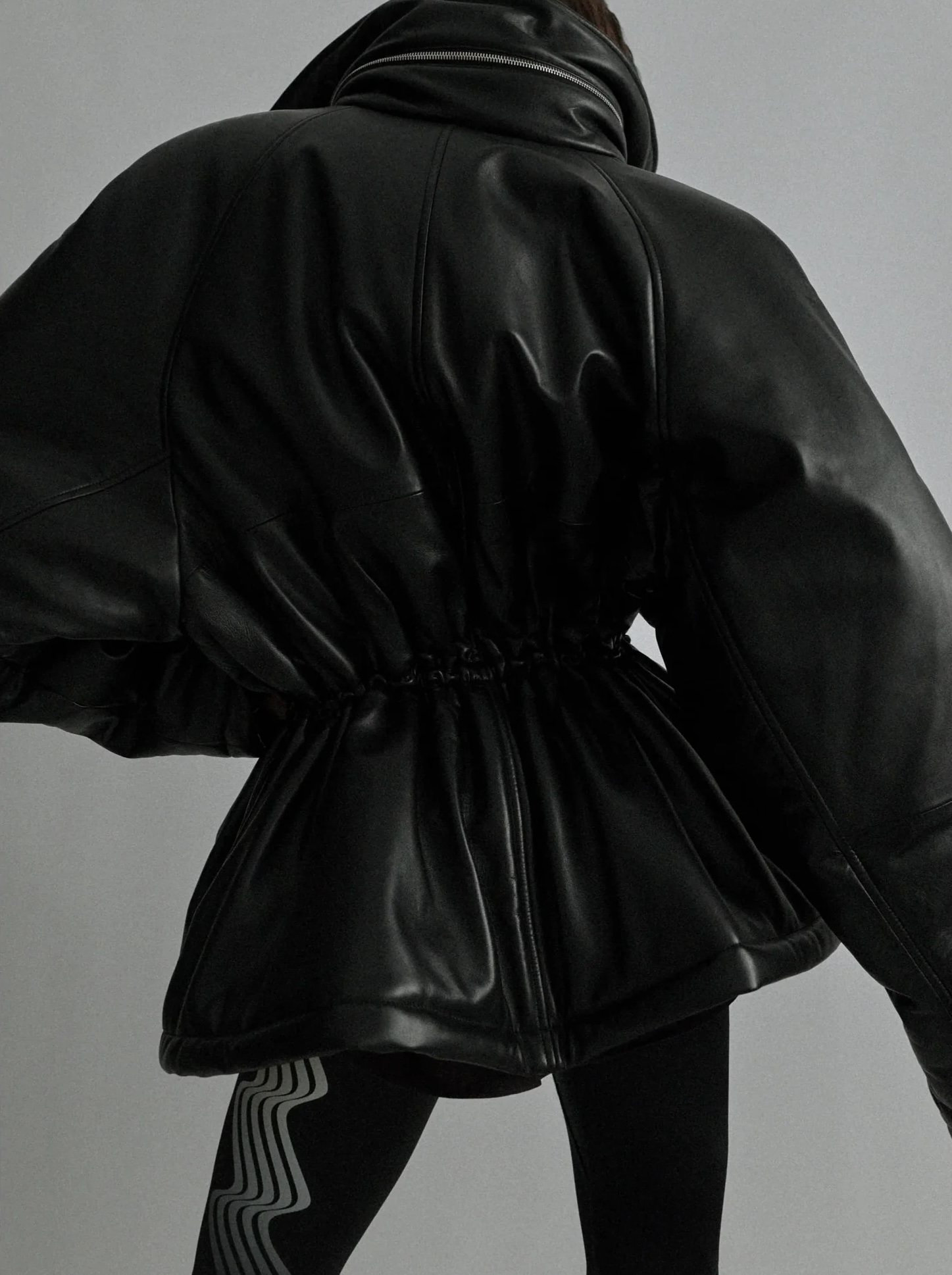
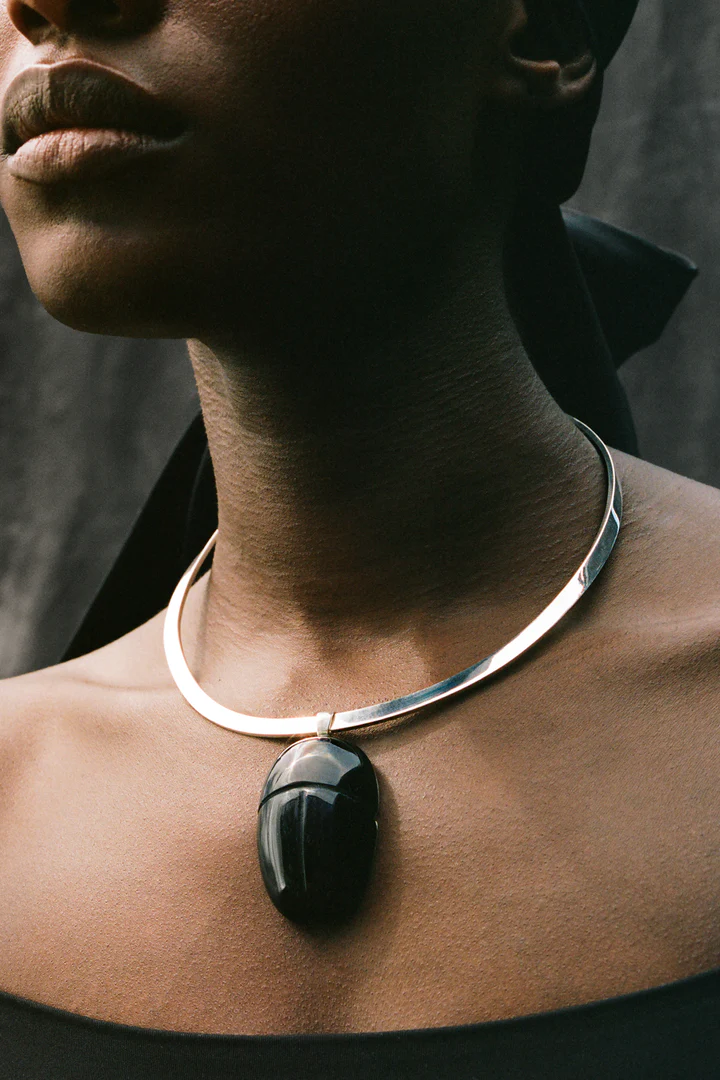
Cover: The Row, Summer 2021 campaign. Photography by Jack Davison. Model: Nyaueth Riam. Courtesy The Row.
All images © their respective rights holders.
Image rights & attribution →