

There are clothes that seem to ask for very little explanation. They arrive already carrying the words that will be used to describe them: clean, modern, architectural, oversized. Studio Nicholson is almost always received this way. The garments look simple, the palette stays narrow, the wardrobe they form appears calm and resolved. The trousers are wider, the coats swing further from the body, the shirts hold more room than convention requires. “Oversized” feels natural because it seems to describe exactly what the eye sees: the same garments, only with more space inside them.
The word is not wrong about what it sees. The garments are visibly larger than convention demands. The trousers carry more room than a standard cut. The knitwear drops past where it needs to. The coats swing. If you were told that oversized was the right word, you would have no immediate reason to disagree.
But oversized describes quantity. It does not describe cut.
A simply oversized trouser hangs from the hip. The volume falls where gravity takes it. Extra fabric drops, folds, and gathers according to weight. The shape is a consequence of surplus. The Dordoni does not behave this way.
Fitted clothing describes. Oversized clothing obscures. The Dordoni holds.
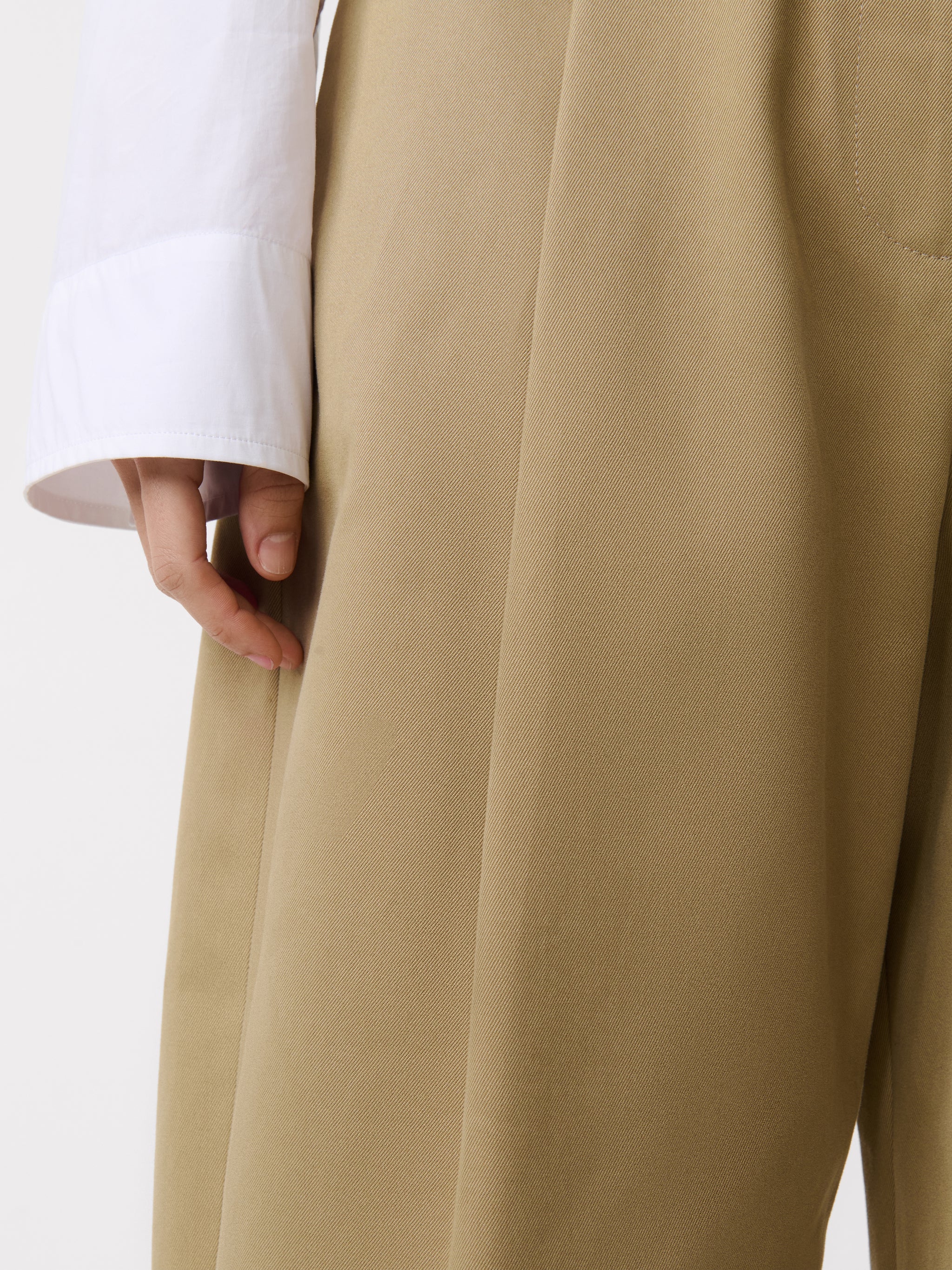
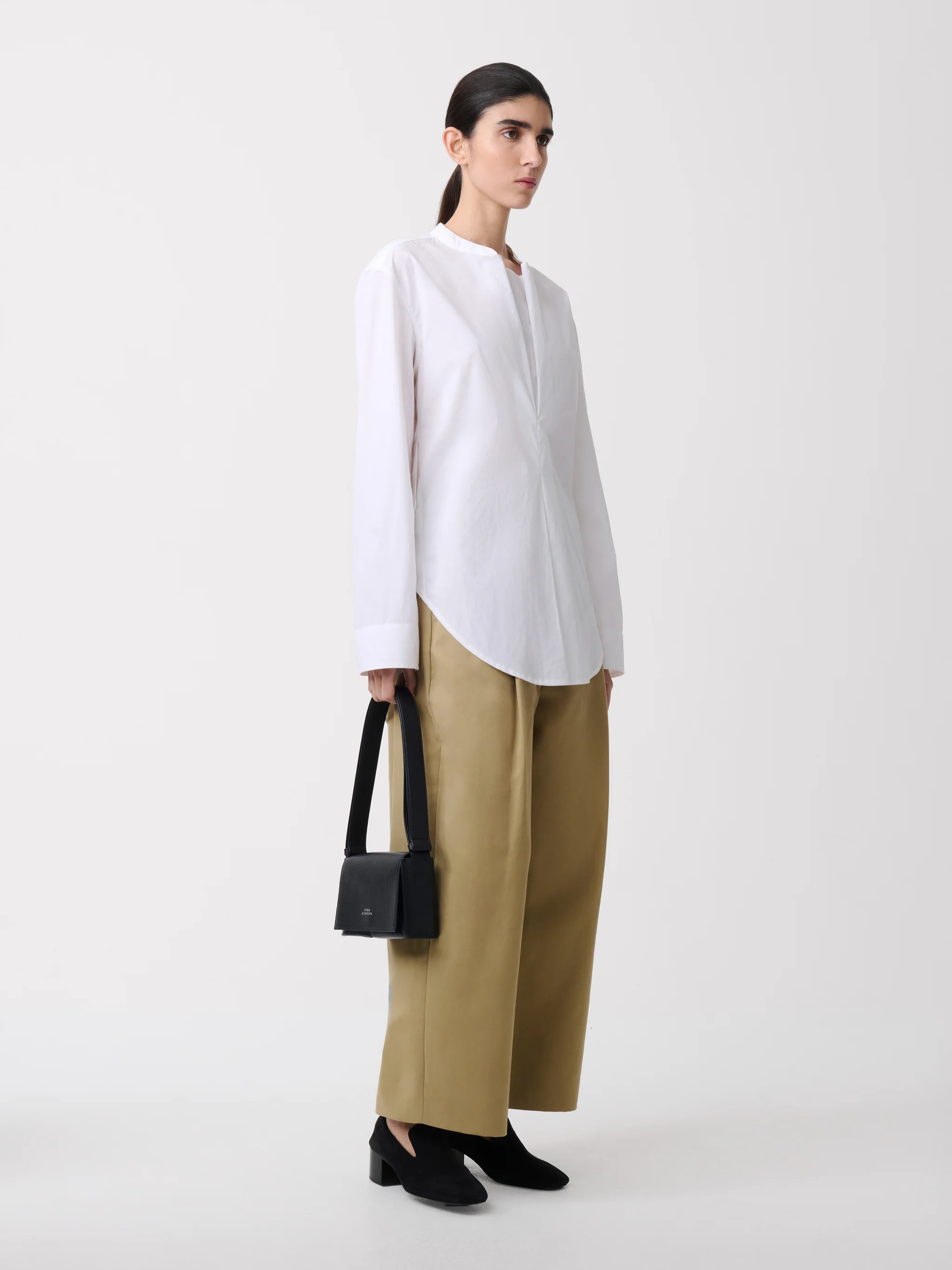
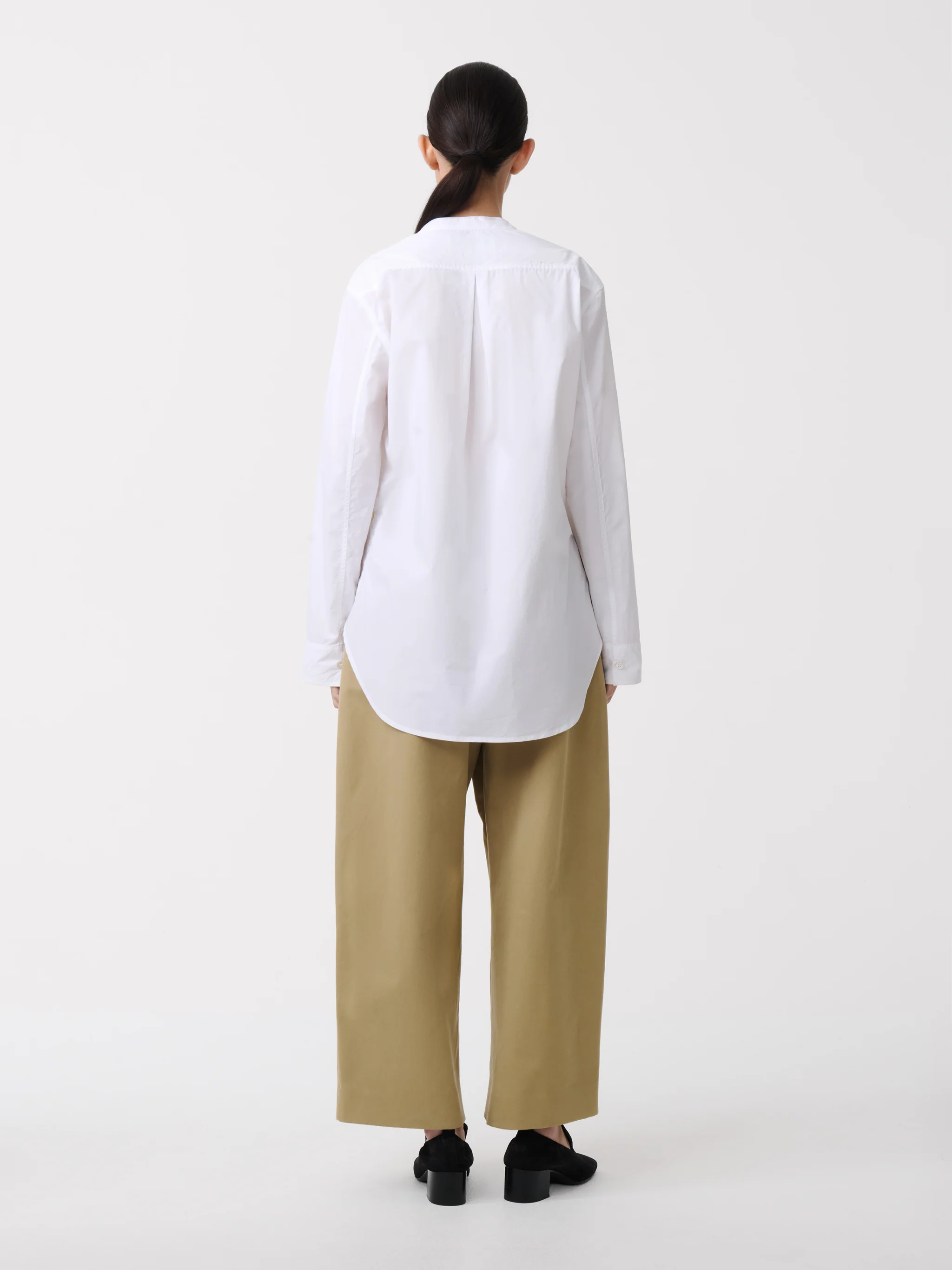
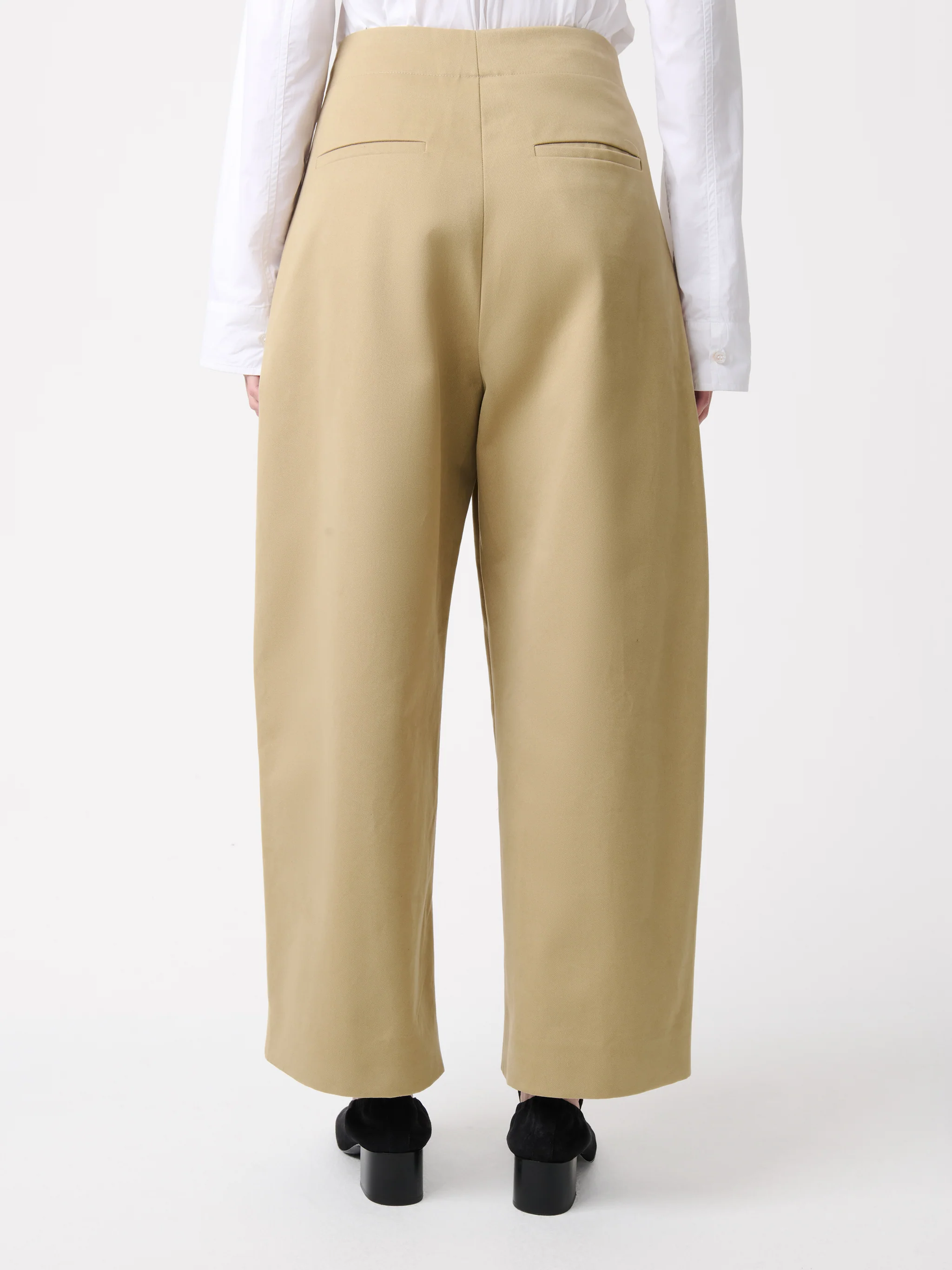
A wide trouser hangs. The Dordoni curves. The fabric does not just fall away from the body because there is more of it. It moves outward through the thigh, holds away at the hip, returns through the leg, and releases cleanly at the hem. What the eye first registers as scale is already something else: a shape determined by cut.
The waist sits high and fixes the garment to the body at a single point. Below it, the drop crotch releases the fabric from the upper thigh so it does not press where the body is widest. Pleats hold the volume at rest and release it in motion. The leg is cut on a curve, not a straight line, so the volume moves outward and then returns, held in place by the pattern rather than by gravity. The hem stops before the fabric can gather. Each decision prevents collapse.
Volume is the result. Curve is the fact.
The Dordoni is not an oversized trouser. It is a curved form that holds its volume through construction, independent of the body inside it. The shape is not extra fabric finding its own level. It is a decision made at the pattern stage, maintained through the cut, and stable across bodies and fabrics. There is no excess. There is only the shape the cut was built to produce.
As the body turns, the curve reads differently. From the front it opens. From the side it deepens. From behind it closes again. The pleat shifts with movement, the fabric carrying space forward and then releasing it. What appears, at a distance, as a stable silhouette keeps rearticulating itself in motion. The shape does not follow the turn. The body moves through it, and the space reorganizes without collapsing.
This is where architectural becomes both closer to right and still not right enough. In most fashion writing, the word names a visual effect: clean geometry, controlled structure, a garment that looks sculptural from the outside. Wakeman means something more spatial than that. Buildings, she has said, look different from different angles and exist to protect what is inside them. The garments work the same way. Their shape is not fixed as a single image delivered to the eye. It changes as the body moves through it and as the viewer moves around it. The question is not what silhouette the garment shows, but what kind of space it holds around the body.
Wakeman traces the first recognition to a Tokyo street: a man moving through a crowd in trousers that did not sit on the body the way she expected. They were not tight, not loose, not simply larger. They held a distance. The body was fully present inside them, but it was not being described by them. The recognition was immediate and physical before it was verbal. What was visible was not more fabric, but a different relation between fabric and body — a gap that had been made, not left over.
That is what the construction gives the wearer. Not simply room, and not disguise. Distance. The body is present, but not surrendered immediately to outline. It is not described at the hip, thigh, or leg, where clothing most often gives the body away. The garment does not hide the body, and it does not display it. It holds a form around it so the wearer can occupy space without being reduced to the body’s most legible line.
The wearer is present. But not, in the first instance, given away.
In Japanese terms, this is ma: not empty space, but a meaningful interval, a structured gap produced deliberately and maintained as part of the form itself. The space is not what remains after the solid elements are arranged. It is what they were arranged to produce. Oversized sees the interval and calls it excess. It sees held distance and calls it more room. Wakeman’s Tokyo street encounter was not a stylistic influence. It was a first contact with a spatial tradition that her strongest garments have been articulating ever since.
The modular wardrobe language surrounding the brand misses it differently. As units in a system, these trousers are interchangeable, combinable, dependable — pieces you return to because they work with everything else. But that description belongs to the closet, not to the garment. The Dordoni does not hold because it combines well. It combines well because its form is already resolved.
Set beside Studio Nicholson’s straight trousers, the difference becomes clearer. A straight-leg trouser can be well made, well proportioned, and entirely functional within the wardrobe. It follows the body’s line and extends it. It does not create the same interval. The Dordoni establishes a space the body occupies without collapsing into it. The difference is not between better and worse design. It is between a garment that accommodates the body and one that holds a position for it.
That is where the word oversized gives way. The garments are not larger. They are curved, and the curve is what holds the volume. The volume holds the distance. The distance changes the body’s terms of appearance. What looks, at first glance, like more fabric is something more deliberate than that: not a garment made larger, but a garment made to hold.
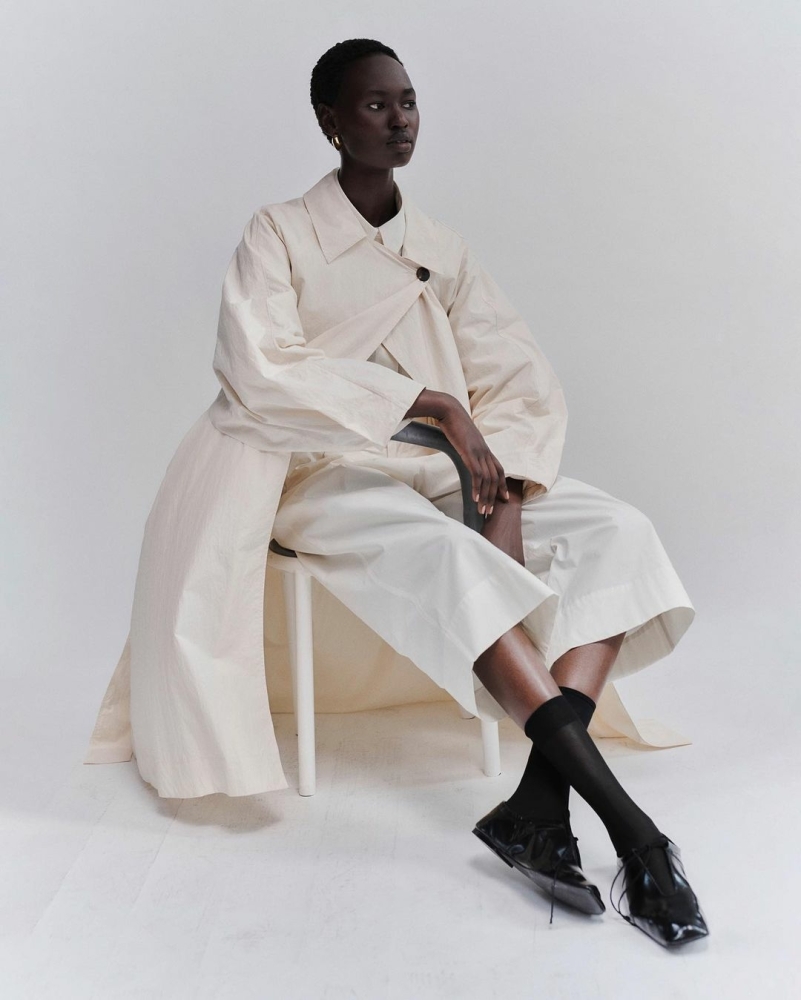
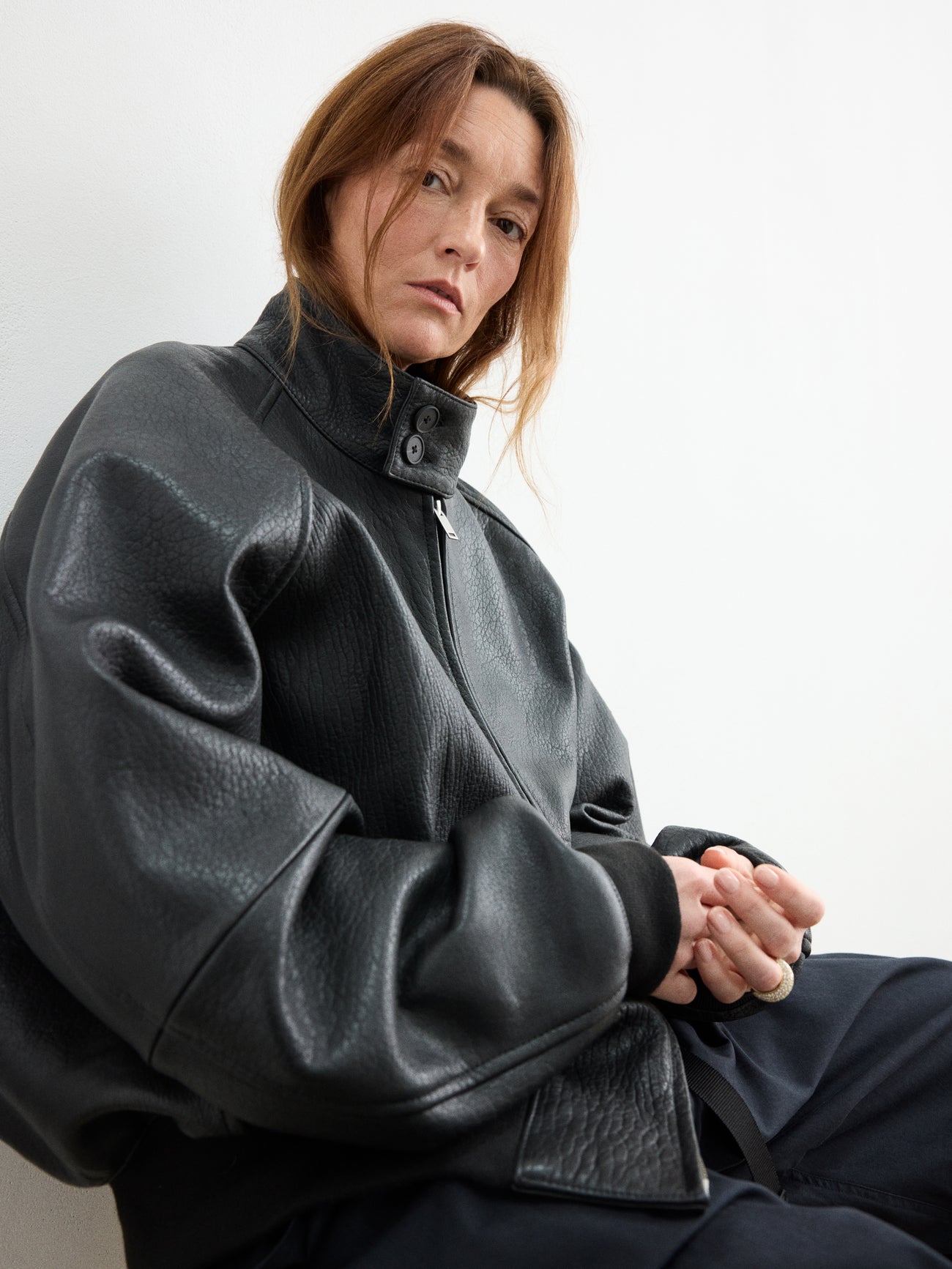
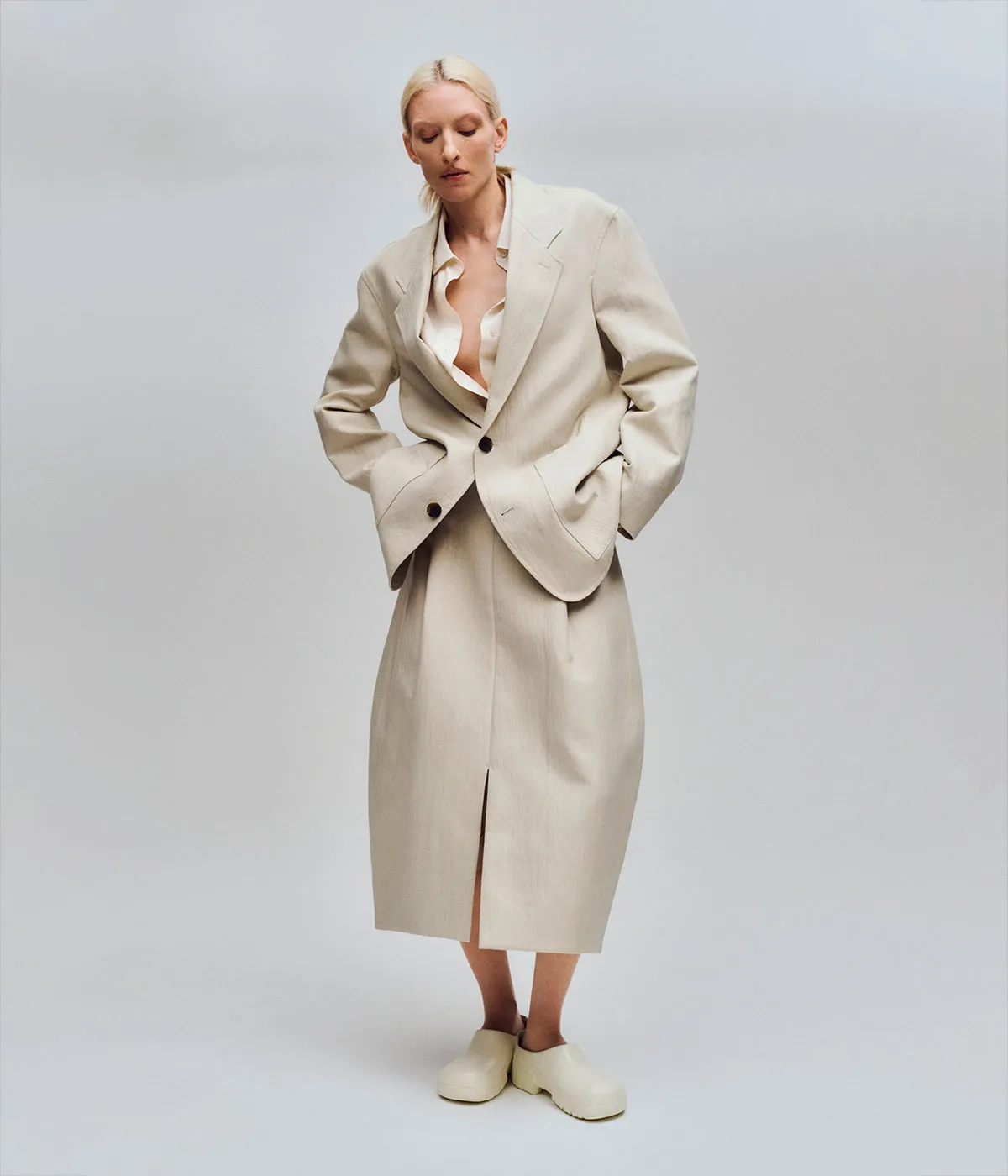
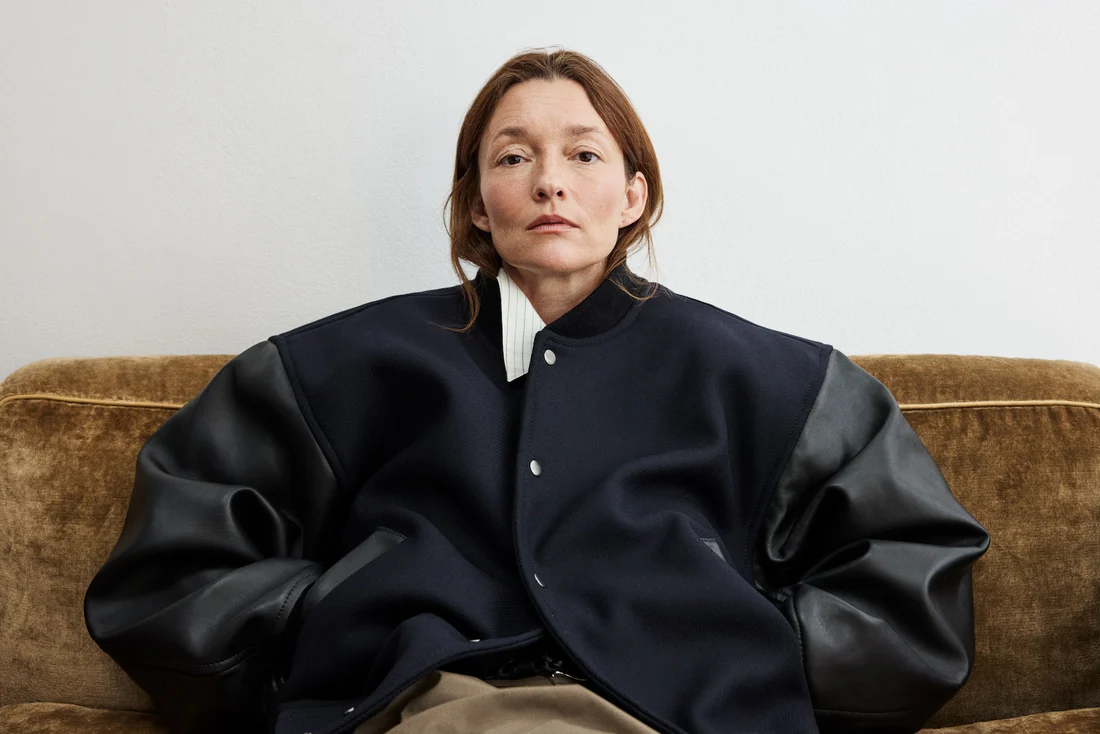
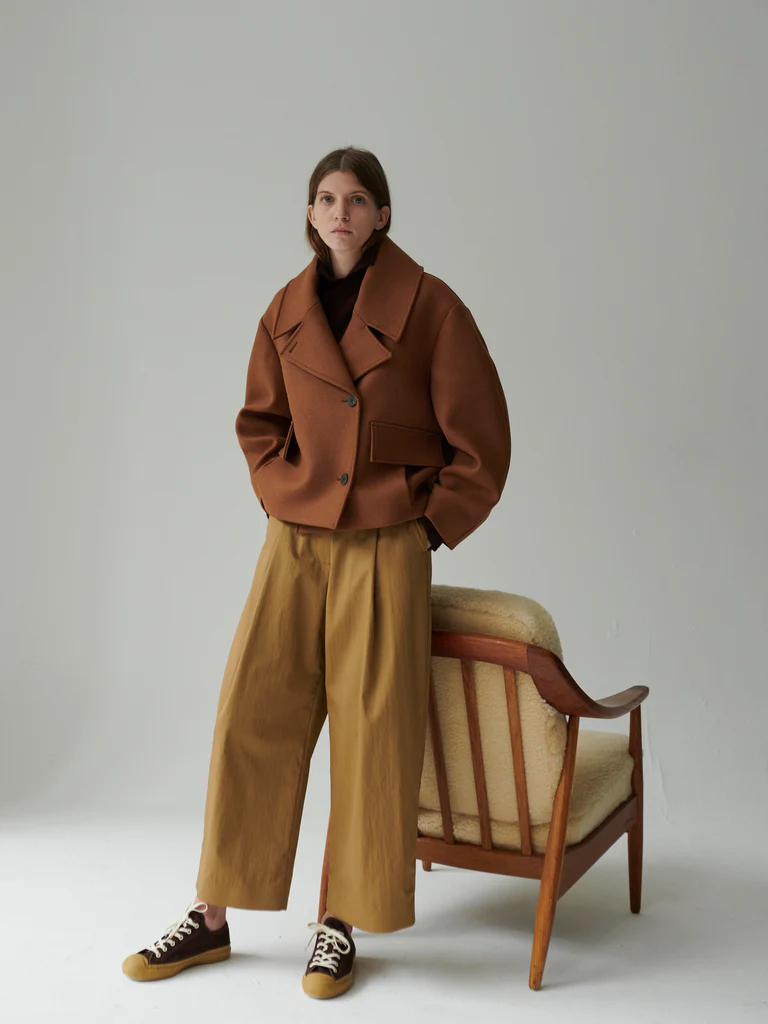
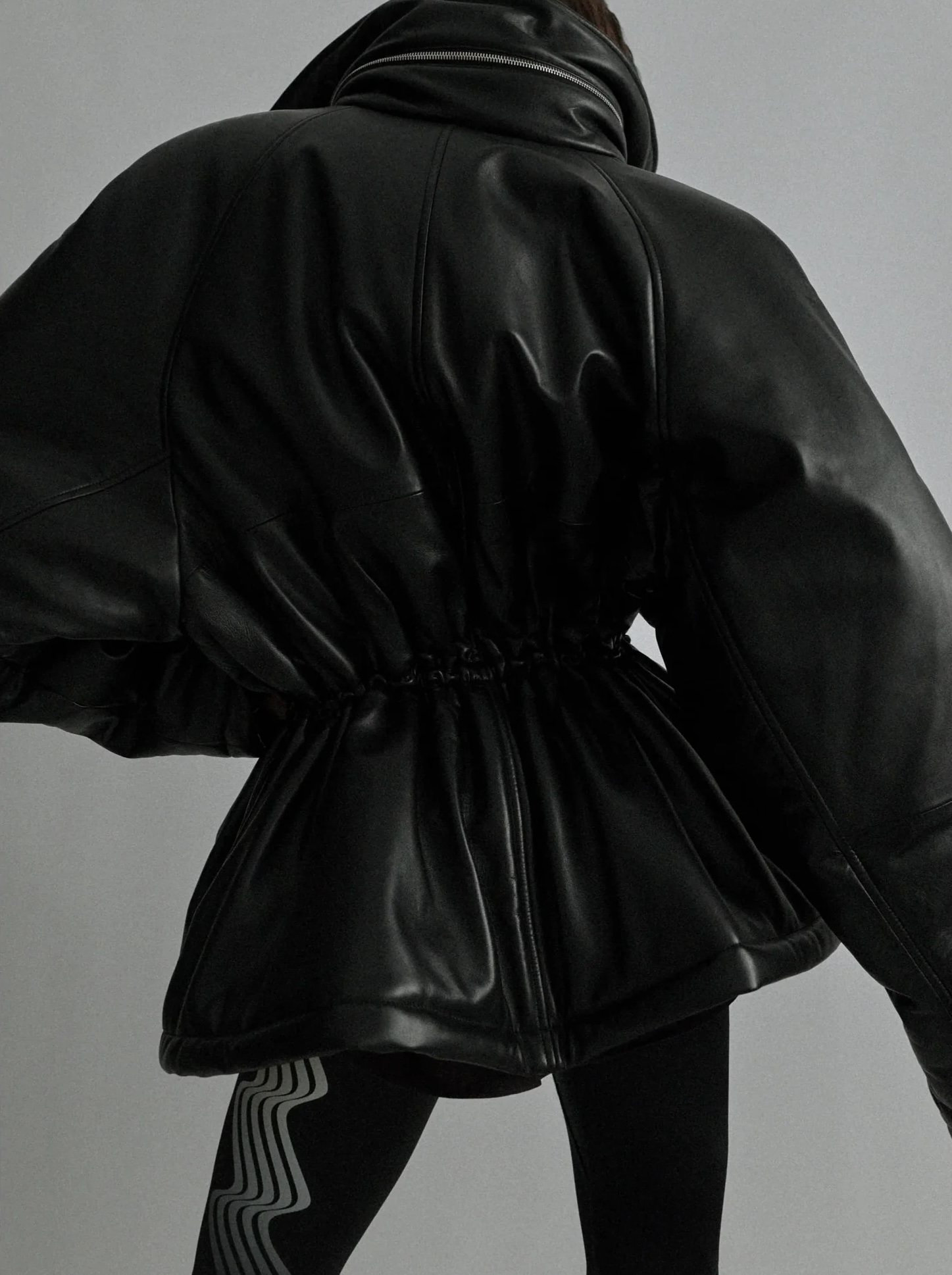
Cover: Studio Nicholson, Pre-Spring 2026, Over Leather Jacket. Designer Nick Wakeman. Photo courtesy Studio Nicholson.
All images © their respective rights holders.