

There is a kind of dressing that stops being a decision. The coat goes on each morning. The trousers are the ones that work. Nothing announces itself and nothing seems to require thought, because the thinking has already been absorbed into the wardrobe, distributed across a few garments that have become, quietly, the right ones. The day begins without resistance.
Fashion usually asks the garment to resolve before that happens. On the runway, in the photograph, on the rack, the form has to arrive quickly: silhouette, proportion, image. A wardrobe asks something less visible and more severe. The same coat has to return for years without becoming inert inside its own outline. It has to survive weather, posture, habit, hurry, fatigue, and the small differences of one morning from the next.
The coat does not fall the same way every morning. A shoulder sits differently depending on how quickly you put it on. A shirt closes one day into clarity and the next into drift. You feel it in the second before leaving: the line is right, but not where it was yesterday. You smooth it once, then stop. Nothing is wrong. Nothing has failed. The garment still works. But the form is not fixed by that fact.
This is where the familiar language begins. The clothes are effortless. They follow the body rather than correcting it. They settle without force. The word feels accurate because the garments do not resist the wearer. They allow. They loosen. They adjust.
But ease is not the structure. It is the feeling left after the structure has done its work.
The same cord is tightened differently from one day to the next. A shoulder drops and the line opens rather than resolves. A closure shifts the garment slightly off its own center. The form does not simply settle. It has to be found, each time and again.
The difference is slight at first. It sits in the hesitation before leaving the house, in the small adjustment that does not quite repeat. Then it accumulates. A sleeve takes on the memory of a habit. A cuff softens where a hand passes through it. A crease holds where the body returns to it. Nothing has been altered deliberately, and yet the garment does not return to a single state. It keeps arriving.
A shoulder-button dress makes the logic visible. On the hanger, the line can be read as arrangement: opening, button, shoulder, fall. On the body, it becomes less settled. The button does not simply close the garment. It chooses one version of it. Fastened one way, the shoulder holds wide and the cloth falls with more clarity. Shifted slightly, the same structure loosens and pulls the line off center. The construction has not changed. The resolution has.
A wrap works more quietly. One day it closes into precision. Another day the same movement leaves it softer, less certain. The line is right both times. It is just not the same.
The ankle-drawstring trousers make the point through posture. A body can stand, walk, recline, even lie down, and the form does not fail. It settles differently and remains itself. The silhouette is not designed to stay. It is made, unmade, and made again.
Garment dyeing carries the same thought into surface. The piece is assembled first in raw fabric and only then immersed in color as a finished object. Color arrives after structure, settling across seams, edges, and folds that already exist. The surface does not seal the garment into a final image. It records another stage in its becoming.
Flexibility is too weak a word for this. A flexible garment accommodates the body and returns to itself. Lemaire’s garments do not simply return. They offer several possible resolutions without fixing one in advance: a shoulder that can sit wide or fall inward, a closure that can shift the body’s line, a volume that can expand or compress depending on how it is entered.
The wearer does not simply occupy the garment. The wearer completes it.
Each wearing produces a form that did not fully exist before it and will not repeat in quite the same way again.
Timelessness fails because it imagines endurance as preservation. A timeless garment is supposed to remain available as the same image across time. Lemaire’s garments endure by another means. What continues is not one silhouette, but a set of conditions that can be resolved again: the same coat, the same dress, the same trouser yielding different forms as the body moves, adjusts, and returns.
The consistency is structural, not visual.
Eventually that openness moves from perception into construction. Tailored pieces are stripped of their lining so that the body beneath them takes over work tailoring usually hides inside itself. The coat no longer holds its shape against the wearer; posture, movement, and crease become part of its structure. Structure arrives before surface. Resolution arrives after use.
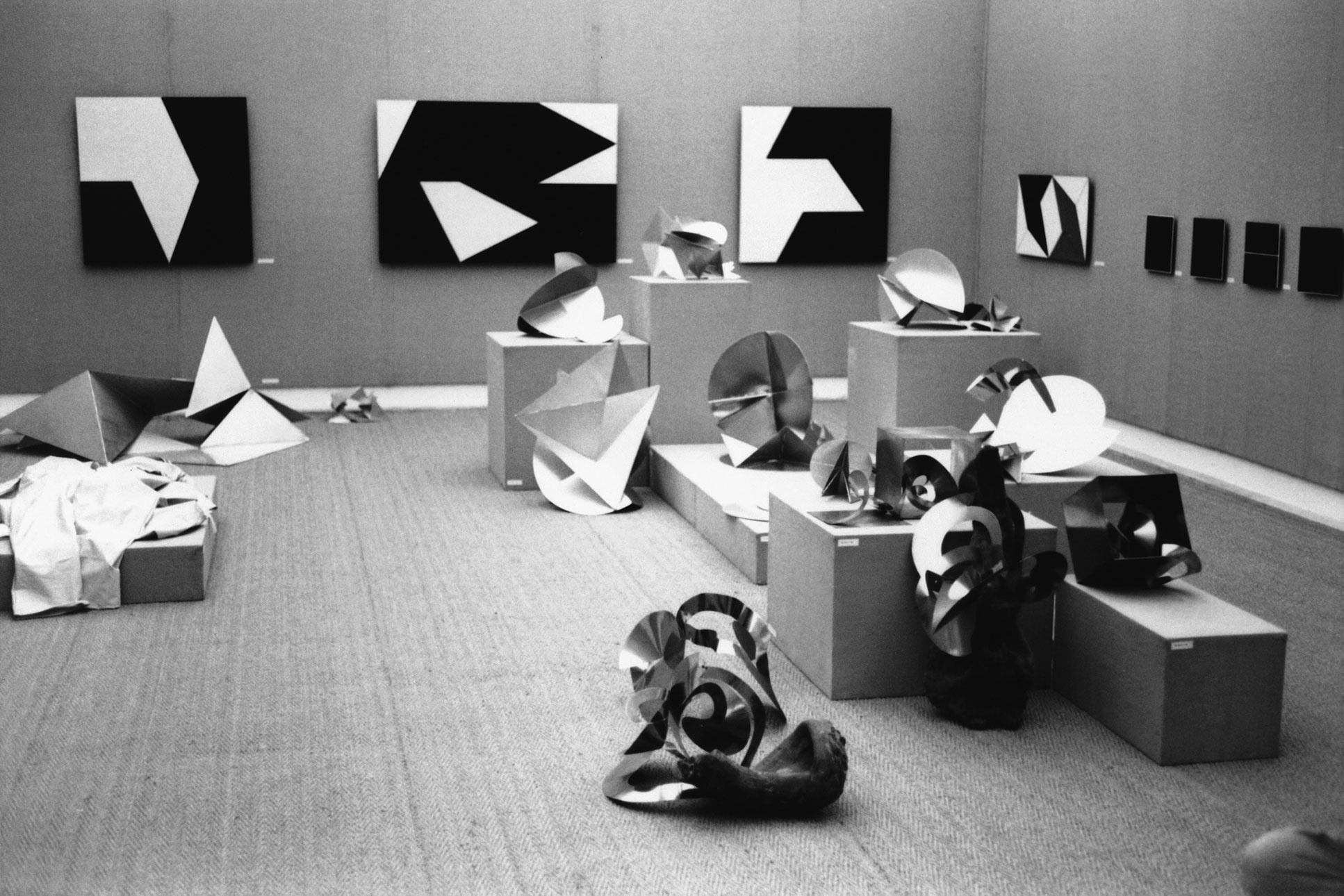
Lygia Clark is the clearer lineage. Her objects were not finished works but propositions — structures without a single ideal state, completed only through the act that engages them. The garment works the same way. Its form is not presented in advance. It is offered as a range within which form can occur, and it requires a body to bring it into being.
But Clark’s proposition is activated in the moment. Lemaire’s is activated in repetition. The garment is not completed once. It is completed, worn, softened, remembered, and completed again. It does not only become. It remembers.
Placed against other garments, the difference becomes clearer. Some arrive already resolved, their form complete before the body enters them. Others set the terms in advance and ask the body to adjust. Here, neither condition holds. The form is not withheld, and it is not imposed. It is worked out in the wearing, and differently each time.
The garment is a proposition, not a finished image.
You feel it most clearly not when looking at the garment, but when wearing it. The shoulder sits slightly beyond your own and you adjust without deciding to. The wrap closes one day into precision and the next into something looser, less certain. The line is right both times. It is just not the same.
That was what the earlier language could not reach. Not a form that holds against change. Not simply ease. Something that continues to take shape each time it is used.
The garment does not arrive finished. It arrives with the possibility of being finished, briefly, before shifting again.
The coat goes on again the next morning.
The gesture is the same.
The result is not.
Calm is the visible surface of Lemaire’s work, but not its deepest achievement. The clothes are shaped through proportion, repetition, and use until they become dependable enough to live with — not statements, not status objects, but garments that remain close to the body and close to the day.
That is why the work feels less like minimalism than like fidelity. A coat gives room without slackness, a trouser lengthens without display, a shirt settles into ease without carelessness. What emerges is a wardrobe built not to interrupt life, but to accompany it with steadiness, dignity, and form.
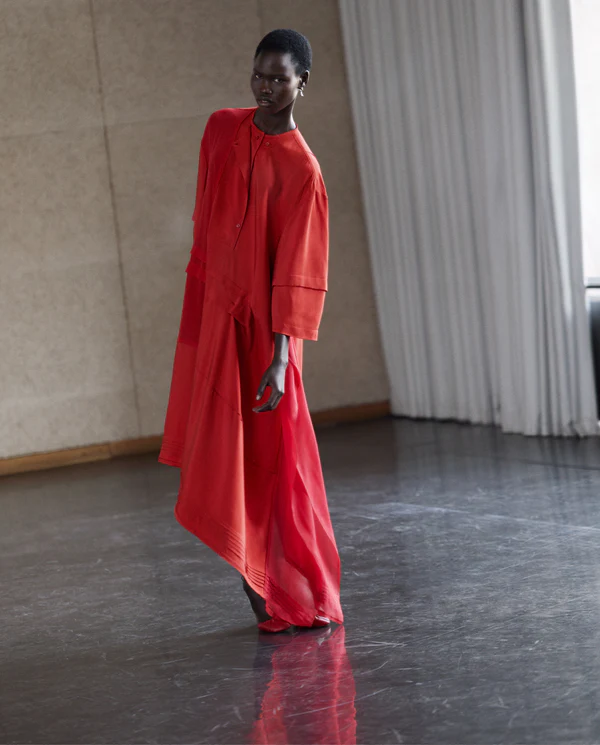
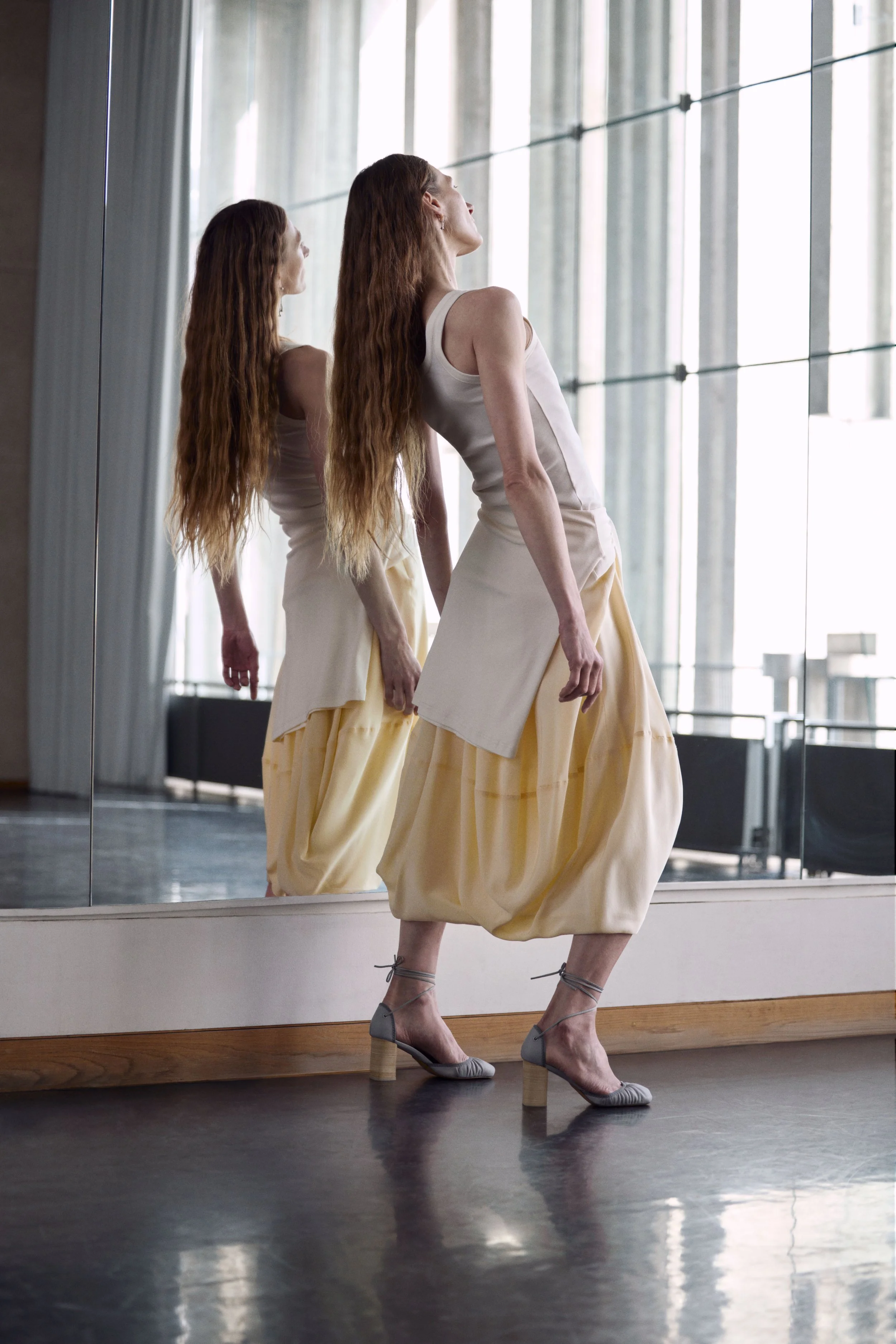
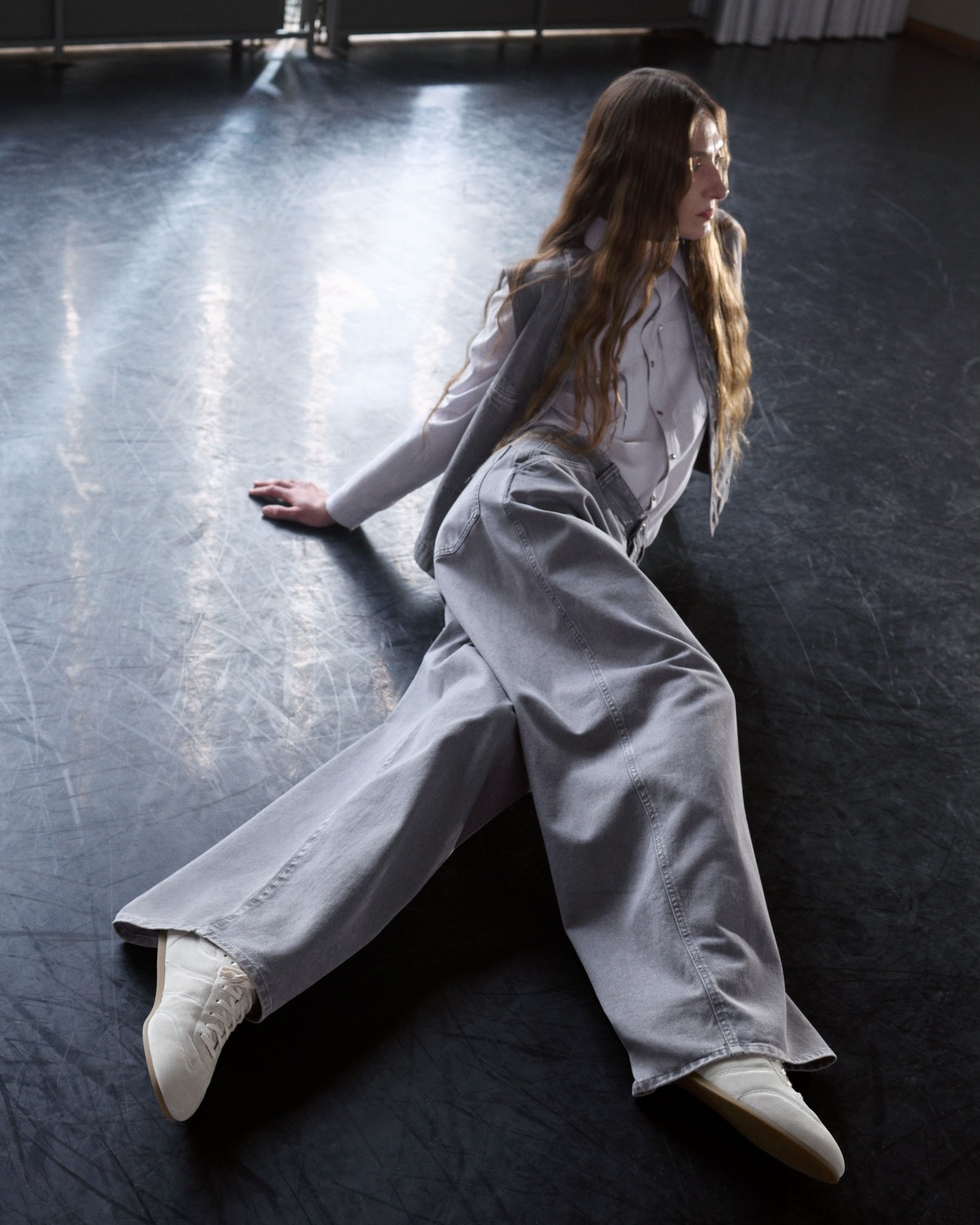
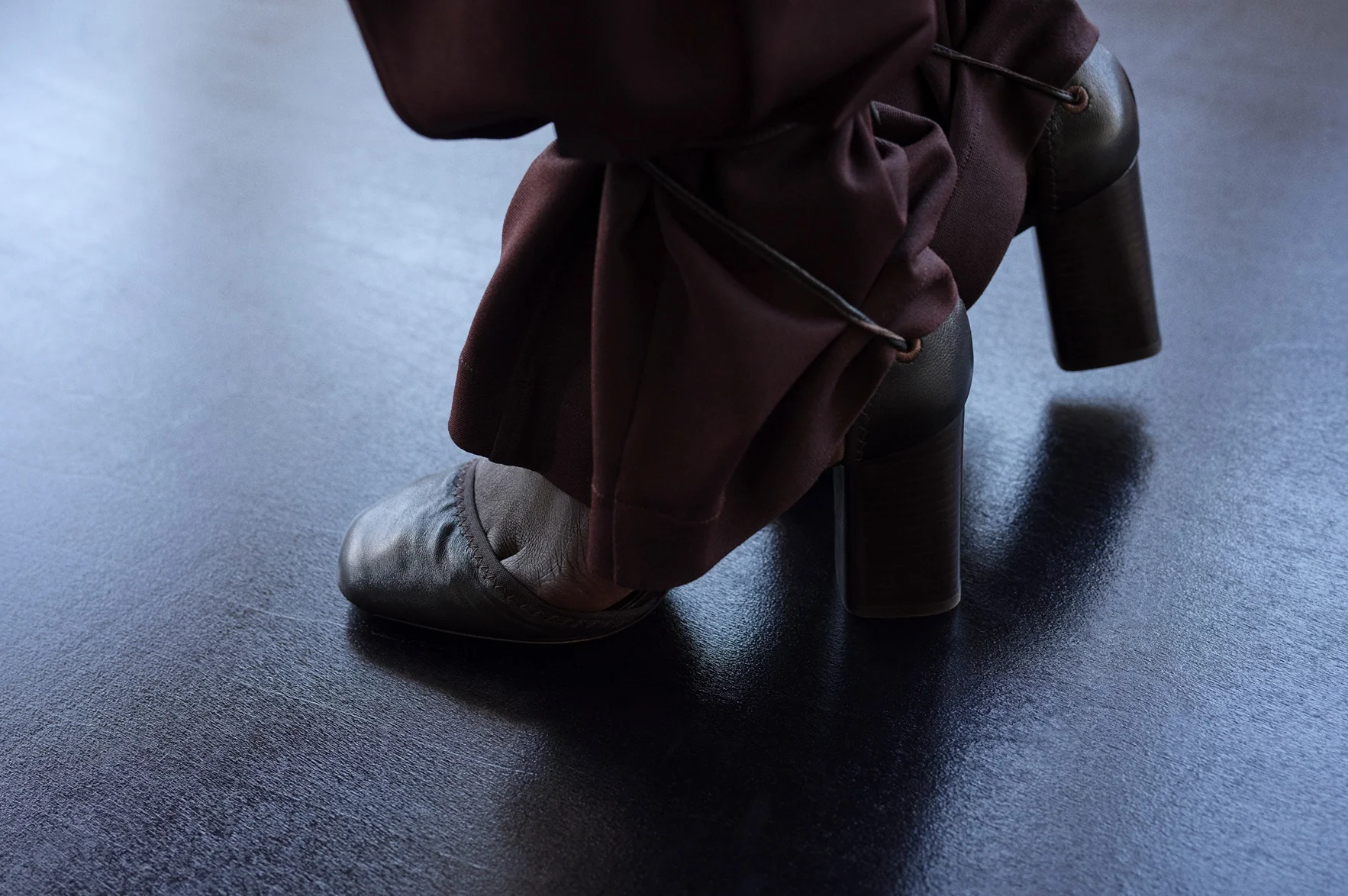
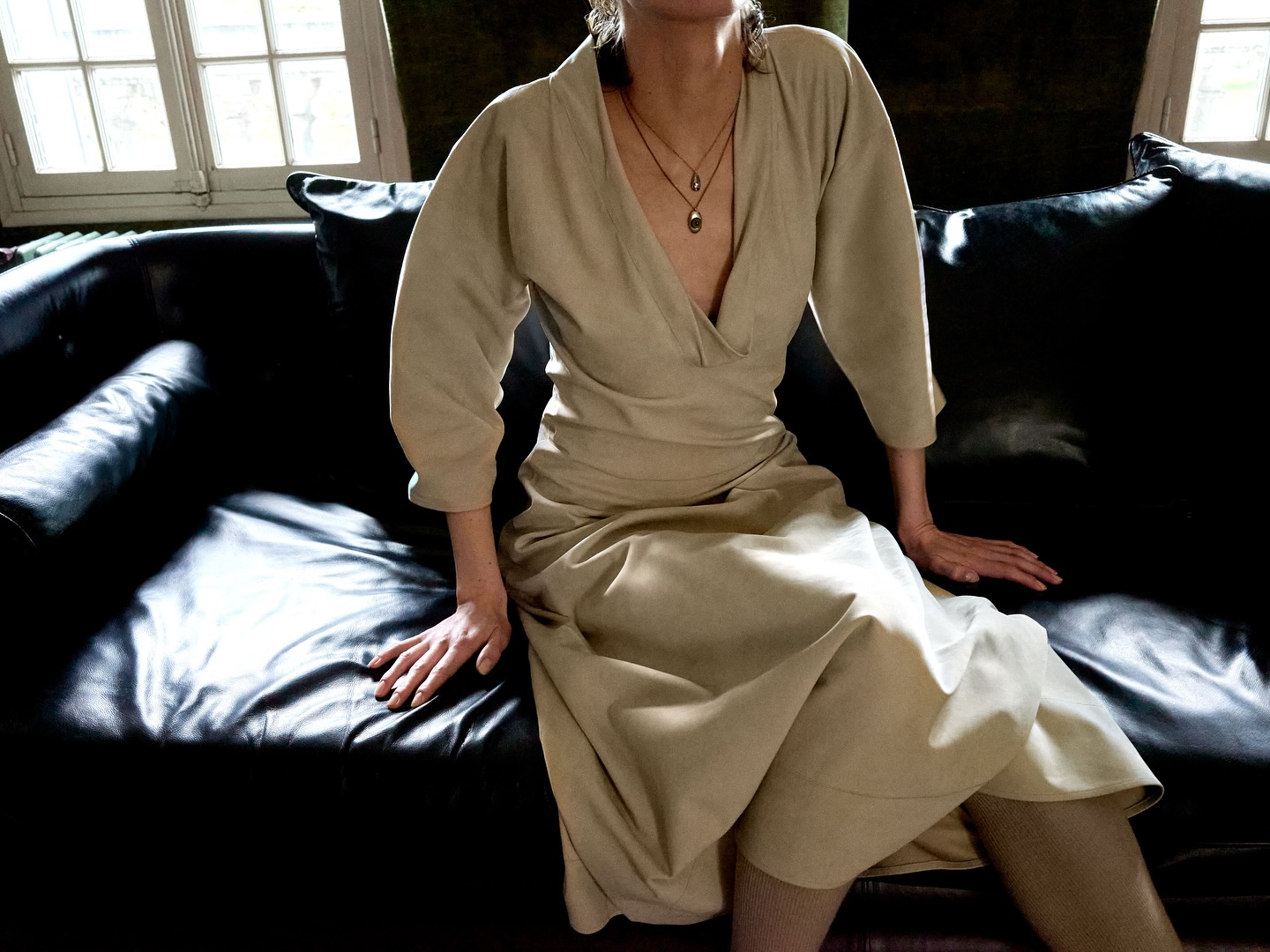
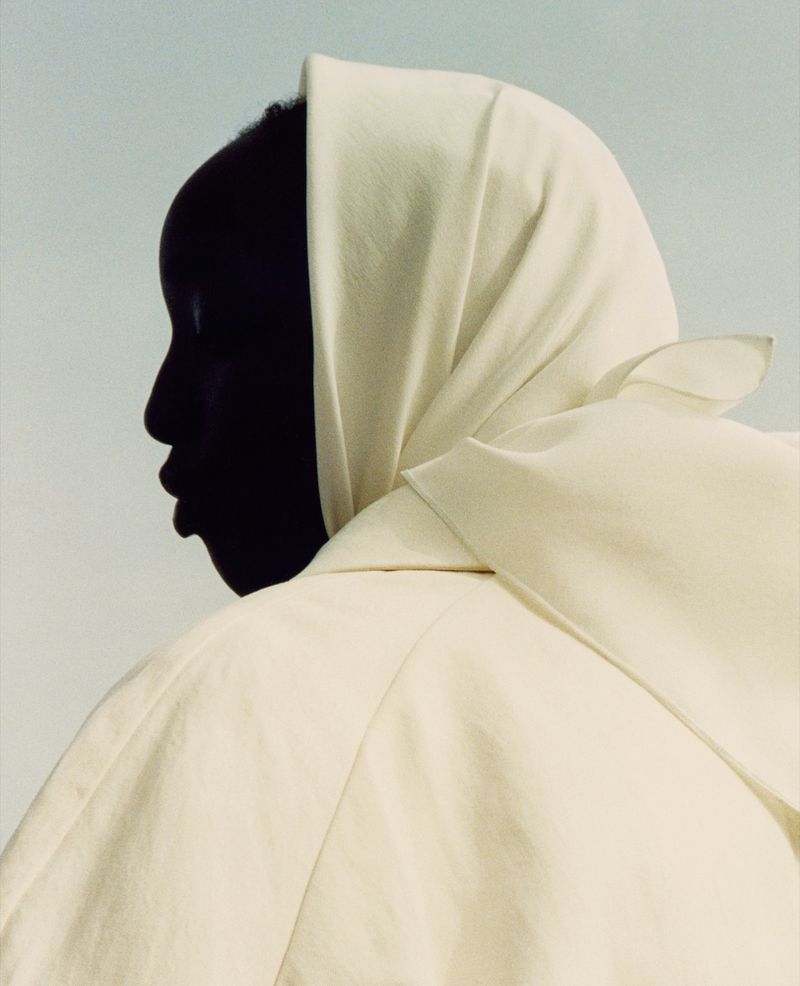
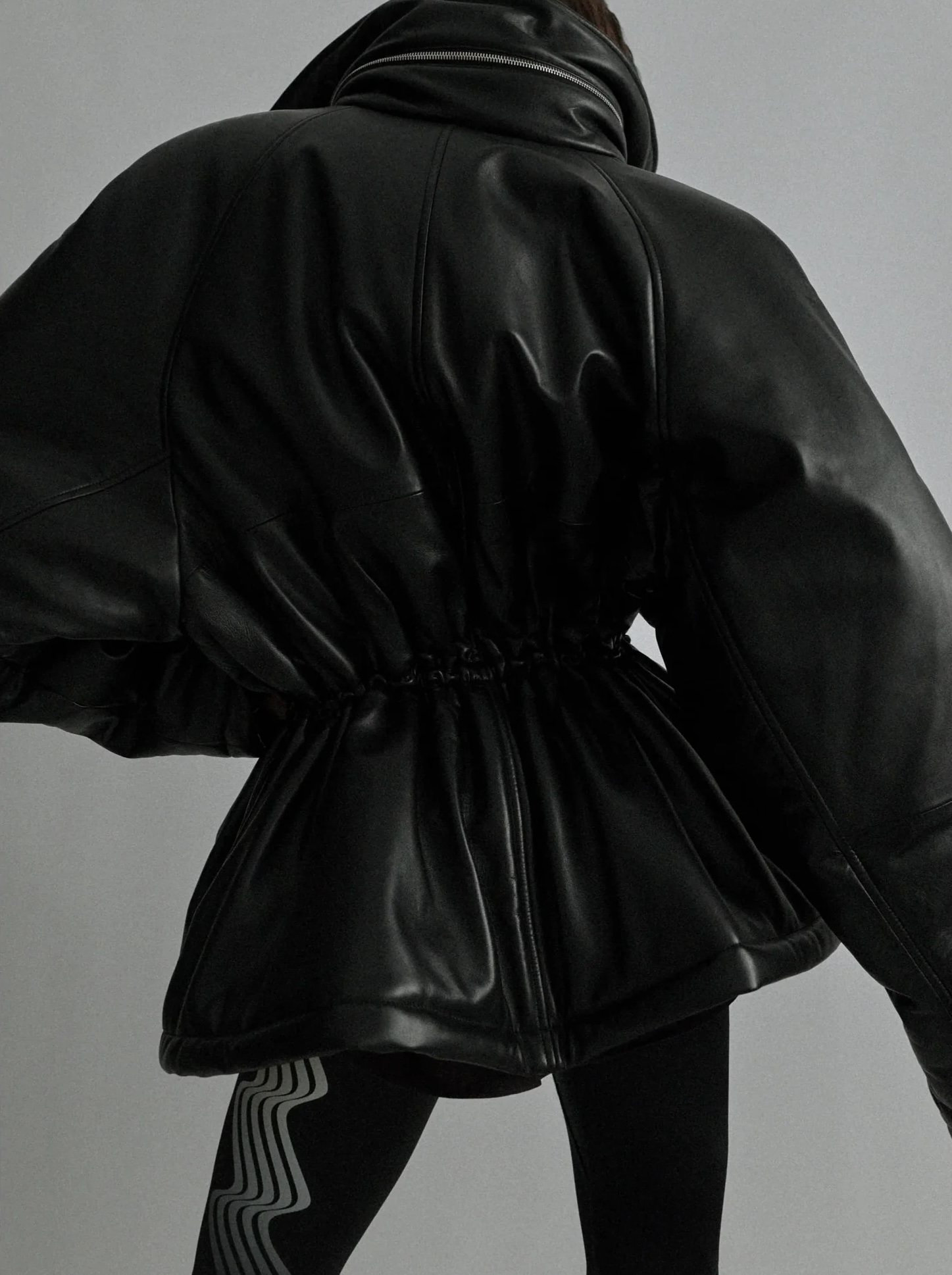
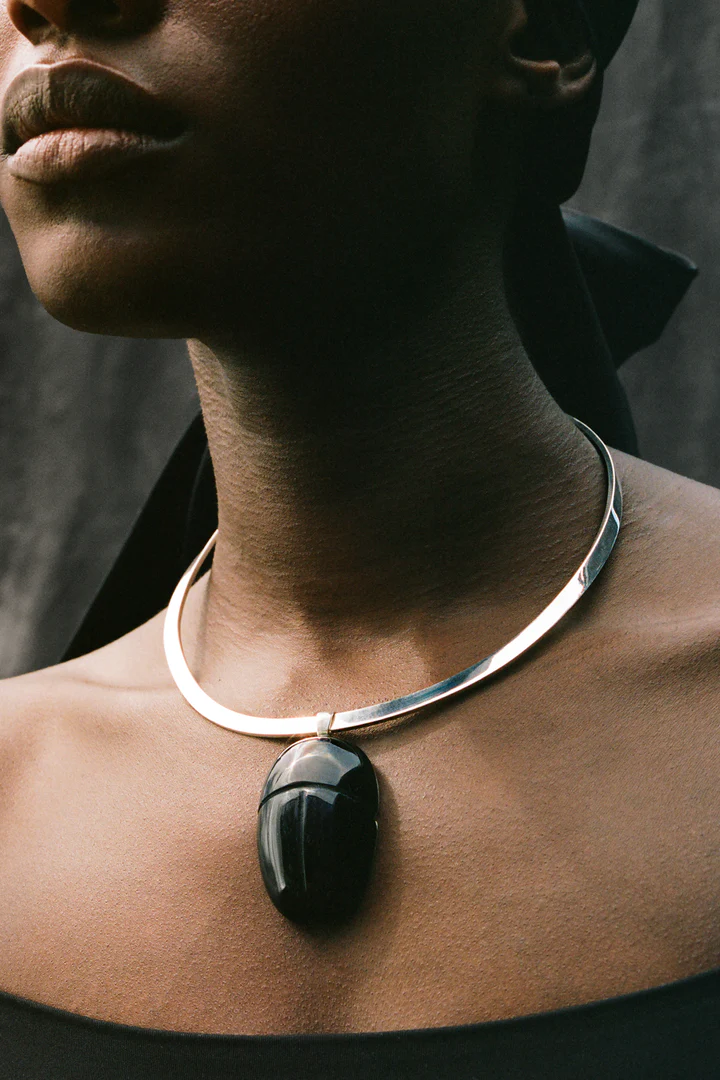
Lemaire, Fall/Winter 2025.
Photograph: Stanislas Motz-Neidhart.
All images this section.
All images © their respective rights holders.
Image rights & attribution →